The Eroica, in ten voices

By cristina liotta - August 2, 2026
Chiara Banchini tells the story of Theresia's next chapter in Geneva: how chamber music becomes a way to rediscover the great symphonies and set them travelling again.

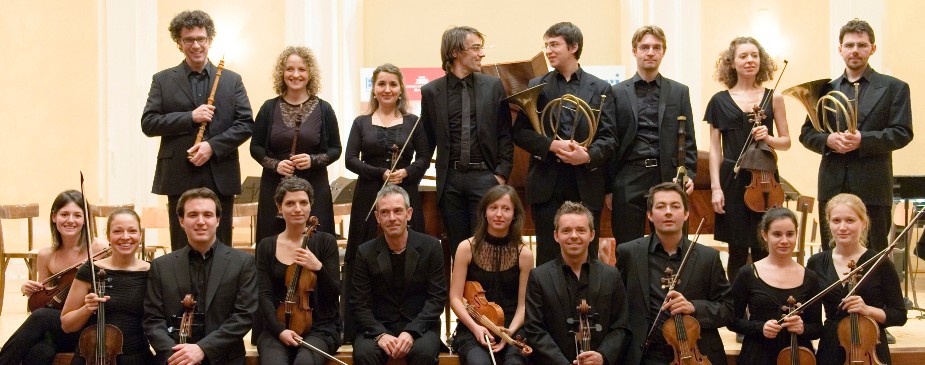
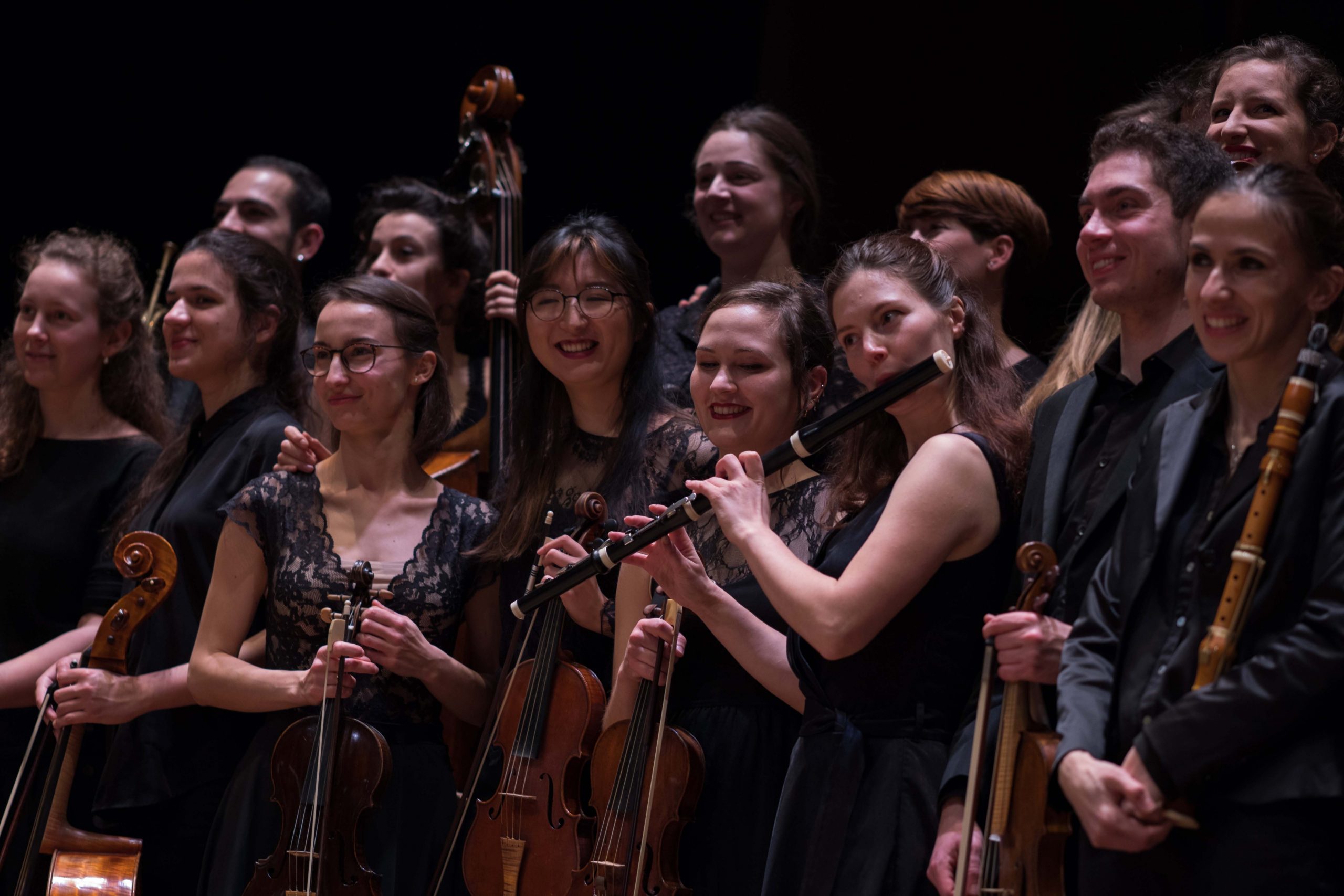
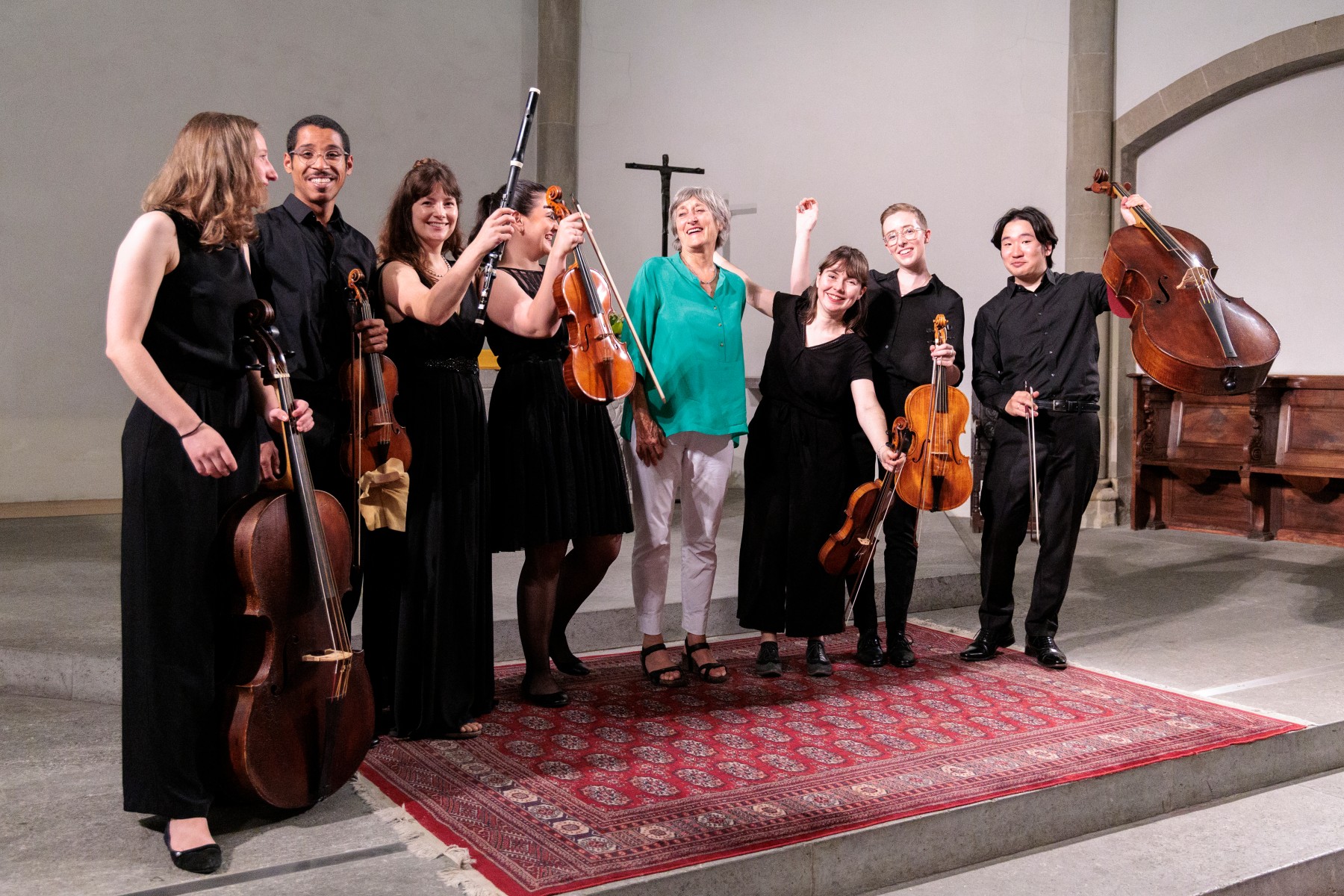
Every summer for the past seven years, Theresia has climbed up to Geneva’s Vieille Ville for two evenings at the Église St-Germain. In these occasions, the orchestra gathers around a chamber-sized stage. The bond with the Concerts d’été à St-Germain began in 2019, when Chiara Banchini, newly on its artistic committee, brought a proposal to the table.

A cycle born from a conversation

The idea, Banchini says, came the way good ideas do: from a conversation.

Mario Martinoli came to Geneva, we talked at length with the committee, and out of that came the idea of a cycle devoted to Beethoven’s symphonies in reduced scoring. The committee loved it, so we decided to do one each year.”

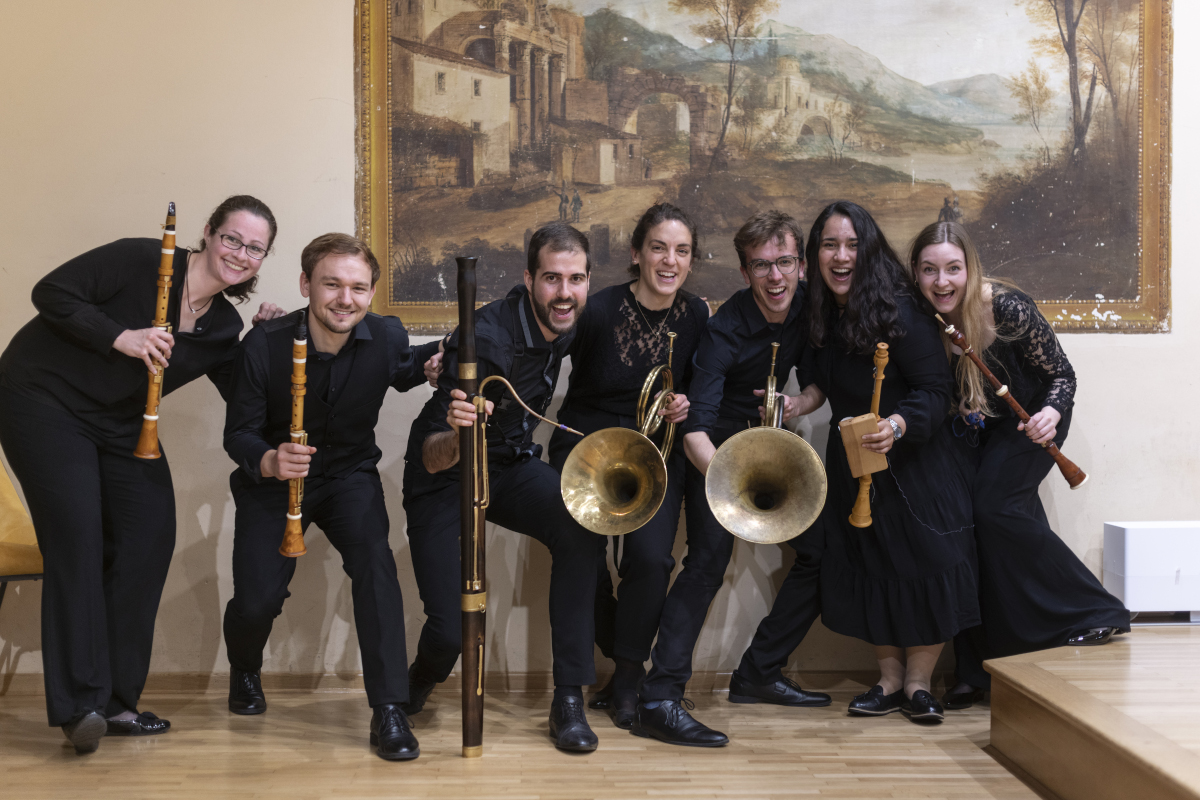
And this year, that bond reaches one of its most demanding point: Carl Friedrich Ebers’s chamber arrangement of the Eroica, Beethoven’s Third Symphony recast for a handful of instruments, a highly ambitious step in the Beethoven cycle we have been building here since 2022.

It is worth pausing on why. A symphony in reduced scoring sounds, at first, like something has been taken away. But fewer players mean nothing is hidden: every line has to be heard, every player is exposed, and the audience sits close enough to follow the music thinking itself through. What the committee recognised was that this is not a smaller Eroica but a unique way of listening to this masterpeace: a nearer and more intimate one, and a church seating a few hundred people is exactly the right frame for it.

A fixture in the Geneva season

The choice has practical roots as much as artistic ones. St-Germain cannot hold a full orchestra, and the festival has always made room for young performers — of its nine concerts each season, two or three go to young groups or soloists, often from Geneva, often competition winners. Theresia sits exactly between those two things. And here is the heart of it: Theresia exists to bring the symphonic repertoire to life, music that normally asks for an orchestra. The Beethoven cycle is how we carry that heritage into a church where this music cannott be heard usually — and towards listeners who come looking for something more intimate than the great concert halls and symphonic works.

The Concerts d’été à St-Germain have run for fifty-two years, always in the same church. When the programme is drawn up, people say: there, a Theresia concert. It’s a fixture, perhaps the only one alongside the winner of the Concours de Genève.”

Theresia began as an orchestra of young professionals gathered from across Europe and playing on period instruments as they were in use during the Classical period, when this music was written. The orchestra has no fixed home: each project is built with a network of partners, and in Geneva this year the players come together for a full residency. That international, hands-on formation is part of the point. Banchini, who taught for years at the Schola Cantorum Basiliensis in Basel, Europe’s leading centre for early music studies, sees residencies like this as where young musicians put training into practice.

She is also clear-eyed about where early music stands, and adds a positive note to the discussion about classical music education and early music.

Look at the conservatoires today — the early-music departments keep growing. Period instruments for early music, modern instruments for modern music: in my day this wasn’t done, now it’s natural, no longer an exception.”

The 2026 programme: Gyrowetz and the Eroica

Alongside the Eroica comes a Serenade in E-flat major, Op. 3 No. 1 by Adalbert Gyrowetz — a Bohemian composer who built his career in Vienna, and of whom relatively little is known today. It is a genuine piece of Harmoniemusik, the wind music of late-eighteenth-century Viennese salons and gardens: the same intimate sound world from which the chamber transcriptions of the great symphonies would soon emerge. Think of it as the evening’s opening door — the room the Eroica will walk into.

The Eroica is where the cycle asks the most, of the players and of us.

It’s one of Beethoven’s most incredible symphonies, almost an hour long. In four days of rehearsal we have to arrive at a truly compelling moment, because the Eroica speaks to everyone: it draws both attention and the heart.

Why an Eroica chamber arrangement, today

There is a second reason the concert matters, and it lies in Ebers’s arrangement itself. Chamber transcriptions, extremely rare in today’s programming, were once how music travelled: without recordings or an orchestra always at hand, reducing a symphony to seven, eight, ten instruments was often the only way to bring a work like the Eroica to the people who wanted to hear it.

I’ve never heard it in concert myself — none of Beethoven’s symphonies reduced this way. Winds and strings together make a sound far clearer and plainer than the one we know. And these are transcriptions made in Beethoven’s own day, not ours — that matters.

That last point is what makes the arrangement valuable: it shows how musicians of Beethoven’s own time heard and understood this music. And reviving it now does something to the listening, too. When the forces shrink, the symphony comes into focus. The inner voices return one by one. Strip away the orchestral mass and the compositional thinking lies exposed: the interplay of voices, the harmonic choices, the way an idea passes from one instrument to the next a phrase you have heard a hundred times suddenly arriving from a single bassoon.

The great-hall Eroica and this one are two different experiences. The second is intimate and transparent, and closer to the work as it was made.

A training ground for young musicians

The reduced ensemble also changes what is asked of each player. With ten instruments, no one can lean on another stand: each part covers the role of several from the original, carried with a soloist’s responsibility and a chamber musician’s ear. The very practice that once sent symphonies out into the world becomes, here, how a new generation is formed.

Ours isn’t an audience that rushes to hear the Eroica in the great halls, and it values hearing it somewhere more intimate. People ask me which symphony is next, or tell me they’ve never heard it like this. There’s a real appetite for the symphony in reduced scoring.

For whoever leads a project like this, preparation is almost double: you have to know the orchestral score by heart in order to teach the parts.

I need to know the orchestral Eroica by heart to work out how to coach the players.

We look very much forward to the evenings of 2 and 3 August, for this next stage of the Theresia Beethoven cycle in Geneva.
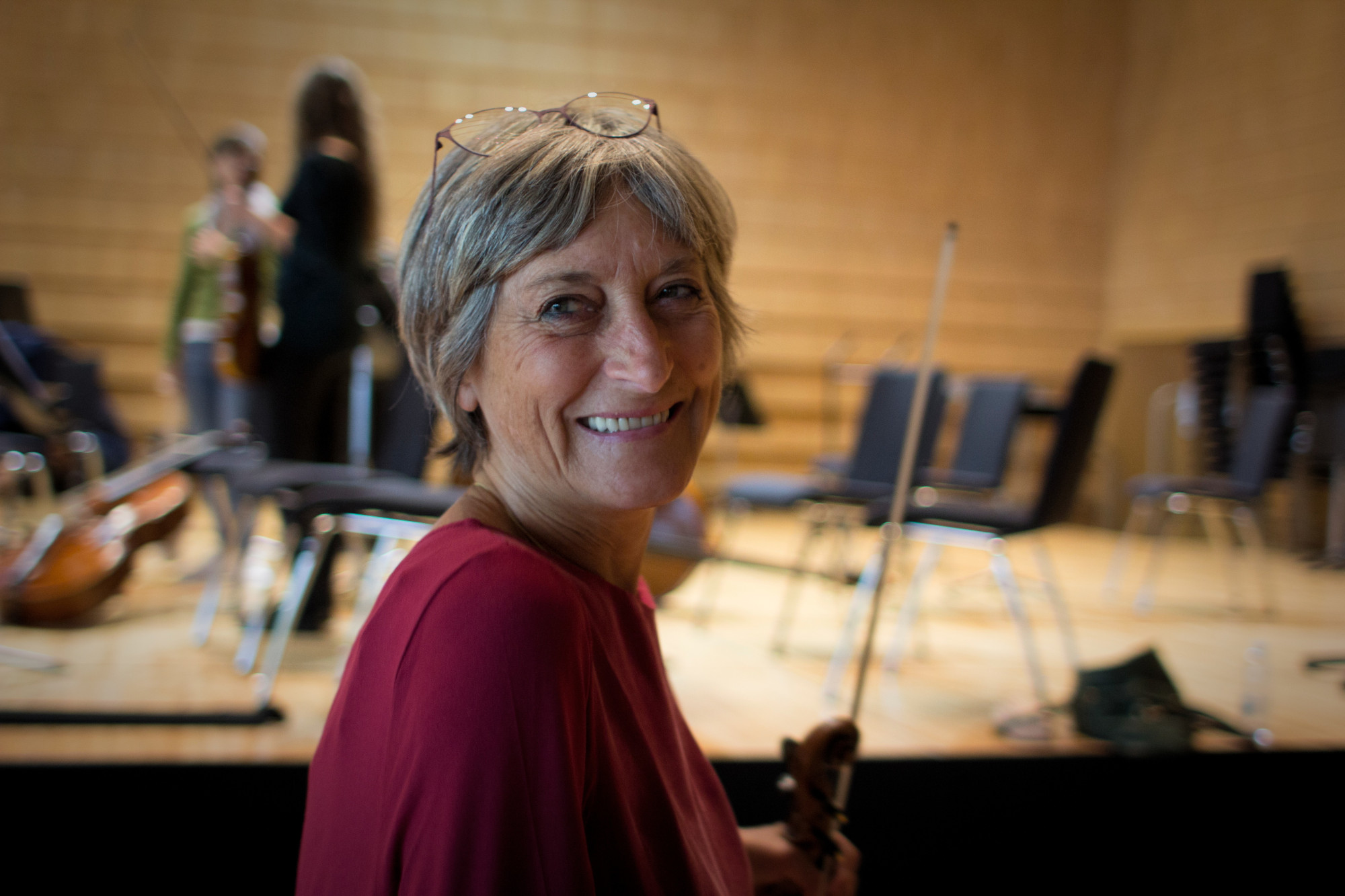

Exploring Beethoven in Geneva: Chiara Banchini on Theresia’s next chamber music project

By Emilia Campagna - July 22, 2024
Theresia will be in Geneva in July for a chamber music residency led by violinist Chiara Banchini, in which nine musicians from the orchestra explore and perform a historical transcription of Beethoven's Second Symphony in the chamber version by Ferdinand Ries.

Continuing what has become a tradition, Theresia will be in Geneva in July for a chamber music Academy led by violinist Chiara Banchini, in which nine musicians from the orchestra will participate. Elana Cooper and Guillermo Santonja di Fonzo (violins), Hannah Gardiner and Helena Reguera Rivero (violas), Marta Jiménez Ramírez (cello), Ariel Walton (double bass), Ching-Yao Wang (flute), and finally Jonathan van der Beek and Janire de Paz Rivas (horns) are the musicians who will take part in the musical project. They explore and perform a historical transcription of Beethoven’s Second Symphony in the chamber version by Ferdinand Ries. The project is artistically spearheaded by Chiara Banchini, who told us more about the musical programme and about the Festival Concerts d’été de St Germain, of which she is a member of the artistic committee.

Chiara Banchini, let’s start with the Festival Concerts d’été de St. Germain: how is it structured and how did the collaboration with Theresia come about?

“The festival takes place in July and August with concerts every week on Sunday and Monday evenings. It has been going on for 40 years and has a very loyal audience. We have a priority, which is to let young people play more than artists who are already established and in the prime of their careers. In this spirit, the collaboration with Theresia began in 2019: I proposed it when I joined the artistic committee. Initially, the projects were generally dedicated to repertoire for chamber groups or small ensembles, but since 2022 we have started a project on historic transcriptions of Beethoven’s symphonies, which has been very well received”.

What were the previous stages of this exploration of Beethoven, and what is this year’s programme about?

“In 2022 we performed the Sixth Symphony, in 2023 the Seventh, and this year the Second Symphony: it is a transcription by Ferdinand Ries, Beethoven’s student and friend. The transcription is very beautiful and very well done: it’s a new and interesting way to approach Beethoven’s symphonies, because it feels like getting into the heart of the compositional process.”

Beethoven’s Second Symphony is not the only piece on the program.

“Indeed. We decided to put an original piece by a contemporary of Beethoven next to the symphony: it is the Nocturne for flute, two horns and string quintet by Franz Anton Hoffmeister. It is a completely unknown side; it has never even been recorded. What is particularly interesting is that it is written for the same instrumental ensemble that Ries used for the chamber version of Beethoven’s Second Symphony. Moreover, following a practice of the time, each instrument in the ensemble has its own solo moment in which to emerge and showcase its technical and musical talents.”

Does the festival focus on baroque and classical repertoire?

“In fact, the Festival’s musical programme ranges from Baroque to contemporary, but since I have been on the committee, I have been able to ensure that there is much more focus on historically informed performance. And not just the Baroque repertoire! For example, we have planned a concert of Schubert Lieder that will be played on an 1840 fortepiano. This also solved the acoustic problems that made it impossible to use a modern piano, since the concerts take place in a church.”

You said earlier that the Festival has a priority to give space to young musicians: besides Theresia, who are the other young emerging artists?

“We have a strong collaboration with the Concours de Genève: this season we just hosted the NOVO Quartet, winners of the 2023 edition dedicated to the string quartet. We also host the winners of a new interdisciplinary competition, OSEZ!, aimed at groups that have to present a musical performance with actors, dance and staging: the winners of the first edition were the vocal sextet Ensemble Diaphane, which opened the festival with a programme ranging from baroque to contemporary.”

Concerts will take place at Eglise Saint-Germain de Genève, on Sunday 28 and Monday 29 July 2024 at 6.30 pm

Theresia’s plans for 2024: ongoing projects and new collaborations

By Emilia Campagna - January 18, 2024
It is time to take a glance at the new projects and programmes in the upcoming year. We've sought insights from Mario Martinoli, Artistic Director of Theresia and the visionary Founder and Co-chair of Fondazione ICONS, to give us a preview of Theresia's plans for 2024.

What lies ahead in 2024? After retracing the most important initiatives that shaped the past year, our gaze naturally turns to the new projects and programmes in the upcoming year. We’ve sought insights from Mario Martinoli, Artistic Director of Theresia and the visionary Founder and Co-chair of Fondazione ICONS, to give us a preview of Theresia’s plans for 2024.

“After the whirlwind of activities last year, when we played so much, we’ve made a conscious decision to take things a bit slower in 2024. Our aim is to return to a pace that is more like our pre-pandemic activities! This decision is couple with the notable development of EUBO joining ICONS, which has increased our organisational efforts significantly. Moreover, the outlook for 2025 is already promising to be an exhilarating and particularly busy year when we have engagements lined up in Germany and Poland as significant highlights on our calendar. 

The first residency of 2024 will be taking place in Lodi, the hometown of our Foundation: the musical programme is focusing on Haydn’s “Seven Last Words of Christ on the Cross”, conducted by Alfredo Bernardini. After the first concert in Lodi, we are happy to return to the two friendly cities of Rovereto and Ravenna for further concerts. 

Another nice return, I would even call it a tradition, is our July residency in Geneva. This time we are set to perform Beethoven’s Second Symphony in a chamber music transcription, conducted by Chiara Banchini. This venture is part of a wide-ranging project: extending our performances of the Sixth and Seventh Symphonies. Our goal is to study and perform all transcriptions of Beethoven’s symphonies, an artistic endeauvour of which our host festival, Les Concerts d’été à St-Germain, is exceptionally supportive.

Theresia has consistently provided a blend of ongoing projects and never-ending innovation: will there be new collaborations in 2024?

Absolutely! The brilliant and accomplished conductor Enrico Onofri will conduct our orchestra for the first time in a project we entitled “Mozart Alpha and Omega”: the musical programme includes various works by Mozart, featuring Symphony No. 1 and Symphony No. 41 among others. The residency is planned for October in Ravenna, with concerts scheduled both in Ravenna and Nova Gorica, Slovenia.

On a different note, a consistent highlight in recent years has been the annual opera production with the Reate Festival: will this collaboration continue in 2024?

Yes, it will. In October, we will return to Rieti and Rome for a new production of Giuseppe Gazzaniga’s “Don Giovanni” under the direction of Alessandro De Marchi. While everyone knows the title very well, the composer is relatively unknown today. It is intriguing to rediscover this opera, written in early 1787, only a few months before Mozart’s “Don Giovanni” which dates from the same year. Interestingly, it seems that Da Ponte, the librettist for Mozart’s opera, attended the successful premiere of Gazzaniga’s opera in Venice, drawing inspiration for the libretto he would later be invited to write for Mozart’s acclaimed opera.

I believe you’re not only working on music productions but on other projects that will enrich Theresia’s activities too. The latest is Fondazione ICONS joining Mozart Ways – could you tell us more about that?

Mozart Ways is the network of cities associated with Mozart, – those where Mozart resided or visited during his travels. Although Lodi holds its own place as a Mozart city, it has not been part of this network until now. As a Foundation, we are very happy that this is now happening, and anticipate that our inclusion will expand and strengthen our collaborations. Mozart Ways is not the only network we’ve become part of:  Fondazione ICONS is now also an official partner in the New European Bauhaus, a network supported by the European Commission, dedicated to fostering initiatives that are both “enriching, sustainable, and inclusive.” For us, this represents a challenge to amplify our creativity, aligning with the musicians’ desire to experiment, which we have seen and proven to be a key motivator for those who join us. 

Stay tuned to the blog for upcoming insights into these two significant new collaborations, and keep following us: 2024 is evolving into another year of satisfaction and musical excitement of the highest order!

Simone Laghi guides us in the discovery of two hidden treasures

By Emilia Campagna - July 18, 2023
Although very different, the programmes for our next two projects have one thing in common that is very important to us. Both the historical chamber music transcription of Beethoven's 7th Symphony and Traetta's oratorio Rex Salomon have been critically edited by Simone Laghi, Scientific Advisor of Theresia, who gives us an interesting insight to these hidden treasures.

Theresia musicians have two big events coming up this summer: a chamber music residency in Geneva -a welcome return – led by Chiara Banchini from 24-31 July, and an orchestral production as guests of the Early Music Festival in Innsbruck conducted by Christophe Rousset, from 12-18 August, performing with the NovoCanto choir.

Although the programmes are very different (music by Beethoven and Boccherini in Geneva, music by Tommaso Traetta in Innsbruck), they have one thing in common which is very important to us. The core of the Geneva programme, a historical chamber music transcription of Beethoven’s Seventh Symphony, and Traetta’s oratorio Rex Salomon were both critically edited by Simone Laghi, Scientific Advisor of Theresia, with whom we’ve had a brief interview.

Simone Laghi, let’s start with Beethoven’s Seventh Symphony in the transcription for flute and string sextet. What can you tell us about this work?

The transcription was written by Nicolas Mori, an Italian-English violinist who was active in London in the first half of the 19th century. This type of transcription was very common in Europe at the time, to bring symphonic and orchestral works into a chamber dimension (and thus for domestic performance). In this case, it is a very interesting work, especially for the ensemble used, namely flute and string sextet (specifically two violins, two violas, cello and double bass): there are no particular changes in the writing, the flute takes over the role of the wind parts, sometimes flanked by the second viola.

How did you get to work on this transcription and edit the critical edition?

In my research at Cardiff University I dealt with the string quartet repertoire of early 19th-century Italian composers active in London, so I came across the work of Nicolas Mori. A few years ago I had the opportunity to edit the critical edition of this transcription, which was then published by the HH publishing house. However, I believe that Theresia’s is the first performance in modern times. There are, however, other interesting transcriptions by Mori, such as those of Beethoven’s Overtures: unfortunately the double bass parts are missing, so it is impossible to make a critical edition for now.

Beyond the existence of this ‘English’ transcription, is there a relationship between Beethoven and London?

Absolutely. We know, for example, that Beethoven composed the Ninth Symphony at the invitation of the London Philharmonic Society: it is true that the first performance took place in Vienna, but then the Symphony was naturally performed in the English capital. And then it seems that Beethoven had planned to go to London, as Haydn had done years before, but it never actually took place.

Now let’s talk about Traetta’s Oratorio “Rex Salomon”, which Theresia will perform on 18 August as part of the Innsbruck Early Music Festival: what do we know about this composition?

The Rex Salomon was composed by Tommaso Traetta in 1766 to be performed at the Ospedale dei Derelitti in Venice by the ‘Putte’, i.e. the girls residing in this charitable institution. Precisely because it was intended to be performed within the Ospedale dei Derelitti, the vocal ensemble is female only, making it a rather special work within this genre.

What was the occasion for the composition?

Rex Salomon was composed to be performed on the Feast of the Assumption, 15 August 1766. On this particular occasion Traetta had the task of restoring the former glory of the Ospedaletto’s orchestra and choir, which had been neglected in recent years and were experiencing a period of decline. With this oratorio, which was performed four more times in the following ten years, he succeeded in doing so, even though we are in the last years of the glorious history of the Serenissima: with 1797 and the fall of the Republic, even the musical vitality of realities such as the Ospedaletto dei Derelitti faded away.

How did the ‘Putte’ become part of the orchestra and choir?

Often they were girls who had been taken in as children because they were orphans, but in many other cases they were so-called ‘adult daughters’ who were taken in because of their musical merits: it was not easy to get in, the selection process was quite strict. Nor was it easy to get out, because once these talented young girls had been trained, the institution wanted to keep them. Those who managed to pursue a musical career on their own had to do so outside Venetian territory, or if they performed in the city, they did so in secret and under a false name.

What is the source on which you have based the edition from which Theresia will perform?

It is a manuscript kept in Brussels and part of the Fétis collection: this important musicologist, who lived in the 19th century and was the author of a monumental Encyclopaedia of Music and Musicians, probably bought the manuscript on the antiques market, and it is a somewhat unusual piece in the collection. Moreover, the manuscript refers to the last performance, that of 1776, which Traetta partially revised because one of the singers, originally a alto, had been replaced by a soprano.

What are the musical characteristics of Rex Salomon?

The main peculiarity is the vocal ensemble, which is necessarily all female. There is a certain complexity to the writing, although it is far from the excessive virtuosity typical of the theatre of the time. However, there is still a great deal of coloratura and a certain amount of elaboration, a sign that the level of the performers was quite high and that they were addressing an audience with high expectations. It is curious, and gives us a measure of a peculiar situation, that each of the five soloists has two arias, so there is no measurable hierarchy in the increasing number of arias according to degree of importance. The instrumental part, especially the first violins, is also well worked out, detailed in its articulations.

There is a fine record of the very first performance, a letter written by the philosopher Giammaria Ortes to the composer Johann Adolph Hasse on 16 August 1766: Yesterday I went to a new musical oratory at the Ospedaletto, and I have realized how, without singing well, one can still avoid singing poorly, and how in similar conservatories, the combination of docility and moderate skill can provide more pleasure than abundant skill combined with presumption. If these girls continue in this manner, this could be the case in which music, having generally fallen into the excess in which it currently resides, returns back to that mediocrity that constitutes its perfection.”

Simone Laghi is Sicentific Consultant of the Theresia Orchestra and a digital communication expert. He holds a PhD in music performance from Cardiff University. He has a background as professional musician in the historical performance practice field, and he has collaborated with a large number of groups and ensembles in Europe. He has produced and organised recordings. He has published several musical editions of eighteenth-century works, and has written articles and editorials for Ad Parnassum, Early Music Performer, and Eighteenth-century Music.

Lots to celebrate: Theresia’s first ten years

By Emilia Campagna - February 16, 2023
Theresia is proud and happy to celebrate its first 10 years of activity with a concert in the very town where everything started!

Do you know that special feeling when you are both fulfilled and satisfied with what you  have achieved, and eager to move forward and break new grounds? That is exactly where Theresia is today; celebrating an important milestone and paving the way for new projects.

What’s to celebrate? No less than our first ten years of activity!

Back in the autumn of 2012 the orchestra gave its debut performance. The occasion was Premio Ferrari, an international competition set in Rovereto and dedicated to fortepiano performance: this was the prestigious frame to launch the cultural patronage and youth promotion project intensely wished for by our founder and artistic director Mario Martinoli.

Mario Martinoli, founder and artistic director of Theresia

The challenge at stake in this venture was twofold: to support the orchestra almost exclusively with private capital from a group of cultural patrons, and to focus on the classical repertoire.
Both ideas were innovative, especially in Italy. Cultural patronage wasn’t something that was talked about widely in Italy at the time; and as the classical repertoire was concerned, HIP orchestras up to that point had almost almost exclusively focused on performing Baroque music, neglecting the repertoire from 1750 to 1815.

The challenge was taken. In the beginning, the enthusiastic endorsement of renowned directors such as Claudio Astronio, Chiara Banchini, and Alfredo Bernardini was crucial. They, together with a dedicated staff, ensured that the orchestra consolidated and developed a solid international reputation.

Claudio Astronio conducting Theresia in 2014

Lady of the baroque bow: Chiara Banchini performing with Theresia in 2014

2016: Alfredo Bernardini conducts Theresia in Rimini

2016: Alfredo Bernardini conducts Theresia in Rimini

Today, after 37 residencies, and 77 concerts in 6 different European countries, Theresia is stronger than ever: we offered tuition in Classical music to more than 200 young musicians from over 40 world countries, for a grand total of 1300 hours of orchestral training. From an organisational point of view, Theresia makes for a solid partner as part of ICONS Foundation, capable of planning for the future. Additionally, Theresia is now funded by the European Union thanks to the Empower project!

As you can see, we have a lot to celebrate. And we are happy to do that in the very place where everything once started: Rovereto! Theresia will perform at the stunning Teatro Zandonai on February 26, which will be very special. The concert has a particular focus on the music by Ludwig van Beethoven with the Egmont Overture, as well as Symphony No.8 in F major, Op. 93. The orchestra will be conducted by Giovanni Antonini and is joined by violinist Dmitry Smirnov for Beethoven’s famous violin concerto.  Theresia will perform the same programme in Florence the next day: stay tuned for more details on the blog.

These February concerts will be the first of the full concert season in 2023, which we are incredibly looking forward to .

Let’s take a moment to remember those first days back in 2012, when we were full of enthusiasm and willingness, feelings that haven’t abandoned us. So, let’s browse together through the photo album of our debut at Premio Ferrari: enjoy the gallery!

Theresia’s summer concert season

By Emilia Campagna - August 1, 2022
August promises to be an intense month, with five concerts in three different European countries: Italy, Switzerland and Spain

Five concerts in three different European countries: as July was devoted to our annual auditions, Theresia’s summer concert season is concentrated in August, which promises to be an intense month.

A first modern performance for Concerto Theresia

Concerto Theresia, our alumni ensemble, will perform in the first event, scheduled on 4th August in Bagnocavallo (Ravenna, Italy): the musical program is entirely devoted to a rarely performed composer, Elia Vannini. Concerto Theresia and “I luoghi dello Spirito” Ensemble will be cooperating to bring back to life music that modern audiences has never listened to: specifically, Concerto Theresia will play six Sonatas that Elia Vannini, a musician and a priest who lived beween 1644 and 1709 and was Maestro di Cappella of Ravenna’s Cathedral, dedicated to his Archbishop Fabio Guinigi in 1691.

Musicians involved are Gemma Longoni and Valentina Russo (violin), Francesca Camagni (viola), Giulia Gillio Gianetta (cello) and Federico Bagnasco (doublebass), with the collaboration of harpsichordist Maria Luisa Baldassari and organist Marina Scaioli (“Ensemble I Luoghi dello Spirito”).

A welcome comeback in Geneva

For the third time, our string ensemble has been invited to perform within the framework of a renowned festival, “Concerts d’été à Saint Germain”, in Geneva. That is a great honour and good opportunity too, especially for the orchestra members, who will have the chance to work with Chiara Banchini, thanks to the collaboration with the Société Genevoise d’Utilité Publique. Theresians will perform Boccherini’s Quintet in B flat major G 337 Op. 39 n. 1 plus an absolute rarity, a string transcription by M. G. Fischer of Beethoven’s Symphony n. 6 Pastorale in F major Op. 68. Two concerts are scheduled on 21 and 22 August.

Musicians involved in the project are violinists Léna Ruisz and Natasha Pichler, violists Anna Luiza Aleksandrow and Alioša Šolak, cellist Sara Vicioso Usero and doublebassist Yussif Barakat,

Performing in a new place

As well as we love going back to places we have performed in, we are delighted to explore new venues: it means knowing people, starting a new partnership, and enriching our network. So, our third summer project means a lot to us, as it will be in Spain, a country where we have never been (but from whom a lot of Theresians have come during these years). Specifically, we are going to be part of ECOS Festival in Totana, and on 26 and 27 August our woodwinds ensemble will work under the guidance of bassoonist Javier Zafra: the musical program is enchanting, as it is entirely devoted to Mozart’s Divertimentos for winds (Divertimento in F major K. 213, Divertimento in F major K. 253, Divertimento in B flat major K. 270)

Musicans involved are oboists Linda Alijaj and María Jesús Moreno Ciudad, bassoonists Angel Alvarez and Vincente Beltràn, and hornists Jonathan van der Beek and Etienne Devigne.

Stay tuned for further details!

The importance of playing in a quartet

By Emilia Campagna - March 19, 2022
Chiara Banchini, tutor in the Ossiach residency, talks about playing in a quartet and how no string player should miss it

A chamber music residency is taking place during these days in Ossiach, a beautiful place we recently wrote about. A selected group of string players (Tommaso Toni, Aura Fazio, Léna Ruisz, Lavinia Soncini, Anna Krzyżak, Irina Fârtat, Cecilia Clò, Leah Plave) is rehearsing under the guidance of Chiara Banchini, violinist and conductor with whom Theresia has a strong connection.

The musical program is devoted to string quartets by Haydn (String Quartet in d minor op. 42 Hob. III:43), Mozart (String Quartet in d minor n. 13 KV 173) and Boccherini (Quartets G 200 and G 223 “La Tiranna”). A concert at Kultur Forum Amthof will close the residency.

Ms Chiara Banchini, this chamber project is devoted to string quartets: what are our musicians playing and how is the residency going?

It is going very well. A couple of participants couldn’t be there, unfortunately, as they were quarantined the day before the beginning, so we had to slightly resize the program. Still, it remained faithful to the initial idea of combining an “important” quartet (by Haydn, Mozart or Pleyel) with one of the short quartets of Boccherini, which are real jewels. They are very agile pieces of music, with only two movements but perfect to make the experience of playing in a quartet.

Many of the musicians present at this residency are new members of Theresia, selected in the auditions last summer: how is the work going?

I am extremely pleased with the level of all the participants: I can see they are very prepared, well-tuned, and they are also very good at working together and listening to each other. I think the general level of the orchestra has risen a lot in the past five years. Everybody is doing a great job.

How significant is it for a string player to live the experience of playing in a quartet? And how difficult is it?

As a matter of fact, it is both important and difficult! A string musician has to face huge problems in terms of tuning and sound. It’s way easier to play in another kind of ensemble, like a piano trio or a piano quartet, or playing together with wind instruments. A piano provides you with a constant reference for the tuning of the ensemble, although you are forced in sticking to equal temperament, which is not ideal for us string players. With wind instruments, the differences in sound make things easier in terms of tuning and blending. Then, you have relational issues to face: many famous quartets are known also for their members’ quarrelsomeness! But, the repertoire is so stunning, and rich: even only focusing on Haydn, you have more than eighty wonderful quartets! From every point of view, playing in a quartet is something no string player should miss.

In your professional activity, how much did you dedicate to string quartets?

A lot. With my musical partners from Ensemble 415, we explored Haydn, Mozart, Boccherini, Beethoven’s opus 18. We didn’t go further, though. My generation was the first to switch from the modern instrument to period one: deepening the baroque style, moving one toward the classical repertoire, studying period essays and looking for sources was a big deal. When I think of going beyond Beethoven and approaching, for example, Schubert, I feel quite overwhelmed with the idea of studying and knowing everything I can. For this generation, things are different: they are more confident because they could take advantage of the expertise and the achievements of the older ones, and they have had more chances to experiment playing on period instruments, so I’m sure they would easily approach composers like Schubert. In this “easiness”, though, I also see a lack of interest in studying methods and deepening their theoretical knowledge of historical performance, so with a bit of more effort they will really go a long way.

Our places: Ossiach

By Emilia Campagna - February 21, 2022
There’s a place in the heart of the Alps that from time to time becomes our house. Read the article to find more about Ossiach and the Carinthian Music Academy (CMA)

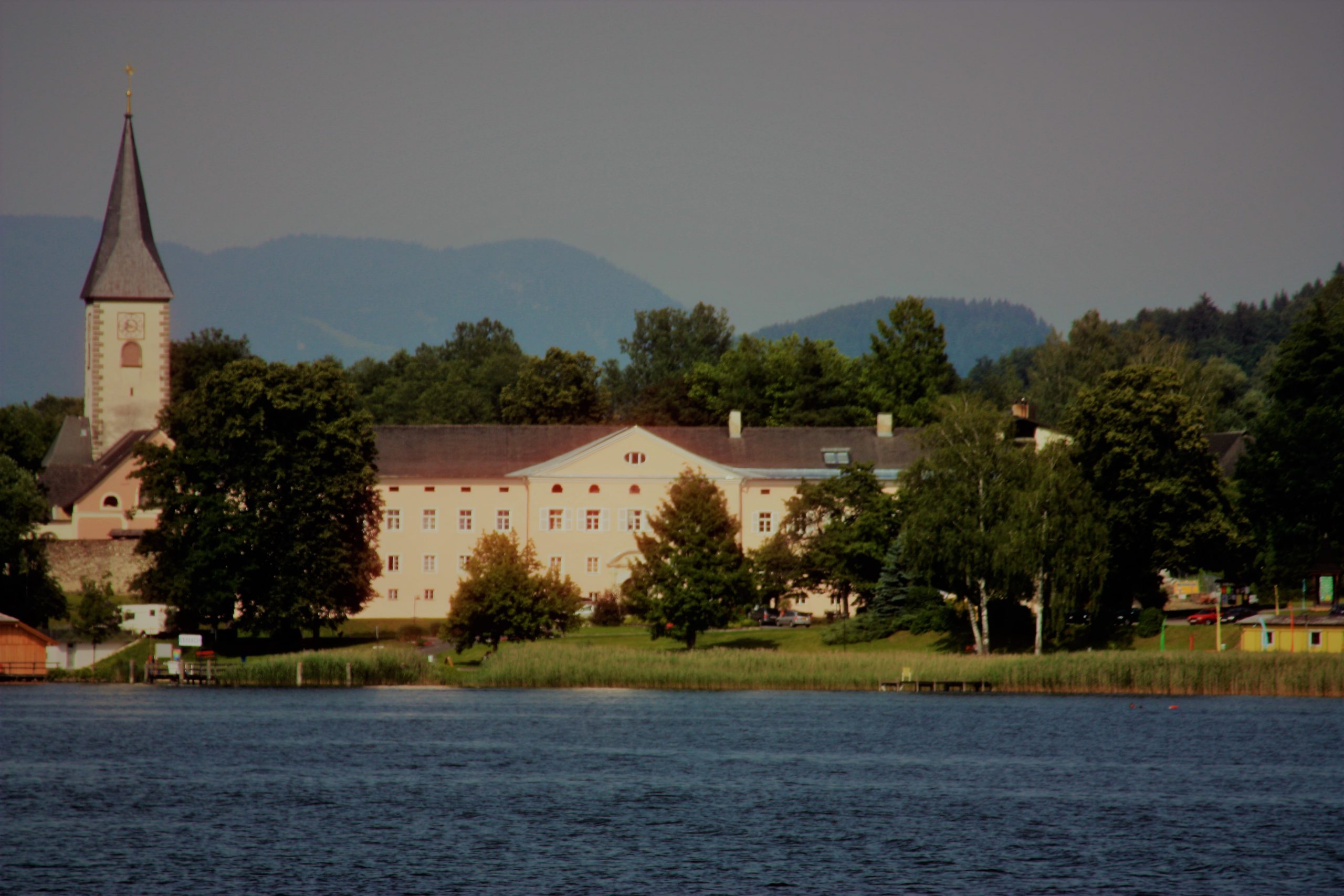
There’s a place in the heart of the Alps that from time to time becomes our house. It’s a magical place, devoted to music, thanks to the Carinthian Music Academy (CMA) which has so far been our partner in two projects we held there. The name of the place is Ossiach, a little village in the South of Austria, famous for the historic Ossiach Abbey, with its Baroque collegiate church. Today the former 11th-century Benedictine monastery is a renowned cultural centre, beeing the venue of the Carinthian Summer international music festival and the Carinthian Music Academy.

Talking about CMA, it was founded in 2009 with the mission, as chief of administration Ulrike Baumgartner told us, of being a competence centre for further education and training. The CMA has quickly established itself as a popular meeting place for music and culture enthusiasts of all genres. Besides the regular course program, the CMA also offers the perfect infrastructure for events at two locations: Ossiach Abbey at Lake Ossiach and the Music Center Knappenberg high up above (second location, about an hour away from Ossiach, founded in 2007)”. The activity of the centre is intense, as it “organizes itself the concert series and supports organizers in conducting their concerts. Around 150 concerts and competitions take place annually”. It hosts “mainly Austrian musicians. But also musicians from all over Europe and American universities visit the CMA for rehearsals.” As everywhere, Covid affected CMA activity: “In 2020 and 2021, the academy had to stay closed for several months. Of course, there had been numerous cancellations, especially for concerts. Many rehearsal phases and courses have also been postponed.”

Luckily, activity has now restarted at full pace, and a new Theresia project is going to take place from 14 to 19 March, with the renowned violinists Chiara Banchini and Emilio Moreno as tutors, and a program devoted to string quartets, mostly by Boccherini but also by Mozart, Haydn and Pleyel. A concert at Kultur Forum Amthof will close the residency.

Looking back to our past projects in Ossiach, our first residency was in October 2018, with conductor Chiara Banchini, and Petr Zejfart as a tutor for wind players. The residency was devoted to the connections between Haydn and Joseph Martin Kraus, a composer we love: performing Haydn’s Ouverture from “L’Isola Disabitata” and Symphony n. 81 and Kraus’s Symphony in C major “Violino obbligato” with Gemma Longoni as soloist was a wonderful way to commemorate the meeting between the two composers. They met in 1781 and Haydn wrote a letter to the Swedish ambassador describing Kraus as “The first genius I ever met”. In 1781 Kraus spent quite a long time between Vienna and Estheraza, where he also conducted several works by Haydn.

The residency was intense and followed by two concerts, one in Ossiach itself and one in Munich, our first performance in Germany!

The second residency, we remember it very well, because it was in February 2020 and it was the last one before the prolonged pause due to Covid restrictions: it was a chamber music project, and the main tutor was Chiara Banchini again, together with cellist Marco Testori. Haydn’s String Quartet in G major op. 77 n. 1 and Beethoven’s String Quartet in c minor op. 18 n. 4 were deeply studied and rehearsed and performed in a concert at Palazzo Veneziano in Malborghetto, a lovely village just beyond the Italian border, which happens to be another place we truly love.

New year, new plans: what 2022 brings to us

By Emilia Campagna - January 18, 2022
Chamber music, orchestral residencies and the new European project EMPOWER: let's go through Theresia's activities for 2022

The new year has started, full of promises and good resolutions. And here an overview of our upcoming activity!

As you know, last year ended with a bang, and that’s the best good wish we could expect: a 3-years grant was awarded to Theresia Orchestra by the Creative Europe Programme to develop excellence in orchestral learning and soft skills acquisition by our young artistic talents. The project is going to start in a few weeks, so we will keep you updated on any further development.

So, let’s go through our plans for 2022!

We are going to start with two chamber music projects: developing ensemble performances and deepening chamber music repertoire are two things at the very core of our mission. Also, we’ll get back to places we’ve been before, renewing some meaningful partnerships.

From 14 to 20 March, we’ll be in Ossiach (Austria), with such tutors as Chiara Banchini (violin) and Emilio Moreno (violin and viola). The program will be devoted to string quartets by Mozart, Haydn, Pleyel and Boccherini, which will give our musicians the chance to widen their knowledge of classical repertoire.


A shot from chamber music residency in Ossiach in 2018


Wind players will have their moment in the spring: from 2 to 9 May, they will be in Lodi, following the lead of oboist Alfredo Bernardini and deepening some important pieces of music, like Krommer’s B flat major Partita P4:30 and Beethoven’s E flat major Partita op.113. Concerts in Lodi, Trieste and Turin will top off the residency, and we are looking forward to them.

Then, a new chamber music project will bring us back to Geneva, Switzerland, guests of Les Concerts d’été à St-Germain: Chiara Banchini and Alfredo Bernardini will be the tutors in this project, scheduled from 17 to 22 August, with concerts on 21 and 22 August.

A moment of 2021 performance at Les Concerts d’été à St-Germain, in Geneve

The whole orchestra will rejoin at the end of June in Mondovì: this residency (from 27 June to 3 July, with concerts in Susa and Cuneo) will mark the beginning of the collaboration with a new conductor, Vanni Moretto, which we are excited to start.

Last but not least, we are working hard on a new project that at the end of the year will celebrate our first 10 years of activity: stay tuned for that!

Alfredo Bernardini and Theresia’s hidden gems

By Emilia Campagna - August 19, 2021
During the concerts in Geneva (on Sunday 22nd and Monday 23rd August), as part of the Festival ‘Concerts d’été à St-Germain’, Theresia Orchestra will perform five pieces - one for strings, one for woodwinds and three for mixed woodwinds and strings - composed at the end of the XVIII century. True jewels by Boccherini, Cambini, Haydn, Bach and Cannabich, that fell into oblivion but deserve to be rediscovered. The program in details told by one of the tutors, Alfredo Bernardini.

Theresia is ready for a new chamber music program: on Sunday 22nd and Monday 23rd August, two concerts will take place in Geneva as part of the Festival Concerts d’été à St-Germain’.

Musicians involved are Saaya Ikenoya and Léna Ruisz (violin), Irina Fartat and Elena Gelmi (viola), Sophia Witmer and Anne-Linde Visser (cello), Samuel Casale (flute), Antonello Cola (oboe) and Vicente Beltrán (bassoon): they are going to prepare the musical project under the supervision of two amazing tutors, Chiara Banchini and Alfredo Bernardini.

We talked to Alfredo Bernardini and asked him to tell us something about the musical program:

“In line with the artistic mission of Theresia, this project focuses on missed gems, music composed at the end of the XVIII century and then forgotten. I am talking about true jewels that fell into oblivion but deserve to be rediscovered. These pieces of music will be performed by a group of chamber musicians, strings and woodwinds, like a miniature orchestra.”

Let’s talk about the program in detail:

“The program includes five pieces: one for strings, one for woodwinds and three for mixed woodwinds and strings. Boccherini’s sextet in F major for strings is a very profound piece: Boccherini was an excellent cello player, who moved from Lucca, in Italy, to Madrid, where he was a very appreciated composer. Giuseppe Cambini was an illustrious migrant too, who worked successfully in Paris: Theresia will perform his woodwind Trio in D major.

Michael Haydn’s Divertimento for oboe, bassoon, and string trio is like a little symphony, in four movements and rich in humorous ideas. Michael Haydn is the youngest brother of the more famous Franz Joseph: he was very appreciated by Mozart, that got inspiration from some of his works, especially by a Symphony in C that Theresia performed some years ago.

Another piece in the program is the flute quartet by Johann Christian Bach, another musician that influenced the young Mozart and that, oddly enough, was born the very same year as Michael Haydn. Theresia will perform the C major Quartet for flute and string trio: this was a very popular ensemble, that took over the baroque trio sonata.

Last but not least, the C major sextet by Christian Cannabich involves flute, oboe, bassoon, and the string trio: Cannabich was one of the conductors of the celebrated Mannheim orchestra, that Charles Burney called ‘an army of generals’. It was made of the finest musicians of their time. In Cannabich scores, one can’t but be amazed by the richness and the accurateness of all the dynamic markings, meaning that he used to work with extremely thorough performers.”

You will be tutor together with Chiara Banchini: how are you going to work?

“First, I want to say that I am very happy to work with Chiara Banchini: I’m sure I will learn a lot of things in the first place! And as for the working method, at the beginning of the residency, we are going to give some space to the young musicians of Theresia, so that they can rehearse by themselves and take responsibility for their choice: on our part, we will have the chance to observe their working method and give them some pieces of advice on how to play together, on technical problems and the interpretation. Obviously, I will focus more on the woodwinds and Chiara on the strings. Two of the ensembles can work at the same time, so we will occasionally split up to work with one or the other group.”

This will be the first project of Theresia you are involved in after the health emergency: how did you deal with the lockdown?

“I can say I did quite fine during the first lockdown: it was a totally unprecedented situation for everybody, and I found myself with so much time for studying new pieces. The second lock-down, though, was really hard, because it seemed like we didn’t know when it would end. And, especially for ancient music performers, who are mainly freelancer professionals, the lack of concerts began to be a huge problem and a source of unbearable uncertainty.”

During the lockdown, many musicians tried to keep in touch with their audience through streaming performances: what do you think about it?

“Streaming was a valid surrogate both of live performance and teaching: there was a high risk of losing motivation, and, as it often happens in moments of deep crisis, many persons found alternative ways of doing things. It cannot replace live performance though we need an audience to perform because audience itself is an essential part of the creative and emotional process.”

Which were your feelings when you started to live-perform again? 

“It was intense, both performing and being part of an audience: some days ago I saw a performance of Haendel’s Il Trionfo del Tempo e del Disinganno, and I was moved to tears. Also, I am particularly happy for the young participants of Theresia’s residency in Geneve: they will have once again the chance to make music together and in front of an audience, giving rise to a moment of beauty together.”