“A spontaneous and modern theatre that is fun to perform.”
Soprano Eleonora Bellocci on Theresia’s latest album release

By Emilia Campagna - April 30, 2024
Another gem has been added to Theresia's already rich discography: CPO has recently released a two-CD box set featuring the recording of our performance of Domenico Cimarosa's opera "Le Astuzie Femminili", conducted by Alessandro De Marchi at the 2022 Reate Festival. To highlight this release, we caught up with the female protagonist, soprano Eleonora Bellocci.

Another gem has been added to Theresia’s already rich discography: CPO has recently released a two-CD box set featuring the recording of our performance of Domenico Cimarosa’s opera “Le Astuzie Femminili”, conducted by Alessandro De Marchi at the 2022 Reate Festival. To highlight this release, we caught up with the female protagonist, soprano Eleonora Bellocci.

Read the Italian version – Leggi la versione italiana

Eleonora Bellocci, tell us about Bellina, the role you sang in “Le Astuzie Femminili”: what are her characteristics from both a theatrical and vocal perspective?

Bellina is the classic example of a soprano whose character is inspired by the Commedia dell’Arte. It is easy to draw parallels with Goldoni’s character Mirandolina in “La Locandiera”: there’s a spontaneity, immediacy, and modern theatricality that makes it very fun to perform this character. The vocal line leans towards declamation and directness, lacking the virtuosic passages or grand melodies found in more serious or later repertoire.

Had you worked with Alessandro De Marchi before? What did you particularly appreciate about his artistic choices and way of working?

I’ve had the privilege of working with Maestro De Marchi before, and each time has been incredibly rewarding. What I appreciate most about his approach is his utmost respect for the score. He also pays meticulous attention to meeting the needs of each singer in terms of vocality, expressiveness and musical timing.
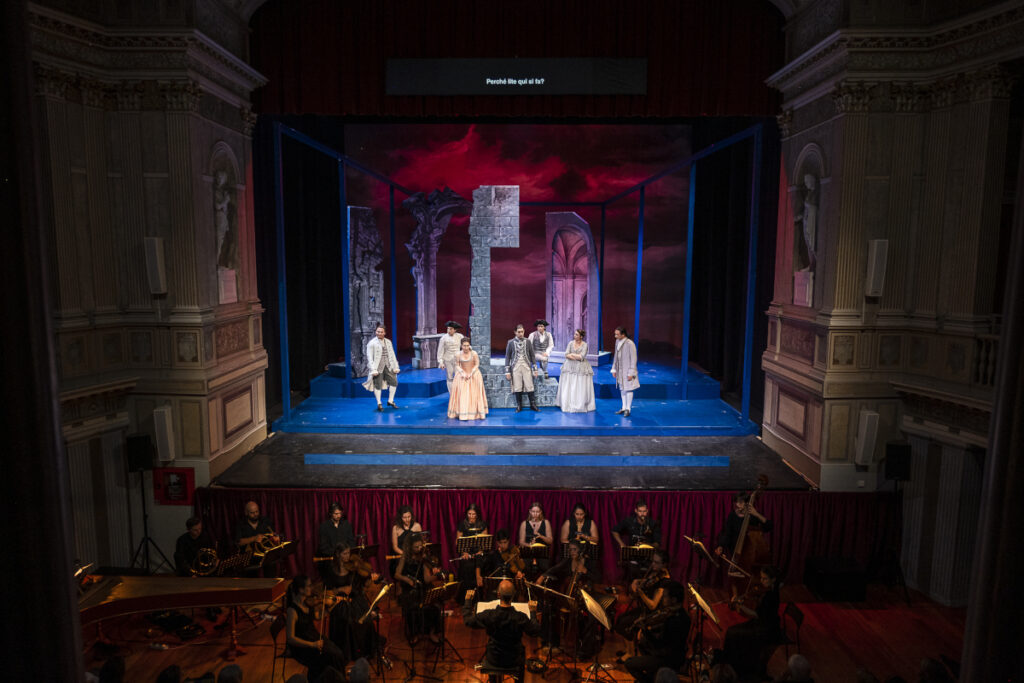
Cimarosa Theresia CPO Eleonora Bellocci

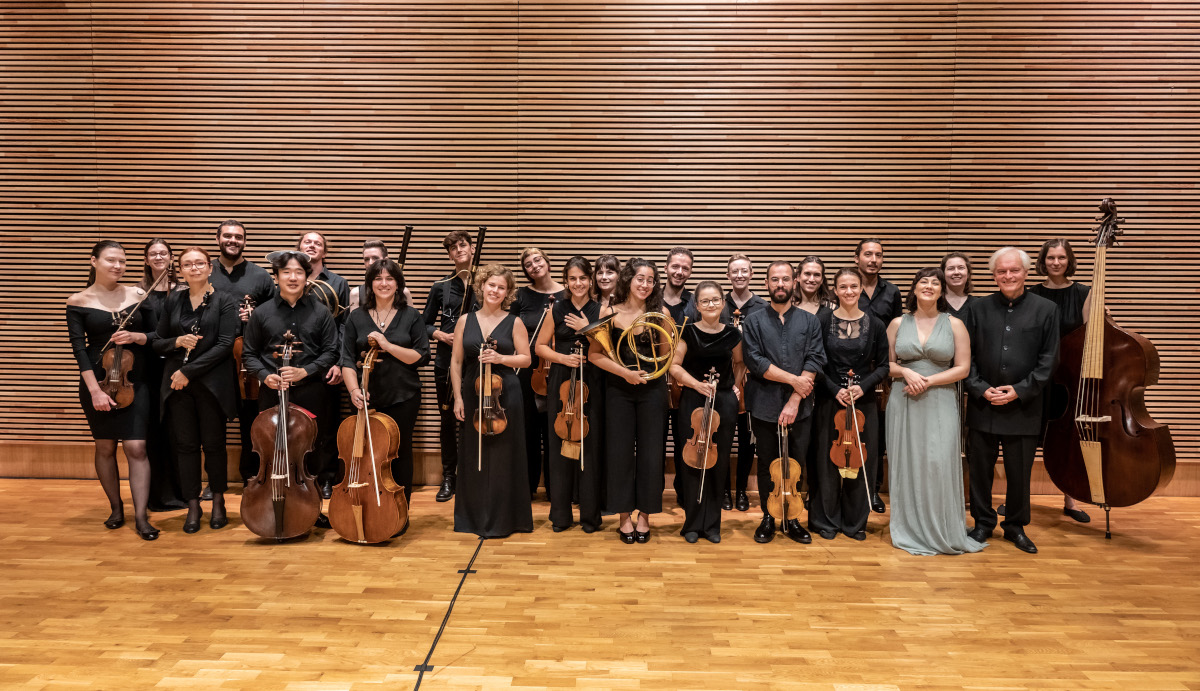
The vocal cast and Theresia Orchestra during the performance of “Le Astuzie Femminili”

What did you enjoy most about working with our orchestra?

I found great joy in collaborating with Theresia orchestra, particularly in the context of performing works from the 18th-century repertoire like “Le Astuzie Femminili.” Having both young artists in the orchestra and on stage injects the performance and this repertoire with a fresh vitality, as their enthusiasm and curiosity breathe new life into a language that may feel outdated to contemporary audiences. This aspect not only revitalizes the text, but also infuses the score with energy. Another element of richness of Theresia Orchestra lies in its diverse array of musicians, hailing from different origins and backgrounds, and each bringing a different cultural background converging into a kaleidoscopic performance.

What is your take on recordings versus live performances? Do you prefer one over the other?

I absolutely prefer live recordings: they may capture some inevitable imperfections due to their live nature, they preserve the genuine interpretation that only a performance in the theatre can offer. Take for instance Pavarotti, even recording in the studio, he insisted on performing in front of a small audience to evoke the best from himself. Basically, it is the human energy and warmth of a live performance that really make a difference!

What are the most important milestones in your career so far?

The most important moments of my career have been marked by debuts in the great operatic repertoire. These experiences always come with significant challenges and confrontations to engage with a long and rich tradition. From the Queen of the Night in Mozart’s “The Magic Flute” at the Teatro di Catania conducted by Maestro Gianluigi Gelmetti, whom I remember with affection, and Maestro Pierluigi Pizzi, to taking on the role of Gilda in Verdi’s “Rigoletto” at the Teatro Filarmonico in Verona, where I’ve been fortunate to establish a rewarding collaboration in recent years. Also, singing the role of Susanna in “Le Nozze di Figaro” at the Teatro Comunale di Bologna was another key moment. However, my career is still in its early stages and who knows what the future holds for me!

Your repertoire ranges from Baroque to Verdi: what kind of soprano are you?

I do not like to categorize artistically as I believe it can be limiting. However, I consider myself as a lyric-light soprano, which means I can’t think of singing the role of Verdi’s Aida as beyond my vocal range! Nevertheless, I believe that one must keep the door of possibilities open, respect one’s instrument and proceed calmly and patiently allowing for a natural maturation, vocal and interpretive growth over time. I love different range of repertoires, from the baroque – rich in vocal virtuosity – to the perfect musical balance of classical bel canto, and more romantic works for expressive intensity and dramatic momentum. I believe they all come together to make a complete artist.

What are your musical dreams? And tell us about your upcoming projects?

Definitely to debut many more roles from the tradition and beyond, the list is long and the space devoted to it would not be enough! But above all, I would like to maintain the curiosity and ingenuity that I put into the study of a new score, and to continue singing what is right for me for many years to come, observing how the result achieved changes and matures each time. Upcoming engagements include: my debut in the role of Zerlina in Mozart’s “Don Giovanni” at the Teatro Comunale di Bologna, soprano soloist in Petrassi’s “Magnificat” at the 86th Maggio Musicale Fiorentino Festival conducted by M° Daniele Gatti, and a my second upcoming debut as Musetta in Puccini’s “La Boheme” at the Arena di Verona conducted by M° Daniel Oren.

“Le astuzie Femminili” performed by Theresia under the baton of Alessandro De Marchi and a vocal cast composed of Eleonora Bellocci, Martina Licari, Rocco Cavalluzzi, Matteo Loi, Angela Schisano, can be purchased online or streamed on the major platforms.

Listen to “Le Astuzie Femminili” on Spotify

———

“Una teatralità spontanea, immediata e moderna”. Eleonora Bellocci parla dell’ultima uscita discografica di Theresia
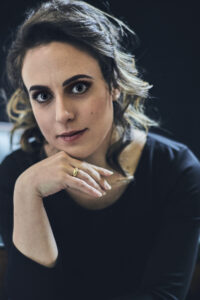
Eleonora Bellocci

Un’altra gemma si aggiunge al già ricco tesoretto discografico di Theresia: è stato recentemente pubblicato da CPO il cofanetto di due cd con la registrazione della nostra esecuzione dell’opera “Le Astuzie Femminili” di Domenico Cimarosa, andata in scena per il Reate Festival nell’ottobre 2022 sotto la direzione di Alessandro De Marchi. Per celebrare questa prestigiosa uscita discografica, abbiamo incontrato la protagonista femminile, il soprano Eleonora Bellocci.

Eleonora Bellocci, ci parli di Bellina, il personaggio delle “Astuzie femminili” da lei interpretato: che caratteristiche presenta da un punto di vista teatrale e della tecnica vocale?

Bellina è il classico esempio di soprano il cui carattere si ispira alla Commedia dell’Arte, e non è difficile trovare dei parallelismi con il personaggio di Mirandolina de La Locandiera di Goldoni: quindi una teatralità spontanea, immediata e moderna, molto divertente da interpretare. Proprio per questa ragione la vocalità è messa al servizio della parola, quindi la linea vocale si fa più declamata e schietta e non sono presenti virtuosismi o grandi melodie che invece fanno parte del repertorio serio o più tardo.

Aveva già lavorato con Alessandro de Marchi? Cosa ha apprezzato in particolare delle sue scelte artistiche e del suo modo di lavorare?

Avevo già avuto occasione di lavorare con il Maestro de Marchi ed è sempre stata una collaborazione proficua nel massimo rispetto della partitura da eseguire: esattamente questo è uno degli aspetti che apprezzo del metodo di lavoro del Maestro, oltre all’andare incontro alle esigenze del singolo cantante in termini di vocalità, espressività e tempi musicali.

Cosa le è piaciuto di più nel lavorare con la nostra orchestra?

Credo che le opere del repertorio del ‘700 come “Le Astuzie femminili” traggano beneficio dalla presenza sia in orchestra che sul palco di artisti giovani che possano infondere tutto il loro entusiasmo e curiosità nell’esecuzione. Essendo un linguaggio per noi ormai desueto c’è bisogno di una fresca vitalità per renderlo meno “polveroso” e coinvolgere appieno il pubblico. Questo aspetto è interessante non solo per il testo ma anche per la partitura musicale, e con la Theresia orchestra questo è stato possibile. Elemento di ricchezza poi è che questa orchestra raccoglie musicisti di diversa origine e provenienza ed ognuno di loro porta con sé un diverso bagaglio culturale che contribuisce ad una esecuzione caleidoscopica.

Che rapporto ha con le incisioni discografiche? Le ama o preferisce l’esibizione dal vivo?

Preferisco assolutamente le registrazioni dal vivo: magari riportano qualche inevitabile imperfezione dovuta alla presa diretta ma restituiscono la genuinità dell’interpretazione che solo un’esecuzione in teatro può dare. Non dimentichiamo che quando Pavarotti incideva in studio voleva sempre un piccolo pubblico per rendere al meglio. Sostanzialmente è una questione di energia e calore umani che possono fare davvero la differenza!

Quali sono state finora le tappe più importanti della sua carriera?

Le tappe più importanti della mia carriera corrispondono a debutti nel grande repertorio operistico perché costituiscono sempre grandi sfide e confronti con una lunga e importante tradizione del passato: dal ruolo della Regina della Notte nel “Die Zauberflöte” di Mozart al Teatro di Catania diretta dal Maestro Gianluigi Gelmetti che ricordo con affetto e dal Maestro Pierluigi Pizzi, a quello di Gilda nel “Rigoletto” di Verdi al Teatro Filarmonico di Verona, con il quale ho instaurato in questi anni una graditissima collaborazione, o ancora quello di Susanna ne “Le Nozze di Figaro” al Teatro Comunale di Bologna. Tuttavia la mia carriera è agli inizi e chissà cosa mi riserverà il futuro.

Il suo repertorio spazia dal Barocco a Verdi: lei che tipo di soprano è?

Non amo le catalogazioni e trovo difficile applicarle in ambito artistico, tuttavia essendo un soprano lirico-leggero non potrò mai pensare di eseguire il ruolo di Aida di Verdi! Ma credo che si debba lasciare aperta la porta delle possibilità, rispettare il proprio strumento e procedere con calma e pazienza affinché avvenga una naturale maturazione da un punto di vista vocale e interpretativo. Amo i diversi tipi di repertorio, dal Barocco ricco di virtuosismi vocali al più classico belcantistico per il gusto ed il perfetto equilibrio musicale fino al più romantico per l’intensità espressiva e lo slancio drammatico; credo confluiscano tutti a rendere un Artista completo.

Quali sono i suoi sogni nel cassetto musicalmente parlando? E i suoi progetti più imminenti?

Sicuramente debuttare ancora tanti ruoli della tradizione e non, la lista è lunga e non basterebbe lo spazio dedicato! Ma sopratutto vorrei continuare a mantenere nel tempo la curiosità e l’intraprendenza che metto nello studio di un nuovo spartito e cantare sempre ciò che è giusto per me per tanti anni ancora, osservando come cambia e matura il risultato raggiunto ogni volta. Tra i prossimi impegni figurano tappe importanti: debutto nel ruolo di Zerlina nel “Don Giovanni” di Mozart al Teatro Comunale di Bologna, soprano solista nel “Magnificat” di Petrassi nell’86° Festival del Maggio Musicale Fiorentino sotto la guida del M° Daniele Gatti e il doppio debutto in Musetta ne “La Boheme” di Puccini all’Arena di Verona diretta dal M° Daniel Oren.
Celebrating Earth Day: a glimpse into Theresia’s carbon offset initiatives

By Emilia Campagna - April 22, 2024
Today is Earth Day! It's a special day to mark the birth of the modern environmental movement in 1970. As we celebrate this day, we're would like to share what kind of actions we have taken to offset or reduce the carbon emissions resulting from our orchestra's activities.

Today is Earth Day! It’s a special day to mark the birth of the modern environmental movement in 1970. As we celebrate this day, we’re would like to share what kind of actions we have taken to offset or reduce the carbon emissions resulting from our orchestra’s activities. We’ve connected with Matteo Molteni, Sustainability consultant at Up2You, the specialized company that has collaborated with us to device a custom carbon offset strategy for our orchestra.

Matteo Molteni, what does Theresia’s carbon offsetting activity involve?

The carbon offsetting activity spans three years, during which we quantify the emissions stemming from musicians’ travel and consumption associated with residencies and concerts. With accurate data provided by Theresia’s management, we determine the CO2 emissions and their resulting climate impact. Using this data, we compensate by supporting natural and technological projects around the world that are certified for their high CO2 sequestration capacity.

What nature projects are part of Theresia’s offset activities?

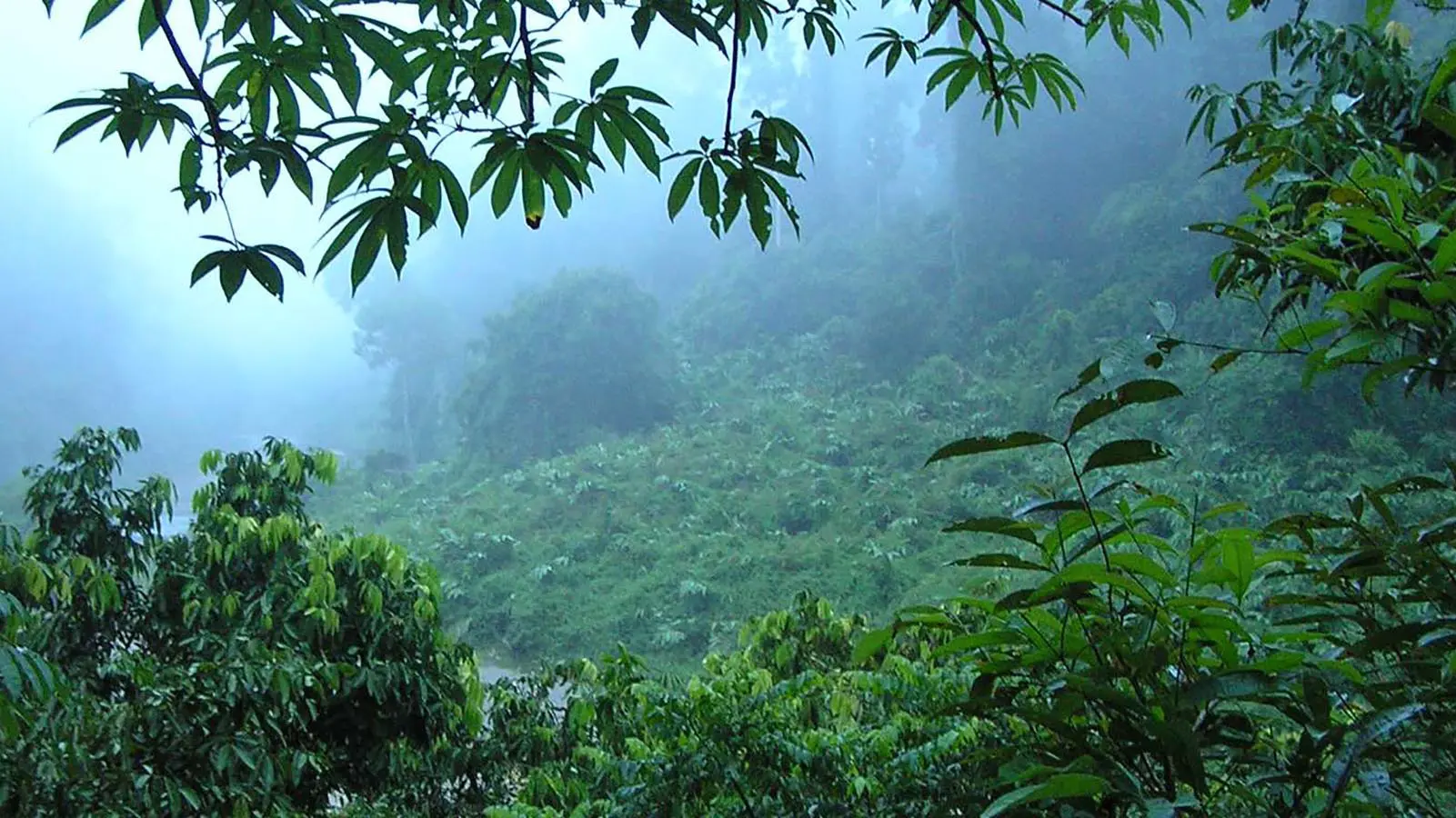
Theresia’s offset activities include two significant projects. Firstly, the Rimba Raya Biodiversity Reserve Project safeguards a buffer forest on Borneo Island, Indonesia. Positioned between a nature park and an industrial zone, it effectively limits the expansion of the industrial area. This project holds international recognition, certified by the non-profit organization Verra. Rimba Raya has garnered two additional certifications from Verra beyond the basic one: the first, CBB (Climate Community and Biodiversity), acknowledges its positive impact on the local community and the protection of endangered species, in this case orangutans. The second certification, ESD VISTA, assesses its contribution to the objectives outlined in the UN’s 2030 Agenda for Development: Rimba Raya aligns with all seventeen goals!

Rimba Raya protects 422 animal species including one of the last populations of wild orangutans in the world.

The second nature project is located in Uruguay and involves the restoration of the Guanarè Forest, formerly degraded pastureland that has been converted into a forest area. The ecosystem has not only been preserved but also revitalized. The project has earned CBB certification from Verra for its significant positive impact on biodiversity and the local community.

Guanaré Forest Plantation Project

Guanaré Forest Plantation. The project is located in the north central region of Uruguay covering an area of 20,000 hectares, annually 127 thousand tons of CO₂ are captured.

What are the technology projects?

The first projects is situated in Brazil and involves the support for constructing a hydroelectric power plant. Given that Brazil, like many other South American countries, predominantly generates electricity from coal-fired power plants, establishing a facility for producing clean energy is not economically feasible without external support. In the complete absence of national public incentives for such initiatives, obtaining international certification has facilitated access to capital, enabling the coverage of construction costs.

Inside the hydroelectric plant

Clean energy: inside the power hydroelectric plant

Finally, in China, the Heqing Solar Cooker Project supplies local communities with solar-powered cookers as alternatives to coal-fired ones. This initiative enables the production of clean thermal energy for heating, hot water, and cooking.

Up to the boiling point… The Solar Cooker allows residents to efficiently replace coal with solar energy

How long have you been working on this activity?

Up2You was founded in 2020 and has experienced rapid growth since then. I’ve been with the company since 2022, initially joining a team of 20 people. Now, we have expanded to a team of 50, marking significant growth both for Up2You and the industry as a whole. Our portfolio of projects and clients continues to expand, partly because of the willingness of some companies to integrate sustainable practices, and partly driven by a growing recognition of future regulatory obligations. 

Do you have individual customers?

We operate primarily as a business-to-business intermediary, focusing on companies interested in implementing carbon offsetting strategies, such as the ICONS Foundation. BHowever, we’ve observed an increasing number of individuals seeking information and advice from us. As part of our future plans, we are planning to develop software that would enable you as an individual to measure your own carbon footprint.

Do you have other clients in the music industry?

We have previously provided consulting services to measure the environmental impact of music events and concerts, but this is the first time we have worked with an orchestra on an ongoing basis.

How did you quantify the orchestra’s emissions, and what advice do you give Theresia’s musicians to actively reduce their carbon footprint?

Theresia produced 40 tons of CO2 in 2022 and 34 tons of CO2 in 2023: these values are not particularly high because virtuous behaviours such as using buses and trains for transportation were already in place. If trips were made by plane, the numbers would be much higher! However, there is always room for improvement and the advice is always to carefully consider the logistical aspect, such as combining several concerts in close proximity on the same tour, to minimize travel. Additionally, we recommend the use of trains as much as possible, and if car trips are necessary, to opt for car sharing as much as possible.

Get an overview of Theresia Orchestra’s ongoing offsetting activities.

Meet Theresia: Maddalena Bortot

By Emilia Campagna - April 3, 2024
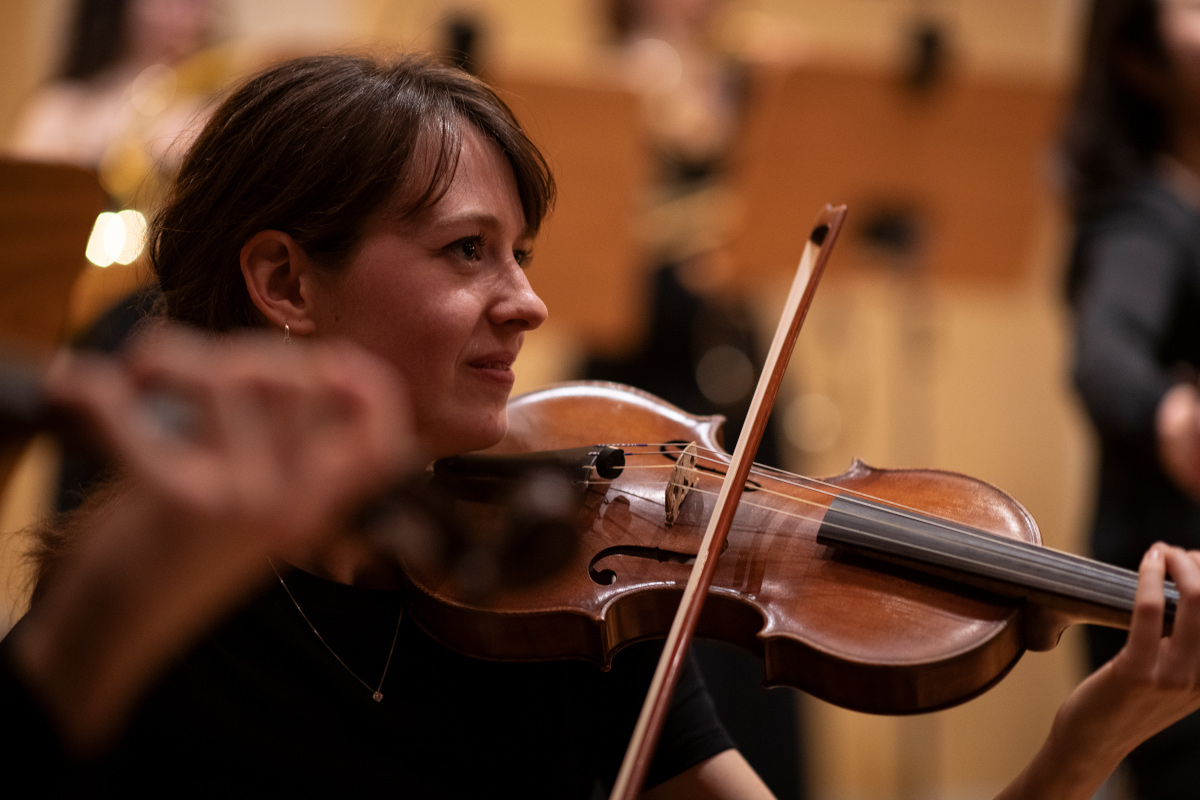
Maddalena Bortot is a young Italian violinist who recently joined Theresia. Let's find out more about her in this interview!

Maddalena Bortot is a young Italian violinist who recently joined Theresia. Let’s find out more about her in this interview!

Maddalena, tell us how you started to play the violin and how you decided to devote yourself to the period instrument.

I have been playing the violin since I was 10, although my first instrument was the guitar: but we had a violin at home and I always had it in my hand and tried to play it myself. Recognizing my passion, my parents enrolled me in a music school. At the end of secondary school I decided to devote myself entirely to music and moved to Bolzano to study at the Conservatory. I followed the three-year course for the first degree in modern violin with Paolo Zordanazzo. To tell you the truth, I immediately started poking around in everything that was going on in the Early Music department. By taking part in numerous projects, I discovered my deep affinity for the repertoire and the way I had to approach it. So upon completing the three-year course in modern violin, I embarked on another three-year course focused on baroque violin, and I am currently studying in Bolzano under Barbara Altobello.

Last January, you attended our auditions in Paris: how did you decide to take part? And how did you find out about Theresia Orchestra?

I heard about Theresia through a friend, Matylda Adamus, a cellist I met in Bolzano. She was the one who told me about the orchestra. Strangely enough, although I was born and raised in Rovereto, where Theresia has performed several times, I had never heard of it! In any case, having missed the opportunity to attend an audition, I didn’t miss it this year: it was really worth the trip to Paris!

What was it like to take part in the auditions? Apart from being selected, how would you rate the experience?

Everything was very positive. The auditions I had taken part in before just consisted of preparing a video. For Theresia, however, I first had to learn a Beethoven quartet (plus both violin parts), which was a completely different approach to playing a series of orchestral passages. In addition, the real challenge was to play with complete strangers, musicians from all over the world, communicating in a language that we all use, English, which may not be the first language for everyone: because to put a quartet together you have to talk as well as play! Finally, I also played in different ensembles, one day the first violin part, the next day the second violin part. It was really two days of full immersion! For me, it was particularly inspiring because I am still a newcomer to performing on historical instruments and it is not so common for me to have the opportunity to hear so many other young musicians live, with their different experiences and sensibilities.

Awesome. So the auditions went so well that you were selected to take part in the first residency of the year. How did it go and what was it like to work with Alfredo Bernardini?

It was a wonderful experience. I had never played the ‘Last Words of Christ’ by Haydn and I must say it was a challenge to perform. Working with Bernardini was particularly pleasant because he created such a good group atmosphere. To give just one example of his attitude, he called us all by name, which is not something you take for granted from a director. Then he managed to work us through such a demanding piece while keeping the atmosphere positive and relaxed: fatigue was inevitable, but it was accompanied by great satisfaction.

How did the concerts go from your point of view?

It is difficult to compare them because we played in very different places in terms of acoustics. In Lodi we played in a church with very generous acoustics. In Rovereto, we played in a much drier concert hall, but this did not affect the quality. Finally, in Ravenna, again in a church: in this case, the performance was more demanding because the pieces alternated with reflections by the Bishop of Ravenna, which were much longer than the readings in the first two concerts. In this case, maintaining concentration definitely proved to be more challenging.

What are your plans for the next few months?

I will be playing again with Theresia at the concerts in Slovenia in October. I also have many engagements with ensembles within the Conservatoire and with some baroque orchestras I work with such as the Ensemble Cordia and the Ensemble Labirinti Armonici from Trento which is led by Andrea Ferroni, who is my first violin teacher.

Do you have any hobbies or does music fill your days completely?

I have a few hobbies that are very important to me! I read a lot, and then I go swimming, which helps me keep in shape, as well as longboarding, which I do on the cycle paths in Bolzano: movement is essential for me to keep in shape, both physically and mentally.

You live in Bolzano, an Italian city with Austrian and German connections: do you like this dimension?

Bolzano offers a very high quality of life, a lively cultural life and the opportunity to get in touch with nature. However, I will be moving soon. If all goes well, I will be in Barcelona next semester as part of an Erasmus programme: I can’t wait! I always want to get to know new places and people to enrich my experience.

Alfredo Bernardini: “The Seven Last Words of Christ are challenging to perform, as they were to compose”

By Emilia Campagna - March 1, 2024
Next Theresia's orchestral project will be entirely focused on a very special and peculiar composition, "The Seven Last Words of Christ" by Franz Joseph Haydn. Leading the orchestra will be Alfredo Bernardini, whom we asked to introduce us to this 18th-century masterpiece

Next Theresia’s orchestral project will be entirely focused on a very special and peculiar composition, “The Seven Last Words of Christ” by Franz Joseph Haydn. Leading the orchestra will be Alfredo Bernardini, whom we asked in this interview to introduce us to this 18th-century masterpiece

Alfredo Bernardini, please, tell us about The Seven Last Words of Christ?

It is a composition for orchestra with a very special history. It is the result of a commission that was made to Haydn in 1786 by the church of the Santa Cueva in Cadiz, Andalusia, a commission with very specific requests, namely that the seven last words of Christ be set to music. The occasion was the Good Friday celebration during Easter week in 1787, and Haydn was asked to write slow movements plus an introduction and a fast finale to illustrate the earthquake that follows Christ’s death. The order letter specified that the music, while maintaining a slow tempo, should always be interesting to keep the attention of the faithful. This was an enormous challenge for Haydn, to which he devoted himself with great commitment.

How did this commission come about? Did Haydn have connections with Andalusia at the time?

In truth, no, and this fact is one of many demonstrations of the international fame of Haydn, probably the most celebrated composer of his time. Although he had worked up to that time in the small court of Estrehaza his fame was spread throughout Europe. Recall that Haydn laid the foundations for new instrumental forms, such as the Sinfonia, and in Italy, for example, his music was copied and thus spread widely. His fame reached even such remote and mundane places as the Church of the Santa Cueva in Cadiz: we can imagine how much difference there was at the time between Andalusia and the Vienna region.

Did Haydn succeed in keeping variety within a series of slow movements?

Absolutely. The score has a lively alternation of melodies, orchestration, instrumental colour, a great variety of dynamics and phrasing. Haydn was so pleased with the work that he later made three transcriptions of it for as many ensembles: for string quartet, for piano and also an oratorio for choir and orchestra.

You said this was a challenge for the composer: is it also a challenge for the performers?

It is certainly very delicate music, full of details, with great richness in articulation and dynamics. The greatest difficulty in the case of a series of slow movements concerns intonation: the instruments are very exposed and anything out of place is more easily noticed. Fast movements require a certain degree of virtuosity, but things go by quickly…. Then it must be said that the very delicate technical aspect is only one side of the effort, in the performance the expressive side must come out, which is very developed and important.

The performance is accompanied by the reading of excerpts from the Scripture and reflections: what is the relationship between the music and the text?

The relationship is very intense, starting with the phrases that are taken from the four Gospels and that Haydn had published at the beginning of each piece. The music is intimately connected to the meaning of the text and invites meditation. For example in the case of the second piece, which is introduced by the phrase “Truly I tell you, today you will be with me in paradise,” the music is charged with a special light, while in the fourth number, introduced by “My God, my God, why have you forsaken me,” Haydn uses a minor key and a particularly dark color.

As a performer, when and on what occasion did you first play The Last Seven Words of Christ on the Cross?

It was several years ago, at the beginning of the 1990s! The occasion was a series of concerts, later followed by the release of a CD, with Jordi Savall’s orchestra “Les Concert de les Nations”. I must confess that I did not know the piece at the time, and it was a thunderbolt for me. Jordi Savall, on the other hand, had loved this composition since childhood and had always had a great desire to perform it. It was one of the first musical programs with which Savall began to explore the classical repertoire for orchestra. For all of us it was a great musical experience with a strong spiritual impact.

Theresia will perform “The Seven Last Words of Christ” by Franz Joseph Haydn under the baton of Alfredo Bernardini on three different occasions: Tuesday 12 March in Lodi (Chiesa di San Francesco), Wednesday 13 March in Rovereto (Sala Filarmonica), and Thursday 14 March in Ravenna (Basilica di San Giovanni Evangelista).

Vanni Moretto on the release of Theresia’s new CD on Ernst Eichner

By Emilia Campagna - February 28, 2024
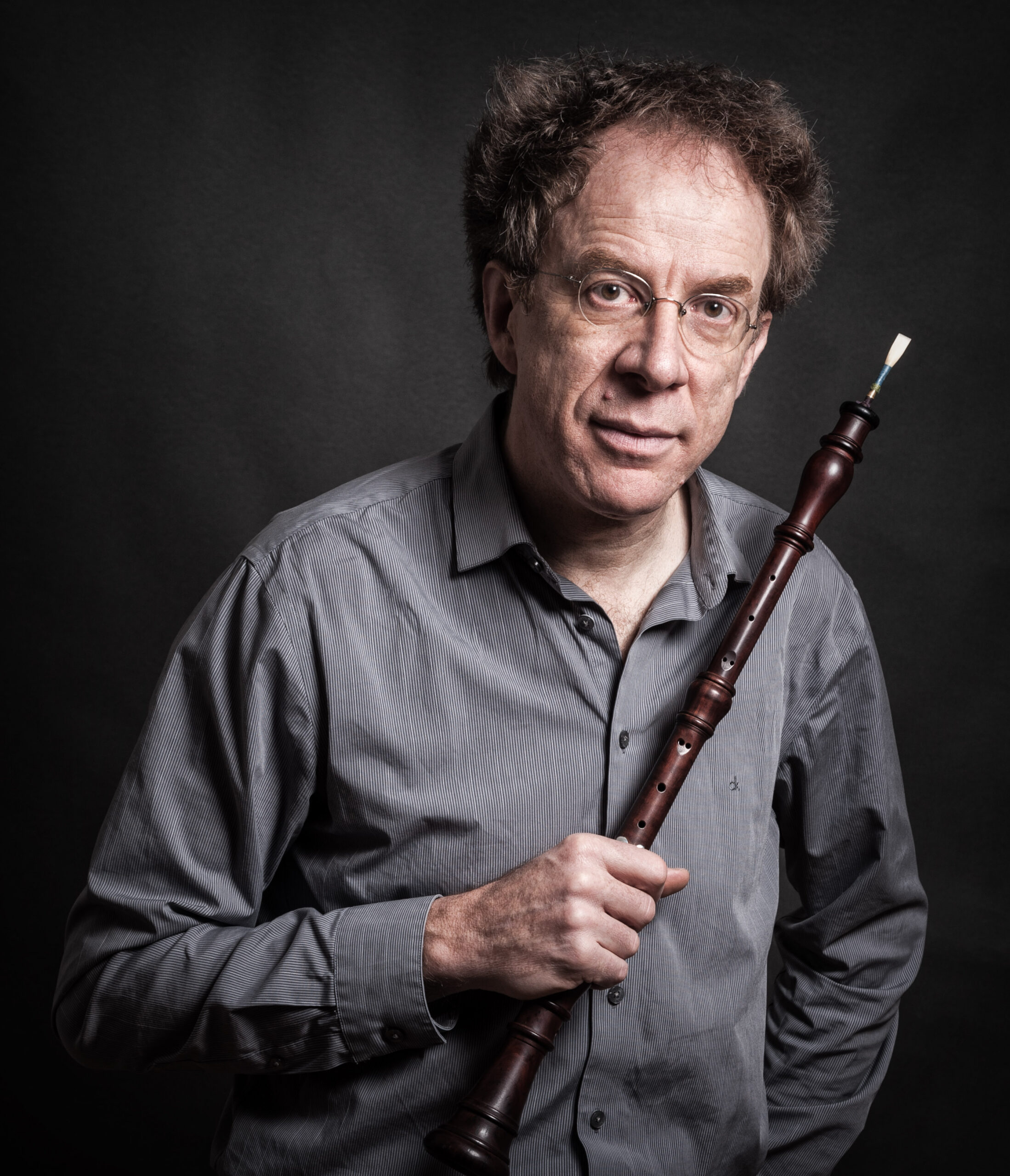
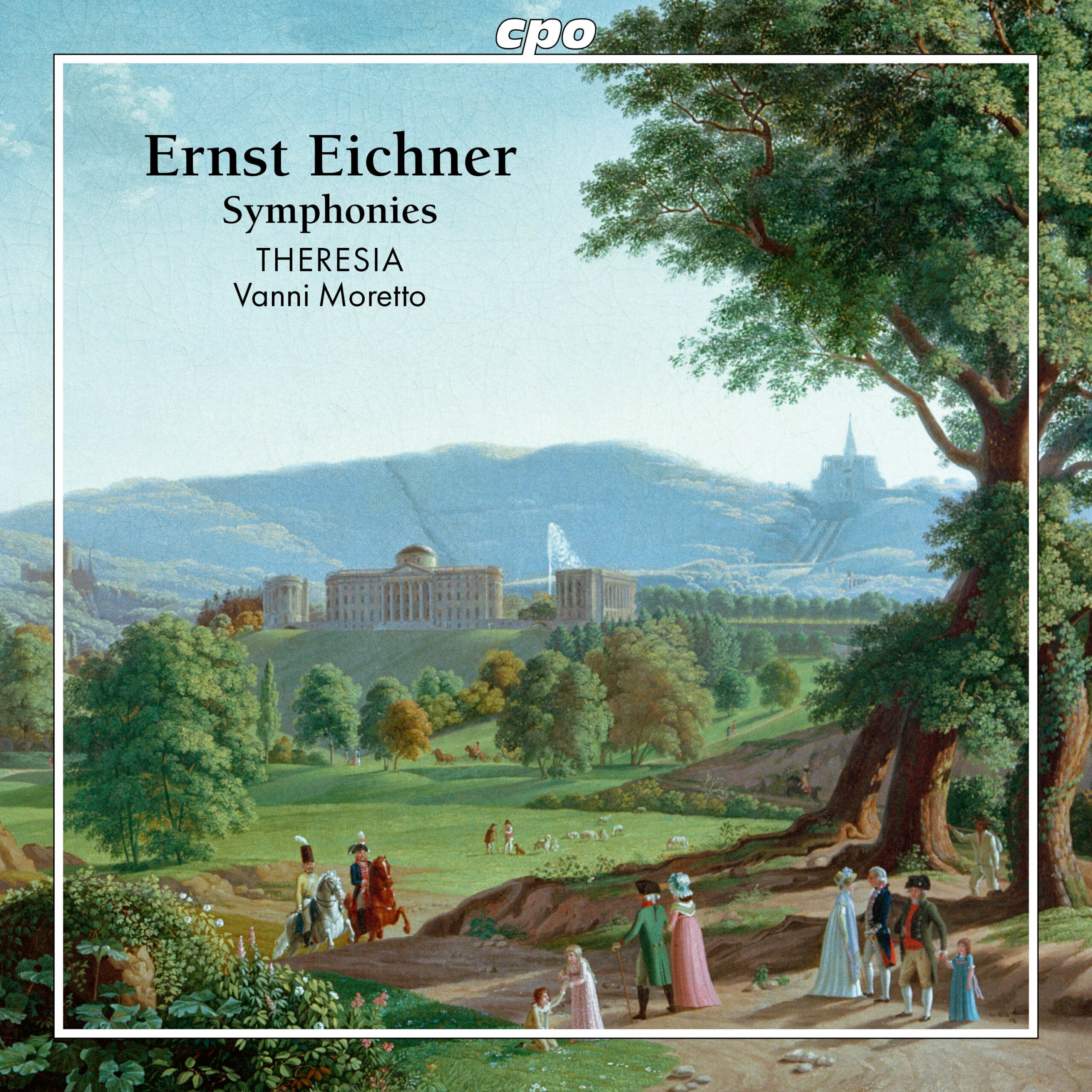
Theresia has just released a new CD on the CPO label: a recording of Ernst Eichner's Symphonies conducted by Vanni Moretto.

A new CD has just been released on the CPO label: Theresia’s recording of Ernst Eichner’s Symphonies conducted by Vanni Moretto, whom we had the pleasure of interviewing briefly.

Vanni Moretto, what is the significance of this release?

For me, it is a very important recording because it offers an opportunity to rediscover the music of a forgotten composer. During his lifetime, Eichner was a great bassoonist and violin virtuoso, and that is what he was primarily recognised for. Although his fame as a virtuoso was substantial, it complicated the later reception of his compositions. Unlike his more widely recognized composer colleagues in Mannheim, Eichner’s legacy was overshadowed, leaving a fainter imprint on musical history.  What’s more, and we don’t think about it today, but at that time instrumental music was a subordinate genre compared to opera. As Eichner focused on a genre that was less emphasized, his name fell into oblivion after his death.

What is the musical program on the CD?

The CD contains four symphonies from as many opus, i.e. collections published with an opus number. This was common practice at the time, and we must remember that an increasing opus number does not guarantee a chronological sequence: composers would publish when they had the opportunity, perhaps bringing back scores written earlier and not yet published. In the case of Eichner, who has a very short compositional span, this is not a problem because his style remains very homogeneous and coherent.

How did you choose the four symphonies?

In my view, the symphonies selected from op. 11, op. 10, op. 1, and op. 7 are particularly representative of his style. Prior to initiating this project, I conducted a survey of the existing Eichner recordings on the market (which, truth be told, are quite scarce) to ensure that I wouldn’t duplicate programs already covered by others.

In a previous interview you described yourself as an explorer, even a miner of early music: how and when did you discover Eichner?

I stumbled upon him, as I often do, by chance. Libraries are my goldmines; when I study a composer, I follow paths in search of all sources, both literary and musical. Around 2009, while studying Francesco Zappa, I discovered that he and Ernst Eichner had been published in common collections. Later on, I found him again by researching musical incipits, discovering that there are similarities between incipits of compositions by Eichner and Mozart, with apparent quotations from Mozart, which shows us that both were looking for common musical archetypes. I grew fond of this composer, and when talking with Mario Martinoli, Artistic Director of Theresia, I found out that he also was familiar with him and shared my interest in Eichner. That’s how the idea came about of working together on a recording project.

In a world where the consumption of music has changed a lot, what is the importance of recording and releasing CDs?

I have a very complex relationship with recording, and am always struggling between being diplomatic and completely sincere. Recording music is to me is an ever-evolving phenomenon, the nature of which is now completely different from what it was in the early days. Initially it was recorded to faithfully document a musical performance, now if we ask a sound engineer to simply “document,” it is likely that they will be offended. Technology has allowed us to intervene in the recording to the point of bordering on perfection, but it is a utopian perfection that makes the CD light years away from the experience of live listening, in which it is normal to hear small errors, or smudges. After all, recording allows us to spread the repertoire and reach an audiences far and wide. Nevertheless, for me there remains the fact that it cannot replace the experience of a live performance, which is unique for both listeners and performers. Any musician knows the energy that may or may not come from the audience: in the concert hall, something unrepeatable, unique and certainly unrecordable is created.

What musical gems does your treasure trove hold for us? Can you share any insights into your upcoming projects?

I am planning to resume my project on Francesco Zappa and Frank Zappa in a concert with a “pop” angle in which music by both of them will be performed. I will then be engaged with the Stockholm Chamber Orchestra, which I will conduct in a programme that brings together the music that travelled from Milan to Sweden in the 18th century, performing compositions by Chelleri, Antonio Brioschi, and Sammartini. Finally, a commitment as a composer also awaits me: my third “important” opera, commissioned by the Austrian Capital of Culture 2024, will be staged. It is Der Wassermann vom Grundlsee, on a libretto by Stefano Pintor, a reinterpretation of an ancient legend about the discovery of the regional salt deposits by the merman of Grundlsee lake. It will be particularly fascinating site because it will be an open-air performances on the shores of Lake Grundlsee.

“Ernst Eichner: Symphonies” is available for purchase and online streaming here.


Elisabeth Schmid on joining the New European Bauhaus initiative

By Emilia Campagna - February 8, 2024
The ICONS Foundation has recently joined the New European Bauhaus Initiative, a European project that will have interesting implications for our orchestra's activities. We interviewed Elisabeth Schmid, Grant Office Director at ICONS, to find out more.

A new opportunity is on the horizon, which promises to involve our orchestra actively. Recently, ICONS Foundation joined the New European Bauhaus initiative as an official partner. The foundation that manages, develops and supports our orchestra is a leading non-profit organisation operating in the field of science communication, developing large-scale cultural projects.

We asked Elisabeth Schmid, Grant Office Director at ICONS, to tell us more about this initiative:

The New European Bauhaus serves as a link between the worlds of science and technology, arts and culture, aligning seamlessly with ICONS’ core activities. Joining the NEB network is a terrific opportunity for active involvement in shaping a more sustainable and inclusive Europe and pursue our values of beauty and culture.

Elisabeth Schmid, what is your role at the ICONS Foundation?

As the European Grant Office Director, I focus on developing new project ideas across various research and cultural domains and establishing European-level partnerships. I identify suitable open calls and funding opportunities, aligning them with ICONS’ expertise in science communication, business, and social innovation.

I seek out those opportunities for collaboration with stakeholders whose goals align with the values and mission of our foundation. Working with universities, companies, public authorities, civil society organisations and many others, we collectively aim to meet project scopes and anticipated outcomes from calls. All our project proposals aim to implement existing European policy agendas and future strategies contributing to a more sustainable, inclusive and liveable Europe, while preserving our culture and values. In my job, it is fundamental to maintain and expand  ICONS Foundation’s network to enhance collaboration and cross-fertilize knowledge, practices, and strengthen human capital, a key element of our mission.

What is the New European Bauhaus initiative and when did it start?

Launched by the European Commission in 2020, the New European Bauhaus initiative is a creative and interdisciplinary movement to rebuild a more sustainable and inclusive Europe. This initiative connects the European Green Deal to our daily lives, living spaces and experiences. Inspired by the German art school of the early 20th century, it integrates art, culture, and science to expresses the EU’s ambition for a sustainable and inclusive future.

Why has ICONS joined the NEB initiative?

ICONS Foundation’s commitment to science communication, business and social innovation, aligns perfectly with the NEB’s values of beauty, sustainability, and togetherness. Our daily work in making research and innovation accessible to all through awareness campaigns, social engagement strategies, co-creation processes, and roadmaps to facilitate the adoption of research results for the benefit of society at large, meet the NEB mission of inclusiveness (together). Sustainability is a key focus in the many projects ICONS is involved in addressing social, economic and environmental challenges and develop new solutions. ICONS is commitment to musical and philanthropic initiatives that emphasise societal impact and cultural excellence. By actively fostering artistic talents, managing and supporting international youth orchestras of early music such as Theresia Orchestra and the European Union Baroque Orchestra, we align with the NEB mission of promoting beauty.

In short, the NEB is perfectly summarises the Foundation’s spirit, and we are ready to support its intrinsic values. That’s why we decided to apply to the NEB initiative, and we have now officially become partners, together with many other non-profit organizations in Europe. Each partner has a role to help build, inspire, and act as key interlocutors for the initiative.

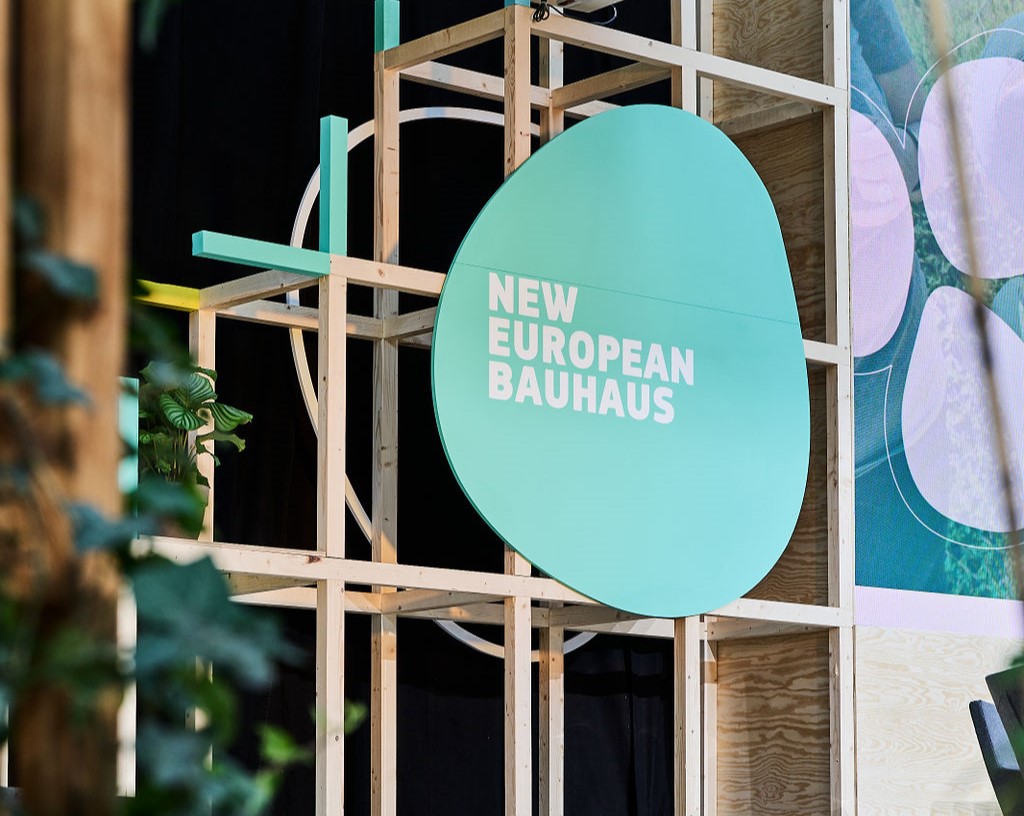
New European Bauhaus

“The New European Bauhaus Initiative is a creative and interdisciplinary movement for rebuilding a more sustainable and inclusive Europe”

What kind of projects does ICONS Foundation intend to carry out as part of the New European Bauhaus initiative?

ICONS’ experience in enhancing human capital, fostering intangible assets, and promoting philanthropic endeavours can significantly contribute to increase awareness and engagement around the New European Bauhaus. In 2021 ICONS successfully applied to the first round of Horizon Europe NEB-inspired calls and since 2022 we work on one of the first five NEB Lighthouse projects: Eyes Hearts Hands Urban Revolution.

As President Ursula von der Leyen said on occasion of launch of these new projects, they “[…] should become the starting point for a European and worldwide network of New European Bauhaus projects”. We feel somehow part of this first cornerstone, which set the path for an increasing social engagement with the NEB movement. Moreover, the Foundation is coordinating the Creative Europe EMPOWER project, further merges arts with sustainability, co-design and investing in the development of young talented professional musicians’ soft skills, which again are fully in line with the NEB spirit.

More recently we have joined new projects connected to NEB and are currently working on new research and cultural proposals inspired by NEB values , hoping they will soon turn into real projects.

What impact does ICONS expect from its participation in the New European Bauhaus initiative?

The participation in the NEB initiative enables ICONS to expand its network and reputation as a key player at European level. The NEB platform supports networking, community building and knowledge sharing, for which it will be possible to find and establish new partnerships with entities and communities aligned with NEB values to get involved in the development of new research and cultural projects. ICONS can intrinsically be considered as a natural ambassador for NEB, its involvement inspires our team but also resonates with those we engage with. Being a supporter and partner of such a movement will also inspire our team and the people we are getting in touch with. We should all be aware that we are contributing to building on a sustainable and inclusive future together through our daily efforts.

How do you think the New European Bauhaus initiative will influence the music projects supported by ICONS?

The Foundation’s support and management of of a unique system of international youth orchestras playing on period instruments – Theresia Orchestra and the European Union Baroque Orchestra – will continue to pursue the NEB values of beauty and culture and work in a new European movement that is gaining more and more attention in Europe and beyond, also thanks to the European Commission’s promotion of and commitment to the NEB initiative.

The New European Bauhaus platform is facilitating the engagement with many different cultural realities and organisations working both at a local and European level. It demonstrates inspiring projects and opportunities in which also the music projects supported by ICONS can find a place to join, sustain or cooperate with already existing or new cultural events, initiatives, festivals and campaigns. The network also gives substantial communication support to publish and promote events e.g. via their official Instragram account to increase outreach and engagement. Each year, the New European Bauhaus Festival is organised to celebrate its core values, which represents another opportunity for creative projects involving our two orchestras.

Explore the New European Bauhaus platform or visit ICONS Foundation’s website to find out more about their impactful projects.

Eight new members join us after auditioning in Paris

By Emilia Campagna - February 1, 2024
Welcoming eight talented young string players who will join the ranks of Theresia following our recent auditions in Paris.

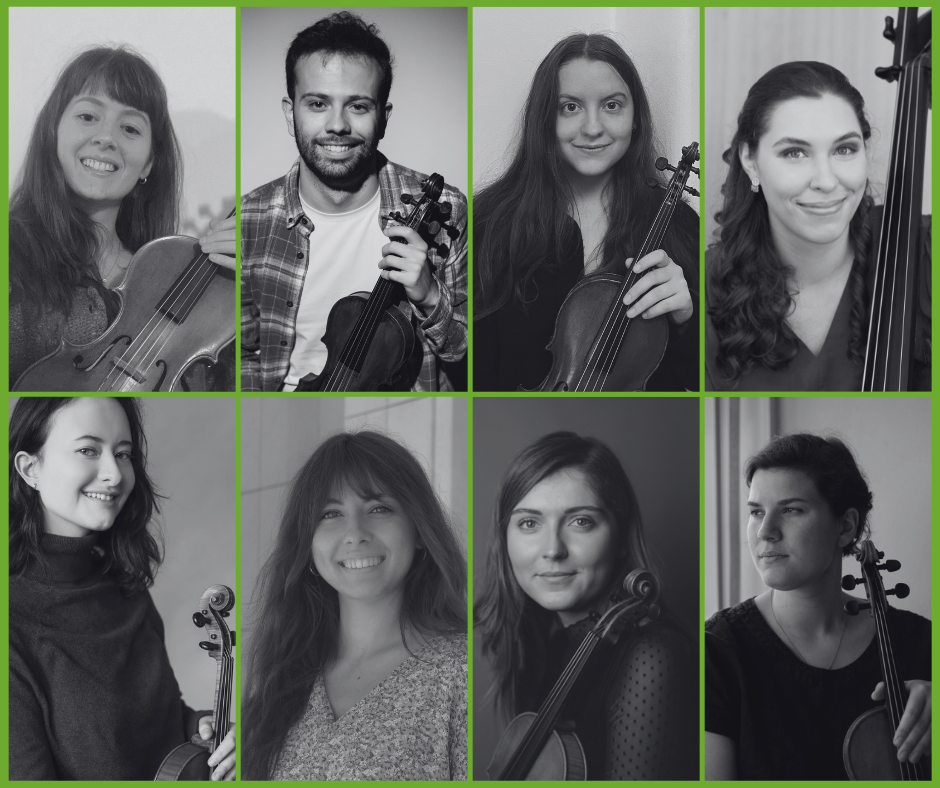
With great enthusiasm, we are pleased to introduce eight talented young musicians who were carefully selected during our recent round of auditions held exclusively for historically informed string players in Paris. Without further ado, let us extend a warm welcome to the following new members joining the ranks of Theresia Orchestra:  Ariel Walton, an American double bass player from the Royal Conservatory of The Hague; Spanish violist Clara de Benito Forriol, from Escola Superior de Musica de Catalunya, Barcelona; and six violin players from various institutions — Italian Maddalena Bortot from the Conservatorio Claudio Monteverdi in Bolzano; Anna Freer, an Australian/Swiss talent from the Zürcher Hochschule der Künste; Italian Lorenzo Molinetti from Musik-Akademie Basel; German Anna Perl from the Universität für Musik und darstellende Kunst Wien; Camille Poirier-Lachance, a Canadian violinist from the Conservatorium van Amsterdam; and Jenna Raggett, an Irish musician hailing from the Royal College of Music and Royal Irish Academy of Music.

These eight new members were selected from a total of 38 applications, from which 14 candidates were invited to audition and showcase their skills in person at the Conservatoire de Boulogne-Billancourt in Paris on January 19 and 20. The focus point of the auditions was a musical workshop around Beethoven’s String Quartet No. 4, Opus 18. Candidates were also invited to articulate their motivations during comprehensive interview.

For the first time, Giovanni Antonini was on the jury, continuing an important collaboration that has already resulted not only in the renowned conductor leading our orchestra, but also in the apprentice project which saw four Theresians joining the ensemble Giardino Armonico on tour last Summer. Throughout the audition process, candidates worked closely with both Giovanni Antonini and Gemma Longoni, Theresia’s tutor and concertmaster, to explore Ludwig van Beethoven’s Quartet Op. 18 No. 4, both individually and as an ensemble. This innovative audition approach allows us to gain a deeper understanding of the musical qualities of our candidates, placing a special emphasis on their collaborative skills and ensemble work. Additionally, we are pleased with the constructive nature of the audition experience. Even for those who may not advance beyond the audition phase, the process provides a valuable addition to their educational background, ensuring every participant comes away with something meaningful from the experience.

All eight new members joining Theresia now, will participate in most of our projects for 2024 . Some are already gearing up for our upcoming residency in Italy, focusing on Haydn’s orchestral work for Easter: The Seven Last Words of Christ. 
For future auditions, always keep an eye out on our socials or website for updates on upcoming round. Or, why not sign up for our newsletter to be among the first to receive the latest information?

ICONS foundation partners with Mozart Ways to begin an extraordinary new journey

By Emilia Campagna - January 23, 2024
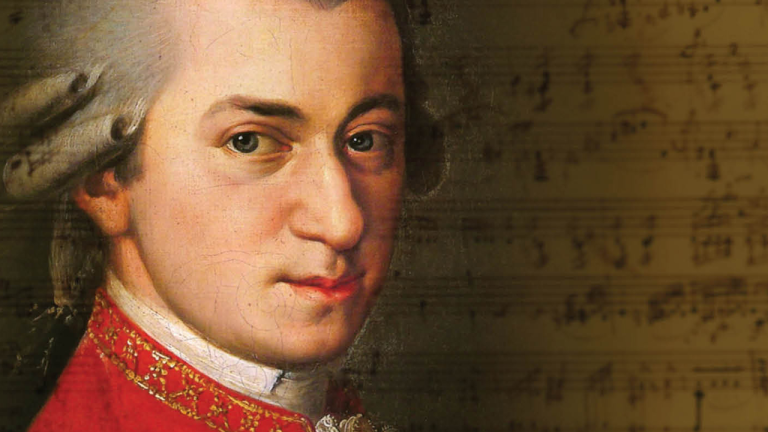
All roads lead to Rome, they say. However, some lead to... Mozart. Today we like to tell you about Mozart Ways, an extraordinary network that brings together cities and cultural institutions associated with the great composer from Salzburg.

All roads lead to Rome, they say. However, some lead to… Mozart. Today we like to tell you about Mozart Ways, an extraordinary network that brings together cities and cultural institutions associated to the great composer from Salzburg. Fondazione ICONS has recently become part of this distinguished network, an official Cultural Route of the Council of Europe. Mozart Ways was established in 2002 through the initiative of the City of Salzburg, which played a crucial role in coordinating joint endeavours in planning the major celebrations commemorating the 250th anniversary of Mozart’s birth, which took place in 2006.

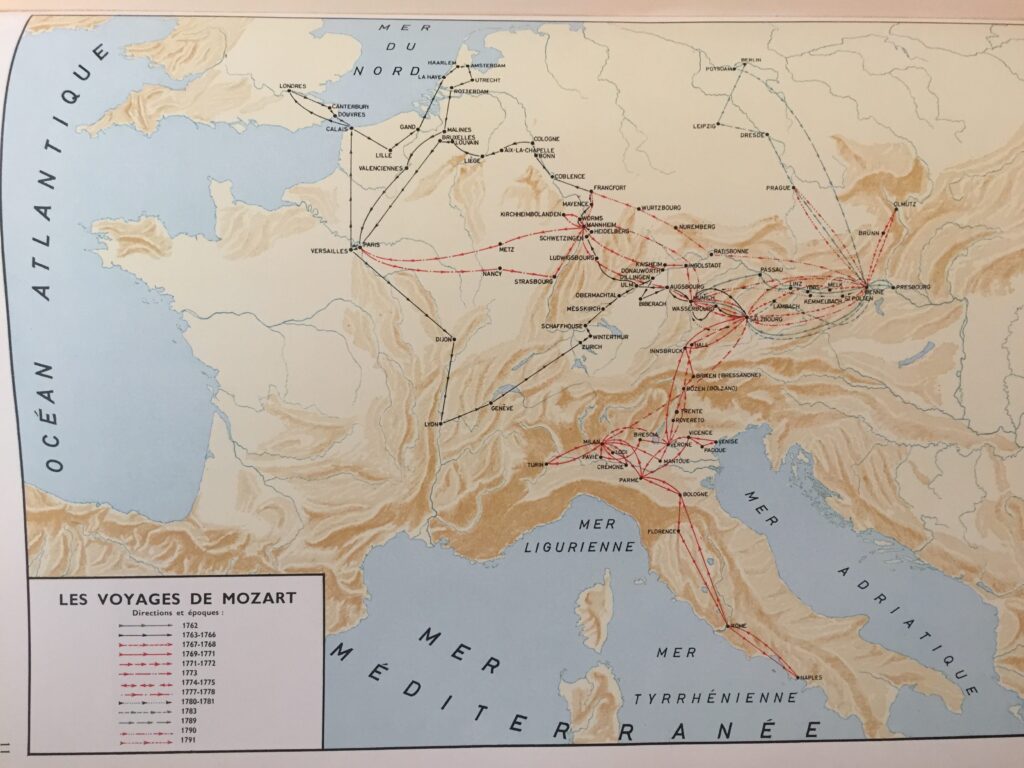
As you can read below, Mozart visited numerous European cities during his travels: while the complete list is too extensive to include here, you can find full details on the Mozart Ways website. Essentially, each of these European cities has a musical legacy associated with Mozart in some way. The purpose of the network is to enhance this legacy by fostering connections, promoting initiatives inspired by and named after Mozart, and providing support, particularly in the realm of cultural tourism.

Mozart’s travels

Mozart was an incredible composer, but he was also a great traveller.  He travelled from an early age with his family mainly to improve his education, to meet the great musicians of his time, and to promote his own compositions. Let’s take a quick look at some of his most important journeys.

Mozart Ways - The full map of Mozart's travels in Europe

The full map of Mozart’s travels in Europe as reported in the “Atlas historique de la musique”

A family trip

Mozart’s first journeys in 1762 were relatively short, at least by today’s standards: from Salzburg to Munich, and from Salzburg to Vienna. In 1763, the entire family of Leopold Mozart, his wife Anna Maria, and their two child prodigies, Maria Anna (Nannerl) and Wolfgang, set out on a Grand Tour of Europe. At the start of that journey, the children were eleven and seven years old, respectively. The first leg of the tour took the family via Munich and Frankfurt to Brussels, and then on to Paris, where they stayed for five months. They left then for London, where they stayed more than a year, and where Wolfgang made the acquaintance of some of the leading musicians of the day, heard lots of performances, and composed his first symphonies. The family moved on towards The Netherlands, where the performance schedule was interrupted by illness of both children, although Wolfgang continued to compose prolifically. The homeward journey included a second stop in Paris and a trip through Switzerland before the family returned to Salzburg in November 1766. The entire journey took three years!

Trips to Italy

Between 1769 and 1773, the young Wolfgang Amadeus Mozart and his father, Leopold, made three trips to Italy. The first trip, spanning 15 months, was an extended tour financed by performances for nobility and public concerts, leading them to the most significant Italian cities. The subsequent two trips centred on Milan, where Wolfgang fulfilled commissions for operas initiated during their first visit. In terms of Wolfgang’s musical development these journeys proved remarkably successful, as his talents were recognised through prestigious accolades such as a papal knighthood and memberships in leading philharmonic societies.

The first of Mozart’s three trips to Italy was the longest and took him all the way to Naples, passing through numerous cities including Verona, Milan, Lodi, Turin, Mantua, Bologna, Florence, Rome.

Heading North

In the early spring of 1789, Wolfgang Amadeus Mozart embarked on one of the most extensive journeys of his adulthood, exploring a several cities north of his adopted home in Vienna, including Prague, Leipzig, Dresden, and Berlin. Sadly, the trip took place at a difficult time in Mozart’s career, when he was no longer earning much money from concerts, and his income from composing operas had not made up the difference. He was borrowing money from friends, and his financial situation was very worrisome.

A unique network

As a Mozart city, Lodi is now fully part of the Mozart Ways thanks to Fondazione ICONS, which represents the city in the network. Our membership was warmly recommended by Maria Majno, chair of Mozart Ways, and also chair of SONG, an important initiative for music dissemination in Lombardy.

ICONS Foundation membership enriches the strong representation of Italian institutions and cities by joining Milan, Bologna, Rome, Turin, Padua, Rovereto and many others. We are only at the beginning of this extraordinary journey full of potential. We already look forward to telling you about the benefits coming from this new partnership.

Theresia’s plans for 2024: ongoing projects and new collaborations

By Emilia Campagna - January 18, 2024
It is time to take a glance at the new projects and programmes in the upcoming year. We've sought insights from Mario Martinoli, Artistic Director of Theresia and the visionary Founder and Co-chair of Fondazione ICONS, to give us a preview of Theresia's plans for 2024.

What lies ahead in 2024? After retracing the most important initiatives that shaped the past year, our gaze naturally turns to the new projects and programmes in the upcoming year. We’ve sought insights from Mario Martinoli, Artistic Director of Theresia and the visionary Founder and Co-chair of Fondazione ICONS, to give us a preview of Theresia’s plans for 2024.

“After the whirlwind of activities last year, when we played so much, we’ve made a conscious decision to take things a bit slower in 2024. Our aim is to return to a pace that is more like our pre-pandemic activities! This decision is couple with the notable development of EUBO joining ICONS, which has increased our organisational efforts significantly. Moreover, the outlook for 2025 is already promising to be an exhilarating and particularly busy year when we have engagements lined up in Germany and Poland as significant highlights on our calendar. 

The first residency of 2024 will be taking place in Lodi, the hometown of our Foundation: the musical programme is focusing on Haydn’s “Seven Last Words of Christ on the Cross”, conducted by Alfredo Bernardini. After the first concert in Lodi, we are happy to return to the two friendly cities of Rovereto and Ravenna for further concerts. 

Another nice return, I would even call it a tradition, is our July residency in Geneva. This time we are set to perform Beethoven’s Second Symphony in a chamber music transcription, conducted by Chiara Banchini. This venture is part of a wide-ranging project: extending our performances of the Sixth and Seventh Symphonies. Our goal is to study and perform all transcriptions of Beethoven’s symphonies, an artistic endeauvour of which our host festival, Les Concerts d’été à St-Germain, is exceptionally supportive.

Theresia has consistently provided a blend of ongoing projects and never-ending innovation: will there be new collaborations in 2024?

Absolutely! The brilliant and accomplished conductor Enrico Onofri will conduct our orchestra for the first time in a project we entitled “Mozart Alpha and Omega”: the musical programme includes various works by Mozart, featuring Symphony No. 1 and Symphony No. 41 among others. The residency is planned for October in Ravenna, with concerts scheduled both in Ravenna and Nova Gorica, Slovenia.

On a different note, a consistent highlight in recent years has been the annual opera production with the Reate Festival: will this collaboration continue in 2024?

Yes, it will. In October, we will return to Rieti and Rome for a new production of Giuseppe Gazzaniga’s “Don Giovanni” under the direction of Alessandro De Marchi. While everyone knows the title very well, the composer is relatively unknown today. It is intriguing to rediscover this opera, written in early 1787, only a few months before Mozart’s “Don Giovanni” which dates from the same year. Interestingly, it seems that Da Ponte, the librettist for Mozart’s opera, attended the successful premiere of Gazzaniga’s opera in Venice, drawing inspiration for the libretto he would later be invited to write for Mozart’s acclaimed opera.

I believe you’re not only working on music productions but on other projects that will enrich Theresia’s activities too. The latest is Fondazione ICONS joining Mozart Ways – could you tell us more about that?

Mozart Ways is the network of cities associated with Mozart, – those where Mozart resided or visited during his travels. Although Lodi holds its own place as a Mozart city, it has not been part of this network until now. As a Foundation, we are very happy that this is now happening, and anticipate that our inclusion will expand and strengthen our collaborations. Mozart Ways is not the only network we’ve become part of:  Fondazione ICONS is now also an official partner in the New European Bauhaus, a network supported by the European Commission, dedicated to fostering initiatives that are both “enriching, sustainable, and inclusive.” For us, this represents a challenge to amplify our creativity, aligning with the musicians’ desire to experiment, which we have seen and proven to be a key motivator for those who join us. 

Stay tuned to the blog for upcoming insights into these two significant new collaborations, and keep following us: 2024 is evolving into another year of satisfaction and musical excitement of the highest order!

Concerts, travel, recordings… A look back at the cool and new things that 2023 has brought us

By Emilia Campagna - December 28, 2023
At this time of the year, we take a look back reflecting on the highlights of 2023 in concerts, travel, and recordings.

For many of us, this is our favourite time of year: the holidays are approaching, we’re spending time with family and friends, and the New Year is about to begin, with its promise of a fresh start. This is also the time of year when we look back on the past twelve months and take stock of our accomplishments. We do this every year too, and we do it with great pleasure, because looking back always gives us a great deal of satisfaction.

In constant renewal

Even as our passion lies in performing classical music repertoire according to historically informed practice – something deeply rooted far back in time – you know we are eager to renew ourselves. We like to play music we don’t know, discover hidden gems, visit new places, and expand our network of collaborations.

Almost each of the 2023 projects brought the thrill of “firsts”: let’s look at these moments together in the light of novelty and discovery!

Many new things at the start of the year

This wonderful 2023 started off with an orchestral project led by conductor Giovanni Antonini: do you remember? We were in Ravenna, Rovereto and Florence playing Beethoven with the excellent soloist, Dmitri Smirnov, for the Violin Concerto. Well, let’s stop there for a moment, as there are already so many new things here that my head is spinning. First of all, a conductor who is leading us for the first time, sharing his long experience to enrich our orchestra; secondly, a young virtuoso who literally electrified us; and finally, performing Beethoven (the Eighth Symphony in addition to his Violin Concerto). This meant, we got to expand our repertoire in an important way. As Giovanni Antonini explains well in the interview published on the blog, “it must be said that a remarkable technical leap was taken by Beethoven: his music was extremely difficult at the time, specifically because of its technical complexity, which often had to do with the required dynamics. Beethoven was the first composer to demand such a high degree of intensity from the orchestra, which was truly unheard of in those days. Taking on Beethoven is quite a challenge and also an opportunity for both technical and musical growth.”

Dmitry Smirnov: “Gut strings taught me a great deal”

Giovanni Antonini and Beethoven as you do not expect

An expanding network of collaborations: new opportunities for Theresians

An exciting development is our collaboration with Il Giardino Armonico as the ensemble offered to host four of our musicians on a European tour. The operation was so successful that both parties have expressed interest to continue this apprenticeship programme.

Musicians involved this year were violinists Lucas Bernardo da Silva, Guillermo Santonja Di Fonzo, Natascha Pichler, and cellist Matylda Adamus. They embarked on a European tour to perform Haydn’s The Seasons led by Giovanni Antonini at prestigious venues in Lucerne, Bonn, Bremen, Wroclaw, Antwerp, Bucharest. Three of the performances were broadcast on national radio, and the Wroclaw performance was also filmed for MezzoTV, reaching an even wider audience.

Working with Giovanni Antonini also meant expanding on our network of collaborations and benefitting from his connections. We treasure his interest in our orchestra by involving Antonini in our upcoming auditions in Paris in January where he will be part of the selection committee.

Our cellist Matylda Adamus has written a passionate account of the experience of touring with Il Giardino Armonico: we invite you to read it again!

Four Theresia members join Il Giardino Armonico on major European tour

Matylda Adamus: A wave of beauty

Not just one record: the beginning of a multi-year project with a prestigious music label

Last November our new CD featuring Kraus Overtures conducted by Claudio Astronio, was released as the first album in a series of recordings we are producing in collaboration with the CPO record company.

Future releases of Theresia on CPO are planned for 2024 featuring various seldom-performed orchestral pieces and opera rarities. In February the next album will be released featuring four symphonies by Ernst Eichner, one of the early masters of symphonic compositions, in which Theresia is conducted by Vanni Moretto. Later in the year, two opera recordings will be released: Le astuzie femminili by Domenico Cimarosa and Rossini’s L’inganno felice, both conducted by Alessandro De Marchi.

August will see the release of the world premiere recording of Traetta‘s oratorio Rex Salomon. We recorded and performed this work dating from 1765 which Traetta wrote for the female voices of the Conservatorio dell’Ospedaletto in Venice, at the Innsbrucker Festwochen under the passionate guidance of Christophe Rousset, an expert in reviving unfamiliar works. 

Christophe Rousset: music as an endless discovery

These recordings are an extraordinary opportunity to enrich the professional experience we offer to our musicians, leaving a tangible trace of our many musical projects.

CPO

Theresia starts new recording collaboration with CPO

“My love for Kraus is well-known”: Claudio Astronio about Theresia’s new album

New places to perform? Yes, please!

Even though Rovereto is a city where we have played many times and where it all began, we had never played in the wonderful Teatro Zandonai, a true jewel of 18th century architecture, perfectly in tune with our repertoire! In the same tour, Teatro Goldoni in Florence was another precious addition to our travel journal.

Truly inspiring... Teatro Zandonai in Rovereto was the venue of our first 2023 concert
Truly inspiring… Teatro Zandonai in Rovereto was the venue of our first 2023 concert

The May Wind Residency took us to familiar and beloved places such as Lodi, our adopted city, and the Palazzo del Quirinale in Rome, where we made a welcome return after a few years. Our wind players also went to Koper (Slovenia) to perform at a beautiful and historically rich venue, the Regional Museum.

Theresia Wind Ensemble’s whistle-stop spring tour

In June, Germany was a happy destination, where we took part in something totally unusual, a bicycle concert!

That sounds new: a bicycle is not exactly the first thing that springs to mind when you think of a classical music concert: but it’s probably what you think of when you imagine a get-together with friends on a beautiful day in spring, isn’t it? Well, the organisers of the Musikfestspiele Potsdam Sanssouci managed to bring music and cycling together in a series of open-air concerts along a route to which the audience members were encouraged to cycle along. Theresia’s wind quintet and a trio of trumpets and timpani were part of these inviting bicycle-concerts. Find more here.

Musikfestspiele Potsdam Sanssouci have managed to bring music and cycling together

Theresia in Potsdam: a short guide to our next musical adventure

Alexis Kossenko and the joy of sharing a passion for music

Among the 23 different locations where we performed in 2023, we want to tell you about the Penderecki Centre for Music which really stands out as a remarkable destination. This amazing project is a beautiful place, born out of a community’s love for its esteemed composer. The Penderecki Centre provided an awe-inspiring setting for five days of rehearsal, followed by our Polish tour with stops at the at the Ruins of the Victoria Theatre in Gliwice, and at the National Theatre and Opera in Warsaw. It was really inspiring to experience the genuine passion Polish audiences have for classical music: we hope to play for this wonderful audience again in future!

Our places: the Krzysztof Penderecki European Centre for Music

These are some of the remarkable things that happened to us in 2023; it’s good to linger on memories, but know that we’re already working on upcoming projects. Follow us to find out what 2024 has in store for us!