New record release for Theresia: Traetta’s Rex Salomon under the direction of Christophe Rousset

By Emilia Campagna - April 2, 2025
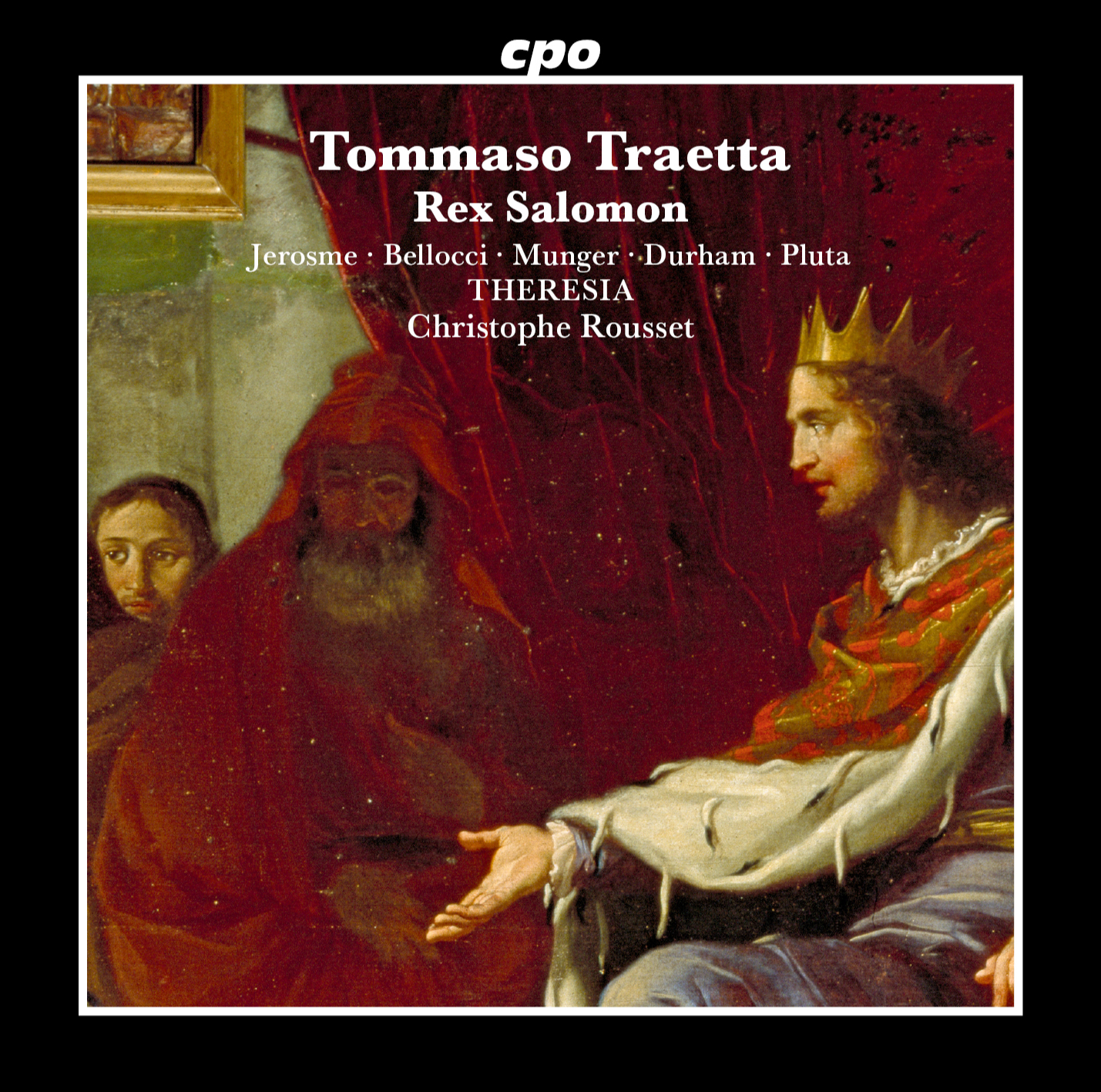
A world premiere recording has been added to our CD collection: Tommaso Traetta's ‘Rex Salomon’, with Theresia Orchestra conducted by the great Christophe Rousset, has just been released and is available on the main streaming platforms.

It is wonderful to have such an intense musical life as Theresia’s: travelling, working with great masters, playing new music. But the excitement of the stage and the applause of the audience are linked to the moment: it is important that something remains, to relive the emotions, to mark our milestones. Also, not all of our supporters can follow us around Europe, so having a record of our work helps us to share it.

We’re fortunate to be able to have an intense collaboration in place with CPO, a major record company dedicated to early music, and that is eager to rediscover forgotten treasures, and attentive to the practice of performing on period instruments.

Find here all Theresia’s recordings with CPO

This particular recording is particularly dear to our hearts because it bears witness to a special and prestigious experience when we performed under the baton of Christophe Rousset at the Innsbruck Festival of Early Music in the summer of 2023.

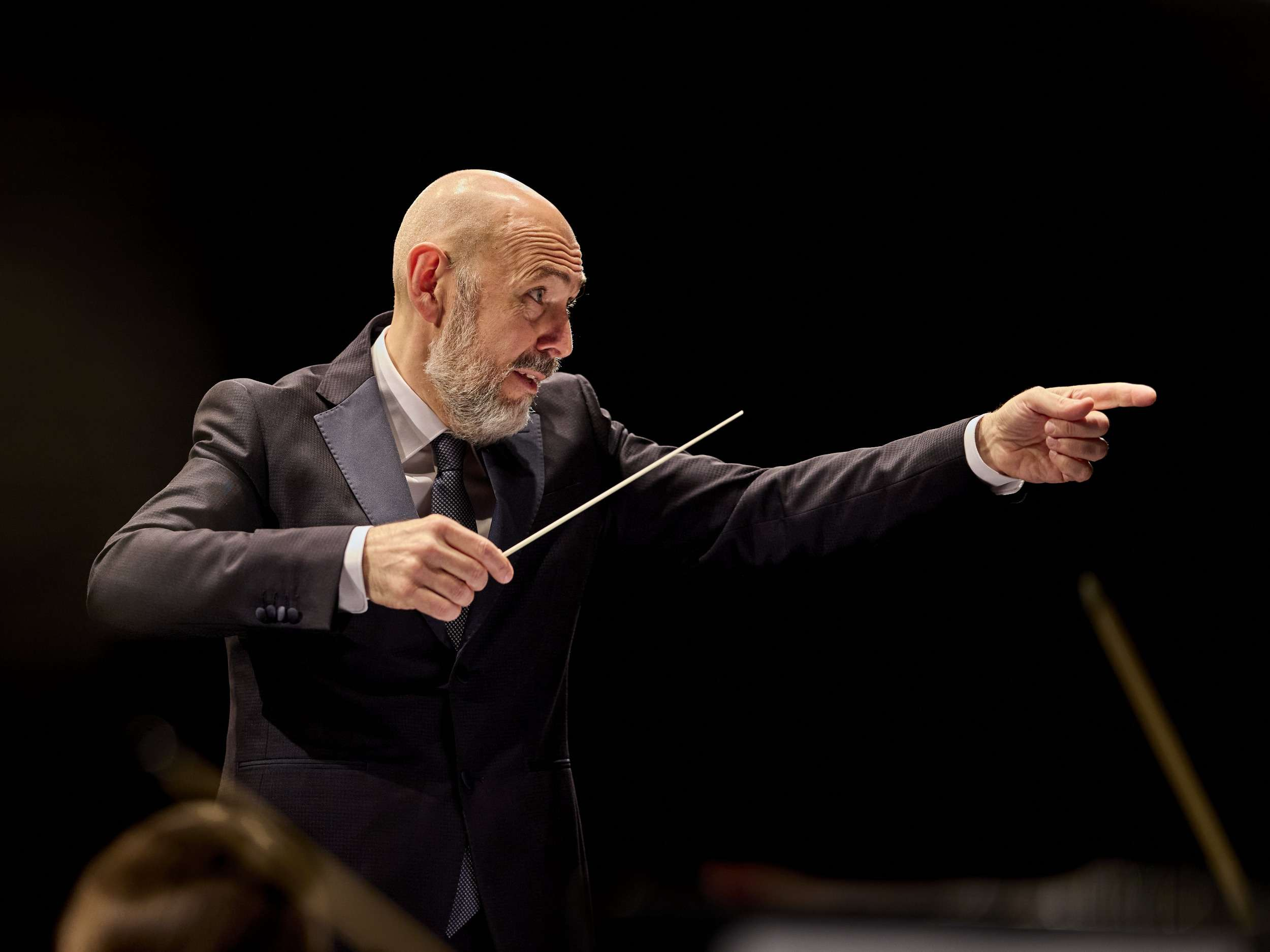
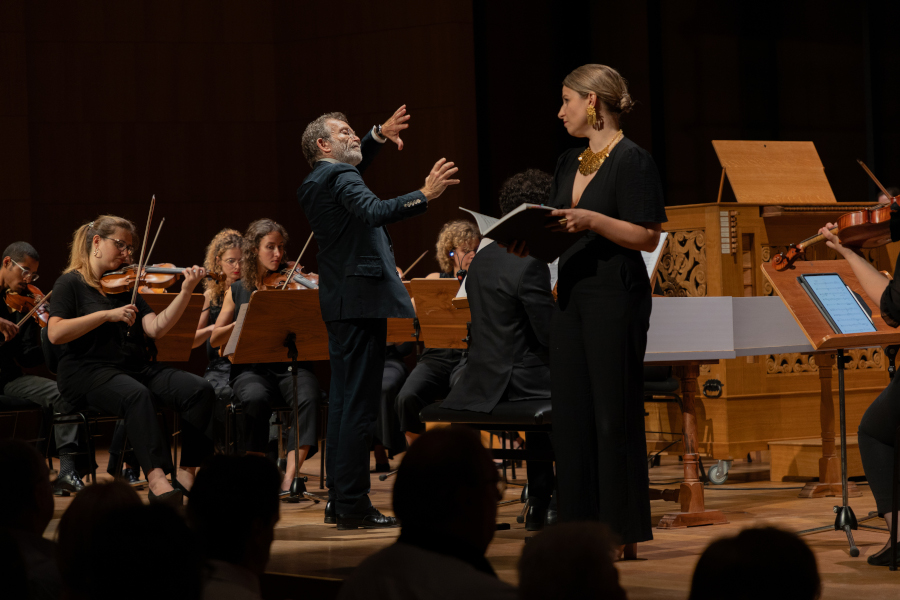
Shaping the music… Christophe Rousset during the live performance of Traetta’s Rex Salomon in Innsbruck

Rex Salomon is an oratorio in two parts, based on a libretto by Domenico Benedetti (1766), and was premiered on August 15, 1766 at the Ospedaletto dei Derelitti, Venice. The edition we based on was supervised by Simone Laghi, artistic advisor to Theresia. As Simone Laghi explained us, “The Rex Salomon was composed to be performed at the Ospedale dei Derelitti in Venice by the ‘Putte’, i.e. the girls residing in this charitable institution. Precisely because it was intended to be performed within the Ospedale dei Derelitti, the vocal ensemble is female only, making it a rather special work within this genre.” Indeed, the vocal cast is entirely female: Salomon is soprano Suzanne Jerosme, Abiathar soprano Eleonora Bellocci, Queen of Sheba is soprano Marie-Eve Munger, Sadoc is mezzo-soprano Grace Durham and Adon is contralto Magdalena Pluta.

As we said, one of the most exciting aspects of the experience was working with Christophe Rousset, an extraordinary musician who founded the ensemble ‘Les Talens Lyriques’ over 30 years ago and who is an inexhaustible explorer and discoverer of forgotten musical gems. At the time of the concert, he told us of his passion for discovering hidden treasures: Rex Salomon’s project with Theresia is also in this vein, as it is the first modern performance of this masterpiece.

Christophe Rousset: bringing to life forgotten pieces is my specialty

Theresia’s new CD is available for purchase on the CPO website and can be listened to directly on various streaming platforms: find out more here!

Listen to Theresia’s new CD


Theresia Harmonie to perform in Rome and Turin

By Emilia Campagna - March 11, 2025
Kicking off the 2025 season in style with two concerts in Rome and Turin

Two magnificent Italian cities will be the venue for the concerts that will inaugurate Theresia’s activities for 2025: at the end of a Wind Academy led by Alfredo Bernardini, Theresia’s Wind Ensemble will perform in Rome, Italy’s capital, and in Turin.

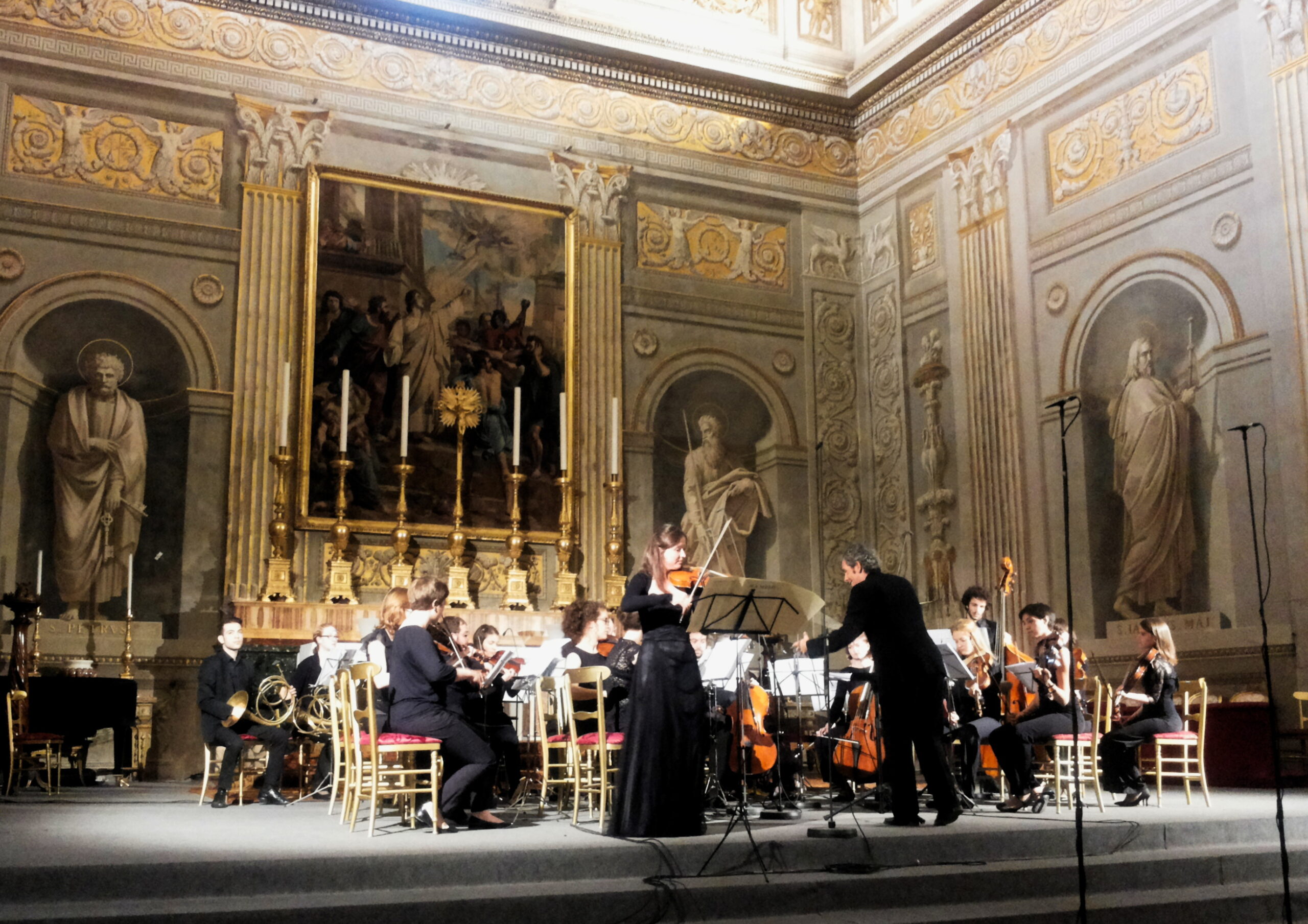
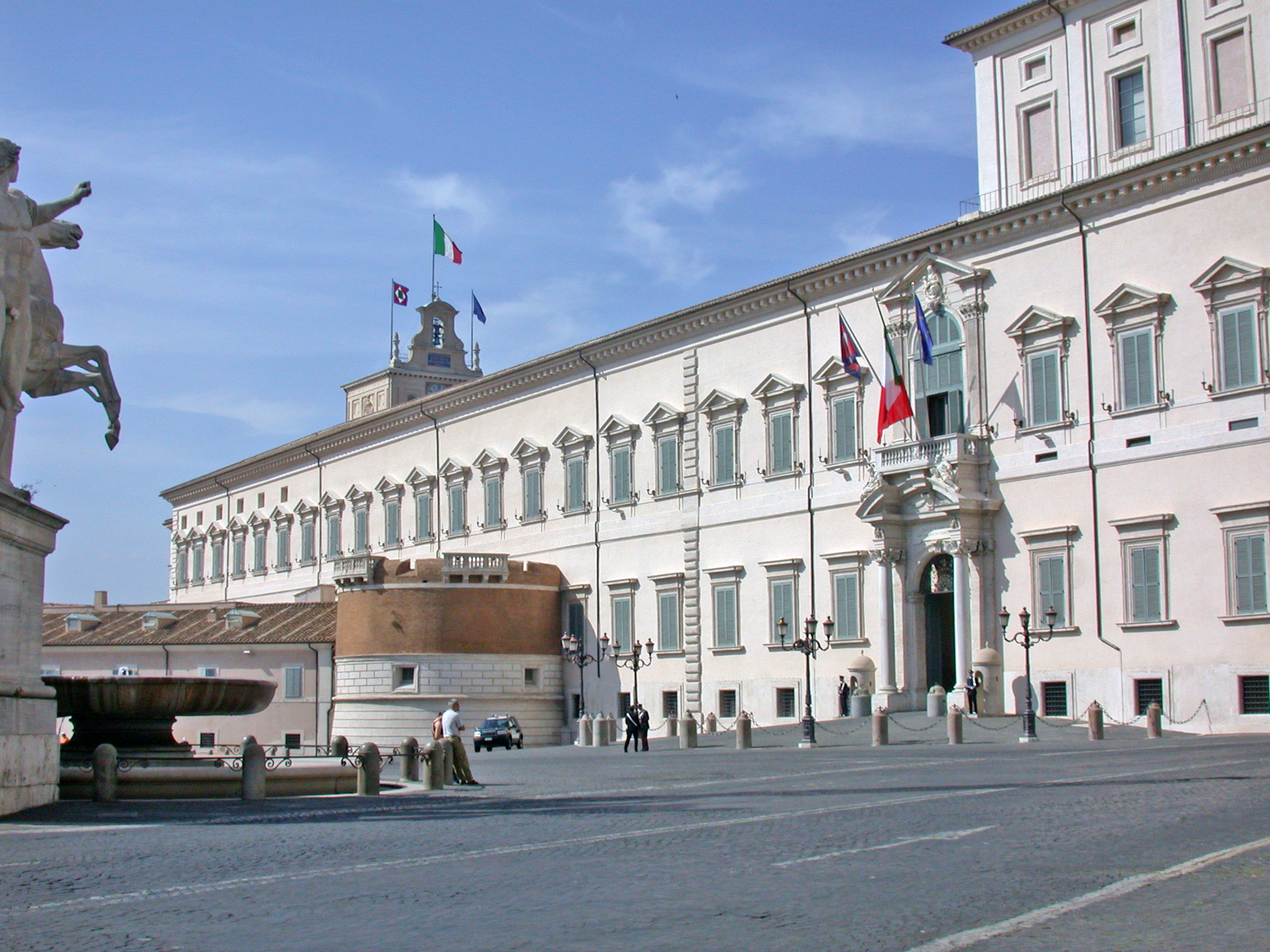
The Roman concert will take place in the Quirinale Palace, residence of the President of the Italian Republic, and will be broadcast live on Radio3 Rai as part of the programme ‘I Concerti del Quirinale’. This is not the first time our orchestra has performed at the Quirinale: exactly ten years ago, in 2015, Claudio Astronio conducted Theresia, with violinist Ester Crazzolara as soloist. It was an exciting tour, and what awaits us now will be no less so!

Claudio Astronio conducts Theresia in Quirinale Palace

Ten years ago… Claudio Astronio conducting Theresia in Quirinale Palace

Discover the Quirinale Palace, one of our favourite places


Turin is also not a new stage for Theresia, who performed there in 2017 under the baton of Chiara Banchini. This year’s concert will be held at Teatro Vittoria and is part of the programme of the prestigious ‘Unione Musicale’ in Turin.

Returning to these two cities is a great way to start our 2025 activities again: it reminds us of our recent past and how much we have grown as an orchestra and as an institution; and it brings us back in front of cultured and sophisticated audiences.

And we will not disappoint expectations: our musical programme is thoughtful and refined, ranging from Josef Mysliveček (Partita No. 3 in B flat major) to Wolfgang Amadeus Mozart (Serenade KV 375 in E flat major Wolfgang Amadeus Mozart and Ouverture and arias from Don Giovanni, arr. by J. Triebensee). In Turin we will also perform Josef Triebensee’s Echostücke.

The musical programme is dedicated to Harmoniemusik, the wind ensemble typical of the 18th century, which became independent of the strings thanks to the technical innovations of the time. As our artistic advisor Simone Laghi explains: ‘The wind ensemble became a viable alternative to the orchestra, which is typically based on string instruments; in some contexts, such as open-air concerts, the use of wind instruments was even preferred to strings, due to the greater volume of sound and greater reliability in less than optimal conditions for the fragile gut strings of violins and violas. In addition to pieces specifically written for Harmoniemusik, such as those by Mysliveček, Mozart and Triebensee included in this programme, the repertoire also includes transcriptions of famous operas, ballets and symphonies for orchestra. ‘

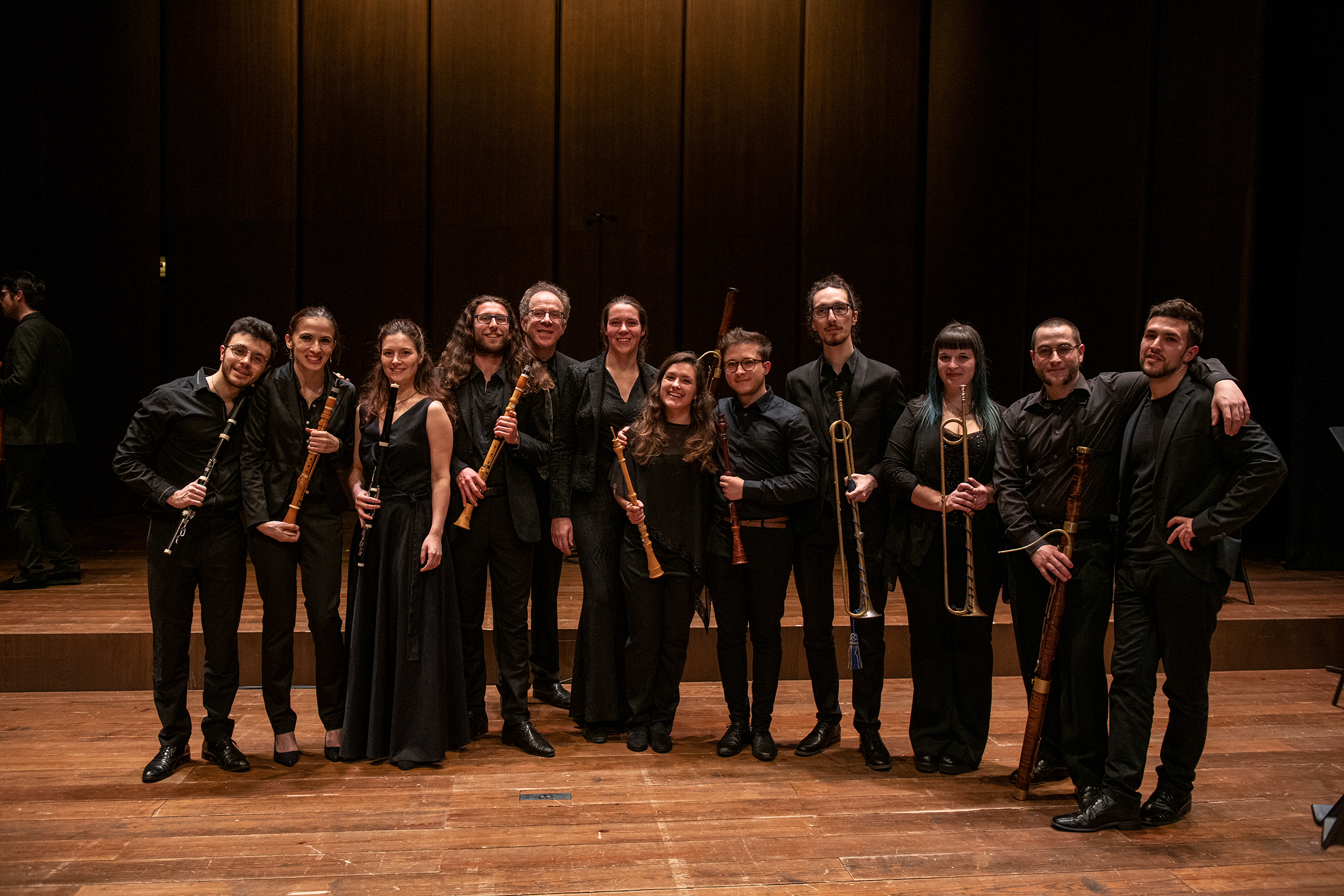
Musicians involved in this project are: oboists Nina Alcañiz i Macias (Spain) and Phyllis Breit (Austria); bassoonists Yoan Urbano Otano Rangel (Cuba) and Enrico Toffano (Italy); hornists Márton Kóródi (Hungary) and Vicente Alfonso Serra Primo (Spain); and clarinetists Elia Bianucci (Italy) and Carolina Guiducci (Argentina/Italy).

Mark the dates of these appointments: and those who will not be able to attend in person, remember that the Rome concert is broadcast by Radio3 Rai on Euroradio!

Theresia Wind Academy

16 March 2025, Palazzo del Quirinale, Roma, h. 11.50

17 March 2025, Teatro Vittoria, Torino, h. 20

Meet Theresia: Márton Kóródi

By Emilia Campagna - December 19, 2024
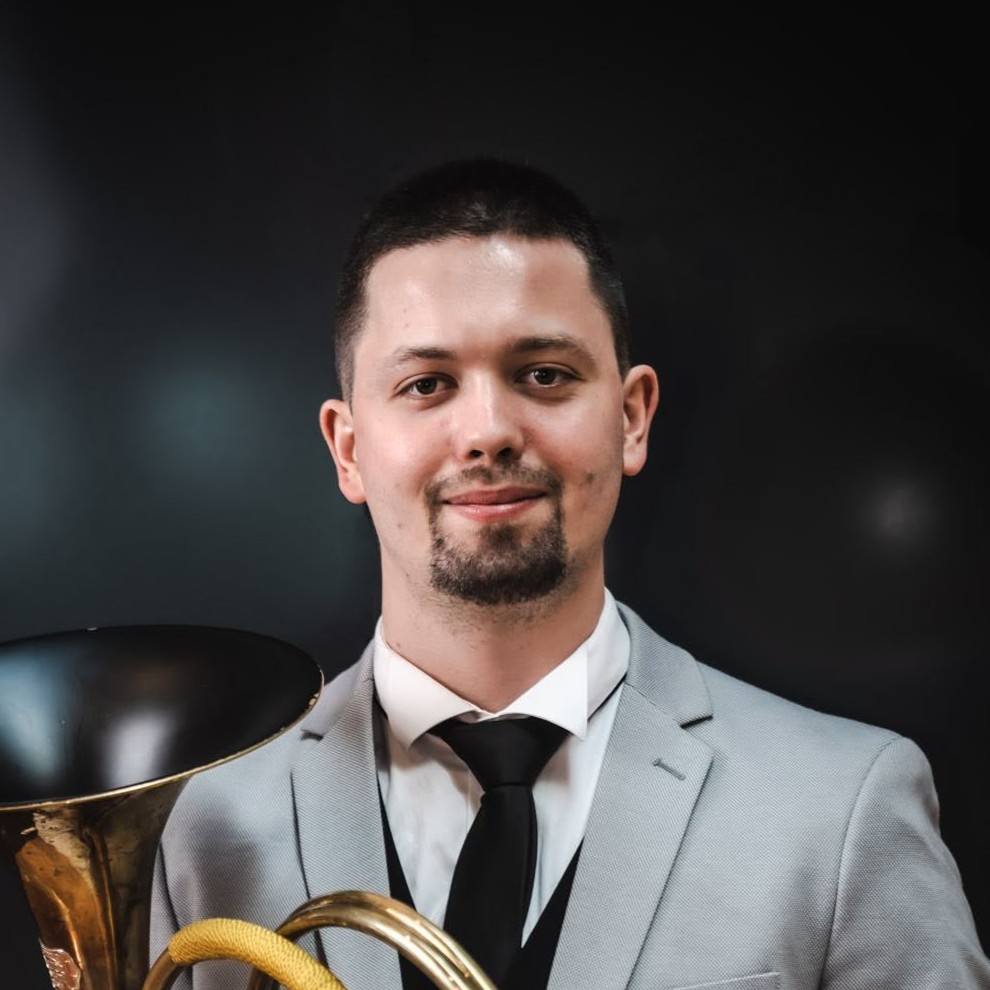
Let's meet Márton Kóródi, a young Hungarian horn player who recently joined Theresia. We asked him about his studies, his passions, his dreams and, above all, how he fell in love with the natural horn. Let's find out together!

Márton Kóródi, tell us about your musical upbringing and education: did you grow up in a musical family? When did you start studying music?

I wasn’t born into a musical family—my parents are veterinarians and equine-assisted therapists—but they always emphasized the importance of learning an instrument for me and my siblings. When I started elementary school, I applied to the local music school in Kaposvár and was accepted, but I didn’t start right away. Instead, playing football with my friends took priority. However, a few years later, when I was 10, I decided to give it another try. I began learning the tenor horn, and things progressed fairly well. I still remember the immense sense of accomplishment I felt when I joined the music school’s wind band after just one year of playing.

In my second year of studying music, something shifted within me, and I became motivated to pursue music more seriously. I can’t quite recall the exact reason, but part of it was my desire to explore the world, meet new people, and experience different cultures. When I shared this motivation with my current teacher, he suggested I switch instruments, recommending either the trombone or the horn, as the tenor horn was rarely used in classical music. Given that he was a hornist, József Kocsis, I suspect he gently nudged me in that direction. Though I’m not sure if he “pushed” me, I’m grateful he did.

I later attended the Leó Weiner Music Secondary School in Budapest, where I studied under Tamás Gáspár and Zoltán Varga. This is where I began to shape my professional career and seriously prepare for it. In 2017, I was accepted into Szabolcs Zempléni’s class, first in Trossingen and later in Hamburg. I’ve always been fascinated by the instrument, so it was a real highlight when Szabolcs organized a natural horn course every year with different teachers. One of these masterclasses, with Teunis van der Zwart, was the moment I first began to seriously consider pursuing my master’s in historically informed performance. This led me to seize every opportunity to perform on the natural horn and gain experience, and eventually, I began thinking about furthering my studies in The Hague. It was a fortunate moment when I realized that the university where my wife was studying, where Teunis was teaching, and where I met Mees Vos—a teacher I believed could help me develop further—was the perfect fit for my goals.

When and why did you decide to focus on period instruments?

What drew me to historical performance? Initially, I was curious about the natural horn—how it works, how its technique could improve my playing on the modern horn, and I’ve always been captivated by its colorful sound. Over time, I became more interested in historical performance as a whole, and this curiosity evolved into a deeper exploration of why it was valuable and what insights we could gain from it in modern performance practice. This is what led me to focus more on the periodic instrument and ultimately to audition for the Theresia Orchestra.

What do you think was the most memorable experience that made you decide to become a professional musician? Are there any musicians you have met who you consider to be your mentor(s)?

I don’t recall a single moment when I decided to become a professional musician, but there are a few key projects and encounters that reassured me of my potential and inspired me to follow a path that, to this day, I continue on.
In 2015, I won the audition for the Verbier Festival Youth Orchestra for the first time, which felt like a huge achievement and source of inspiration. Before I received the confirmation email, I could hardly believe that I would actually become a member of that orchestra. Up until then, I had no real understanding of the professional music world. It wasn’t until I started secondary school that I began to learn about it, and coming from a background of playing in local bands, the experience of joining such a prestigious ensemble opened my eyes to an entirely new side of being a musician. There, I met many talented individuals whose knowledge and preparation far surpassed mine, giving me a completely fresh perspective on the world of music.

Less than a year later, as my school celebrated its 25th anniversary, we had a concert in which we accompanied some of the school’s alumni who had gone on to become renowned artists. One of them was Szabolcs Zempléni. I was struck by how conscious he was while playing, the effortless quality in his sound, and the apparent ease with which he controlled everything. After one of the rehearsals, I mustered all my courage and asked if I could have a lesson with him. A few more followed, and it became clear to me that I wanted to study in his class. The years I spent under his guidance shaped my approach to horn playing in many ways—technique, interpretation, and the way I think about pieces. Everything else I learned from others I built upon the solid foundation he gave me.

I also have to acknowledge the significant impact the teachers at the Royal Conservatoire of The Hague have had on my career. Mees Vos, my modern horn teacher, helped me navigate the vast amount of information I had gathered before working with him, and played a crucial role in helping me find my voice as an artist. Additionally, Teunis van der Zwart introduced me to the world of early music, which has been an essential part of my journey.

When and how did you find out about Theresia and decide to audition? What was the experience of auditioning for Theresia like?

As I mentioned, I’ve been part of the early music community since I began studying in The Hague, so I’ve watched my fellow students get accepted to Theresia. I had considered applying for the audition in 2023, but for some reason, I couldn’t follow through. This year, I made it a goal to apply and see what would happen. I’m glad I did, as I was able to participate in this unique audition process.

What’s special about the Theresia audition is that it doesn’t follow the traditional format; instead, it’s held as a chamber music session. On one hand, this makes the experience much more comfortable and less stressful, as playing with others feels more natural than standing alone on stage under the scrutiny of many judging eyes. On the other hand, this format also provides the jury with more valuable insight. They can assess whether the candidates’ technical skill and musicality meet the required standard, while also observing how well we interact with other musicians and respond to new instructions from the committee. Additionally, it gave us the opportunity to get to know each other better, which is important for building connections with our future colleagues in Theresia.

You took part in the Nova Gorica project: what did you like most about this experience?

The sound of an orchestra with period instruments, and the work ethic within the early music community, are what I truly value. I feel that there is always more room for discussions about the right sound color or articulation in period instrument ensembles than in groups with modern instruments. Since we play period instruments, it’s essential to explore our options and figure out what works best on the instruments in each specific piece. Working with and getting to know Enrico Onofri was also an incredible experience. His knowledge, kindness, and the way he interacts with all of us young musicians elevated the entire project to another level.

Márton Kóródi – on the left – with the others Theresia’s wind players in Nova Gorica

In the next project you will be working with Alfredo Bernardini: have you met him yet? What do you expect from him?

I met him only at the audition in July, so I don’t know him well, but I can share the impressions I gathered from our brief conversation afterward. There is no doubt in my mind that he will be well-prepared for the project and will know how to collaborate effectively with wind players. He also seems like a kind person and a great educator. For me, it’s important to work with people who are not only talented artists but also have good personalities, especially when working with students or those at the beginning of their professional careers. I believe it will be a fantastic experience and an unforgettable memory working with him.

What’s special about the Theresia audition is that it doesn’t follow the traditional format; instead, it’s held as a chamber music session. This makes the experience much more comfortable and less stressful, as playing with others feels more natural than standing alone on stage under the scrutiny of many judging eyes – Márton Kóródi

Do you have any other passions besides music?

Of course, I do. I’ve always admired people who can dedicate all their time to music, but for me, it’s important to step away from it at times and seek other sources of inspiration. I watch a lot of sports and go to the gym 2-3 times a week. I also enjoy hiking with my wife and playing football with friends. Additionally, I like to get creative in the kitchen, and recently, I’ve started learning about investments.

Where do you see yourself in five years time? A musician in an orchestra, a musician with your own ensemble, a teacher… tell us about your plans.

Actually, it’s a healthy combination of the options you mentioned. My goal is to be an orchestral musician, with the opportunity to teach, ideally in a secondary music school. It’s also our responsibility to introduce music to children, so they can become the audience of the future. Lastly, I’m working hard to take the Hungarian Brass ensemble to the next level in its career. We founded the ensemble four years ago, and next February, we’ll finally be recording our first album. Hopefully, this will help us gain more recognition, and we’ll be able to entertain people with high-quality brass music wherever we go.
Enrico Onofri: “A youth orchestra is a generative mirror of ideas and freshness”

By Emilia Campagna - September 25, 2024
For our upcoming orchestral residency, Theresia will be working with the renowned conductor and violinist Enrico Onofri for the first time. The orchestra will perform an all-Mozart programme, including the iconic "Jupiter" Symphony. We caught up with him to find out more.

Maestro Enrico Onofri, you will conduct Theresia Orchestra in a programme entirely dedicated to Mozart, with performances of his first and last symphonies: how does it feel to perform two compositions that represent the beginning and culmination of Mozart’s art up close?

Juxtaposing Mozart’s first and last symphonic works – hence the title of the program, “Mozart, Alpha & Omega” – was an idea that had been in my mind for some time. Not to compare their style and content: in fact, it would be a sterile operation without being able to examine simultaneously the entire path that Mozart travelled in the twenty-four years between his First Symphony and the “Jupiter”. However, I thought it would be interesting to demonstrate to the audience how the quality of writing and musical ideas – despite the enormous difference between the two works – remains a constant of the composer, from his childhood to the last years of his life. There is also a small curiosity that unites them, which has sparked speculation, but is the result of a coincidence due to the contrapuntal pattern in one of the movements of the piece, rather than Mozart’s specific intention, and thus a purely programmatic divertissement: In the Andante of the First Symphony, the theme of the final movement of the “Jupiter” Symphony appears, entrusted to the horns, which is also the theme of the Credo of the Mass, KV197, itself taken from a Gregorian motif – in the case of the Mass, however, the connection with the “Jupiter” is probably no coincidence.

Also on the program is the Serenade K. 100: for what occasion was this piece composed, and which ‘Mozart’ are we listening to?

We do not know the specific occasion for which this work was written, but it was certainly for a celebration or an open-air event in Salzburg, as with most of his serenades. K100 is one of the earliest works in this genre, whose structure resembles that of a symphony enriched with many movements, intended to entertain the patron’s guests. In the Serenade K. 100 we can already recognise the characteristics of the later, more famous serenades, namely the “Posthorn” and the “Haffner”, and it offers us a brief glimpse into the complex journey of Mozart – who was just 13 years old when he composed K. 100 – that I mentioned earlier.

For the first time, you will conduct Theresia, an orchestra founded 12 years ago with the aim of performing classical repertoire on original instruments. How do you view this artistic project?

The Age of Enlightenment is undoubtedly the turning point that made Europe into what it is today. As an artist, if I had only one hypothetical opportunity for time travel, I would want to experience the years around the turn of the century to learn from figures such as Mozart, Beethoven, and Goya. The classical repertoire is highly formative and educational, both in terms of its content and its instrumental demands. As a student, I trained as a violinist and chamber musician mainly on the classical repertoire, as well as on the romantic and twentieth-century repertoire, which in some way extends or transforms its language. I therefore consider it an invaluable opportunity for these young musicians to immerse themselves in this music, and to do so on historical instruments, which allows them to engage with it on an even deeper level.

Theresia is a youth orchestra consisting of musicians up to the age of 28. Do you often work with youth orchestras? What do you enjoy about it, and how does it change your approach?

I have been combining my career as a conductor with working with youth orchestras and teaching for twenty-five years now, for example as a mentor and conductor of the EUBO (European Union Baroque Orchestra) or the youth orchestra of the Academia Montis Regalis. It is an essential part of my journey as a musician, because in giving to young people, I receive just as much from them: a youth orchestra, with its energy and thirst for knowledge, is in some way a generative mirror of ideas and freshness, enriching the musicians as much as it enriches me. In terms of the way I work, I do neither more nor less than I would with a ‘professional’ orchestra: conducting, especially when it comes to historically informed practices, naturally has a strong didactic element, but with young people, I also have the added responsibility of training them in an ethic of playing together, and helping them understand the valuable contribution this ethic makes to our lives, not only in music.

Where were you, and what were you doing when you were at the age of our Theresians?

When I was nineteen, I became first violinist in Savall’s orchestra for a short time, before moving to Milan to continue my traditional studies. After various experiences with both pioneers of historically informed performance and with musicians from different backgrounds, at twenty-four I recorded the complete Op. 8 of Vivaldi with the Giardino Armonico for Teldec – including “The Seasons”, an album that in some ways marked a milestone in the journey of historically informed music. That same year, I also performed with the Concentus Musicus Wien under Harnoncourt. The following year, I recorded the complete Brandenburg Concertos of Bach as a soloist, while also working with the likes of Gustav Leonhardt…. In short, I have been very fortunate.

Theresia will be performing in Nova Gorica, a city that, until a few years ago, was divided by a wall from its “sister” city across the border, Gorizia. In a world surrounded by conflicts and divisions, is it just rhetoric to say that music transcends borders, or is it still true?

Certainly: music is a powerful ‘bulldozer’ for breaking down walls, as well as the best way to connect souls in difficult times. As a convinced Europeanist, I am very much looking forward to conducting in Nova Gorica, a symbolic city in the journey of our continent.

The final concert takes place in Nova Gorica, the Slovenian city designated as the European Culture Capital in 2025. Find out more here!

Our Places: Nova Gorica

By Emilia Campagna - September 12, 2024
Once upon a time there was a town - no, wait, we should actually say "once upon a time, there was no town". Today we're telling you about Nova Gorica, a city built from scratch in the 1950s. In Italy, when we see a sprawl of houses and buildings, we often say, "This used to be all countryside here." And in this case, it truly was.

In 1947, after World War II, Italy signed a peace treaty with the Allies, including Socialist Yugoslavia. The treaty transferred most of the Slovene-inhabited areas of the Italian region of Gorizia to Yugoslavia. The city of Gorizia itself, however, remained under Italian rule. The new border cut the city off from its northern and eastern suburbs, and about 40% of the municipality’s territory was transferred to Yugoslavia. The area was filled with villages and suburbs and had a population of about 10,000 (almost exclusively Slovenian, with a tiny Friulian-speaking minority). However, they lacked cohesion and were poorly connected. To overcome this problem, the communist authorities of the Socialist Republic of Slovenia decided to build a brand new settlement that would unite these suburbs into a new urban space. The new city was called Nova Gorica or “New Gorizia”.

A 1969 postcard of Nova Gorica

For decades, Gorizia and Nova Gorica were divided by an iron curtain. Have you heard of the Berlin Wall? A similarly impassable barrier existed here. The term “Gorizia Wall” (in Slovenian, Goriški zid) referred to a fence comprising a 50-centimetre-wide concrete base topped by a five-foot railing built in 1947. It was placed along the Yugoslav-Italian border, cutting through the city of Gorica.

In 2004, following Slovenia’s entry into the European Union, the fence that divided Transalpina Square was removed. However, the free movement of people and goods had to wait until 2007, when Slovenia joined the Schengen Agreement. Since 2004, Transalpine Square has been a free meeting place for both the Italian and Slovenian populations.

Transalpine Square - A simple plaque now marks the border between the two States

A simple plaque now marks the border between the two States

In May 2020, during the Covid-19 pandemic, Transalpina Square was once again divided by a wire fence along the Italian-Slovenian border as part of measures to slow the spread of the infection. This sadly reminded many citizens of Gorizia and Nova Gorica of the period between 1947 and 2004, when the two towns were divided by a fence.

The relations between the cities of Gorizia and Nova Gorica have strenghtened over time, gradually overcoming difficulties and mistrust. A key symbol of their friendship is their joint selection as the 2025 European Capital of Culture. Many cultural initiatives are being organised to celebrate this recognition, including theatre, music, and art exhibitions, with Theresia Orchestra proudly featured as part of this very rich programme.

Our orchestra will reside in Nova Gorica from 8th to 16th October and the final concert will take place on 14th October at Kulturni Dom Nova Gorica. For this orchestral residency, Theresia will be collaborating for the first time with conductor Enrico Onofri. The renowned conductor and violinist will work with the orchestra on an all-Mozart programme including the iconic “Jupiter” symphony. Stay tuned for more info about the musical programme! See you soon in Nova Gorica!

Meet Theresia: three new players join our Ambassadorship Programme

By Emilia Campagna - August 26, 2024
Each year around this time, Theresia Orchestra experiences a meaningful transition as three ambassadors complete their term and three new ones step into the role, becoming the key players in our Ambassadorship Programme. We're excited to introduce our new ambassadors: percussionist Jarick Bruinsma, violist Hannah Gardiner, and violinist Anna Freer.

Every year at this time, Theresia Orchestra sees a special transition as new ambassadors join its Ambassadorship Programme. This year, percussionist Jarick Bruinsma, violist Hannah Gardiner, and violinist Anna Freer step into this important role, continuing Theresia’s mission to promote Historically Informed Performance (HIP) and classical music across Europe. Let’s get to know them, explore their backgrounds, and discover what they hope to achieve during their ambassadorship.

Where are you from and where do you currently live?

Anna Freer: I’m from Australia, and I currently live in Zürich, Switzerland!

Hannah Gardiner: I’m from London, which is also where I live.

Jarick Bruinsma: I am from Hoogeveen, a city 60 km south of the city of Groningen in the north of The Netherlands, where I have been living since 2015.

How long have you been a member of Theresia?

Anna Freer: Only since January!

Hannah Gardiner: For about a year.

Jarick Bruinsma: Technically speaking, I am not a member of Theresia, but I have been invited to join two of Theresia’s projects this year. As far as I know, these are the only projects that include percussion this season, which means I will be part of all the projects involving percussion.

The first and latest Theresia project you participated in were…

Anna Freer: I’ve done one Theresia residency thus far – the Seven Last Words project with Alfredo Bernardini in March.

Hannah Gardiner: My first project was the Rossini opera in October. My most recent project was the Beethoven transcriptions in Geneva this July.

Jarick Bruinsma: The only project I participated in so far was Haydn’s Seven last words in March 2024.

Why did you want to become an Ambassador for Theresia?

Anna Freer: I thought it would be a good opportunity to develop my skills further in developing projects, with the support of the Theresia and European Commission’s network, as well as a chance to promote Classical and HIP music to audiences in new ways.

Hannah Gardiner: Because I am very committed to working with young people and increasing engagement with classical music.

Jarick Bruinsma: I offered to become an ambassador because I have been quite active as an organiser and facilitator of projects for a while already, so it seemed right up my ally. I also noticed the necessity of fulfilling the different-nationalities factor of the project, and the pool of not-yet-used nationalities looked slim, there had not been a Dutch ambassador yet, so I could fill that gap nicely.

What would you like to work on during your ambassadorship?

Anna Freer: I would like to work on community building and singing together, as well as singing and playing instruments at the same time, two historical practices that have sadly been lost!

Hannah Gardiner: I would like to explore the potential benefits of music making and creativity on mental health in teenagers.

Jarick Bruinsma: Mainly I want to address that music, just like many other things, can be a vessel to spread unity and understanding amongst humans from different backgrounds and with different beliefs and values. All by touching audiences and get them to reflect on whatever it is that could make them a better understanding and accepting human being.

The main objective of the Theresia Ambassadorship Programme is to introduce new audiences, especially young people, to the world of classical music and to the practice of Historically Informed Performance (HIP). Every years, three young musicians from nine different European countries embody and transmit the core values of classical music and its importance in their countries of origin.

Find out more on the official page!


Exploring Beethoven in Geneva: Chiara Banchini on Theresia’s next chamber music project

By Emilia Campagna - July 22, 2024
Theresia will be in Geneva in July for a chamber music residency led by violinist Chiara Banchini, in which nine musicians from the orchestra explore and perform a historical transcription of Beethoven's Second Symphony in the chamber version by Ferdinand Ries.

Continuing what has become a tradition, Theresia will be in Geneva in July for a chamber music Academy led by violinist Chiara Banchini, in which nine musicians from the orchestra will participate. Elana Cooper and Guillermo Santonja di Fonzo (violins), Hannah Gardiner and Helena Reguera Rivero (violas), Marta Jiménez Ramírez (cello), Ariel Walton (double bass), Ching-Yao Wang (flute), and finally Jonathan van der Beek and Janire de Paz Rivas (horns) are the musicians who will take part in the musical project. They explore and perform a historical transcription of Beethoven’s Second Symphony in the chamber version by Ferdinand Ries. The project is artistically spearheaded by Chiara Banchini, who told us more about the musical programme and about the Festival Concerts d’été de St Germain, of which she is a member of the artistic committee.

Chiara Banchini, let’s start with the Festival Concerts d’été de St. Germain: how is it structured and how did the collaboration with Theresia come about?

“The festival takes place in July and August with concerts every week on Sunday and Monday evenings. It has been going on for 40 years and has a very loyal audience. We have a priority, which is to let young people play more than artists who are already established and in the prime of their careers. In this spirit, the collaboration with Theresia began in 2019: I proposed it when I joined the artistic committee. Initially, the projects were generally dedicated to repertoire for chamber groups or small ensembles, but since 2022 we have started a project on historic transcriptions of Beethoven’s symphonies, which has been very well received”.

What were the previous stages of this exploration of Beethoven, and what is this year’s programme about?

“In 2022 we performed the Sixth Symphony, in 2023 the Seventh, and this year the Second Symphony: it is a transcription by Ferdinand Ries, Beethoven’s student and friend. The transcription is very beautiful and very well done: it’s a new and interesting way to approach Beethoven’s symphonies, because it feels like getting into the heart of the compositional process.”

Beethoven’s Second Symphony is not the only piece on the program.

“Indeed. We decided to put an original piece by a contemporary of Beethoven next to the symphony: it is the Nocturne for flute, two horns and string quintet by Franz Anton Hoffmeister. It is a completely unknown side; it has never even been recorded. What is particularly interesting is that it is written for the same instrumental ensemble that Ries used for the chamber version of Beethoven’s Second Symphony. Moreover, following a practice of the time, each instrument in the ensemble has its own solo moment in which to emerge and showcase its technical and musical talents.”

Does the festival focus on baroque and classical repertoire?

“In fact, the Festival’s musical programme ranges from Baroque to contemporary, but since I have been on the committee, I have been able to ensure that there is much more focus on historically informed performance. And not just the Baroque repertoire! For example, we have planned a concert of Schubert Lieder that will be played on an 1840 fortepiano. This also solved the acoustic problems that made it impossible to use a modern piano, since the concerts take place in a church.”

You said earlier that the Festival has a priority to give space to young musicians: besides Theresia, who are the other young emerging artists?

“We have a strong collaboration with the Concours de Genève: this season we just hosted the NOVO Quartet, winners of the 2023 edition dedicated to the string quartet. We also host the winners of a new interdisciplinary competition, OSEZ!, aimed at groups that have to present a musical performance with actors, dance and staging: the winners of the first edition were the vocal sextet Ensemble Diaphane, which opened the festival with a programme ranging from baroque to contemporary.”

Concerts will take place at Eglise Saint-Germain de Genève, on Sunday 28 and Monday 29 July 2024 at 6.30 pm

Empower: how to develop a music business idea

By Emilia Campagna - July 1, 2024
Among the various opportunities Theresia offers its musicians is a capacity-building programme that includes workshops, courses, and seminars designed to cultivate broader skills crucial for young musicians shaping their professional futures. One specific seminar is dedicated to coaching musicians in developing music business ideas led by Claudia Crippa, Head of Business Innovation at ICONS and Lorenzo Morelli, Junior Officer Business Innovation at ICONS

Among the various opportunities Theresia offers its musicians is a capacity-building programme that includes workshops, courses, and seminars designed to cultivate broader skills crucial for young musicians shaping their professional futures. The Theresia Academy is training scheme that goes beyond traditional rehearsals and instrument study. Co-funded by the EU as part of the Empower project, ICONS runs this comprehensive training programme. The various modules range from improving communication skills and self-care practices, to integrating soft skills with high musical proficiency.

One specific seminar is dedicated to coaching musicians in developing music business ideas. This module is led by Claudia Crippa, Head of Business Innovation at ICONS and Lorenzo Morelli, Junior Officer Business Innovation at ICONS. We spoke with Claudia and Lorenzo to find out more about the course they teach.

What does your training module cover?

In the organisation, economic and managerial skills module, we are mainly focusing on the use of an effective business planning tool known as the “Business Model Canvas”. This tool is essentially a framework with various sections that cover goals, activities, partnerships, and other crucial aspects that need to be taken into consideration when structuring any professional or business activity.

Why do you think this business course is useful for emerging musicians?

Getting to know the inner mechanisms of a business plan can be immensely useful for emerging musicians. It helps them clarify their goals, chart their career path in the music industry, and identify the necessary steps to achieve success. These questions-and answers-can span strictly musical objectives (how to become a permanent or regular member of an orchestra, how to set up an ensemble, or how to get into teaching) and broader career strategies such as event planning and management. We also offer insights into personal aspects on how best to manage one’s energy, ensuring a holistic approach to career development.

What were the goals identified by the course participants, and how did they work towards them?

The most common goal, understandably, is achieving financial stability: which became the focal point of our workshop. We explored the steps necessary to achieve this goal, starting with identifying stakeholders – colleagues to interact with and target audiences to address. We take a closer look at the importance of improving personal skills, ranging from strictly musical and technical proficiency to interpersonal skills. Participants then identified specific needs, such as the costs associated with further education or instrument maintenance. This led to the key question: how can these financial needs be met? how can I earn the money I need to pay for a courses or instrument check-up? The responses were diverse and enlightening ranging from the most obvious “get a contract in an orchestra” to the more creative approaches such as “organising concerts and sell tickets” to “participating in public calls for grants aimed at supporting young artists”.

How were the lessons structured?

The lessons began with an introductory explanation of the model. In a next phase, participants were divided into small groups to gather feedback and stimulate discussion. This approach encouraged peer interaction, allowing diverse and innovative ideas to emerge from withing the group. Finally, we provided personalised feedback to further refine individual understanding and application of the concepts discussed.

Did the course conclude with the completion of the Business Model Canvas?

Well yes, the core components were covered in the basic part of the seminar. Additionally, there was an optional module that consisted on designing, as concretely as possible, an event: the ideas that emerged in the first phase was often general, and participants had to investigate the various economic, logistical, and organisational aspects to gain a better understanding of the practical issues involved. We offer support throughout this process to ensure practical implementation.

Meet Theresia: Ching-Yao Wang

By Emilia Campagna - June 3, 2024
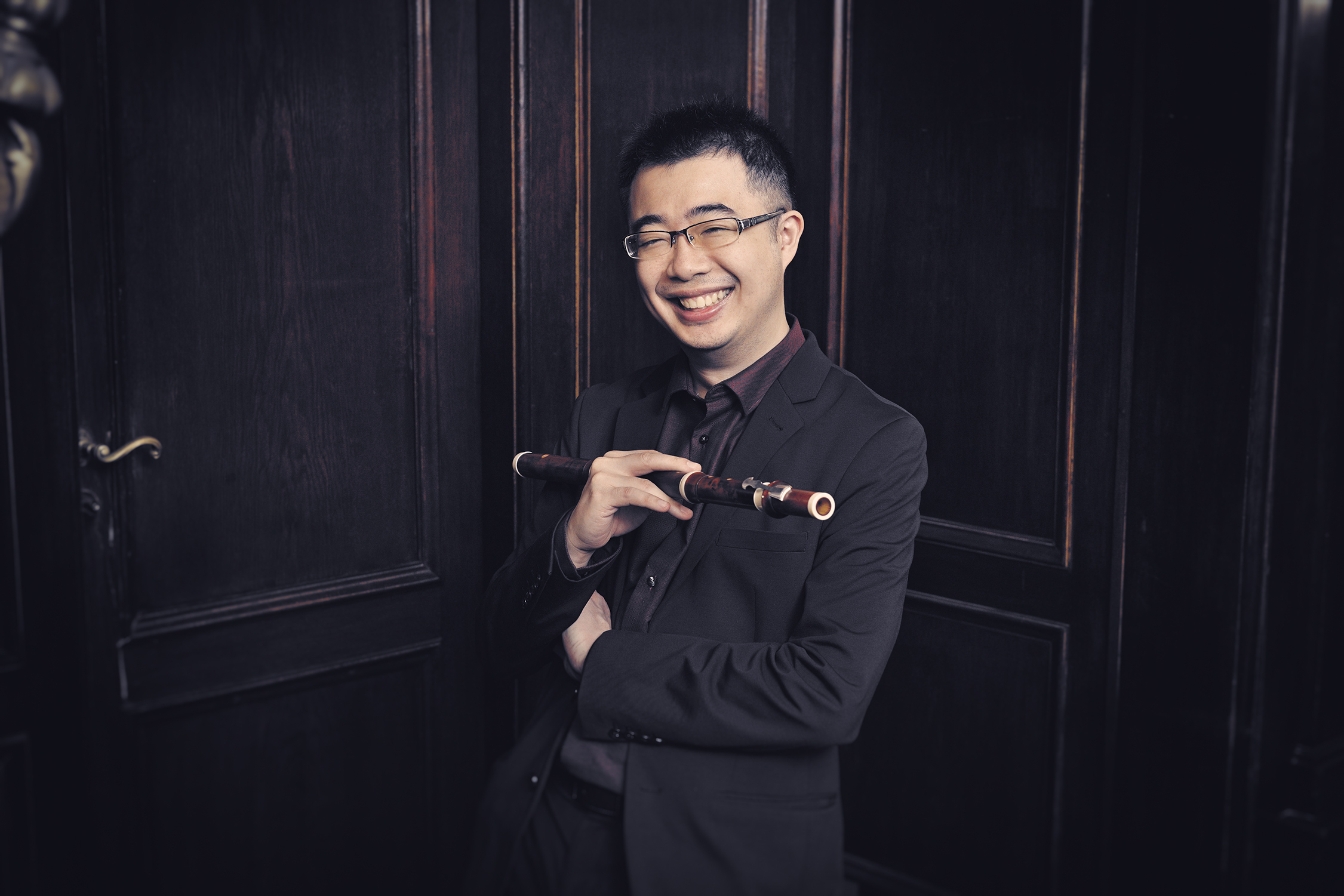
Theresian flautist Ching-Yao Wang is a highly active musician who recently won the first prize at the inaugural Dutch International Traverso Competition. Born in Taiwan, he moved to Europe to pursue his passion for music. It was here that he discovered and joined our orchestra... Let's find more about his story.

Theresian flautist Ching-Yao Wang is a highly active musician who recently won the first prize at the inaugural Dutch International Traverso Competition. Born in Taiwan, he moved to Europe to pursue his passion for music. It was here that he discovered and joined our orchestra… Let’s find more about his story.

How did you start studying the flute and what were the most important steps in your education?

I have always had a special interest in wind instruments since I was a child. Besides piano and percussion lessons, I learned to play the recorder and the harmonica by myself and played them every day for hours without taking a break. When I was ten, a very famous pan flautist came to our town and opened a private music school, where I started to take violin lessons. Since the pan flautist didn’t have enough students, he offered me free lessons on the pan flute, and it turned out that I was much more talented on the pan flute than on the violin. One day, he gave me a CD with pieces where he played the flute and suggested that I should learn to play the flute and consider a professional music education. I still remember the moment when I first heard the sound of the flute. I fell in love immediately with this instrument and started to take lessons. Later, I entered the Taiwanese music experimental class and received profound music training. When I was eighteen, I decided to come to Europe to study the flute. The music school of the pan flute player in our town closed a few years after opening, and my first teacher has withdrawn from the music business. I’ve never seen him again since then, but I am still very grateful to him for his advice.

When and how did you decide to become a professional musician?

It was never a question for me. I fell in love with music when I was very young, and since then I have never thought about leaving it for once. When I play the flute, I am the happiest person in the world. I am very glad that I now have so many opportunities to play concerts with my friends and colleagues.

Do you come from a musical family? Did your family support your choices?

My parents are not musicians, but my father is an enthusiastic amateur recorder player and a big fan of early music. I grew up in an environment very interested in arts. Regarding my decision to become a musician, they had their concerns, which is absolutely understandable. But they supported me anyway.

When did you choose to focus on historically informed performance?

It was more of a continuous process than a single decision. Since I started playing the traverso, I gradually played it more and more. Especially after founding my own group, ensemble freymut, I began spending a lot of time with historical instruments and sources without even realizing it. One day, I woke up and found myself deeply immersed in the world of historically informed performance!

Do you play the modern flute and modern repertoire as well?

I don’t play the modern flute that often anymore since I’ve done that for many years, and there are still so many historical flutes I want to explore. However, I premiered a very special concert programme in March this year. It was a programme about the music collection of the Jewish harpsichordist Sara Levy, combining early music and contemporary music. Together with my ensemble, we commissioned a Suite from the Spanish composer Daniel Serrano. The Suite consists of six movements, each movement based on a piece from Sara Levy’s music collection. By using modern performance techniques on historical instruments, Daniel transformed the motifs and structures from the originals into fascinating sound constellations. It was an extraordinary experience for us to explore modern performance techniques on historical instruments, and our audience was amazed by all these sounds they had never heard before. I can imagine doing more projects like this in the future.

How and when did you discover Theresia and what has been your experience with the orchestra so far?

I found out about Theresia Orchestra quite by coincidence two years ago when I saw a poster for the audition at my university. Fortunately, I was invited to audition in Salzburg, and it was the most unique audition I have ever had in my life. It was more of a rehearsal than an audition, and the atmosphere was extremely positive and pleasant. There were four flautists who were invited to the audition, and we ended up eating ice cream and walking back to the city centre of Salzburg together. I am very happy to have been accepted by Theresia. Working with the orchestra has been absolutely amazing so far!

What has been your favourite orchestral or chamber music project with Theresia so far, and why?

It’s almost impossible to tell. So far, I have participated in two projects, and both have been my favourites. My very first project was the ten-year anniversary of Theresia with a Beethoven programme under the baton of Giovanni Antonini. The incredible energy he radiated during rehearsals and concerts was extremely touching. My second project was in Rheinsberg with Alexis Kossenko. Throughout the residency, he led the orchestra in a gentle and sensitive way, which left a very deep impression on me. The wind quintet project that took place as part of this residency was also a very special experience. Initially, the piece sounded very strange, and we all thought it might not work well. But after a few rehearsals, it came together beautifully in the end, and we had wonderful performances in Potsdam.

Would you suggest Theresia to a friend, and why?

Definitely! It’s a great opportunity to get essential orchestra practice on classical instruments, make friends, and explore new places. Unforgettable moments happen during the residencies. And the seminars of Theresia Academy provide good support for us, the young musicians, to better understand and deal with the challenges we encounter during our careers.

You recently won an important award: tell us about that.

Yes, exactly. I feel very proud and honoured to be the first prize winner of the inaugural Dutch International Traverso Competition for students. Although the competition was organised for the first time, everything was very well thought out, and the team on site was very friendly and supportive. The compulsory programme was absolutely charming, and it was a lot of fun to prepare and present it on the stage. It was also the first time in over ten years that I was back in The Netherlands. On my arrival, I was completely fascinated by the sky. I had never seen such an endless sky in my life. I live in Austria, and there are always mountains in sight. In The Netherlands, the sky is just endless…it was simply breath-taking. As far as I know, the next competition for traverso will take place in two years. Since there are not many competitions for traverso, I really hope that this wonderful event can bring more young traverso players to the international stage in the future.

What are your plans and dreams for the future, musically speaking?

I recently took over a festival in Vienna with my ensemble, and we have also started a new concert series featuring innovative early music programmes this year. Creating and implementing new programmes is artistically very satisfying, but the tasks involved are also tremendously demanding and time-consuming. My plan and dream would be for all these activities to achieve stability in the foreseeable future. In the long term, my dream has always been to be able to play the flute as much as I want since I was a child, and that has never changed.

How do you spend your days, apart from music? Do you have hobbies?

Due to my varied activities, I hardly have time for hobbies. But I love reading, and I try to read at least a few pages every day before I go to bed. I also enjoy handwriting. It’s a habit I developed in my teenage years. I usually choose a poem from a book and write it down in a notebook. The feeling of writing words beautifully and neatly on paper calms and relaxes me a lot. I always have this notebook with me wherever I go. In critical moments, it brings me back into balance and let’s me focus.

Auditions: what Theresians think of them

By Emilia Campagna - May 21, 2024
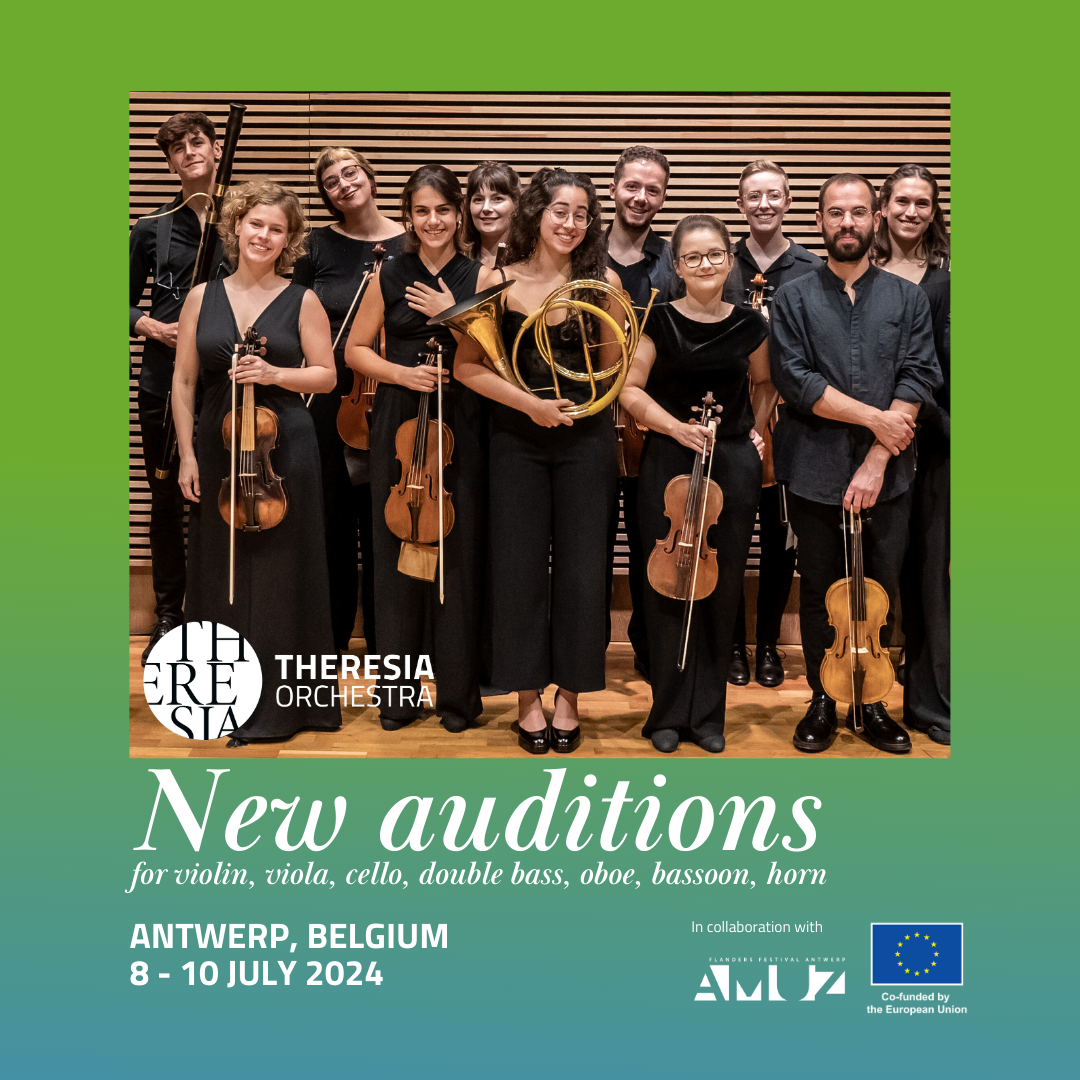
A new round of auditions is coming up, and we are seeking musicians who play violin, viola, cello, double bass, oboe, bassoon, and horn. Hear from a couple of our recent Theresians as they share their audition experiences.

A new round of auditions is coming up: we are looking for musicians who play violin, viola, cello, double bass, oboe, bassoon and horn, and we are offering each of them a grant worth of 3,500 euros, which will cover the activities of our Learning Program and participation in five orchestral residencies between August 2024 and January 2026. The auditions take place in Antwerp on July 8-10 and are organised in collaboration with AMUZ, a major venue for early music in Flanders. The deadline for applications is Monday 3 June and you can submit your application here!

We have often told you about our auditions, detailing their unique features and explaining why we believe they offer an exceptional opportunity for personal growth. Today we want to let those who have experienced our auditions firsthand speak for themselves. We have gathered comments from some of our recent Theresians to give you their perspective.

The importance of being auditioned

Auditions are crucial part of a young musician’s journey toward gaining professional experience. Our violinist Lorenzo Molinetti had already participated in several: “Before I auditioned for Theresia, I had done about five or six auditions. I auditioned mainly for symphony orchestra academies, always made it to the finals, but never got the real job….. Pretty frustrating!” Auditions can be not only frustrating but also impersonal, as was the case for Maddalena Bortot, who before Theresia had only attended auditions that consisted of video presentations.

A welcoming environment

Theresia’s auditions are not designed as individual, high-pressure hearings (like the “do or die” variety), but rather as an extended period during which the board of examiners can get to know the candidates. And because we know that tension can run high in front of a jury, we opted for a format that allows us to observe the musicians truly “at work” rather than just in a solo performance.

But back to our Theresians – let’s hear what they tell us about their experiences:

What were your expectations?

lorenzo-molinettiLorenzo Molinetti: “I am also a EUBO member, so I was expecting that very nice and welcoming environment that I encountered during my previous ICONS audition. I had never played classical repertoire on my baroque instrument before, so I had no idea of how my instrument (and my hands) would have reacted. That was something that was both exciting and frightening, especially because I had to perform very new repertoire in front of such an important panel of musicians and experts.
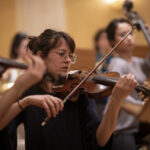
What are the challenges you had to go through?

Maddalena Bortot: I first had to learn a Beethoven quartet (plus both violin parts), which was a completely different approach to playing a series of orchestral passages. In addition, the real challenge was to play with complete strangers, musicians from all over the world, communicating in a language that we all use, English, which may not be the first language for everyone: because to put a quartet together you have to talk as well as play! Finally, I also played in different ensembles, one day the first violin part, the next day the second violin part. It was really two days of full immersion!”

What did you like most about auditioning for Theresia?

Lorenzo Molinetti: “I loved the repertoire and the different interactions I managed (and was asked) to create with the other aspiring candidates. To be able to play a lot of music and for a lot of time is really something amazing for an orchestra audition, where usually five minutes of playing (or even less) determine the outcome of the whole process. Auditioning for Theresia felt like giving proper recognition to all the work I put into the preparation of the piece beforehand.”

Maddalena Bortot: “For me, it was particularly inspiring because I am still a newcomer to performing on historical instruments and it is not so common for me to have the opportunity to hear so many other young musicians live, with their different experiences and sensibilities.

Do you have suggestions for improving the format of our auditions?

Lorenzo Molinetti: “It was very nice to be able to interact and develop a piece with input and ideas from the other candidates, and we were lucky to play in front of such esteemed jurors. We really had the chance to respond to their feedback, observe our responsiveness, and receive some really valuable guidance and suggestions. All this did happen to a some extent, but I would have liked even more of it!”

If you would like to take advantage of this extraordinary opportunity to showcase your musical skills as a performer of classical repertoire on period instruments, Theresia’s auditions are for you! Don’t miss this chance!