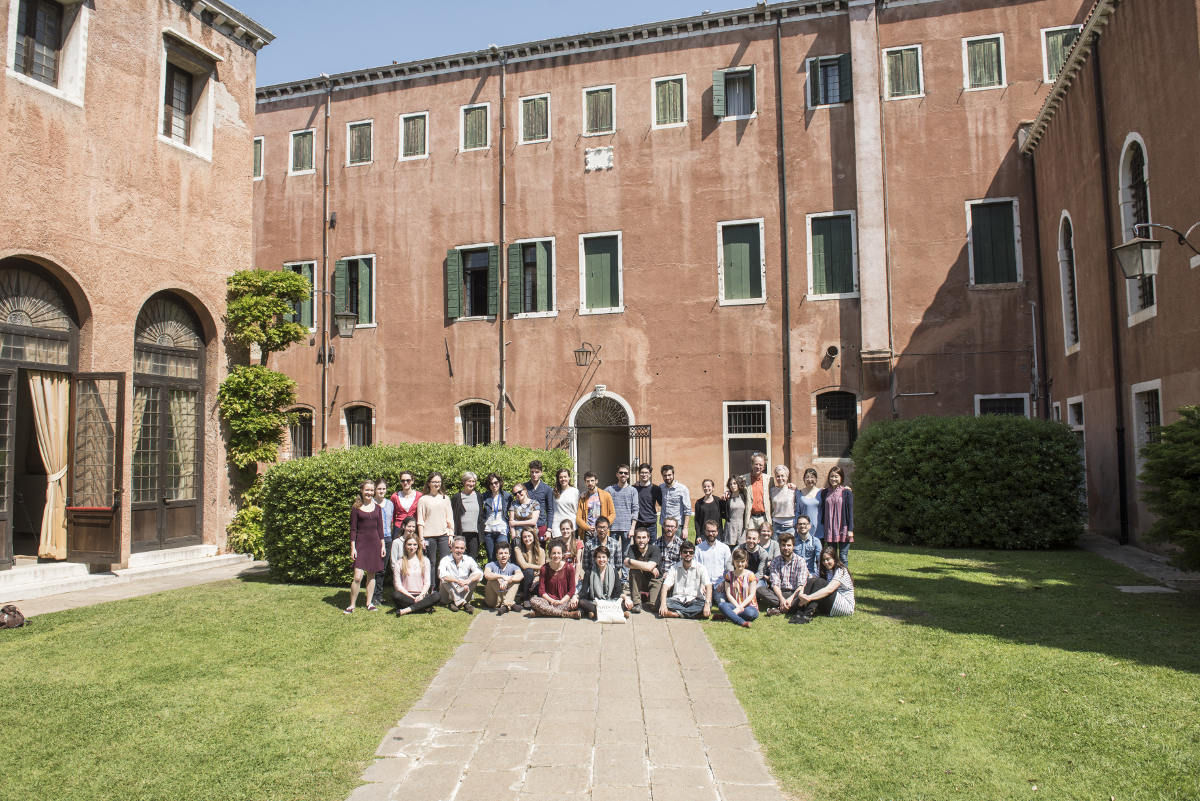
Theresia, welcome to the new members

By Emilia Campagna - May 23, 2016
After the end of the Venice workshop and auditions, now we have the names of the new members: 27 musicians were selected to join Theresia and take part in TYBO’s musical stages and orchestral projects in 2016-2019. The youngest are Simone Pirri and Samuel Casale, respectively Italian violinist and flutist born in 1994, the oldest […]

After the end of the Venice workshop and auditions, now we have the names of the new members: 27 musicians were selected to join Theresia and take part in TYBO’s musical stages and orchestral projects in 2016-2019. The youngest are Simone Pirri and Samuel Casale, respectively Italian violinist and flutist born in 1994, the oldest is Noemy Gagnog-Lafrenais, Canadian violinist born in 1988. Altogether the selected candidates have an average age of 26 years.

Ten violinists, five viola players, five cellist, two double-bass players, one horn player, one flutist, two oboe players and two bassoon players were selected, coming from Italy (6), Spain (5), Poland (4), France (2), Brasil, Canada, China, Colombia, Japan, Indonesia, England, Holland, Ukraine, USA.

Participants to the workshop were 31, selected on the basis of their curriculum from 122 applications received: as our conductors said, level was really high! Now all we are looking forward to next concert tour, that will take place in August in Bolzano, Rovereto and Rimini.

We met some of the new members of TYBO during the workshop’s days: stay tuned for the next “Meet Theresia” interviews!

Two clarinet players, two trumpet players and one trombonist were selected on the basis of video recorded performance.


Here are all the new members!

[row padding_top=”” padding_bottom=”” bg=”” bg_light=”true” appear=”false”] [column size=”1-2″ appear=”false”]Joanna Aksnowicz (POLAND) Violin
Anna Luiza Aleksandrow (POLAND) Viola
Vicente Beltran (SPAIN) Bassoon
Arthur Bolorinos (FRANCE) Clarinet
Samuel Casale (ITALY) Flute
Andre’ Costa (BRAZIL) Violin
Bartolomeo Dandolo Marchesi (ITALY) Cello
Nicolò Dotti (ITALY) Oboe
Alaia Ferran (SPAIN) Viola
Amaya Figuerendo Garcia (SPAIN) Violin
Noemy Gagnon-Lafrenais (CANADA) Violin
Giulia Gillio Gianetta (ITALY) Cello
Emanuele Goggio (ITALY) Trumpet
Katarzyna Kmieciak (POLAND) Violin
Maryse Legaul (CANADA) Clarinet
Neven Lesage (FRANCE) Oboe
Katarzyna Litwiniuk (POLAND) Viola
[/column] [column size=”1-2″ appear=”false”]
Chloé Lucas (FRANCE) Double-Bass
Yan Ma (CINA) Violin
Matteo Macchia (ITALY) Trumpet
Vadym Makarenko (UKRAINE) Violin
Zaynab Martin (ENGLAND) Double-Bass
Francisco Olmedo Molina (SPAIN) Trombone
Alejandro Perez Marin (COLOMBIA) Bassoon
Simone Pirri (ITALY) Violin
Clara Rada Gomez (SPAIN) Cello
Fernando Santiago Garcia (SPAIN) Cello
Giulia Sardi (ITALY) Violin
Yoko Tanaka (JAPAN) Viola
Taylor Townsend (USA) Horn
Anne Linde Visser (HOLLAND) Cello
Satryo Yudomartono (INDONESIA) Violin[/column] [/row]
Diario veneziano: intervista a Gabriele Rossi Rognoni

By Emilia Campagna - May 9, 2016
"Dobbiamo entrare in un sistema di pensiero che ci permetta di ricostruire come venisse vissuta l'esperienza della musica in un'altra epoca che non ci appartiene più"

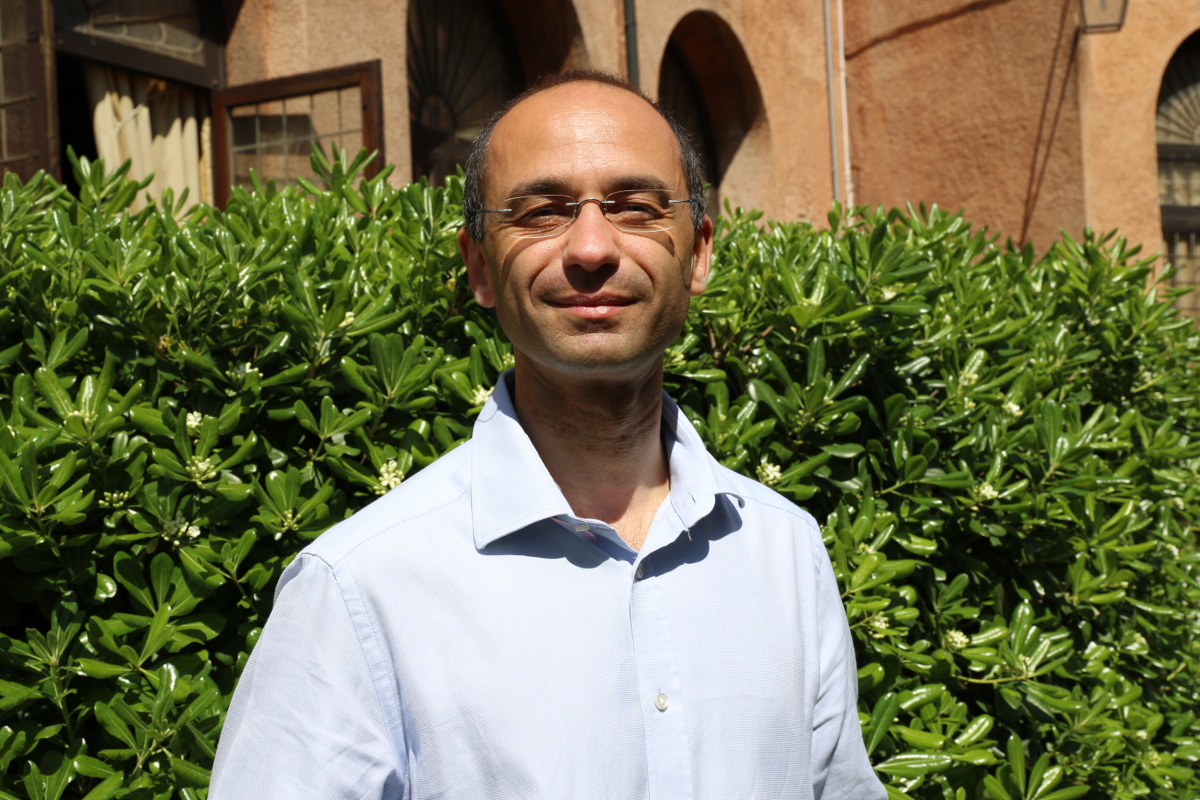
I tre seminari musicologici del workshop di Tybo a Venezia si sono conclusi con l’intervento del professor Gabriele Rossi Rognoni sul tema “From Pre-Classical to Classical orchestra in German countries: an organological perspective”, un tema complesso ed estremamente interessante per definire di cosa si parla quando si parla di orchestra ‘classica’. In questa intervista trovate una sintesi del suo intervento: buon ascolto!

[button url=”http://www.theresia-project.eu/wp-content/uploads/2016/05/grr.mp3″ new_tab=”false” size=”medium” style=”solid” color=”false” light=”false”]ASCOLTA L’INTERVISTA[/button]

[highlighted_text]READ THE ENGLISH VERSION[/highlighted_text]


The last of three musicological lectures was held by Professor Gabriele Rossi Rognoni about “From Pre-Classical to Classical orchestra in German countries: an organological perspective”. Professor, how was Haydn’s and Mozart’s orchestra?


“We think we know what Classical orchestra is, i.e. an orchestra that is supposed to have been defined in a period between 1740 and 1815. We think that it had a steady workforce, with more or less standardized roles, with certainly identifiable instruments.
On the contrary, what we tried to find out in Venice is the huge variety of the classic orchestra. As it always happens, it depends on perspective: when one looks from very far away, details get lost, and it seems that one can identify common characteristics. But then, when one looks from a nearer point all these certainties disappear: variety was huge, instruments changed from town to town, from maker to maker; sound changed, as such as the organization of the instruments; likewise, the relations between musicians, the way they were seated, the place itself where they were sitting changed, and all this brings more questions than answers. But it let us know the wide variety of the possible sound and repertoire’s interpretation, a variety higher than we can otherwise imagine.”

What are the sources underlying your research?

“They are so many: from documents to paintings, and also treatises that begin to be published in the beginning of Eighteenth century: they are treatises on the orchestra sometimes written with pre-nationalistic aim, in order to demonstrate that the orchestra of one’s own town was the best in Europe, sometimes with different aims. We tried to focus on musical instruments, looking for what they can tell us. Instruments are one of the most ‘material’ sources survived to narrate us the history of music: music doesn’t survive, scores do. But we know that a score is like a shorthand text that tells just a part of the actual musical impression of the performance: obviously we do not have recordings, but we have descriptions, written by contemporary listeners, telling us how past music sounded. Talking about music is always very different from playing it or listening to it: musical instruments can tell us a lot of things because we can study how they were made, how they evolved in time. If we put these observations in relation with the descriptions made by contemporary listeners, we can get an idea of the evolving of the ideal sound and how this ideal sound was perceived by contemporary audience.”

Given the variety that emerges from this musicological research, in your opinion how should an orchestra like Theresia – that bases its performances on the respect of the sources and on the use of the original instruments – behave?

“This is the point, we have to break away from the idea that there is a right way and a wrong way of playing. We should start to think that the music of the past centuries, much more of nowadays music, was a pragmatic phenomenon. Composers were referring to the place where the music they were writing would be performed; they used to compose for a specific event, for a specific place; if the same piece of music was to be performed again in another place, they used to orchestrate and write it down again, in order to fit it to the new place’s acoustics, to the new orchestra, to the new musicians and to the instrument that possibly would have changed in the period of 30 years passed after the first performance, or to instruments that in Paris would be different from the ones in Vienna.
So, we have to break away from the idea that musical sources give us a unique version to whom we must relate ourselves if we want to perform music of the past centuries correctly. Instead, we can study a system of thought that lets us imagine how the music was experienced in an era that no longer belongs to us.”

At the end of your lecture many questions came from the audience: did you expect such an interest?

“It was an awesome experience! I often do lectures and seminars, but I have rarely had an audience so interested, prepared (because all the questions were very relevant), interactive. It was absolutely awesome.”

Meet Theresia: a Venetian diary (part two)

By Emilia Campagna - May 6, 2016
Let’s keep on meeting some of the musicians that are participating to workshop and auditions here in San Giorgio Maggiore Island in Venice. Yesterday we talked with Clara, Vadym and Samuel: today we are meeting Taylor Townsend, 26 year, horn player from Colorado, USA. “Yes, I am from Colorado, but I haven’t been living in […]

Let’s keep on meeting some of the musicians that are participating to workshop and auditions here in San Giorgio Maggiore Island in Venice. Yesterday we talked with Clara, Vadym and Samuel: today we are meeting Taylor Townsend, 26 year, horn player from Colorado, USA. “Yes, I am from Colorado, but I haven’t been living in USA for some years now: I had a Master course in Zurich, which I finished, and now I live in Madrid. I am a freelance horn player (unfortunately I find work especially as a modern horn player), and I also earn something giving English lessons as a part-time teacher.”

i-PtjZXxB-X2 It’s the first time that Taylor plays in a classic orchestra such as Theresia, where musicians perform the Eighteenth century’s repertoire on period instruments: “I have started to play natural horn two years ago: it all began during my Master course in Zurich, but unfortunately it couldn’t be part of my syllabus. So I had to move around looking for courses in Bruxelles and Germany. For this very reason I am so happy of being here.” Taylor knew about Theresia Youth Baroque Orchestra from a former school mate of his, our horn player Katryn Zevenbergen: “She’s from Colorado too: when we were youngest we were studying together for one year. Recently she told me about the orchestra and these very auditions: I applied and I think that for me it’s a good thing just to be here: we are working so well with TYBO’s conductors, because they give us a lot of historical information and details about the way of playing the music that we are studying: it’s not just a matter of rehearsal after rehearsal, I feel that all we are growing thanks to this workshop.”

Zaynab MartinZaynab Martin is 27: from England (“but my mother is from Austria, so I am Anglo-Austrian”), she is a double bass player and she lives in Amsterdam where she had a Master degree in 2014. “Now I am a freelance musician, playing only the period instrument with gut strings: job’s opportunities are growing, but I play most of all Baroque repertoire. It doesn’t happen so often that I can perform Classic repertoire, this is the principal reason because I’m here.” Zayab is rehearsing with all the three conductors here in Venice: “With Chiara Banchini we work a lot on the bow technique, looking for the right sound, the right articulation; Claudio Astronio is more concerned of balance, dynamics and tuning of the whole orchestra; with Bernardini we deepen the role of each instrument in the wind and string ensembles.” The workshop is also an audition: the best musicians will be chosen for next TYBO’s productions, but Zaynab doesn’t care too much: “First of all I am here because I wanted to have an experience in a Classic orchestra and I wanted to be coached again: I finished studying, I am a freelancer pro, it is good for me to be a learner again sometimes.”
[highlighted_text] Read the first part of “Meet Theresia. A Venetian diary” (in italian)[/highlighted_text]


Meet Theresia: diario veneziano

By Emilia Campagna - May 5, 2016
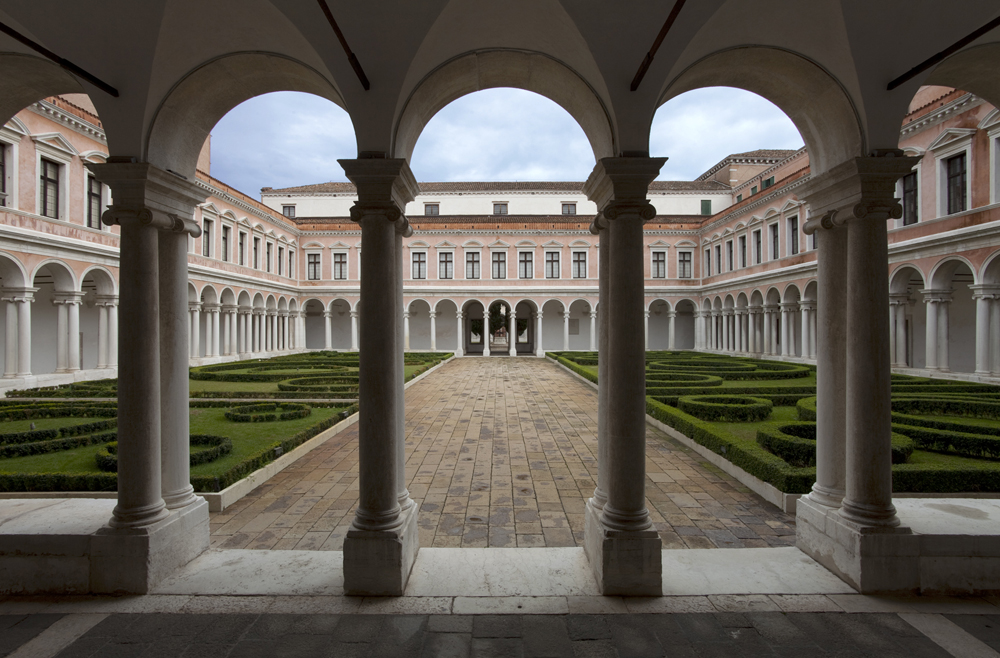
Venezia, Isola di San Giorgio: il workshop di TYBO procede a ritmo serrato, tra prove in orchestra e gruppi da camera. Fuori splende un sole luminosissimo, ma brezza e giri in vaporetto sono cose da turisti! I nostri musicisti sono totalmente immersi nel lavoro, animati da un entusiasmo contagioso: come Clara Rada Gomez, ventisettenne violoncellista […]

Venezia, Isola di San Giorgio: il workshop di TYBO procede a ritmo serrato, tra prove in orchestra e gruppi da camera. Fuori splende un sole luminosissimo, ma brezza e giri in vaporetto sono cose da turisti! I nostri musicisti sono totalmente immersi nel lavoro, animati da un entusiasmo contagioso: come Clara Rada Gomez, ventisettenne violoncellista spagnola, “felice di essere qua: a parte la bellezza straordinaria di Venezia, e di quest’isola in particolare, questa è un’esperienza meravigliosa.” Clara ha studiato a Saragozza, Zurigo e Basilea, dove attualmente vive, dividendosi tra strumento moderno e barocco. A ventisette anni ci si può ancora permettere il lusso di non scegliere un’unica strada, infatti Clara sperimenta anche il jazz, ma sul barocco ha le idee chiare: “Voglio investirci molto, sto suonando con le corde di budello ed è una cosa che mi piace moltissimo, inoltre in questo stage sto imparando cose nuove sull’arco: il mio è adatto per la musica barocca e spero in futuro di poter suonare il repertorio classico con l’arco giusto.” La formula di questo workshop l’ha conquistata: “E’ bello che Theresia faccia delle audizioni diverse dalle solite, in cui si suona per pochi minuti: qua possiamo dimostrare come suoniamo, come lavoriamo, e grazie ai seminari imparare cose nuove: è un vero e proprio corso, in cui confrontarsi con maestri e colleghi!”
Clara ha saputo del workshop dal suo ragazzo, il violinista Vadym Makarenko, ucraino di 24 anni che a Basilea studia con Amandine Beyer, già allieva di Chiara Banchini: a Venezia c’è anche lui, e in una pausa delle prove in cui ha suonato il Quintetto di Boccherini ci racconta che è “straordinario vedere le somiglianze tra Amandine Beyer e Chiara Banchini: diverse nella voce, nel modo di parlare, ma così simili nelle intenzioni musicali. Entrambe lavorano così tanto sull’articolazione, sul colore del suono, sull’emozione: in una parola, sulla bellezza della musica.” E’ la prima volta che Vadim lavora con Chiara Banchini, così come non aveva incontrato prima d’ora Claudio Astronio e Alfredo Bernardini: “Eppure è strano, ci guardiamo negli occhi e sembra di conoscerli già da prima: è una sensazione particolare, di grande rilassatezza. Siamo qua per suonare, e suoniamo: mi potrei dimenicare che questo workshop è anche un’audizione.”

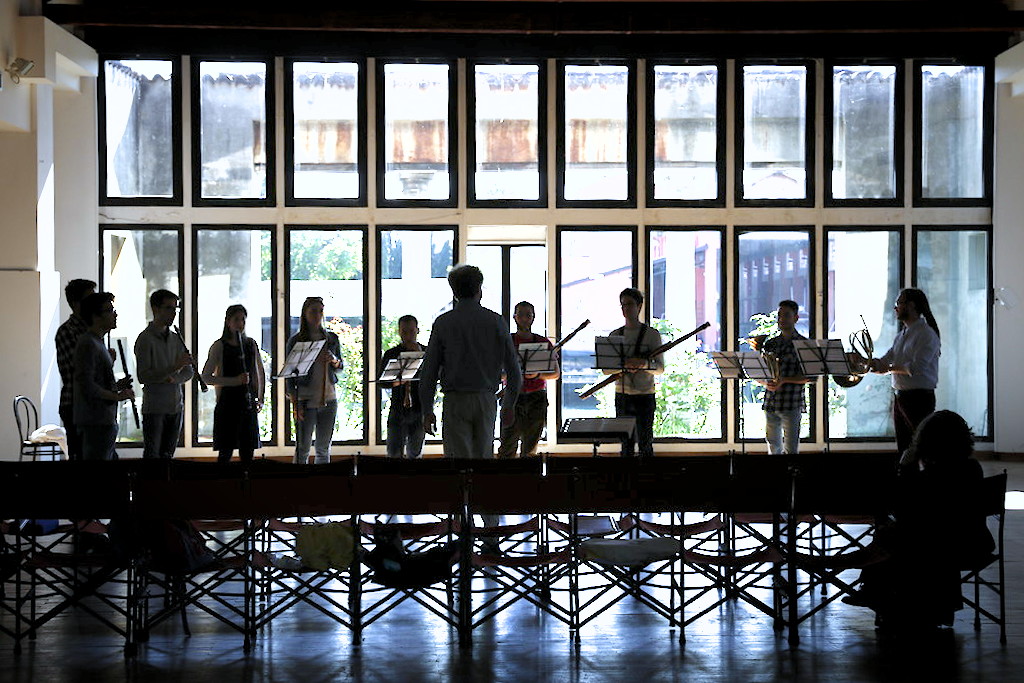
provano il Quintetto di Boccherini durante la lezione di Chiara Banchini

Mentre nella Sala degli Arazzi della Fondazione Giorgio Cini si suona il Quintetto di Boccherini, nella Sala delle Capriate Alfredo Bernardini lavora su un Divertimento di Haydn con i fiati: uno dei più giovani è l’italiano Samuel Casale, 22 anni: “Ho studiato flauto moderno al Conservatorio de L’Aquila e attualmente studio a Strasburgo, dove mi sono avvicinato, nell’ottobre 2014, al flauto barocco: ho anche studiato flauto rinascimentale, e nel gennaio di quest’anno, quando ho saputo dell’audizione di Theresia, ho provato con il flauto classico, con uno strumento che prendo in prestito dal Conservatorio.” Dello strumento classico, a Samuel piace il fatto che “ci sono molte differenze nella disposizione delle chiavi rispetto a quello moderno, e questo mi costringe a lavorare tanto con il cervello, è una condizione che mi stimola molto. Naturalmente anche il suono è molto diverso: più compatto, più diretto rispetto al moderno.” Della formula del workshop Samuel è contento, “anche se io sono abituato a fare quelle tradizionali, come molti altri miei colleghi e non soffro particolarmente lo stress da audizioni. Le giornate sono intense ma troviamo anche il tempo di rilassarci: ieri sera siamo usciti tutti insieme a mangiare una pizza alla Giudecca e poi ci siamo seduti sulla riva del canale a chiacchierare e a confrontarci sulle nostre esperienze.”

Samuel Casale, primo flauto nell'ensemble diretto da Alfredo Bernardini