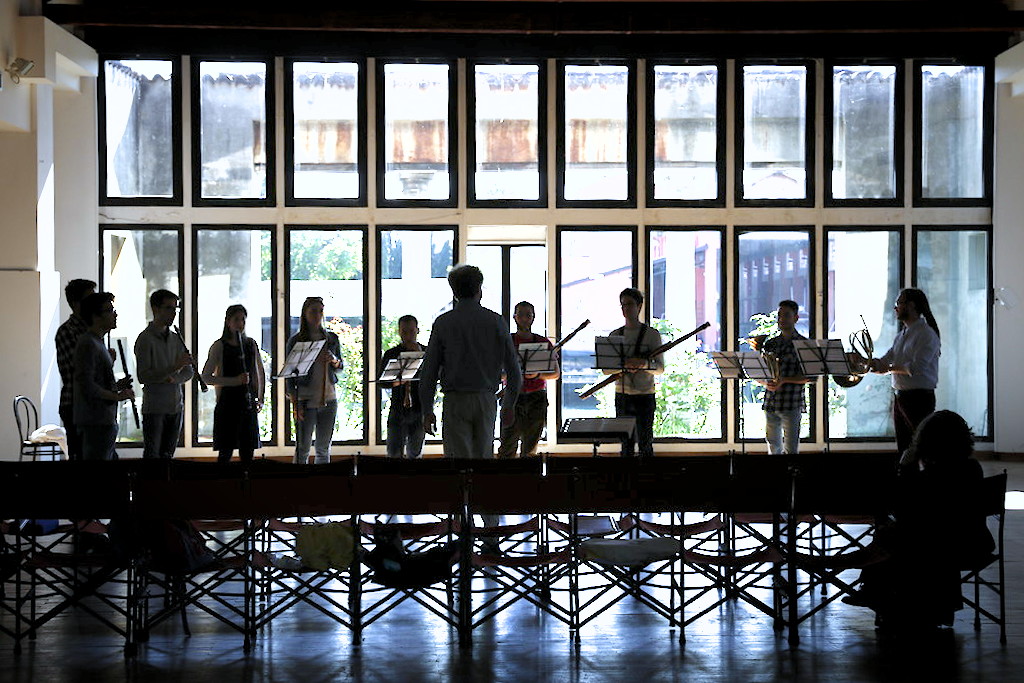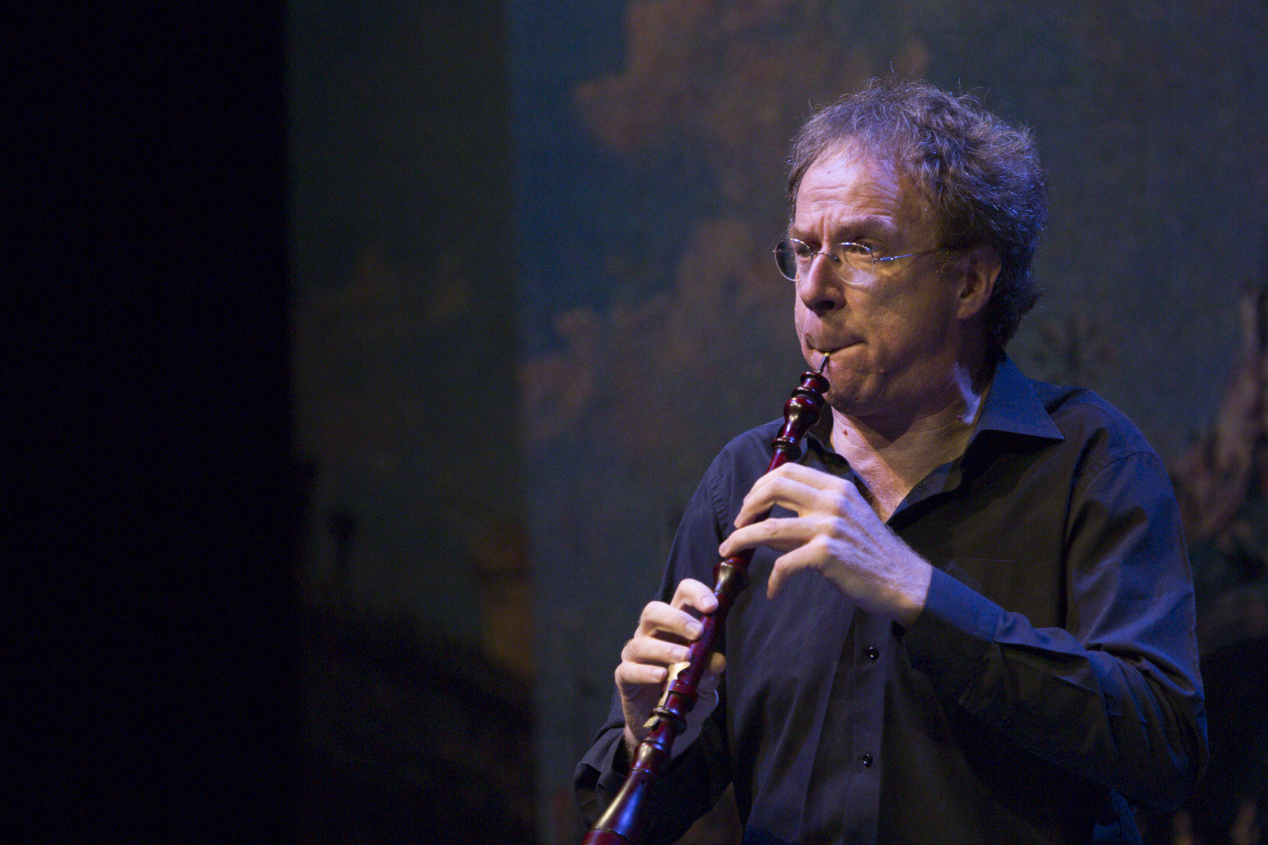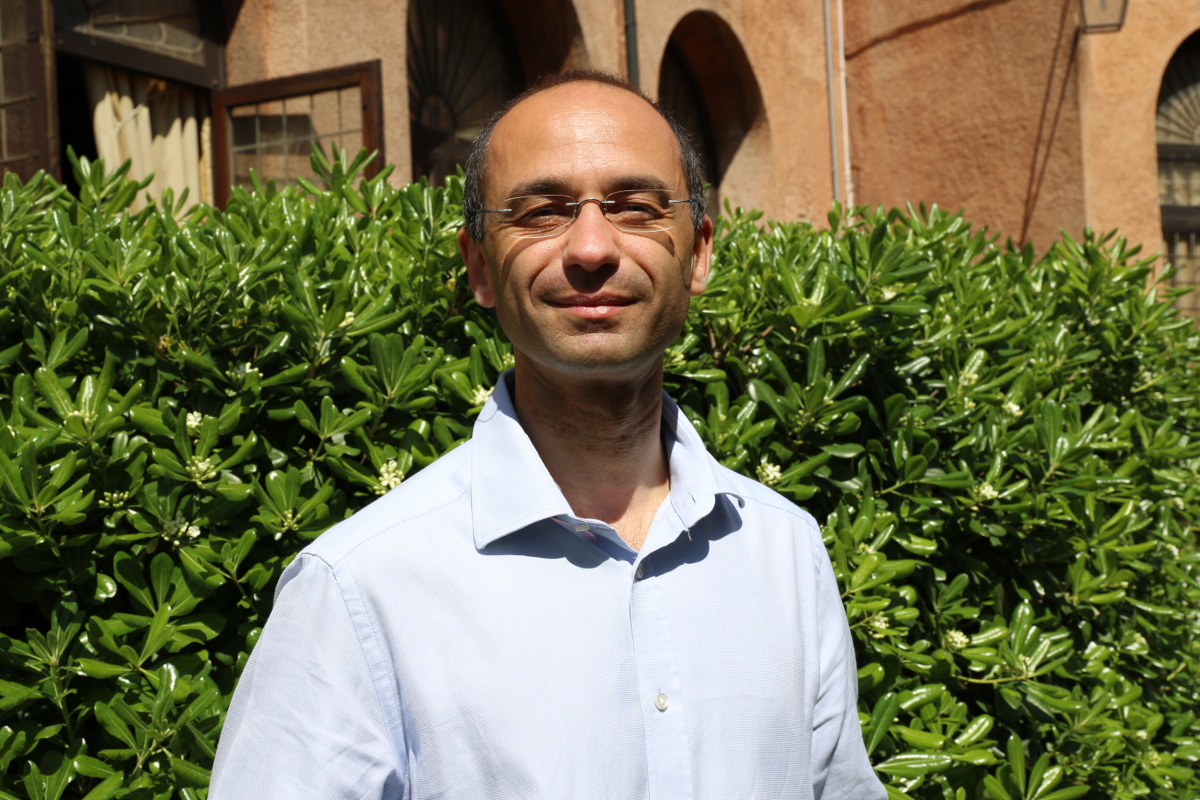
I tre seminari musicologici del workshop di Tybo a Venezia si sono conclusi con l’intervento del professor Gabriele Rossi Rognoni sul tema “From Pre-Classical to Classical orchestra in German countries: an organological perspective”, un tema complesso ed estremamente interessante per definire di cosa si parla quando si parla di orchestra ‘classica’. In questa intervista trovate una sintesi del suo intervento: buon ascolto!
[button url=”http://www.theresia-project.eu/wp-content/uploads/2016/05/grr.mp3″ new_tab=”false” size=”medium” style=”solid” color=”false” light=”false”]ASCOLTA L’INTERVISTA[/button]
[highlighted_text]READ THE ENGLISH VERSION[/highlighted_text]
The last of three musicological lectures was held by Professor Gabriele Rossi Rognoni about “From Pre-Classical to Classical orchestra in German countries: an organological perspective”. Professor, how was Haydn’s and Mozart’s orchestra?
“We think we know what Classical orchestra is, i.e. an orchestra that is supposed to have been defined in a period between 1740 and 1815. We think that it had a steady workforce, with more or less standardized roles, with certainly identifiable instruments.
On the contrary, what we tried to find out in Venice is the huge variety of the classic orchestra. As it always happens, it depends on perspective: when one looks from very far away, details get lost, and it seems that one can identify common characteristics. But then, when one looks from a nearer point all these certainties disappear: variety was huge, instruments changed from town to town, from maker to maker; sound changed, as such as the organization of the instruments; likewise, the relations between musicians, the way they were seated, the place itself where they were sitting changed, and all this brings more questions than answers. But it let us know the wide variety of the possible sound and repertoire’s interpretation, a variety higher than we can otherwise imagine.”
What are the sources underlying your research?
“They are so many: from documents to paintings, and also treatises that begin to be published in the beginning of Eighteenth century: they are treatises on the orchestra sometimes written with pre-nationalistic aim, in order to demonstrate that the orchestra of one’s own town was the best in Europe, sometimes with different aims. We tried to focus on musical instruments, looking for what they can tell us. Instruments are one of the most ‘material’ sources survived to narrate us the history of music: music doesn’t survive, scores do. But we know that a score is like a shorthand text that tells just a part of the actual musical impression of the performance: obviously we do not have recordings, but we have descriptions, written by contemporary listeners, telling us how past music sounded. Talking about music is always very different from playing it or listening to it: musical instruments can tell us a lot of things because we can study how they were made, how they evolved in time. If we put these observations in relation with the descriptions made by contemporary listeners, we can get an idea of the evolving of the ideal sound and how this ideal sound was perceived by contemporary audience.”
Given the variety that emerges from this musicological research, in your opinion how should an orchestra like Theresia – that bases its performances on the respect of the sources and on the use of the original instruments – behave?
“This is the point, we have to break away from the idea that there is a right way and a wrong way of playing. We should start to think that the music of the past centuries, much more of nowadays music, was a pragmatic phenomenon. Composers were referring to the place where the music they were writing would be performed; they used to compose for a specific event, for a specific place; if the same piece of music was to be performed again in another place, they used to orchestrate and write it down again, in order to fit it to the new place’s acoustics, to the new orchestra, to the new musicians and to the instrument that possibly would have changed in the period of 30 years passed after the first performance, or to instruments that in Paris would be different from the ones in Vienna.
So, we have to break away from the idea that musical sources give us a unique version to whom we must relate ourselves if we want to perform music of the past centuries correctly. Instead, we can study a system of thought that lets us imagine how the music was experienced in an era that no longer belongs to us.”
At the end of your lecture many questions came from the audience: did you expect such an interest?
“It was an awesome experience! I often do lectures and seminars, but I have rarely had an audience so interested, prepared (because all the questions were very relevant), interactive. It was absolutely awesome.”
 It’s the first time that Taylor plays in a classic orchestra such as Theresia, where musicians perform the Eighteenth century’s repertoire on period instruments: “I have started to play natural horn two years ago: it all began during my Master course in Zurich, but unfortunately it couldn’t be part of my syllabus. So I had to move around looking for courses in Bruxelles and Germany. For this very reason I am so happy of being here.” Taylor knew about Theresia Youth Baroque Orchestra from a former school mate of his, our horn player Katryn Zevenbergen: “She’s from Colorado too: when we were youngest we were studying together for one year. Recently she told me about the orchestra and these very auditions: I applied and I think that for me it’s a good thing just to be here: we are working so well with TYBO’s conductors, because they give us a lot of historical information and details about the way of playing the music that we are studying: it’s not just a matter of rehearsal after rehearsal, I feel that all we are growing thanks to this workshop.”
 Zaynab Martin is 27: from England (“but my mother is from Austria, so I am Anglo-Austrian”), she is a double bass player and she lives in Amsterdam where she had a Master degree in 2014. “Now I am a freelance musician, playing only the period instrument with gut strings: job’s opportunities are growing, but I play most of all Baroque repertoire. It doesn’t happen so often that I can perform Classic repertoire, this is the principal reason because I’m here.” Zayab is rehearsing with all the three conductors here in Venice: “With Chiara Banchini we work a lot on the bow technique, looking for the right sound, the right articulation; Claudio Astronio is more concerned of balance, dynamics and tuning of the whole orchestra; with Bernardini we deepen the role of each instrument in the wind and string ensembles.” The workshop is also an audition: the best musicians will be chosen for next TYBO’s productions, but Zaynab doesn’t care too much: “First of all I am here because I wanted to have an experience in a Classic orchestra and I wanted to be coached again: I finished studying, I am a freelancer pro, it is good for me to be a learner again sometimes.”