Empower: how to develop a music business idea

By Emilia Campagna - July 1, 2024
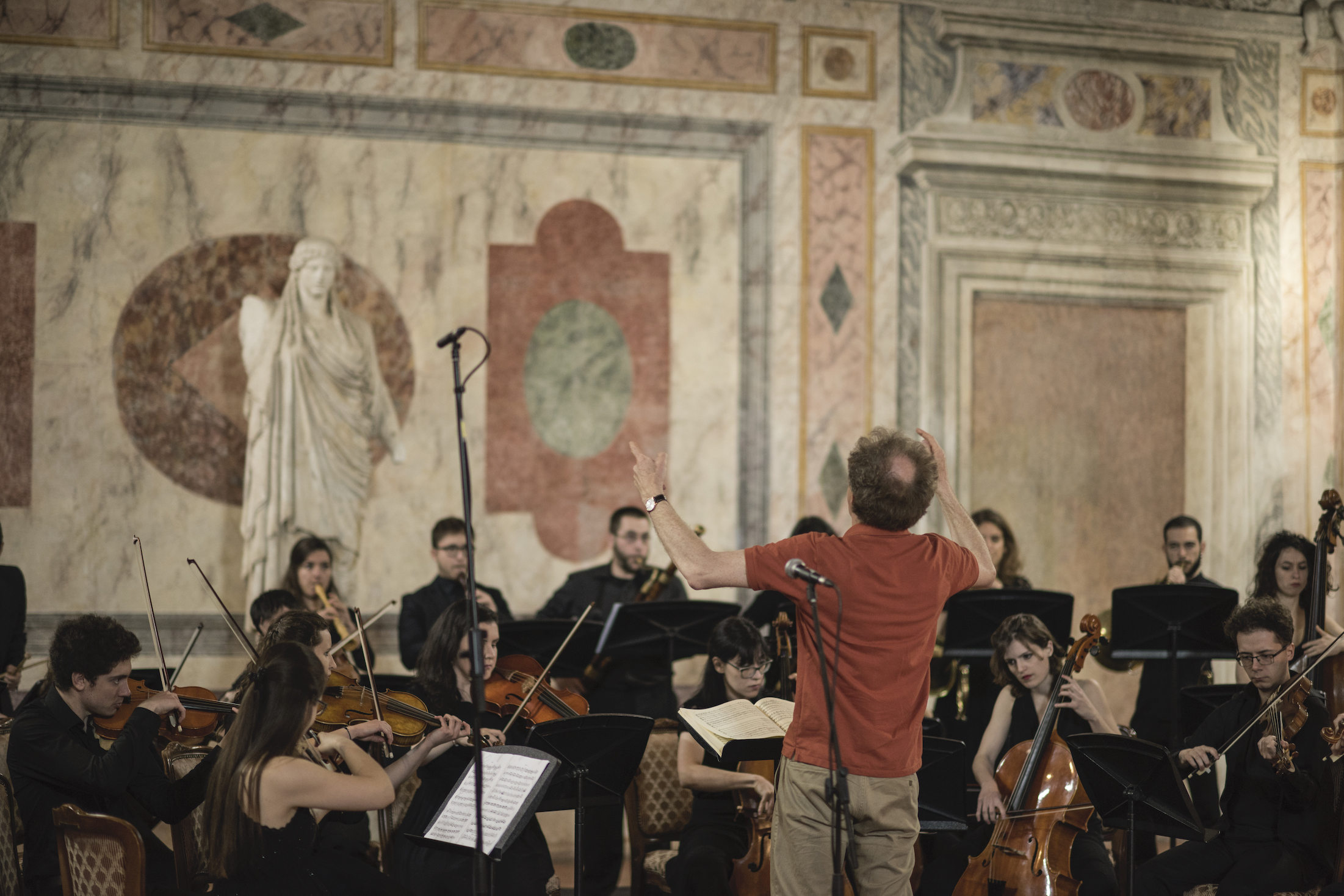
Among the various opportunities Theresia offers its musicians is a capacity-building programme that includes workshops, courses, and seminars designed to cultivate broader skills crucial for young musicians shaping their professional futures. One specific seminar is dedicated to coaching musicians in developing music business ideas led by Claudia Crippa, Head of Business Innovation at ICONS and Lorenzo Morelli, Junior Officer Business Innovation at ICONS

Among the various opportunities Theresia offers its musicians is a capacity-building programme that includes workshops, courses, and seminars designed to cultivate broader skills crucial for young musicians shaping their professional futures. The Theresia Academy is training scheme that goes beyond traditional rehearsals and instrument study. Co-funded by the EU as part of the Empower project, ICONS runs this comprehensive training programme. The various modules range from improving communication skills and self-care practices, to integrating soft skills with high musical proficiency.

One specific seminar is dedicated to coaching musicians in developing music business ideas. This module is led by Claudia Crippa, Head of Business Innovation at ICONS and Lorenzo Morelli, Junior Officer Business Innovation at ICONS. We spoke with Claudia and Lorenzo to find out more about the course they teach.

What does your training module cover?

In the organisation, economic and managerial skills module, we are mainly focusing on the use of an effective business planning tool known as the “Business Model Canvas”. This tool is essentially a framework with various sections that cover goals, activities, partnerships, and other crucial aspects that need to be taken into consideration when structuring any professional or business activity.

Why do you think this business course is useful for emerging musicians?

Getting to know the inner mechanisms of a business plan can be immensely useful for emerging musicians. It helps them clarify their goals, chart their career path in the music industry, and identify the necessary steps to achieve success. These questions-and answers-can span strictly musical objectives (how to become a permanent or regular member of an orchestra, how to set up an ensemble, or how to get into teaching) and broader career strategies such as event planning and management. We also offer insights into personal aspects on how best to manage one’s energy, ensuring a holistic approach to career development.

What were the goals identified by the course participants, and how did they work towards them?

The most common goal, understandably, is achieving financial stability: which became the focal point of our workshop. We explored the steps necessary to achieve this goal, starting with identifying stakeholders – colleagues to interact with and target audiences to address. We take a closer look at the importance of improving personal skills, ranging from strictly musical and technical proficiency to interpersonal skills. Participants then identified specific needs, such as the costs associated with further education or instrument maintenance. This led to the key question: how can these financial needs be met? how can I earn the money I need to pay for a courses or instrument check-up? The responses were diverse and enlightening ranging from the most obvious “get a contract in an orchestra” to the more creative approaches such as “organising concerts and sell tickets” to “participating in public calls for grants aimed at supporting young artists”.

How were the lessons structured?

The lessons began with an introductory explanation of the model. In a next phase, participants were divided into small groups to gather feedback and stimulate discussion. This approach encouraged peer interaction, allowing diverse and innovative ideas to emerge from withing the group. Finally, we provided personalised feedback to further refine individual understanding and application of the concepts discussed.

Did the course conclude with the completion of the Business Model Canvas?

Well yes, the core components were covered in the basic part of the seminar. Additionally, there was an optional module that consisted on designing, as concretely as possible, an event: the ideas that emerged in the first phase was often general, and participants had to investigate the various economic, logistical, and organisational aspects to gain a better understanding of the practical issues involved. We offer support throughout this process to ensure practical implementation.

Lots to celebrate: Theresia’s first ten years

By Emilia Campagna - February 16, 2023
Theresia is proud and happy to celebrate its first 10 years of activity with a concert in the very town where everything started!

Do you know that special feeling when you are both fulfilled and satisfied with what you  have achieved, and eager to move forward and break new grounds? That is exactly where Theresia is today; celebrating an important milestone and paving the way for new projects.

What’s to celebrate? No less than our first ten years of activity!

Back in the autumn of 2012 the orchestra gave its debut performance. The occasion was Premio Ferrari, an international competition set in Rovereto and dedicated to fortepiano performance: this was the prestigious frame to launch the cultural patronage and youth promotion project intensely wished for by our founder and artistic director Mario Martinoli.

Mario Martinoli, founder and artistic director of Theresia

The challenge at stake in this venture was twofold: to support the orchestra almost exclusively with private capital from a group of cultural patrons, and to focus on the classical repertoire.
Both ideas were innovative, especially in Italy. Cultural patronage wasn’t something that was talked about widely in Italy at the time; and as the classical repertoire was concerned, HIP orchestras up to that point had almost almost exclusively focused on performing Baroque music, neglecting the repertoire from 1750 to 1815.

The challenge was taken. In the beginning, the enthusiastic endorsement of renowned directors such as Claudio Astronio, Chiara Banchini, and Alfredo Bernardini was crucial. They, together with a dedicated staff, ensured that the orchestra consolidated and developed a solid international reputation.

Claudio Astronio conducting Theresia in 2014

Lady of the baroque bow: Chiara Banchini performing with Theresia in 2014

2016: Alfredo Bernardini conducts Theresia in Rimini

2016: Alfredo Bernardini conducts Theresia in Rimini

Today, after 37 residencies, and 77 concerts in 6 different European countries, Theresia is stronger than ever: we offered tuition in Classical music to more than 200 young musicians from over 40 world countries, for a grand total of 1300 hours of orchestral training. From an organisational point of view, Theresia makes for a solid partner as part of ICONS Foundation, capable of planning for the future. Additionally, Theresia is now funded by the European Union thanks to the Empower project!

As you can see, we have a lot to celebrate. And we are happy to do that in the very place where everything once started: Rovereto! Theresia will perform at the stunning Teatro Zandonai on February 26, which will be very special. The concert has a particular focus on the music by Ludwig van Beethoven with the Egmont Overture, as well as Symphony No.8 in F major, Op. 93. The orchestra will be conducted by Giovanni Antonini and is joined by violinist Dmitry Smirnov for Beethoven’s famous violin concerto.  Theresia will perform the same programme in Florence the next day: stay tuned for more details on the blog.

These February concerts will be the first of the full concert season in 2023, which we are incredibly looking forward to .

Let’s take a moment to remember those first days back in 2012, when we were full of enthusiasm and willingness, feelings that haven’t abandoned us. So, let’s browse together through the photo album of our debut at Premio Ferrari: enjoy the gallery!

Theresia Orchestra and a year in music

By Emilia Campagna - December 28, 2021
Let's give a look to the six things that made us proud and happy in 2021!

­How was your 2021? There are only a few days until New Year’s Eve, and this is the typically time of the year to look back and make a report about what happened in the last twelve months. Covid related issues continue to be in everybody’s thoughts: during 2021 we also faced difficulties in organizing events and in traveling, but in the second half of the year, we finally saw things changed, returning to travel and to meet in person again.

Nevertheless, here six stunning successes we were able to achieve this year!

1. Auditions at Mozarteum Salzburg

Not only we could manage to set up auditions to enroll new musicians, but we were also able to organize it abroad: it was held in one of the very centers of music in Europe, Salzburg’s Mozarteum. They were scheduled on 15 and 16 July, and 50 musicians (playing string instruments, oboe, horn and bassoon) coming from 23 different countries sent their candidature to take part. At the end of the auditions, 12 musicians from 13 different countries were invited to join Theresia!
Read more about our 2021 auditions in an interesting interview with our artistic director Mario Martinoli.

2. A night at the Opera!

Actually, an entire week: since our projects are mainly devoted to symphonic and chamber music, it was thrilling to be part of an opera production. Concerto Theresia, our alumni orchestra, performed Mattheson’s Boris Goudenow under the baton of Andrea Marchiol last August. Everybody was enthusiast about the experience, and it was a success with audiences and critics: Frankfurter Allgemeine Zeitung’s music reviewer wrote that “the Ensemble Concerto Theresia under the baton of Andrea Marchiol makes the rich and virtuosic music from both vocal and instrumental points of view flourish in all its colours”.

3. Discovering hidden gems in Geneva

We were in Geneva last summer with nine musicians from Theresia Orchestra for a chamber music project held by Chiara Banchini and Alfredo Bernardini. Some true musical jewels by Cambini, Canabich, Boccherini, Michael Haydn and Johann Christian Bach were unveiled to the audience of Festival Les Concerts d’Été à Saint Germain in two concerts, on 22 and 23 August.
Find more in this detailed interview with conductor and oboist Alfredo Bernardini.

4. Some round figures from the residency in Lodi

The concert held on 27 November in Lodi was our 60th, and the residency was the 30th. Something to be proud of! Plus, residency in Lodi was the first orchestral project after Covid started, and the very first for musicians enrolled in the last auditions. Definitely, there’s a lot to celebrate! The orchestra was conducted by Alfredo Bernardini, supported by Gemma Longoni as a tutor of 29 musicians from 20 different countries. And, the residency was the chance for a whole series of initiatives in addition to the concert. Find out more here.

5. Meeting with our counterparts from all over Europe

REMA (Réseau Européen de Musique Ancienne) is the most extensive network for Early Music in Europe, with a membership of 130 organizations in 23 countries.
Theresia joined Rema this year and in September, our team took part in a conference that brought together more than 30 representatives of musical institutions from all over Europe: the first live event after the Covid emergency started!

Read more about our experience here.

6. A thrilling breakthrough!

Last but not least….. a 3-years grant has been awarded to Theresia Orchestra by the Creative Europe Programme to develop excellence in orchestral learning and soft skills acquisition by our young artistic talents. That is, Theresia Orchestra enters today in the group of the leading European youth orchestras, together with EUYO – The European Union Youth Orchestra and other few acknowledged ensembles. This is a deserved international recognition of the work done by Theresia over the past 9 years and the beginning of a new exciting era for our orchestra!

The project is called EMPOWER and it will be coordinated by ICONS. This is a huge milestone that will allow Theresia to complete the pathway towards the creation of a truly pan-European orchestra, unique in addressing the classical repertoire on period instruments. EMPOWER will design and implement activities fostering the artistic excellence of young talented musicians Furthermore, it will make this artistic legacy accessible to the whole society.

To read more about the further development of Theresia, stay tuned!

Theresia Orchestra launches new 2020 concert season

By Theresia - January 8, 2020
  Theresia’s new concert season starts again, with the first residence in 2020 and two concerts in January.


Theresia’s new concert season starts again, with the first residence in 2020 and two concerts in January.

(more…)

Theresia e l’eredità di Bach

By Simone Laghi - June 27, 2019
Approfondiamo il programma che gli archi di Theresia eseguiranno a Ginevra il 7 e 8 luglio al termine dello stage condotto da Chiara Banchini e Girolamo Bottiglieri, con musiche di Mozart, CPE Bach e Mendellsohn

Approfondiamo il programma che gli archi di Theresia eseguiranno a Ginevra il 7 e 8 luglio al termine dello stage condotto da Chiara Banchini e Girolamo Bottiglieri.

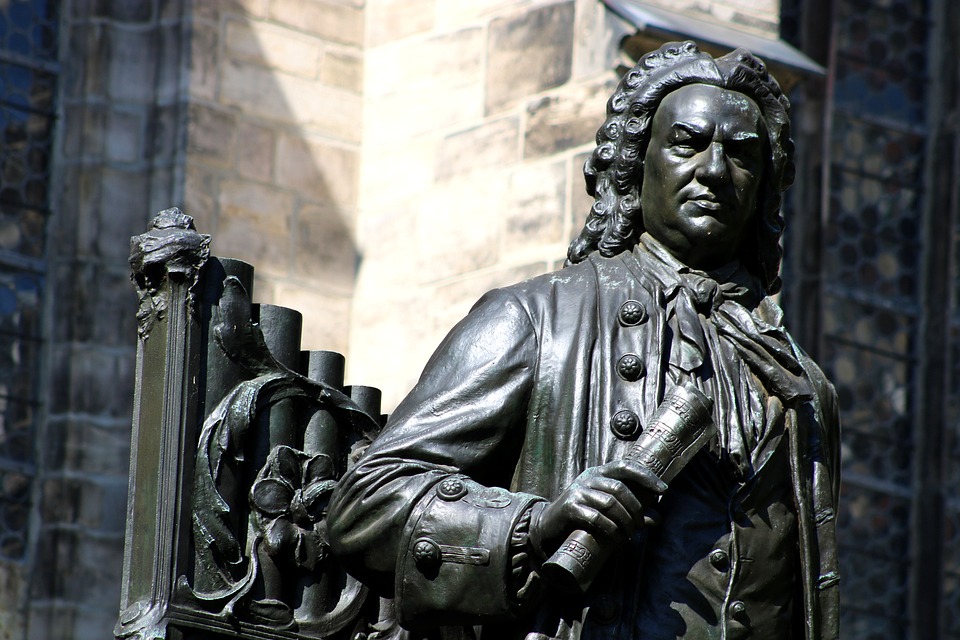
Parlando di musica antica al giorno d’oggi viene quasi spontaneo fare immediato riferimento alla figura di Johann Sebastian Bach (1685 – 1750) come summa di tutto quanto è stato composto per lo meno fino all’inizio del romanticismo, ma sicuramente anche in riferimento alla musica contemporanea. Tuttavia, quest’influenza non è stata sempre così ovvia come lo è per noi al giorno d’oggi. La fama di Johann Sebastian Bach nel ‘700 era principalmente dovuta al suo virtuosismo strumentale ed alle sue composizioni per tastiere (organo e clavicembalo), mentre gran parte dei suoi lavori orchestrali e sacri cadde nell’oblio per diversi anni a partire dalla sua morte e per vari decenni a seguire. La sua opera ha però lasciato una traccia costante e persistente che ha influenzato le generazioni future.

Uno dei principali sostenitori della musica di Bach nel secondo settecento fu certamente il Barone Gottfried van Swieten (1733 – 1803), al quale siamo debitori di aver trasmesso a Wolfgang Amadeus Mozart (1756 – 1791) la curiosità e l’interesse verso Johann Sebastian Bach e Georg Friederich Händel. Negli anni 1782-1783, van Swieten condivise con Mozart i manoscritti di Bach che aveva portato con sé da Berlino, dove aveva vissuto dal 1770 al 1777 in veste di ambasciatore, a stretto contatto con la corte musicale di Federico Guglielmo II e quindi con Carl Philipp Emanuel Bach. Il legame è comprovato anche dal fatto che nel 1773 van Swieten commissionò direttamente a Carl Philipp un ciclo di sei Sinfonie per Archi (Wq 182).
Il 10 Aprile del 1782 Mozart scrisse a suo padre: “Ogni domenica mattina a mezzogiorno in punto vado dal Barone van Swieten, dove non si suona altro che Händel e Bach. Sto collezionando al momento le fughe di Bach (non solo Sebastian, ma anche Emanuel e Friedemann)”. Questo incontro con Bach fu cruciale per Mozart che decise di trascrivere per quartetto d’archi cinque fughe a tre e quattro voci dalla seconda parte del Wohltemperierte Klavier (n. 2, 7, 9, 8 e 5, raccolte come K 405 nel catalogo mozartiano), ed anche sei adagi e fughe a tre voci di Johann Sebastian e Wilhelm Friedemann (per trio d’archi, K 404a). Sulla scia di questa infatuazione musicale, Mozart produsse anche diverse composizioni per tastiera: una di queste, la Fuga in do minore per due pianoforti K 426 (1783), divenne la base dell’Adagio e Fuga per archi K 546, composta nel 1788. Nello stesso anno Mozart componeva anche la Sinfonia n. 41 K 551 Jupiter, che con il suo movimento fugato finale ci ricorda l’influenza bachiana all’interno del catalogo mozartiano.

Wilhelm Friedemann Bach (1710 – 1784), il figlio primogenito, Carl Philipp Emanuel Bach (1714 – 1788) ed il loro fratello da seconde nozze Johann Christian Bach (1735 – 1782) rappresentano l’eredità genetica e la continuazione della lezione musicale del padre. Fra questi tre fu certamente Carl Philipp ad ottenere la posizione più di rilievo, entrando al servizio di Federico Guglielmo II di Prussia a Berlino nel 1740 e successivamente succedendo al suo padrino, Georg Philipp Telemann (1681 – 1767) come Kapellmeister ad Amburgo, nel 1767. Carl Philipp Emanuel ci ha lasciato anche una breve ma rilevante nota autobiografica commissionatagli dal compositore e storico della musica Charles Burney (1726 – 1814), che ebbe occasione di incontrare personalmente ad Amburgo nel 1772. In questa breve autobiografia, Carl Philipp racconta il rapporto col padre e ci fornisce alcune importanti notizie riguardo alla sua attività. La stretta dipendenza dalle commissioni e dai brani destinati alle esecuzioni pubbliche risultò essere per Carl Philipp una stringente limitazione: “In alcune occasioni sono addirittura stato obbligato a seguire indicazioni ridicole, sebbene queste non esaltanti condizioni abbiano portato il mio intelletto ad elaborare alcune scoperte che altrimenti avrei potuto non realizzare”. Si coglie in queste parole il senso di frustrazione dello spirito libero del compositore che vuole ricercare e spingere i confini della pratica oltre la tradizione, scontrandosi con un pubblico che voleva invece mantenere uno status quo rassicurante e famigliare. Il Concerto per Flauto in re minore Wq 22, H. 425 può rappresentare uno di questi felici momenti in cui il compositore, pur assecondando il desiderio del committente (Federico Guglielmo II, abile suonatore di traverso) sia riuscito ad oltrepassare i limiti del consueto, creando un capolavoro dello Sturm und Drang musicale. Nel primo movimento, Allegro, l’orchestra d’archi incornicia i quattro momenti solistici del flauto, ma spesso intrecciando un dialogo intenso, fuggendo il ruolo di mero sottofondo d’accompagnamento. Dopo un elegantissimo secondo movimento Un Poco Andante in Re maggiore, denso di quella Empfindungen tanto cara a Bach, si ritorna ad attraversare una furiosa tempesta nel terzo movimento, Allegro di Molto.

Felix Mendelssohn Bartholdy (1809 – 1847) fu un altro compositore la cui carriera fu irrimediabilmente segnata dall’incontro con la musica di Bach o, per meglio dire, della famiglia Bach. A causa del numero curioso di coincidenze che coinvolgono i percorsi incrociati dei membri delle famiglie Bach e Mendelssohn, era forse inevitabile che in retrospettiva Felix Mendelssohn sia diventato il nume tutelare della musica di Bach, salvandola dall’oblio. Il collegamento in questo caso sono due essenzialmente donne: la prima è la prozia di Felix, Sarah Itzig Levy (1761 – 1854). La casa della Itzig Levy a Berlino divenne sede di un fermento di attività musicali caratterizzate da una devozione particolare per la musica di Johann Sebastian Bach. La Itzig Levy era un’ottima musicista, avendo studiato clavicembalo con il primogenito di Bach, Wilhelm Friedemann; ella inoltre commissionò diverse composizioni di Carl Philipp Emanuel Bach, acquistando per suo tramite anche diversi manoscritti del padre. La sorella di Sarah Itzig Levy era Bella Salomon, la nonna materna di Felix Mendelssohn: anch’ella contribuì all’interesse del giovane compositore, regalandogli nel periodo fra la fine del 1823 e l’inizio del 1824 una copia della partitura della Passione secondo Matteo (oggi conservata alla Bodleian Library di Oxford). Questa monumentale opera sacra, dopo circa cento anni dalla data di composizione, venne finalmente ripresentata pubblicamente l’11 marzo 1829 alla Singakademie di Berlino, sotta la direzione dello stesso Mendelssohn dal pianoforte.
La Sinfonia per archi n. 7 in re minore fu composta da Mendelssohn all’età di 12 anni. Queste sinfonie erano essenzialmente dei compiti assegnati a Mendelssohn da Carl Zelter (1758 – 1832), suo insegnante di composizione ed a sua volta appassionato bachiano. Lo studioso di Mendelssohn R. Larry Todd sottolinea che lo “stile molto manierista” di molte delle sinfonie di archi di Felix, composte fra il 1821 ed il 1823, sarebbe stato influenzato proprio dalle Sinfonie per Archi commissionate dal Barone van Swieten a Carl Philipp Emanuel Bach. Mentre le prime sei sinfonie per archi sono tutte in tre movimenti, a partire dalla settima Mendelssohn cominciò a sperimentare con la forma più ampia in quattro movimenti, inserendo sia un Andante amorevole sia un Menuetto e Trio fra i due tempi estremi veloci (Allegro ed Allegro molto). Lungi dall’essere dei brevi compiti scolastici, questi composizioni giovanili contengono l’essenza dello sviluppo futuro del Mendelssohn maturo: caratterizzate da un marcato sentimento Sturm und Drang tendente al romanticismo, queste sinfonie sono fermamente radicate nella tradizione più elevata del contrappunto bachiano.

Vienna, Salzburg, Mannheim:
Theresia’s musical journey at Trame Sonore

By Emilia Campagna - May 23, 2019
We are about to embark on an enlightening musical journey. It will bring us and our audience through the three main towns when it comes to Classicism: Vienna, Salzburg and Mannheim

We are about to embark on an enlightening musical journey: it will bring us and our audience through the three main towns when it comes to Classicism: Vienna, Salzburg and Mannheim. And yet, nobody will have to leave at all the beautiful centre of Mantua, where we will be hosts of “Trame Sonore – Mantova Chamber Music Festival”.

Music is constantly appreciated as the most powerful way for time-travelling: this is even truer for orchestras that, like Theresia, perform on period instruments, deepening the historical performance practice.

So, this time we are headed for the very roots of Classical style, in search of the origins of Symphony and Sonata form.

Mannheim is considered to be a true school of classical style, thank both to the orchestral techniques pioneered by the court orchestra of Mannheim in the latter half of the 18th century and to the group of composers of the early classical period, who composed for the orchestra itself. The orchestra had an excellent reputation, due to its excellent discipline and the individual skill of its players; the English traveller Charles Burney called it “an army of generals”. The father of the school is considered to be the Bohemian composer Johann Stamitz, whose Symphony in F major n. 6 will be performed together with F. X. Richter‘s Symphony in G major VB 19 (concert on 1st June at 4.30 pm at Palazzo Ducale, Galleria dei Fiumi).

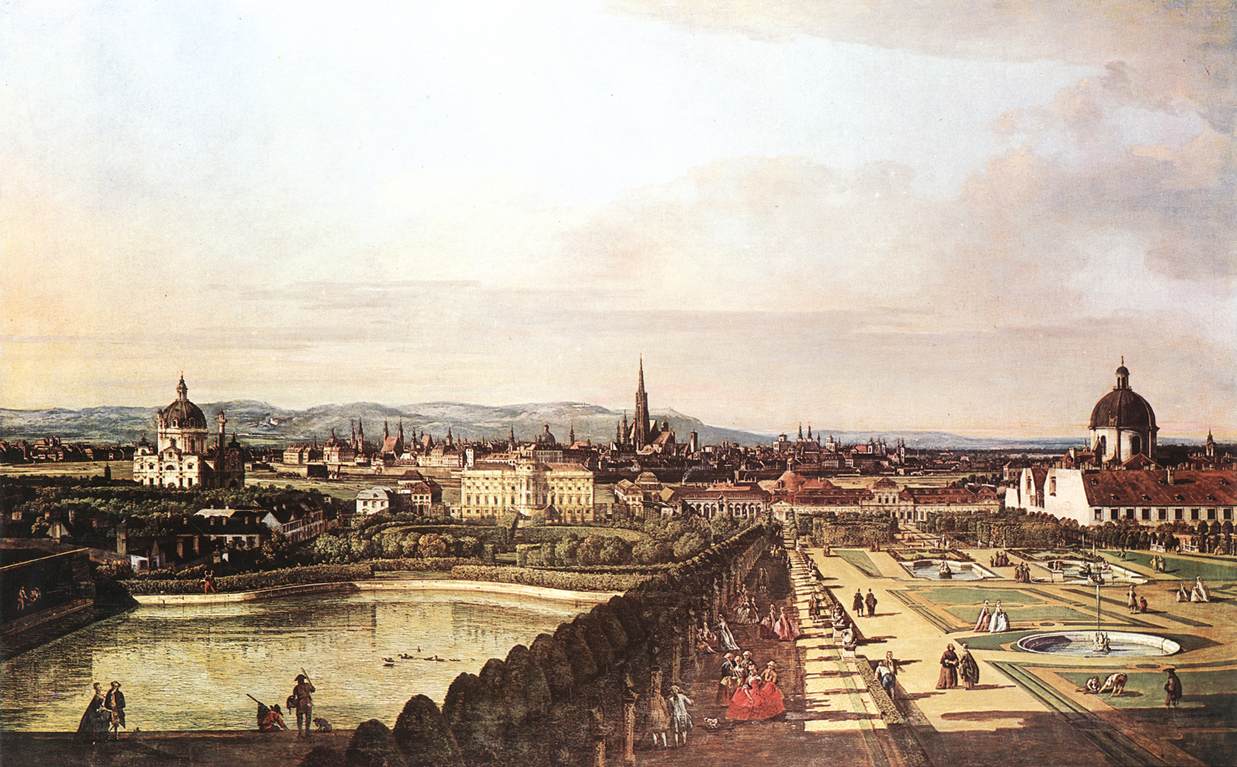
Since it was an imperial capital, Vienna was one of the main centres of musical life in Europe: the Viennese Classical school is nowadays best associated with the names of Mozart and Haydn, but the very transition from Baroque to Classical style was due to composers like Georg Matthias Monn. Monn, who was born in Vienna in 1717 and died in the same city in 1750, represents a school of Austrian composers who had thoroughly studied the principles of counterpoint as practised by Johann Sebastian Bach, but also effected a change from the formalistic and ornate Baroque style to the simpler, more graceful Galante music. Moreover, they renewed the sonata form by expanding the concepts of secondary theme and development. Even Czech-born composers Johann Baptist Wanhal and Josef Mysliveček (both born in the 1730s) are important representatives of the new style. Furthermore, many of Wanhal’s symphonies are in minor keys and are considered highly influential to the “Sturm und Drang” movement of his time. And, is renowned the influence that Josef Mysliveček had on the young Mozart. Monn, Vanhal and Myslivecek will be performed in our “Vienna” concert on 2nd June at 9 a.m. (Palazzo Te) and 10.30 p.m. (Palazzo Ducale).

Last but not least, Salzburg was obviously the town where Wolfgang Amadeus Mozart was born and where he started his career as a court composer to the Archbishop Hieronymus Colloredo: in 1772, when he was sixteen he wrote three Divertimenti after the second of three extended trips to Italy. A final trip to Italy was already in the planning and the Italian influence on Mozart’s writing is strong. The three-movement structure follows the pattern of the Italian Sinfonia, while the writing also nods in the direction of the widely respected Joseph Haydn and Johann Christian Bach – whom Mozart had met in London and whom he regarded as both friend and mentor. String Divertimentos n. 1 in D major and n. 3 in F major will be performed on 30th May at 9 a.m. and 10.30 a.m. (Teatro Bibiena) and on 31th May ah 10.30 a.m. (Galleria dei Fiumi di Palazzo Ducale).

Theresia’s strings will be conducted by Claudio Astronio with Gemma Longoni as violin concertmaster.

Dai voce alla cultura donando il 5 per 1000 a sostegno di Theresia

By theresia - May 15, 2019
È possibile sostenere attivamente le attività di Theresia destinando il 5 per 1000 alla Fondazione iCons. Un piccolo gesto per dare voce alla cultura!

È possibile sostenere attivamente le attività di Theresia destinando il 5 per 1000 alla Fondazione iCons. Un piccolo gesto per dare voce alla cultura!


IL CINQUE PER MILLE ALLA FONDAZIONE ICONS

La Fondazione iCons sostiene la formazione artistica giovanile attraverso l’erogazione di borse di studio a favore di talenti musicali sotto i 30 anni attraverso il Programma Theresia, creato per favorire l’emergere di giovani talenti artistici ed avviarli alla carriera professionale attraverso percorsi strutturati di alto perfezionamento.

​Theresia opera attraverso l’erogazione di borse di studio interamente finanziate dalla Fondazione iCons e da un gruppo di mecenati privati. Sin dall’inizio, la nostra scelta è stata infatti quella di non ricorrere a finanziamenti pubblici per il sostentamento dei nostri progetti culturali, nella convinzione che la creazione di un nuovo approccio al finanziamento della cultura fondato sulla partecipazione attiva dei privati cittadini sia una strada fertile per la costruzione di un nuovo Rinascimento delle arti.

Con il tuo 5 per mille alla Fondazione iCons puoi diventare anche tu protagonista e contribuire a finanziare fino a 10 nuove borse di studio per altrettanti giovani musicisti.

COME DONARE

Per donare il tuo 5 per mille alla Fondazione iCons a favore dei suoi progetti culturali:

  • – Scrivi 92563110151 nell’apposita casella sulla tua dichiarazione dei redditi riservata alla destinazione del 5 per mille per gli Enti del Volontariato.
  • – Invia una mail al tuo commercialista cliccando qui. TI basterà inserire l’indirizzo del tuo commercialista ed inviare la mail per garantire la tua donazione.

Condividi la nostra missione: sostieni la cultura, sostieni i giovani.

​IL NOSTRO 2018

Nel 2018 Fondazione iCons ha erogato 33 borse di studio ad altrettanti giovani musicisti provenienti da 12 diversi paesi del mondo per un totale di 92 400 EUR – di cui 39 173,63 EUR di competenza di bilancio 2018.

​Oltre alle attività erogative legate al Programma Theresia, la Fondazione iCons ha avviato 3 nuovi progetti di ricerca pluriennali nell’ambito del programma europeo di ricerca Horizon 2020., attraverso il Programma iCube.

IL NOSTRO 2019

Nel 2019 Fondazione iCons ha già attivato 7 borse di studio per giovani musicisti di Iran, Bosnia, Colombia, Polonia, Olanda, Romania e Francia e ambisce a riservarne un’ulteriore decina nei prossimi mesi, portando così il totale erogato al oltre 150 000 EUR in totale. Il tuo contributo del 5 per mille sarà destinato a questo scopo, ed abiliterà l’ulteriore crescita della nostra capacità erogativa a favore dei giovani talenti culturali.

​Oltre alle attività di sviluppo e sostegno culturale a giovani artisti, la Fondazione iCons partecipa a 12 progetti di ricerca pluriennali nell’ambito del programma europeo di ricerca Horizon 2020. attraverso il Programma iCube.

​Gli approfondimenti sugli aspetti istituzionali della Fondazione sono illustrati alla pagina Governance del sito.

​Grazie per il vostro sostegno!

Rediscovering Michael Haydn: an interview with David Wyn Jones

By Emilia Campagna - March 31, 2019
Michael Haydn's fame is now considerably overshadowed by that of his older brother, Franz Joseph Haydn, but he was a prolific composer who in his days was much admired. Find more in the interview with Professor David Wyn Jones

Among Classical composer, the name of Haydn is one of the most familiar, isn’t it? This is true when you think of Franz Joseph Haydn. It’s not the same when it comes to his brother, Michael, who was born in 1737 and died in 1806 in Salzburg. As a matter of fact, Michael Haydn’s fame is now considerably overshadowed by that of his older brother, but he was a prolific composer who in his day was much admired and was the teacher of such notable composers as Carl Maria von Weber, Anton Diabelli and Sigismund Neukomm.

In its relentless exploring of the Classical symphonic repertoire, for the first time Theresia will perform a Symphony by Michael Haydn. To deepen the subject, during the preparatory stage, our musician will attend a lecture by Professor David Wyn Jones, one of the major experts on these issues.


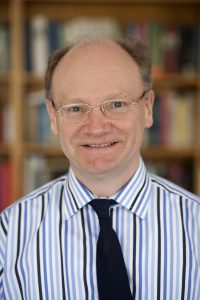
Professor David Wyn Jones

David Wyn Jones, is Professor at the School of Music of Cardiff University, and was Head of School March 2008 – July 2013. His main interest lies in the music of the Classical Period, in particular Haydn, Beethoven and Vienna, and in aspects of music dissemination and publishing. He was a member of the core group for the international project, ‘The Circulation of Music, 1600-1900’, sponsored by the European Science Foundation (2000-04). He has recently been appointed to advise on a new project, Concert Life in Vienna 1780-1830: Performances, Venues and Repertoires. Based at the Institute for Musicology at the University of Vienna, the oldest musicology department in the world, the project aims to provide a public, searchable database of private and public concert life in the city, including virtual recreations of performance spaces. Professor Jones has been appointed as one of seven members on the Scientific Advisory Board that will oversee the project, provide advice and review projects. He is the only panel member selected from outside Austria and Germany.

Professor David Wyn Jones, in your lecture you will speak about “Michael Haydn and Mozart: a forgotten musical relationship”. Which were the terms of their relationship and why has it been forgotten?

“Michael Haydn, Leopold Mozart (Mozart’s father) and Wolfgang Amadeus Mozart were colleagues at the court of the Archbishop in Salzburg. They would have seen each other on an almost daily basis, participated in performances of each other’s music in private and in church services. Like all true friends, they shared gossip and the Mozart family letters contain more than one account of Michael Haydn’s fondness for drink. But there is no doubt that he was a formative influence on the young Mozart, writing symphonies, concertos, serenades, church music and opera.”

Did Michael Haydn’s musical style influence Mozart’s and how?

“This might seem a rather uninspiring thing to say but Michael Haydn’s music has a thorough competence of technique as well a real sense of theatre (in the broadest sense) that is reflected in Mozart’s music. One of the many unfortunate legacies of nineteenth-century biographical writing is the excessive focus on the Wunderkind Mozart and the Incomparable Genius Mozart. In Salzburg, if not throughout his life, Mozart was writing in a lingua franca and many of the features of that language are to be found in Michael Haydn too. That Mozart recognized Michael Haydn’s mastery is suggested by a letter he sent to his father from Vienna, asking for the latest symphonies of Michael, so that he could perform them in that city. For one symphony, Mozart added a slow introduction, and for many years scholarship thought the whole work was by him, No. 37 in G major (K.444); No. 38 was the ‘Prague’ symphony.”

What do we know about Michael Haydn’s relationship with his brother, Joseph?

“Michael Haydn was five years younger than Joseph and for many years their careers ran in parallel: choirboys in Vienna, freelance musicians in Vienna, composers and performers of church music and employment at aristocratic courts, Michael at Grosswardein (in present day Rumania) and Haydn at the Esterházy court in Eisenstadt. When Michael moved to Salzburg in 1762 a long period of separation followed, over thirty years, until they again met in Vienna at the end of the 1790s. Michael was actually offered the post of Joseph Haydn’s deputy at the Esterházy court, but he preferred to remain in Salzburg. He died in 1806, three years before his elder brother.”

Joseph Haydn admired his brother’s music: which are the similarities and the differences between them?

“Joseph particularly admired Michael’s church music and may have been instrumental in persuading Empress Marie Therese (wife of Emperor Franz) to commission items of church music from him. They shared an enthusiasm for composing symphonies and church music, but Michael wrote far fewer string quartets than Joseph, while Michael wrote many more German songs (secular and sacred) than Joseph. Michael Haydn usually signed his autograph scores ‘G. M. Haydn’, while Haydn often wrote ‘G. Haydn’ or ‘Giuseppe Haydn’. Not surprisingly, this often led to confusion during and after their lifetimes.”

Why is Michael Haydn not popular nowadays as his elder brother?

“He’s suffered from being a supporting figure in two careers, Mozart’s and Haydn’s. The fact that his music was not distributed very widely in his lifetime did not help, also the fact that he couldn’t be captured in the narrative of Vienna the musical capital pushed him to the margins.”

Michael Haydn was a very prolific composer: which are the five masterpieces you would suggest listening if someone wanted to approach the composer?

I suggest Concerto in C for viola and organ (1761), Requiem in C minor (1771), Missa Sancti Aloysii (1777), Symphony in D minor (1784) and Quintet for clarinet, bassoon, horn, violin and viola (1790).”


In its next concert, Theresia Orchestra will play Linz Symphony by Mozart: which is the importance of this work in Mozart’s production?

“Dating from the autumn of 1783, it’s a work that both looks back to Salzburg and to later symphonies, including the very last, the ‘Jupiter’. It draws on years of experience of writing symphonies and – less often articulated – church music in Salzburg, and looks forward to the grandeur of his next symphony in C, the Jupiter, as, indeed, does the Michael Haydn symphony. A fascinating programme!”

According to your research and your knowledge of the late eighteenth-century repertoire, would you suggest three names of composers from the classical period who have been unjustly neglected and who deserve to be performed more often?

“I’m pleased to see that Theresia Orchestra has performed so many works by Kraus. Here are three other composers of symphonies who deserve to be performed. Johann Baptist Vanhal (1739-1813), Paul Wrantizky (1756-1808) and Anton Eberl (1765-1807).”

In your opinion, what do we gain performing this repertoire on historic instruments?

“Two words always come to my mind: energy and sonority. For the first it’s not just energy in fast music, but a sense of easy articulation in slow music and in dance movements too. For sonority, the vivid sense of variegated colour rather than a uniform tutti sound; trumpets and timpani, for instance, are to be heard – they meant something to Michael Haydn, Mozart and others.”

Meet Theresia: Lino Mendoza

By Emilia Campagna - February 22, 2019
"Theresia has a very particular way to bond between the members of the projects: since the beginning you can feel like you are part of a family. "

People of Theresia come from many places in the world: double bass player Lino Mendoza, 31 years old, came to study in Europe from Mexico. Let’s know something more about this musician, his past and his wishes for the future.

Lino, when did you start to study music and decide to be a double-bass player?

“As a child I didn’t have a musical education. Around 15 years old, my brother and me started to have curiosity for music, so we started around that age. In particular,  I started to play the double bass when I was 16, so my childhood was not in a musical education environment. Both of my parents aren’t musicians or had any musical formation during their education; however, both of them are big musical lovers. At home in Mexico we listen music very often, and they were always making my brother, my sister and me interested in music and dancing. So I do not come from a family of musicians but from a very musical one.”

When did you move to Europe and why?

“I moved more than three years ago, in September 2015. I came to Bern to achieve a Master in Performance at the Hochschule der Künste with David Sinclair.”

When and how did you decide to perform on period instrument?

“Since I started with the double bass I’ve had a lot of curiosity for the instrument and its history: I find it very particular and attractive. Speaking of the period instrument performance, it looked to me like the natural result of that curiosity.”

You still perform modern repertoire, and also contemporary, as our readers can see here. How does it work? Do you have two instruments or do you “simply” change the bow? Is it natural for you to switch between them?

“Yes, I still play modern music. Repertoire for modern orchestra is amazing and challenging for the bass and, of course, playing it is a beautiful challenge. The modern bass had an incredible boom during the 20th century and luckily it is still alive in these times: there are a lot of fine examples of it and maybe the music of Stefano Scodanibbio is one of the most refined.

Regarding the period instrument performance, I’ve been more and more playing chamber and orchestra music with the Viennese violone, in general the one originally thought for this beautiful instrument; the experience is really overwhelming and I try to do it more and more often. With the double bass I use a set of gut strings and I experiment as much as possible with different period bows: I love this huge variety of options!”

When did you join Theresia? How many Theresia’s projects have you been involved in and how was the experience?

“I joined Theresia for the first time in November 2015, and by now I’ve been already involved in four projects. Theresia has a very particular way to bond between the members of the projects: since the beginning you can feel like you are part of a family.  The lovely thing is that every time you can experience the joy of meeting again your colleagues, the wonderful teachers and the people of the organization that make it possible.”

Do you see yourself as a student or as a professional?

“I like to see myself as a professional that will never stop learning, and that makes me a life long student.”

Do you think that Theresia is giving you the tools to improve your professional status?

“Yes, this kind of performance is an experience that is still hard to find somewhere else in general; working with the experts that conduct and guide the projects has been a vast resource of knowledge for me.”

Theresia has a very particular way to bond between the members of the projects: since the beginning you can feel like you are part of a family.

You are from Mexico and study in Europe: is it hard to manage your travels? How do you cope with flight rules?

“In general, inside Europe I travel by train for carrying my double bass; but I’ve just made two continental flights from Europe to Mexico and back with the instrument and it is very frightening. It’s always a mess to fly with a double bass but luckily my instrument has arrived always good.
Mexico is far, so sadly I don’t often go over there. But I hope with time I can start going back there more and more, hopefully also to make concerts.”

What do you like to do when you aren’t playing?

“I used to read a lot: now, I like to watch movies or just have a nice walk in the city, outside in the nature or visiting a nice museum. I also enjoy eating, so whenever I have time I like to cook, even when I have any background in the matter.”

Where do you see yourself in five years?

“Five years ago I could not imagine myself doing what I’m doing now so it’s a very hard question. Maybe it is better for me to think that I trust in music and wherever it takes me I’m going to be fine with it and my double bass.”

What’s next: 2019 in one glance

By Emilia Campagna - December 17, 2018
2019 will be a rich year, with two big orchestral projects, a wind academy and three special projects for strings. Good for the newcomers that will join Theresia after the upcoming string auditions!

2019 will be a rich year, with two big orchestral projects, a wind academy and three special projects for strings. Good for the newcomers that will join Theresia after the upcoming string auditions!

Next year’s activity will start in January with a String Academy: Chiara Banchini and cellist Roel Dieltiens will be the tutors; string musicians will work in Lodi from 14 to 19 January studying chamber music by Mozart, Kraus, Boccherini, Rossini and Beethoven.

The second project (28 April – 5 May) will be devoted to the symphonic repertoire: Alfredo Bernardini will conduct the orchestra performing Mozart’s Symphony n. 36 in C major “Linz” KV 425 and Haydn’s Symphony n. 28 in C major.  Again, this project will take place in Lodi which, in addition to being iCons Foundations’ venue, is confirmed to be a perfect and friendly environment.  With regard to the music, this first orchestral project is especially interesting because it explores the roots of Jupiter Symphony, Mozart’s masterpiece: we will go deeper into the issue in a later post, now just know that our audience will be very surprised listening to the Finale of Michael Haydn’s Symphony n. 28, which includes all four themes of the Finale of the Jupiter, written four years later in 1788, and gorgeously elaborated. A true surprise, worth the discovery.

After a month, strings will get down to work again, for a project we are looking forward to: Theresia’s string will be guests of the exciting “Trame Sonore” Festival in Mantua, where we were for a successful orchestral project two years ago. The academy will take place from 28 May to 2 June, with music by Luigi Boccherini and Francesco Galeazzi.

In July, strings will be in Genoa, working with Chiara Banchini on music by Mozart: at the end of the residency, on 7th and 8th July, Theresia’s string will perform in a double concert in Geneva.

An ambitious project will be held during the summer: August residency will be devoted to the complete Ouvertures by Joseph Martin Kraus and includes the CD recording of the program for a major world label. The recording will be a world premiere on authentic instruments collecting all the overtures composed by Joseph Martin Kraus for his operas, ballets, theatre, politics and sacred music during his lifetime, plus his major symphonic output, the monumental Chaconne from the opera Aeneas I Cartago. This large-scale program will require Theresia in its largest scale setting (44 elements) and will include, besides a reinforced string and wind orchestra, Turkish music. The two-week project will also include seminars and other learning events linked to the profile and the music of Joseph Martin Kraus and its era.

The last project of the year will be a wind academy: back to Lodi, from 8 to 12 October Alfredo Bernardini will lead the wind players performing music by Beethoven, Danzi and others.

Check our calendar to find out where and when all our concerts will be held: new dates are to be confirmed, so stay tuned and don’t miss any.

Alfredo Bernardini, Chiara Banchini and Claudio Astronio

Alfredo Bernardini, Chiara Banchini and Claudio Astronio will be the conductors of 2019 productions