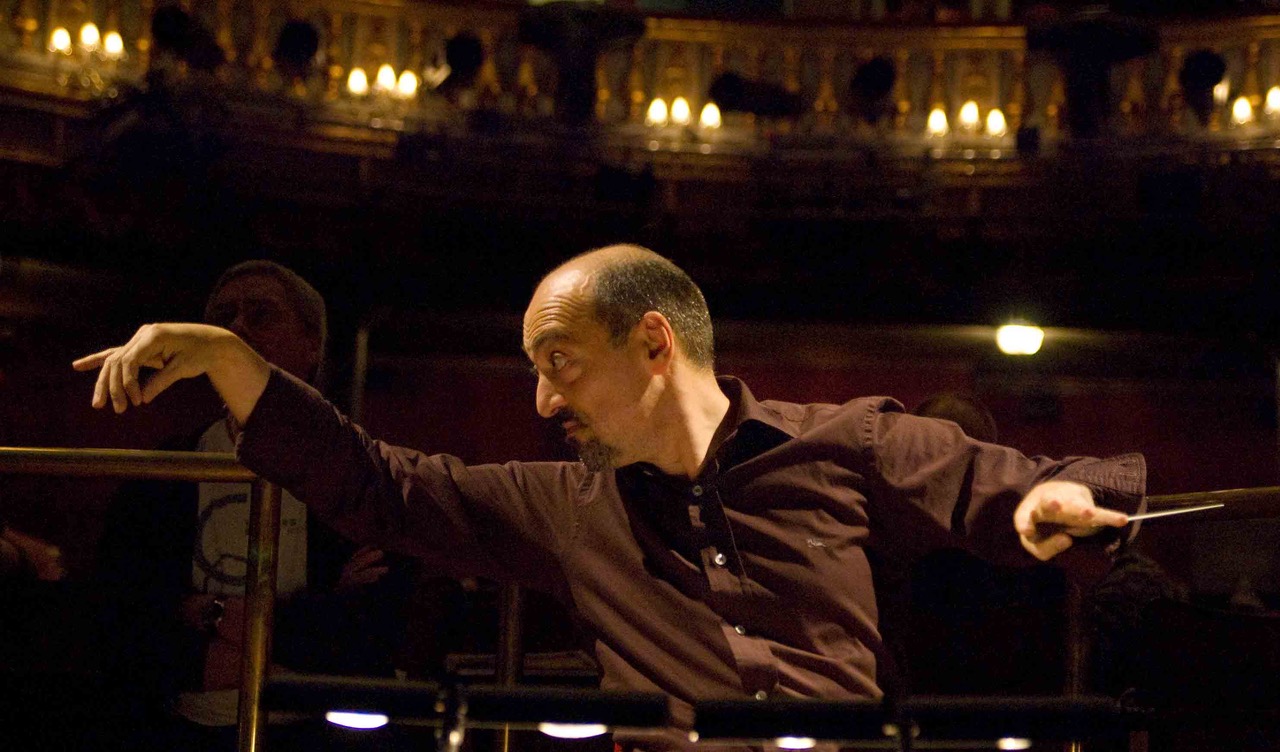
Alessandro De Marchi: “Rossini is a matter of balance between historical research and tradition”

By Emilia Campagna - October 20, 2023
Only a few days away from our next performances, we caught up with conductor Alessandro De Marchi who conducts Theresia in our annual opera project just like last year. We will make our return to the Reate Festival for belcanto opera to accompany a talented cast of emerging singers. And this time we'll be challenged by adding something entirely new to our repertoire: Gioacchino Rossini and one of the first opera's he wrote "L'inganno felice".

Only a few days away from our next performances, we caught up with conductor Alessandro De Marchi who conducts Theresia in our annual opera project just like last year. We will make our return to the Reate Festival for belcanto opera to accompany a talented cast of emerging singers. And this time we’ll be challenged by adding something entirely new to our repertoire: Gioacchino Rossini and one of the first opera’s he wrote “L’inganno felice”.

Find out the details in this interview with conductor Alessandro de Marchi.

Maestro De Marchi, tell us about this Rossini opera “L’inganno felice”: where does it fit within the composer’s body of work?

It is a  so-called “opera farsa” which Rossini composed in 1812 for the Teatro San Moise in Venice to a libretto by Giuseppe Maria Foppa. The term ‘farce’ is misleading, because the plot is anything but comic as it tells about the misfortune of a young bride who is sent to her death by her husband, who unjustly accuses her of infidelity. This characterisation only refers to the one-act structure and some of the typical formal characteristics of the work. The only ‘buffo’ element is the duet of the two basses, which is full of cynicism and irony. The opera was written by a young Rossini at the young age of 19 and clearly shows that he had already mastered the expressive skills typical for his style; above all, the work shows the composer’s mastery of instrumentation (learnt by studying the scores of Haydn and Mozart) that had already earned him the nickname “tedeschino” during his conservatory years.

Can you tell us about the vocal cast involved in this production? Are they singers you have worked with before?

I always enjoy working with talented young singers, and some of the discoveries of recent years have come from the prestigious Cesti Competition in Innsbruck, which I created in the Tyrolean capital in 2010. These artists include Miriam Albano and Matteo Loi, who are now established soloists on the international stage. A long collaboration connects me with the bass Luigi De Donato, who in recent years has given memorable interpretations alongside me of many baroque and bel canto roles. Tenor Antonio Gares and baritone Giuseppe Toia are excellent artists who have more recently been discovered through auditions and with whom I am happy to work with for the first time.

What is your relationship to Gioacchino Rossini?

Rossini has been with me throughout my professional life and even before then. In fact, I come from a family whose female side, the Neapolitan side, was made up of melomaniacs. My mother, aunts and my grandmother listened to opera records at home, and although in the best Italian tradition Verdi and Puccini topped the bill, Rossini also had his place. Even as a child, I loved to accompany singers on the piano, so I often played the most famous arias of the Pesaro composer to great pleasure. However, my affinity with the composer on a conducting level, was three decades ago, at the beginning of my contract as pianist at the Staatsoper Unter den Linden in Berlin. There, I was asked to conduct the Barber of Seville for the first time, “jumping” in the orchestra pit at the last minute without any previous rehearsal. It went very well, and after that fortunate occasion, Rossini engagements became more and more frequent, and so this composer has kept me company for more than 30 years now.

How does the approach to this composer change when performing according to historically informed practice?

My approach is similar with both modern and historical instruments. However, the result changes a lot when you change the instruments as well as the mind-set of the instrumentalists. Certainly, authentic instruments give us completely different sonorities, very fascinating sound mixtures, soft, but also scratchy when needed; also, as in the striking case of the horns, a fusion in the woodwind group that is unthinkable in a modern orchestra. There are many techniques and many aesthetic principles of Rossini’s time that have been lost and that can be reconstructed by studying the sources. On the other hand, there are just as many that have remained in the tradition and are still present today in performances with modern instruments, and which must be preserved as witnesses to practices that have never become extinct. I would say that creating a balanced and historically acceptable interpretation of this music means finding a balance between historical research and tradition.

The historically informed approach originates from the performance of Baroque repertoire, and was then extended to the Classical repertoire, as is the case with Theresia Orchestra. This Rossini project shows that one can go further: what sort of historical limits (if any) are there to perform his music?

Personally, I went as far as Bellini’s Sonnambula, an opera from 1831. And actually there are no time limits: in Germany they already play Wagner with historical instruments, in France they perform Ravel and Debussy on period instruments…

Theresia is performing Rossini for the first time: what can audiences and former collaborators who are familiar with the orchestra’s path and approach expect from this “encounter”?

The usual quality and energy of these young musicians, and above all the joy of making music together.
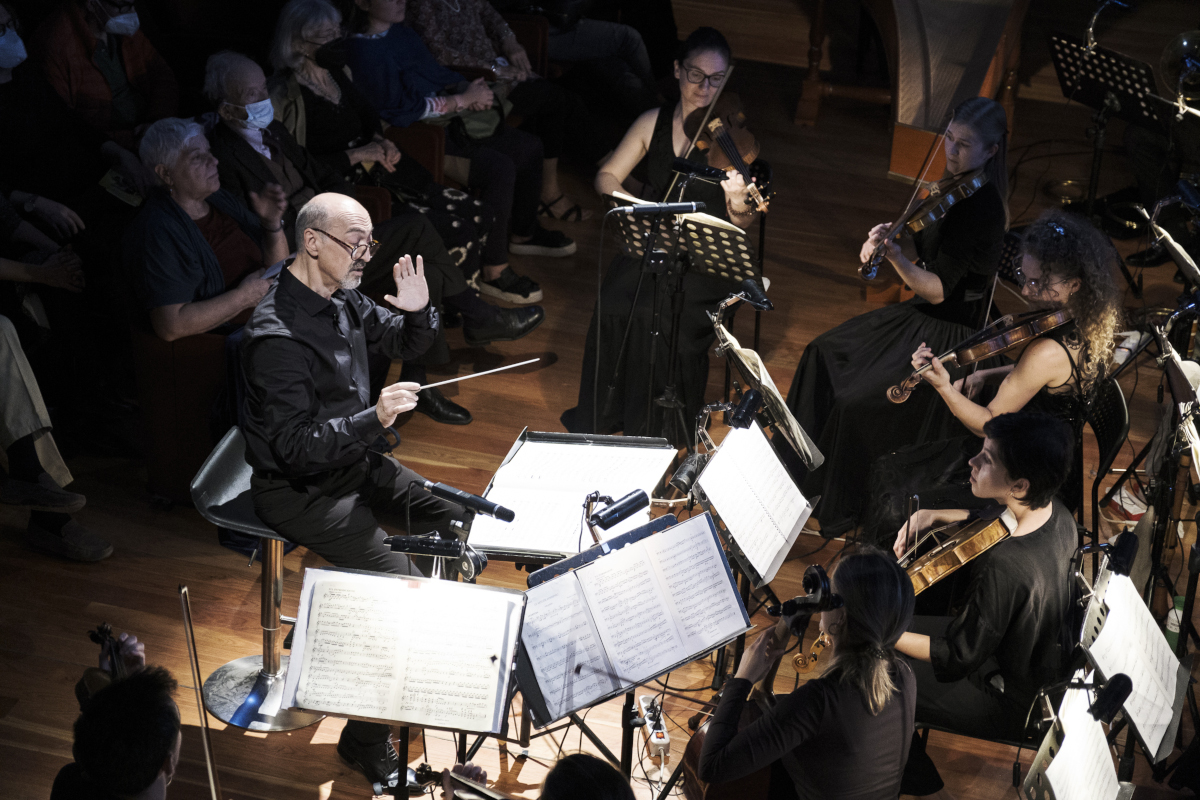
Theresia performs “L’inganno felice” by Gioacchino Rossini under the direction of Alessandro De Marchi on 21 and 22 October in Rieti (Auditorium di Santa Scolastica) and on 24 and 25 October in Rome (Teatro Palladium).

Our places: Teatro di Villa Torlonia

By Emilia Campagna - October 12, 2022
It seems like we can’t help but perform in beautiful and fairytale places. And our next destination is no less. Follow us in Teatro di Villa Torlonia.

It seems like we can’t help but perform in beautiful and fairytale places. It is not that we are looking deliberately for them: maybe we are especially lucky, or we are good at seeing the beauty that surrounds us, but if you pore over the “Our places” series of blog posts, you’ll see it’s just like that. And the next destination is no less.

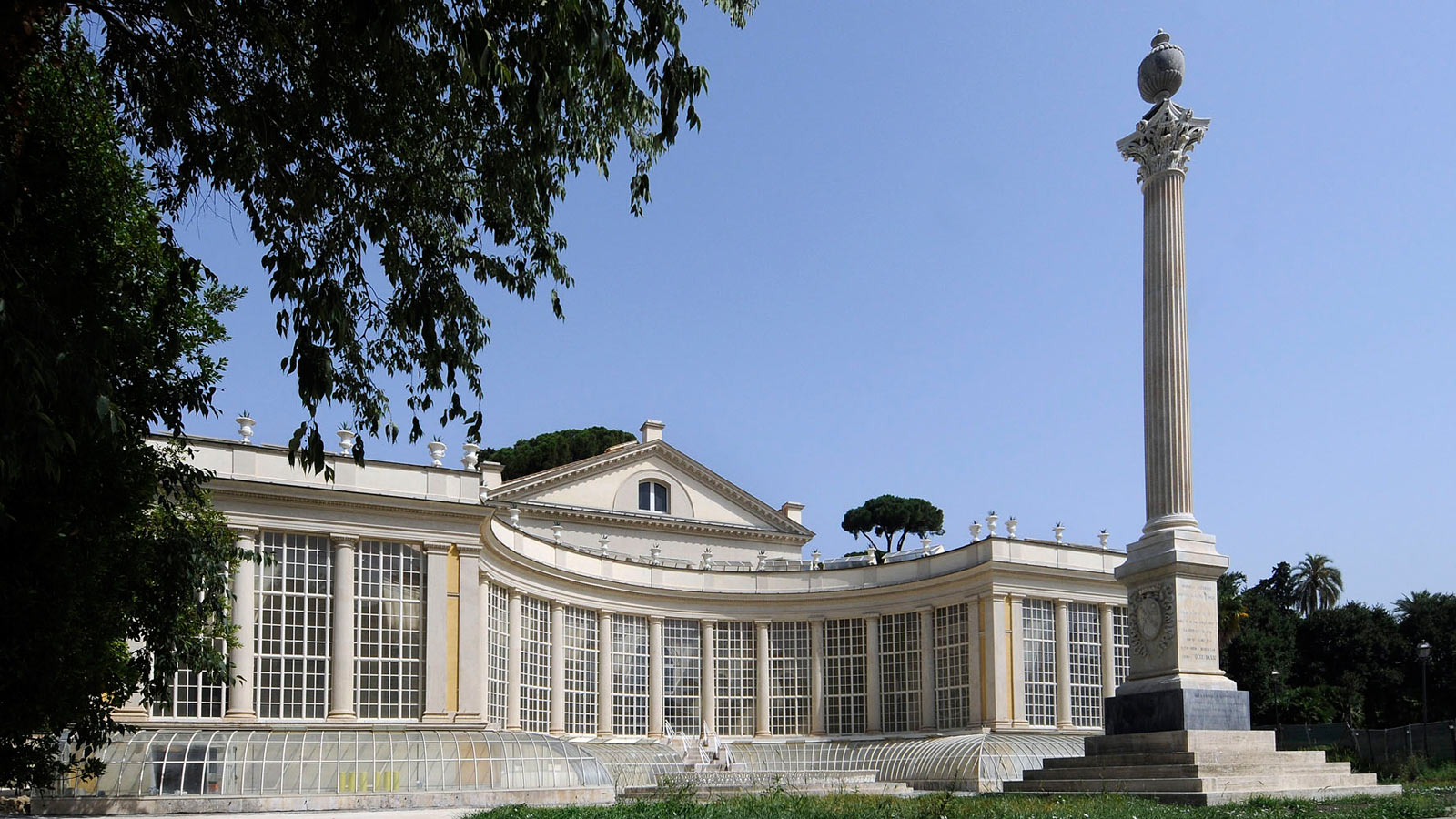
Thanks to Reate Festival, who invited Theresia Orchestra to stage Cimarosa’s “Le astuzie femminili” under the baton of Alessandro De Marchi (click here if you lost the interview), we will perform in a real jewel in the heart of Rome, the Villa Torlonia Theatre.

Villa Torlonia, with its magnificent neoclassical building and the surrounding gardens, was designed by the renowned architect Giuseppe Valadier on behalf of the banker Giovanni Torlonia, who lived between 1756 and 1829. The construction began in 1806 and was finished by the owner’s son Alessandro (1800–1880). It was Alessandro who decided to add a theater to the complex, starting its construction in 1847.

Not proudly, it is mainly known as having been for sixteen years the residency of the Italian dictator Benito Mussolini, who rented it for only one lira a year – a symbolic prize that spared him the accusation of appropriating it by force. After the fall of the dictator, Villa Torlonia became the headquarters of the Anglo-American command and returned to Torlonia familiy’s possession in 1947.

Sadly, a long time of decay followed, until the entire property was bought by Rome’s Municipality in 1978. The first thing to happen was that the garden was made public and open free of charge to all. In 1991, big renovation works started: they made it possible to retrieve various buildings (besides the main one, among them you have some fascinating ones, like the “Casina delle Civette”, the “Casino dei Principi”, the “Serra Moresca”) and turn them into museum venues.

The Theater was one of the last buildings to be renovated: it was opened in 2013 after decades of abandonment.

Roma-villa torlonia01.jpg

A crumbling beauty… a glimpse to the Theater before the renovation – credit Patrick DenkerFlickr, CC BY 2.0

After the war, furniture and furnishings were subject to theft, but nobody could remove the beautiful loggias and the magnificent frescos by Costantino Brumidi, an Italian painter renowned in the US as the author of Whashington’s Capitol Palace frescos. The theater is quite small, though, as it was meant to serve a villa, so only few people will be among the lucky ones who share this special occasion of seeing a performance in such a historical place. We hope you’ll be among them! If you won’t, stay in touch on our social media channel for pictures to come.

Theresia Orchestra is performing Cimarosa’s “Le Astuzie Femminili” in Villa Torlonia’s theater on Friday 14 and Saturday 15 October (8 p.m.) More info on Reate Festival‘s website

Alessandro De Marchi, Theresia and “Le Astuzie Femminili”

By Emilia Campagna - October 4, 2022
"Cimarosa’s style is something in between Mozart and Rossini: as a matter of fact, his style is very personal, and, as though it is mostly comical, it has some very lyrical moments. This is an opera you can’t help but fall in love with, and this is what is happening to us right us."

In a few days, Theresia is going to take part to the performance of the opera “Le astuzie femminili” (Female Shrewdness) by Domenico Cimarosa as part of Reate Festival: a great chance of experiencing the staging of an opera under the baton of one of the major expert of this repertoire, Alessandro De Marchi. We met him and asked him to share with the blog some details of the project.

Maestro De Marchi, you are going to conduct Theresia in the staging of “Le astuzie femminili” by Domenico Cimarosa: what can you tell us about this opera?

When we come to Cimarosa, we are dealing with one of the best opera composers of the XVII century: he was a major exponent of the Neapolitan school, and his career was divided between more than one city: precisely he worked in Naples, Vienna and Saint Petersburg. He was an international composer, and it is very interesting that while composing this very opera, he used part of works written in Saint Petersburg and Vienna, in that giving us a summa of his international activity.

Le Astuzie Femminili is a comic opera, written for the Teatro dei Fiorentini just after his most famous opera, Il Matrimonio Segreto. Speaking of which, I like to remember that Il Matrimonio Segreto is the only opera in the history of classical music that was performed again, as an “encore” at the end of the first performance in Vienna: this was the grade of Cimarosa’s success! Le Astuzie Femminili and Il Matrimonio Segreto have a lot of things in common, as it normally happens when it comes to comic opera. And, the cast that performed the “prima” was the same, formed by professionals, specialized in this sort of roles.

Which are the peculiarities of the libretto?

The original libretto had been written in Vienna by a renowned poet, Giovanni Bertati. It was then adapted and partly translated into Neapolitan by Palomba. As a matter of fact, Italian is not the only language of this opera: we have one of the characters (Giampaolo Lasagna) singing in the Neapolitan dialect, and we can also hear a macaronic German when the two main characters disguise themselves as soldiers and pretend to speak German: it is a botched gibberish, totally funny especially when the Neapolitan character tries to answer as he can. And we enjoy enormously the fact that Bellina and Filandro, the two amorous roles, get to be comical.

How is Cimarosa’s style, and how does he deal with a series of long-established comical situations?

Cimarosa’s style is something in between Mozart and Rossini: as a matter of fact, his style is very personal, and, as though it is mostly comical, it has some very lyrical moments. This is an opera you can’t help but fall in love with, and this is what is happening to us right us. The plot indeed follows a series of comical stereotypes, but Cimarosa had unique ease in transforming the text into music and his best peculiarity is a vein of melancholy that pops out also in the most comical situation: it is the authentic Neapolitan sense of comic that in the XX century the theatre companies of Scarpetta and De Filippo have entirely inherited.

Have you already worked with the singers involved? How is the cast?

I have worked several times with Eleonora Bellocci, who will be Bellina, the main female character, and I know very well Rocco Cavalluzzi, the bass performing Don Giovanni Lasagna. The other members of the cast are young singers that won the competition organized by Reate Festival: the level is very high and this is going to be an unforgettable experience for Theresia’s musicians, as always is the making of an opera.

Working with the youth is essential in your musical activity: you have also founded an International Vocal competition, the Cesti Competition, set in Innsbruck.

Starting the vocal competition was one of the first thing I did when I was nominated artistic director of the Innsbruck Festival For Early Music: I wanted to fill a gap, because at the time there were a series of baroque singing competitions, but not even one devoted to the opera. It was a winning formula, and in very little time has become a point of reference, with hundreds of applications. They are so many that we must select the candidates on the basis of a video, and we have a really high level in the final stage of the competition.

One of the strength of the Cesti Competition is that the Jury is made of professionals working in the world of opera production: artistic directors, stage managers, casting directors… so that taking part in the competition is like having multiple auditions in some of the main theatres around the world, and this represents a great chance for young talented singers. And, in fact, we have seen bright careers that were born among us.

Theresia was at Cesti a couple of years ago: what do you like of this orchestra and of its philosophy?

Theresia was the orchestra accompanying the finalists of the 2020 edition and came back for the staging of the Boris Goudenow the year after. I really admire this orchestra and I like the project, especially the idea of offering training paths that bring to a truly professional experience. And, most importantly, this project is in very competent and capable hands, so I see a bright future.

Theresia’s autumn concert season

By Emilia Campagna - September 27, 2022
After an intense summer, our musicians are ready to start rehearsing again and diving into new exciting musical adventures

For a lot of people, September is synonymous with a fresh start: it’s probably because of our school memories, or because after the summer we are full of energy, ready to start a new project with enthusiasm. And so we are, too, ready to start rehearsing again and diving into new exciting adventures during our autumn concert season. Yet, our summer was pretty intense, but being part of an orchestra like Theresia means being always ready for new projects.

Staging an opera

Definitely, the first project represents a whole new experience: the staging of an opera, “Le astuzie femminili” (Female Shrewdness) by Domenico Cimarosa. Being an ensemble devoted to symphonic (and sometimes chamber music) repertoire, working with voices is not usual for Theresia: it happened to us three times, when we joined the film-concert production “Zoroastro”, and then, more recently, on two different occasions in Innsbruck as part of the opera production “Boris Goudenow” by Johann Mattheson and as the orchestra of the international singing competition for baroque opera “Pietro Antonio Cesti”.

But, staging an opera is much more than just performing vocal music. It is a complex process that needs a lot of rehearsals and many different professionals: a director, a set designer, a stage manager and various technicians in addition to the musicians involved. So, the next project promises to be an exciting experience both for its musical meaning (“Le astuzie femminili” is a stunning comic opera among the best works by Cimarosa) and the thing that we can professionally learn about the world of musical production.

“Le astuzie femminili” is scheduled on 8th and 9th October in Rieti (Teatro Flavio Vespasiano) and 14th and 15th October in Rome (Teatro di Villa Torlonia) as part of Reate Festival (more info here). Theresia will be conducted by Alessandro De Marchi: coming soon an interview with him!

A warm-up residency

Speaking of professional growth, we know that precisely this is at the very heart of Theresia’s mission. Recently, new members were selected to join the orchestra: a “warm-up” chamber music academy now awaits them, the perfect occasion to know each other better and blend in, looking for the ideal ensemble sound while rehearsing and performing chamber music for strings and woodwinds.

The Academy will take place in an exclusive and amazing location, the Tuscan village Montecastelli, in collaboration with the organization Sience and Music, and tutor will be Paolo Beschi, cellist of the renowned ensemble Giardino Armonico. Stay tuned for more info about the musical program and the concerts to come!