3D printing and its role in historical instrument copies

By admin - September 19, 2024
Have you ever considered 3D printing, and how it can be used to make copies of historical instruments?

Article by Isobel Howard-Cordone

3D printing has become more and more significant over the last few years; it is an invaluable asset in many scientific fields, which can also be applied to various musical endeavours, such as creating copies of historical instruments. I’d like to share my experience with creating 3D copies, and explain why I think it is very a relevant and fascinating topic!

Creating historical copies with 3D printing requires a lot of knowledge, because many factors must be considered in order to be successful: the materials, the 3D template, the type of printing, and of course the original model on which to base the copy. Having an accurate and detailed source (where possible) is essential for a successful replica; in this respect, museums often have technical drawings available, or otherwise they can be visited in person to get direct measurements of the instruments. It’s always a good idea to choose an instrument where ample details are available in order to make the 3D modelling process easier, to avoid guesswork and to reduce possible errors!

While all instruments have the potential to be reproduced by 3D printing technology, each instrument has its own complexity and acoustic construction that needs to be studied carefully. My journey with 3D-printed instruments began when I started learning the baroque oboe and happened to meet instrument makers who used this new technology.

3D copy of a taille d’hautbois, made by F. Xiccato.

Traditionally, instruments such as strings, woodwinds, and keyboards are made from wood, which is an extremely complex and dynamic organic material. Wood is usually characterised as being anisotropic, meaning that its properties differ based on the direction of its fibres. It is also a highly porous material and absorbs humidity very well. So, what modern materials could be used faithfully replicate a wooden instrument from the 1700s?

Most 3D printers use polymers, or plastics – a category of materials exhibiting a vast range of diverse properties. The material choice is limited by several factors: cost, toxicity, availability, as well as compatibility with various methods of 3D printing. Certain polymers are ideal candidates for this purpose as they have properties which closely imitate wood, with one of the most common being Nylon (Polyamide). It has the advantages of being lightweight, hygroscopic and has excellent resistance; it’s also very compatible with 3D printers.

Next comes one of the most important step: creating a 3D template. Doing so requires both technical knowledge and proficiency in various computer programs, and it certainly helps to have also an understanding of the fundamentals of acoustics. This step involves using the available instrument measurements, making estimates, and translating this information to machine readable models.

Once the template is ready to print, it’s necessary to consider which 3D printing method may be the most suitable for the project. And here it is often a process of trial and error – a successful replica may require many further reviews and attempts before arriving at a satisfactory result.

So how do 3D instruments contribute to the musical landscape? Most importantly, they enable us to make copies of existing historical instruments and give us the chance to physically play them! This is very exciting if combined with a musical context from that period. As a musician specialised in early music, I’ve often been surprised (both positively and negatively) by how the copies sounded and the comparison with results from modern instruments. Being able to examine and analyse an instrument on such a practical level can give incredible insight into historical performance practises.

Another advantage is the great flexibility allowed by 3D printing. Once the 3D template is made, it can be easily scaled, adjusted and modified, something which would be very difficult to do with traditional instruments. This gives the freedom to further explore and improve the instrument, as well as experiment on a practical level (for example, changing the diapason by scaling the dimensions).

Drawing with measurements of an oboe top joint, from the Bate Collection, Oxford.

Last but not least, 3D printing offers advantages in terms of reduction of time and cost. Once a template is finalised, several instruments can be made, resulting in a very cost-effective process. The materials used are cheaper and more accessible compared to the wood of a traditional instrument. This is an extremely important element to consider, especially when dealing with types of wood that are protected or very difficult to obtain.

In my opinion, the technique of 3D printing should never be considered as a competitor or replacement for traditional instrument construction – instead it can be thought of as a powerful tool to enable us to increase our knowledge on historical instruments and experiment without interfering with the original models. I believe this is an area which has a lot of room for growth and development, and I hope to see exciting new projects emerge!
Meet Theresia: Laura Hoeven

By Emilia Campagna - May 5, 2023
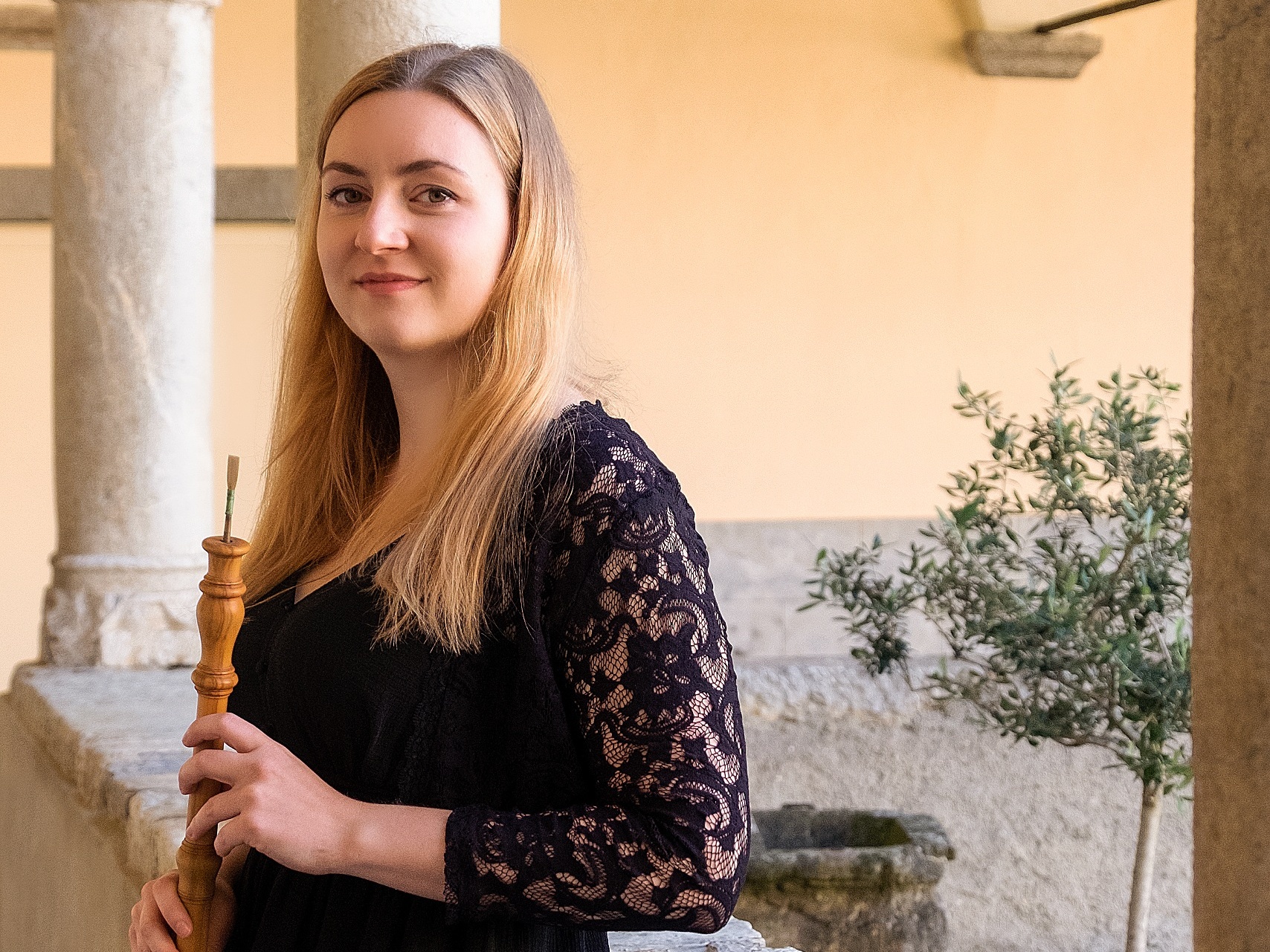
Austrian oboist Laura Hoeven joined Theresia in 2021 and in these very days she is playing with Theresia Wind Ensemble: let's find more about her upbringing, her love for music and the three most important things she learnt playing with our orchestra!

Austrian oboist Laura Hoeven joined Theresia in 2021 and she is currently playing with Theresia Wind Ensemble: let’s find out more about her upbringing, her love of music, and the three most important things she learnt while playing in our orchestra!

Laura, tell us about your musical upbringing: how did you start playing the oboe? And when did you turn to the period instrument?

As a child, I started playing the recorder. When my parents listened to classical music at home, I really loved the sound of oboes, so I was interested in taking up oboe lessons. Unfortunately, there was no oboe teacher at my music school. One day when I was in high school, my recorder teacher told me that I could have a recorder lesson at the Music and Arts University of Vienna to see if I would be interested in studying music. Surprisingly, it turned out that the university teacher taught historical oboe instruments too. I got the chance to try out the baroque oboe and I managed to produce some sound – of course not super beautiful, but at least some notes came out of the instrument. I definitely knew that I want to learn the baroque oboe. I took historical oboe lessons and started a pre-study at the university. Later, I also started playing the Viennese oboe because I was very interested in the development of the oboe in the course of history. So, I actually started playing the period instrument first. Now, I’m about to finish my Master in ‘historical oboe instruments’.

What were the most important experiences that made you realise that music was where you wanted to go?

My parents always enjoyed listening to music and they both played musical instruments (piano and saxophone). I guess this is also why I discovered my love for music. When I was five years old, a friend of mine took music lessons, which inspired me to learn an instrument too. I think it actually happened step by step that I realised that music is where I wanted to go. I can recall the moment I got the chance to play the baroque oboe in an orchestra for the first time. After that, I could picture myself doing this professionally and studying music because I really enjoyed it.

Your first project with Theresia was with Alfredo Bernardini in Lodi in the autumn of 2021: what do you recollect of that experience?

I remember it as a very fun project. It was my first one and I didn’t really know what to expect, but I learned a lot during that residency. First of all, it’s fantastic to work with Alfredo Bernardini because he knows how to get the best out of everyone through his energy, his ideas and imaginative pictures of passages in the music. I also enjoyed that we experimented with the distribution of the instruments in the orchestra. In the rehearsal, we ended up playing the pieces next to instruments from other sections as an exercise. Suddenly, we could hear voices that we haven’t noticed before and it was easier to become aware of similar passages that we share with other instruments. The sound of the orchestra changed completely after that experiment because everyone was very attentive and reacting to everything that was happening. As a group, you really grow together after such an orchestral project.

You are involved in a chamber music project with Theresia Winds instruments, but you have joined orchestral residencies as well: in terms of rehearsal and performance experience, how much does playing in an ensemble differ from playing in an orchestra?

Yes, there is a difference between playing wind ensemble or orchestral music. The music that is composed for wind instruments demands something different from every musician than orchestral music. During the rehearsals with the Theresia Winds, we grow together as a group because there is no conductor. Sometimes, you need to lead the group with your instrument, or you have to react. This changes constantly, and you are required to be very flexible, which is fun and challenging at the same time. In orchestral music the function of the wind instruments is different. They have to blend with the strings, be a harmonic framework or play melodic passages. So, it’s good to be aware of that. Both ways of playing are enjoyable and demanding and there is a lot to learn for the professional life as a musician.

After two years, which in your opinion are the three most important things that Theresia has taught you?

1. No matter where you come from – music is a universal language. Even though we all come from various countries, it is really easy to connect through music.
2. Try to take a risk and use this opportunity to learn and to try out.
3. Most importantly, enjoy the time that you get to make music together!

They say that playing in a youth orchestra lets you meet people who will be your friends for life: do you think this happened to you in Theresia?

Yes, I definitely think so!

Which are your plans for your musical future?

I would like to continue playing in orchestras and ensembles. Also, it would be great to start my own chamber music ensemble. Basically, I would love to get the chance to do various projects.

What do you do when you do not play? Do you have any other passions that do not involve music?

When I’m not playing an instrument, I like to go for hikes, play badminton or cook. Sometimes, I also sing in a Big Band in my hometown for fun. My other passion is science. I also study ‘food science and biotechnology’. It is a completely different field compared to music, but I really like that they are so contrasting, which makes them fit together really well.

Meet Theresia: Paulina Gòmez

By Emilia Campagna - April 26, 2022
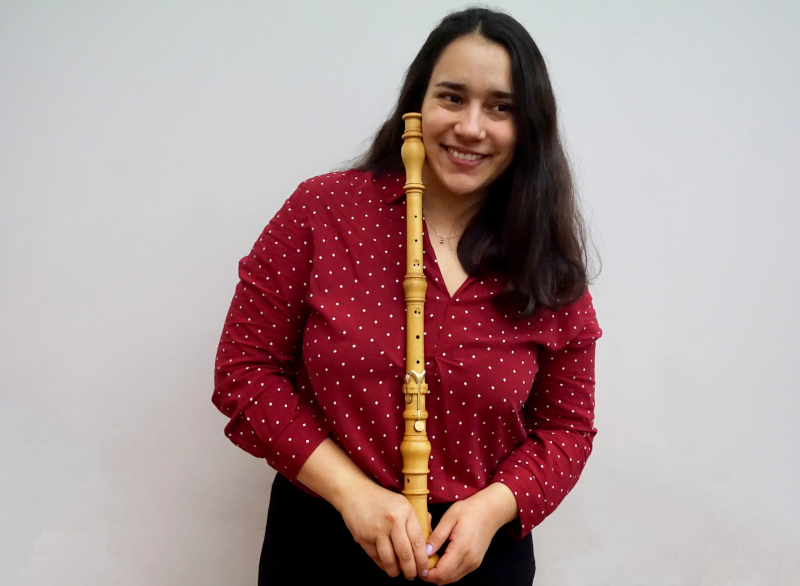
Paulina Gòmez flew from Colombia to Germany to study oboe. She is one of the new members of Theresia Orchestra and we asked her to tell us more about her story.

Paulina Gòmez flew from Colombia to Germany to study the oboe. She is one of the new members of Theresia Orchestra, and we asked her to tell us more about her story.

Paulina, how did you start to play the oboe? Was it your idea, or did someone from your family or school suggest it?

I started studying music because my dream was to become a singer, so I was having music classes, and I was singing with the school choir. One day, we played something with the school orchestra, I can not remember what, and there was this instrument I didn’t know existed. I thought it was incredible, and the sound just enchanted me.

That day I went back home and started doing some research. That is when I discovered the oboe. I remember I started reading a lot about the instrument, and about double reeds. I also looked for some videos on YouTube, the first concerto I heard was Mozart’s oboe concerto. That’s how I decided to play the oboe!

In retrospect, I was really lucky. Even though my parents did not know the instrument, they have always supported me and my decisions. Thanks to that, I was able to start my path in this beautiful profession.

Why did you decide to move to Germany?

Since I started studying music, coming to Germany was one of my main goals. I even started learning German when I was in Colombia. I have always thought Germany is a country with a great music scene, great schools, and fantastic teachers. So I always dreamed of coming to study in Germany, and it has been a challenging road, but here I am.

Was it hard to move to Germany from Colombia? What do you miss more about your country?

The change from Colombia to Germany was very complicated, not only because of the language and cultural differences but also learning to live alone away from my family and friends. Now I have been in Germany for a little more than five years, and I consider it my home. I have met new people, who have become my family away from home. Besides, now I’m used to the way of doing things in Germany, the rhythm of life, even if it is very different from Colombia. I believe Germany has given me the opportunity to grow in many ways. Obviously, I am always happy to go back to Colombia and spend some time there, I think what I miss the most is obviously my family, and then the Colombian food, which has an incredible diversity that is very difficult to find in Europe. 

Was it in Germany that you first met period instruments? Tell us why you decided to switch to it from modern oboe.

Actually, my first encounter with the baroque oboe was in 2015 when I was at an oboe festival in Argentina. One of the invited teachers was Diego Nadra, with whom I had the opportunity to play the baroque oboe for a few minutes: well, from there I had the idea of historical instruments, but unfortunately, it is not something that can be studied in Colombia.

I came to Würzburg in 2017 and during my master’s in modern oboe, I met my current teacher, Clara Blessing, who taught me the world of historical instruments. With her, I had the opportunity to start learning historical oboes, and I simply fell in love with these instruments. I love their sound, the feeling you get when you play a historical oboe, and the flexibility that they give.

Was the change challenging? How much is more difficult (or easier?) playing a historical oboe?

Well the change for me was quite big: although they are oboes, played with a double reed, they are completely different instruments. Technically it was interesting to get used to having a completely different instrument in your hands. Still, the basics are the same and this made a lot of things easier. Adapting to building reeds for other oboes was also difficult at the beginning, also because I didn’t have my own instrument but one that I had borrowed from the university. But historical instruments are much more than just playing them, well at least for me: they involve new ways of working with historical sources, looking for manuscripts, and reading books like the ones by Quantz and CPE Bach. This is also an important part of this world that I deeply love.

How did you know about Theresia and when did you join it?

I found out about Theresia through social media. When I saw that they had auditions I thought about applying, at the time I had very little experience with classical instruments. My teacher Clara also suggested it to me, underlining what a great opportunity it was. So I went for it and applied to the audition.

Back then I was reading about the orchestra and listening to their work and I was incredibly excited about being part of this. For me, being part of Theresia is an almost unique opportunity since there are very few options for us as historical instrumentalists to gain professional experience.

So far I have only participated in one project with Theresia, but I hope many more will come!

How is the classical music scene in your country? Is music taught in schools?

The music scene in Colombia is not so big, there are of course orchestras and festivals. The historical instrument scene is just beginning, there are some people working with this in Colombia, but is a process that needs time.

In Colombia, music is taught in primary and middle schools. There are university and government programs in some cities where people can approach music, but for me, these still have a lot to grow.

Where do you see yourself in ten years?

Something I learned during this pandemic is that making long-term plans is difficult because sometimes life surprises us all. In a few years, I would love to continue making music and continue taking my music to different parts of the world. I would also like to give back to Colombia and go teach the next generation of musicians. I have always thought that it would be very good to make the way for future generations easier. For example, for them to have the opportunity to know the world of historical instruments at an early age.

New auditions for violins, cellos, basses, oboes, traversos, basoons and horns!

By theresia - March 6, 2013
The THERESIA Youth Baroque Orchestra (TYBO) organises a series of auditions to recruit young musicians for the orchestra in preparation of the 2013-2015 productions, remunerated concerts and stages. Core of the TYBO programs is the classical repertoire (1750-1800) played on period instruments (A=430Hz). VENUE AND SCHEDULE The audition will be held in Bolzano (Italy) on […]

The THERESIA Youth Baroque Orchestra (TYBO) organises a series of auditions to recruit young musicians for the orchestra in preparation of the 2013-2015 productions, remunerated concerts and stages.

Core of the TYBO programs is the classical repertoire (1750-1800) played on period instruments (A=430Hz).

VENUE AND SCHEDULE
The audition will be held in Bolzano (Italy) on Saturday 20th April and Sunday 21st April 2013.

Detailed information on venue and performance timing will be notified to all participants in due time.

INSTRUMENTS
The audition is open to the following baroque instruments:
– violin
– cello
– contrabass
– traverse flute
– oboe
– bassoon
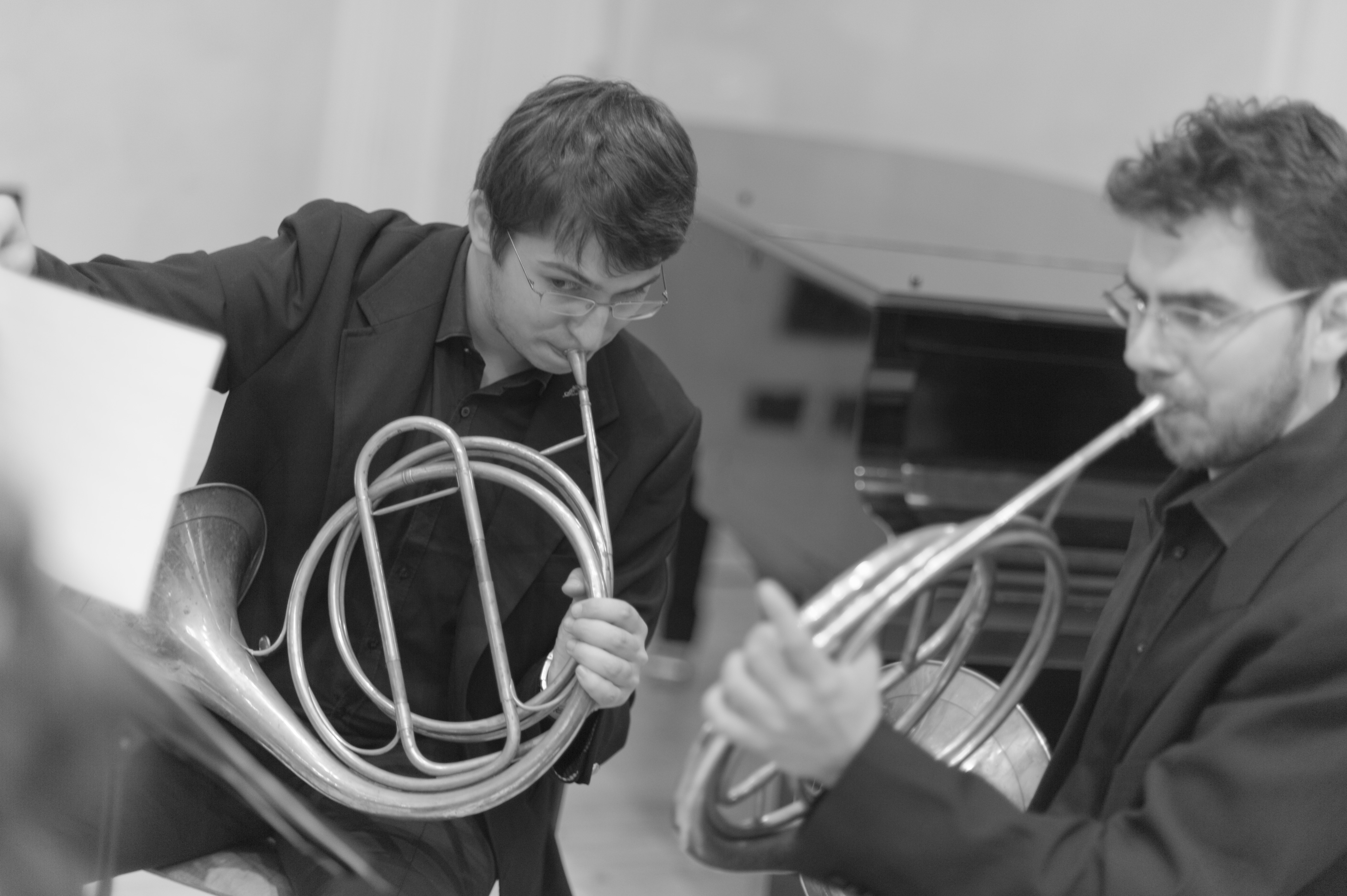
– horn

ADMISSION REQUIREMENTS
The audition is open to professional musicians (including advanced students) born after 1st January 1982.
In-depth knowledge of performance praxis on authentic instruments is a mandatory requirement.

APPLICATION
Participants shall send an email to *auditions@theresia-project.eu* containing:
– name
– surname
– date and place of birth
– nationality
– physical address
– email address
– phone number
– detailed CV
– scanned copy of passport or identity card.

DEADLINE
Applications must be sent to *auditions@theresia-project.eu* not later than Sunday 14 April 2013.

SELECTION COMMITTEE
Claudio Astronio, permanent musical director of TYBO.
Esther Crazzolara, first violin of TYBO.
Luigi Lupo, traverso player.
Mario Martinoli, founder and artistic director of TYBO.

AUDITION PITCH
The pitch for the audition is A=415 Hz.

SCORES
The candidates are warmly invited to bring with them the full scores, or piano reductions, of the pieces they intend to play in the auditions.

ADMISSION RULES
A maximum number of 45 musicians will be admitted to the audition.
In case of the reception of more than 45 applications, the 45 younges musicians will be admitted, provided that the audition shall include:
– At least 3 applicants per instrument
– All applicants resident in the regions Trentino, South Tyrol or Tyrol.

***PROGRAM OF THE AUDITION***

VIOLIN

1) W.A. Mozart, Symphony n. 41 in C major K 551 “Jupiter”, 4th movement

OR

W.A. Mozart, Symphony n. 39 in E-flat major major K 543, 3rd movement, Finale (first part only)

2) Two movements (in total) at choice and contrasting in character from F.M. Veracini, Sonate Accademiche and A. Corelli, Sonate a violino e violone op. 5

3) Two movements at choice from W.A. Mozart sonatas for violin and piano (cembalo).

4) Sight reading.

BAROQUE CELLO

1) F.J. Haydn, Concert for cello and orchestra in C major, 1st movement.

2) Two movements at choice and contrasting in character from F.S. Geminiani, Sonatas for cello and continuo op. 5.

CONTRABASS

1) J.S. Bach, Concerto in a minor for 2 violins BWV 1043, 1st movement

2) J.S. Bach, Matthäus Passion BWV 244, 1st movement, opening choir “Kommt ihr Töchter”.

3) W.A. Mozart, Symphony n. 35 in D major K 535 “Haffner”, 1st and 4th movement

TRAVERSO

1) J.S. Bach, Sonata in E major BWV 1035, 1st and 2nd movement

2) C.P.E. Bach, Two movements contrasting in character at free choice from any of the concert for traverso and orchestra

OBOE

1)J.D. Zelenka, Sonata n. 5 in F major ZWV181, 2nd and 3rd movement (first oboe)

OR

J.S. Bach, Brandeburg Concerto n. 2 in F major BWV1047, all movements.

2)L.A. Lebrun, Concerto n. 1 in d minor, 1st movement (pitch A=430 Hz allowed!)

OR

C.P.E. Bach, Two movements contrasting in character at free choice from any of the concert for oboe and orchestra

BASSOON

1) W.A. Mozart, Concerto in B-flat major KV191, 1st movement

2) J.D. Zelenka, Sonata n. 5 in F major ZWV181, 1st and 2nd movement

HORN

1) J.S. Bach, Brandeburg, Concerto n. 1 in F major BWV 1046, all movements

2) W.A. Mozart, Concert n.4 in E-flat major KV495, 1st movement

3) L. van Beethoven, Symphony n, 7 in A major op. 92, 1st movement (first horn)

INFORMATION
More information on TYBO and the auditions will be available at www.theresia-project.eu and on the TYBO Facebook page.