Get ready for the next auditions!

By Emilia Campagna - December 1, 2023
Theresia is organising new auditions that will take place in Paris on January 19 and 20 and will focus on string instruments, with conductor Giovanni Antonini joining the examining board.

New year, new opportunities!

Theresia has launched a new set of auditions that will take place in Paris on January 19 and 20 and will be dedicated to string instruments: we are particularly looking for violin, viola and double bass players to join our orchestra for the period between March 2024 and September 2025.

As a youth orchestra, we are always on the lookout for talented young musicians who we can offer the chance to gain real professional experience in a classical orchestra that plays according to historical practice.  For the second time round, auditions will be held in Paris thanks to the partnership with the Conservatoire à Rayonnement Régional de Boulogne-Billancourt, which is both a prestigious and convenient location from a logistical point of view. The deadline for the submission of applications is Thursday 14 December 2023.

An exciting addition to this round of auditions is the presence among the examiners of conductor Giovanni Antonini, one of the most highly regarded conductors on the international scene. Antonini conducted Theresia for the first time in this year’s initial residency as the start of a new partnership. Thanks to his confidence in our project, four of our musicians recently joined Il Giardino Armonico on a European tour.

Download the full audition guidelines here

Who can apply?

First of all, you have to meet some mandatory requirements: you need to be born after 1 January 1996 (we are a youth orchestra, folks!), and be a citizen of one of the Countries of the European Union or of the European Economic Area. Non-EU citizens can apply if they have a residence permit for study in one of the Countries of the European Union. As a HIP orchestra, we require in-depth knowledge of performance practice on authentic instruments, the use of a classic bow and a period instrument (or a copy).

How to apply?

Simply fill out the application form and send it along with a video of a live performance: due to the high number of expected applications, the Board of Examiners might make a pre-selection on the basis of the CV and the video recording. Only a limited number of musicians will be invited to the audition sessions in Boulogne-Billancourt.

What to expect during the auditions…

These are not the classic “make it or break it” auditions: in recent years we have perfected a method that allows us to get to know the candidates not only through solo performances, but also to test their ability to work with colleagues through ensemble rehearsals: the auditions will be held as chamber music workshops under the supervision of the Board of Examiners; as a consequence, candidates are required to attend the entire event. We also try to understand motivation and attitude towards teamwork through an interview.

…and what to expect after.

Selected musicians will become part of Theresia: they will receive a grant of 3500 euros to take part in five orchestral or chamber music projects during the period March 2024 – September 2025. This means participating in in the scheduled concerts and recording activities, but also in the learning and artistic activities of the Theresia Academy, including capacity building sessions, soft skills development, and co-creation workshops.

Those who won’t get selected may still have a second opportunity: a candidate may qualify for the Theresia Orchestra talent pool reserve list without receiving one of the full scholarships, if the jury evaluates him/her positively after the audition. The qualified candidates will be placed on a reserve list of musicians who may receive a scholarship for their instrument in the event a grantee drops out or withdraws. In addition, eligible musicians will be added to a list of candidates who may receive invitations to join Theresia for specific productions. They will also have the opportunity to participate in online activities related to Theresia Orchestra’s learning cycle, including musicological webinars and other educational activities designed for young professional musicians.

Download the full audition guidelines here

Theresia in Potsdam: a short guide to our next musical adventure

By Emilia Campagna - June 15, 2023
Theresia adds a new flag to its personal globe: on Saturday 17 June we will perform for the first time in Potsdam, Germany, as part of the Musikfestspiele Potsdam Sanssouci.

Theresia adds a new flag to its personal globe: on Saturday 17 June we will perform for the first time in Potsdam, Germany, as part of the Musikfestspiele Potsdam Sanssouci. It promises to be an intense and rich experience: an extremely multifaceted festival and a new artistic collaboration of which we are particularly proud, namely with conductor and flautist Alexis Kossenko. Read on to find out more about Theresia in Potsdam!

The festival: musical friendship

Let’s take a closer look at this year’s festival theme, which started on the 9th of June and runs until the 25th of this month: recorder player Dorothee Oberlinger, artistic director of the festival, invites to explore the theme of friendship, namely “family ties, fraternal strife and elective affinities in the world of music”. As youth orchestras are often the birthplace of long-term friendships, it’s a theme that intrigues us: how does it translate into music? As the organisers explain, “the concerts of the 2023 Music Festival will bridge the gap from human friendship in the Old Testament, through medieval chant, the musician and composer circles around Heinrich Schütz, Dietrich Buxtehude and Johann Sebastian Bach, to Franz Schubert’s poet friends and the fantasy circle invented by Robert Schumann for the piano.” There is so much richness and musical substance in this journey on the concept of friendship and music that it is truly a privilege to be part of it. If you are curious and would like to know more, check out the programme at the following link.

Flautist and conductor: Alexis Kossenko

Over the years we have forged beautiful friendships with the musicians we have worked with: after all, isn’t it always like that when there is a shared sense of purpose and understanding in doing the most beautiful thing in the world, which is making music? We are therefore delighted to have the opportunity of making new friends with a fantastic musician who will conduct Theresia Orchestra in Potsdam, Alexis Kossenko.

Alexis Kossenko is an experienced conductor and flautist in all historical forms of the instrument, from the ‘modern’ flute to the baroque and renaissance flutes, as well as the recorder. His intense career on the modern and baroque flute was quickly established after graduating with Alain Marion in Paris and with Marten Root in Amsterdam. In 1997, his acclaimed interpretation of the Quantz and Vivaldi concertos with the EUBO, conducted by Ton Koopman and Roy Goodman, marked the beginning of his solo career. Since then, he has been invited as a soloist by numerous European ensembles. With his own orchestra, Les Ambassadeurs, he rediscovered forgotten repertoire – music from the Golden Age of Dresden.

Our musical project: hidden gems

As always, our musical programme is anything but ordinary. In addition to the widely performed and much-loved ‘Paris’ Symphony by Mozart, the programme includes some truly rare gems. It goes without saying that the programme was conceived in line with the spirit of the festival. In particular, the venue where we will be performing was the inspiration for an authentic musical journey which is entitled ‘Rendezvous in Paris‘. Rheinsberg Palace (another dream place where we happen to play!) was Prince Henri of Prussia’s residence for 50 years. In 1784, at the invitation of the King of France, Heinrich (Henri) travelled to Paris. Based on the repertoire of the Parisian “Concerts Spirituels”, Alexis Kossenko and the Theresia Orchestra have created a concert evening that evokes the international flair of the musical metropolis, through forgotten works by contemporaries living in the French capital at the time: Jean-Baptiste Davaux, Giuseppe Cambini, François Devienne. Also on the stand is the overture to the oratorio ‘La destruction de Jéricho’ by Henri-Joseph Rigel.

Music and… bicycle!

That sounds new: a bicycle is not exactly the first thing that springs to mind when you think of a classical music concert: but it’s probably what you think of when you imagine a get-together with friends on a beautiful day in spring, isn’t it? Well, the organisers of the Musikfestspiele Potsdam Sanssouci have managed to bring music and cycling together in a series of open-air concerts along a route to which the audience members are encouraged to cycle along. Theresia’s wind quintet and a trio of trumpets and timpani will be part of these special bicycle-concerts. Find more here.

To sum up: great music, with great people, in a great place. That’s Theresia! We are immensely looking forward to our concert. How about you?


SoundSouci Podcast

Für alle deutschsprachigen Leserinnen und Leser: Hört euch den SoundSouci-Podcast an, in dem der Geiger Guillermo Santonja di Fonzo, die Cellistin Ena Markert und Theresias Projektleiterin Susanna Bucher im Interview vorgestellt werden:

A glimpse on the oncoming Theresia’s activity

By Emilia Campagna - August 6, 2021
After a long and forced pause due to Covid pandemic, Theresia is back on track with bigger projects for both the youth orchestra and the alumni orchestra. Artistic Director Mario Martinoli talks about news and future of Theresia Project.

After a long and forced pause, Theresia is back on track. And with a lot on the line. Waiting for the next performances and concerts (19, 20, 22 and 24 August in Innsbruck and 22 and 23 August in Geneva) we have met Artistic Director Mario Martinoli to ask him about what happened during the last months and which are the next projects.

Mario Martinoli, how did Covid affect Theresia’s activity?

Covid-19 affected us as it affected all. But, unlike others, we have not tried to perform at any cost: for instance, we didn’t try to perform using Plexiglass protection shields, or distancing the musicians. This, because any orchestra is a very specific object, with its own dynamics, and there is not an alternative way of doing it. In a violin section, for instance, musicians need to be near, or they won’t be able to thoroughly listen to each other: it becomes a bunch of individuals instead of being a cohesive group.

Initially, we wanted to start again only after the end of the pandemic, but the Green Pass let everybody avoid such restrictions. In addition, in 2020 we missed a series of auditions, and we risked irreparably losing the continuity of our programming. Now we can start again, and it is a positive sign.

Eventually, Covid has provoked both a proactive and resilient response from us: in 2020 we created Concerto Theresia, which is an alumni orchestra, definitely professional, whereas Theresia Orchestra keeps on being formative and professionalizing.

Besides Concerto Theresia, in which other ways does Theresia professionally exploit her talented members?

Unlike the majority of youth orchestras, we do not have senior tutors playing like concertmasters or sections leaders. Instead, we empower young musicians putting them at the forefront. A brilliant example of this is violinist Gemma Longoni, who joined Theresia in 2015 for the Zoroastro Project: she demonstrated such skills and talents that we turned her into concertmaster.

Speaking of young talents, you recently held new auditions: how did they go?

Brilliant. First of all, we were very happy to hold them at Salzburg’s Mozarteum, a new international collaboration to which we attach great importance. Secondly, we received a high number of applications, fifty, and from many different places. Applicants had to submit a video, on the basis of which we choose forty musicians and invited them to the actual auditions. Finally, the auditions themselves were a very intense day, both for us and the musicians. The selection was based on a chamber music rehearsal, on the fly and in front of the commission: this was an excellent way to evaluate individual musical skills but also the musicians’ personality and interactions with colleagues. Also, we interviewed all the candidates, and we could notice that Theresia has a great reputation and that many of them went through a lot of trouble in order to join us.

In your opinion, what do young musicians look for in Theresia?

Theresia is the only youth orchestra where one can perform classical repertoire on period instruments, and interviews showed that this is something very important for all the candidates. In Conservatories all over Europe it is common to study baroque music or ancient music, but classic repertoire has its own specific way to be played, and that needs a specific approach.

Now Theresia is starting to perform again: which are the oncoming projects?

After a long pause, we have two projects happening at the same time! Concerto Theresia is guest of the Ancient Music Festival in Innsbruck: one year ago we were orchestra-in-residence of the International Cesti Competition, now we will perform the opera Boris Goudenow by Johann Mattheson with the winners of last year competition. Orchestra Theresia in the same time will be in Geneva for a project devoted to chamber music repertoire, with Chiara Banchini and Alfredo Bernardini as tutors.

Where is Theresia going to be in five years?

There’s a lot going on: Theresia is already the benchmark for the classical repertoire performance on period instruments. After nine years of focusing on the music written between 1770 and 1790 in 2022 and 2023 we will expand our horizons performing the first Symphonies by Beethoven. We may move the limit of our repertoire to 1820: after this year massive changes in building wind instrument happened, so it is a rigid boundary for us. And, there are still unexplored areas, like French music of late XVIII century.

We are going to work with new conductors too: besides Alfredo Bernardini, who is our main conductor and a sort of “mentor” who enthusiastically embraced the project, and Chiara Banchini, who will focus on string chamber music projects, in the next two years we are going to work with Vanni Moretto, Giovanni Antonini and Fabio Ciofini. We are looking forward to these new collaborations.

Theresia is a project entirely supported by ICONS, which deals with scientific research and communications: how is the musical project related with the main focus of the organisation?

Theresia is a very special and philanthropic project. In this way, it is a practical expression of the values at the very heart of ICONS. It has a very ethical basis and is focused on human capital development. Moreover, communication is more a matter of culture that of technology, so we can proudly say that the common denominator of all these activities is culture, serving society and its improvement.

Theresia a Trame Sonore, si parte

By Emilia Campagna - May 29, 2019
Ospiti di Trame Sonore i giovani talenti di Theresia esploreranno le origini del repertorio classico per archi toccando i luoghi fondamentali - Salisburgo, Vienna e Mannheim - dove negli anni ‘60 del Settecento il linguaggio orchestrale si sviluppò per giungere a una sintesi nella sinfonia classica.

Trame Sonore entra nel vivo e iniziano anche i concerti di Theresia, cinque appuntamenti che punteggiano da giovedì a domenica il ricchissimo cartellone della manifestazione mantovana.

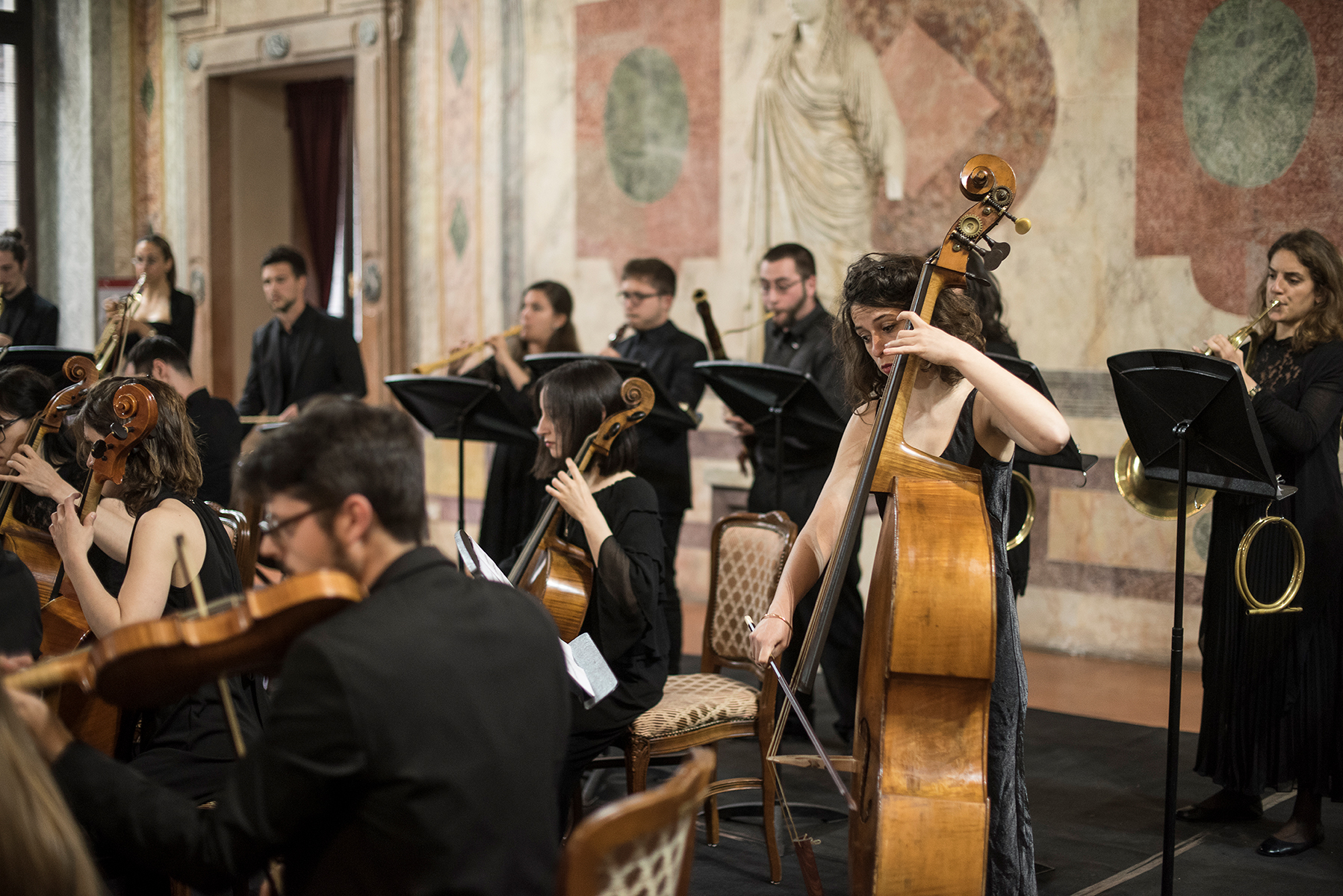
I giovani talenti di Theresia, guidati dal direttore Claudio Astronio e da Gemma Longoni come primo violino concertatore, esploreranno le origini del repertorio classico per archi toccando i luoghi fondamentali – Salisburgo, Vienna e Mannheim- dove negli anni ‘60 del Settecento il linguaggio orchestrale si sviluppò per giungere a una sintesi nella sinfonia classica.

Mannheim sarà ben rappresentata dalla Sinfonia a 4 in fa maggiore n. 6 di Johann Stamitz (1717-1757) – compositore che ampliò l’uso dei fiati in orchestra e fu tra i primi ad adottare per la Sinfonia la struttura in quattro movimenti tipica dell’età classica – e dalla Sinfonia in Sol maggiore VB 19 di Franz Xaver Richter (1709-1789), conosciuto da Mozart nel 1778. Il programma dedicato a Vienna comprende invece la Sinfonia a 4 in sol maggiore di Georg Matthias Monn (1717-1750), la Sinfonia in la maggiore op. 25 n. 5 di Johann Baptist Vanhal (1739-1813) e il Quartetto n. 1 in fa maggiore di Josef Mysliveček (1737-1781), tutti e tre compositori protagonisti in varia misura di una transizione dallo stile barocco a quello galante, e di una affermazione della forma classica. Per Salisburgo sarà la musica di Wolfgang Amadeus Mozart a risuonare con due dei Divertimenti per archi (il n. 1 in re maggiore K136 e il n. 3 in fa maggiore K138) composti nel 1772 quando il giovane Mozart era ancora impiegato alla Corte dell’Arcivescovo di Salisburgo.

I primi due appuntamenti, giovedì mattina, avranno un pubblico speciale e saranno dedicati ai bambini delle scuole elementari: Remo Vinciguerra giocherà con la musica di Mozart in una guida all’ascolto coinvolgente e accattivante.

Tutti concerti di Theresia a Trame Sonore si svolgeranno in alcune sale meravigliose: la Sala dei Fiumi di Palazzo Ducale, un autentico gioiello, il Teatro Bibiena, dove suonò un giovanissimo Wolfgang Amadeus Mozart, la Loggia di David di Palazzo Tè.

I concerti di Theresia al Festival Trame Sonore

Giovedì 30 Maggio – ore 9.00 e ore 10.30
Teatro Bibiena
“Giochiamo con Wolfgang!” – Concerto-laboratorio
Theresia Orchestra – Gemma Longoni primo violino
Conduce Remo Vinciguerra
W. A. Mozart (1756-1791)
Divertimento per archi n. 1 in re maggiore K136
Divertimento per archi n. 3 in fa maggiore K138

Venerdì 31 Maggio – ore 10.30
Theresia Orchestra – Gemma Longoni primo violino
Palazzo Ducale – Galleria dei Fiumi
“Salisburgo”
W. A. Mozart (1756-1791)
Divertimento per archi n. 1 in re maggiore K136
Divertimento per archi n. 3 in fa maggiore K138

Sabato 1 Giugno – ore 16.30
Theresia Orchestra – Claudio Astronio direttore
Palazzo Ducale – Galleria dei Fiumi
“Mannheim”
J. Stamitz (1717-1757)
Sinfonia a 4 in fa maggiore n. 6
F. X. Richter (1709-1789)
Sinfonia in Sol maggiore VB 19
Domenica 2 Giugno – ore 9.30
Palazzo Te – Loggia di David
Theresia Orchestra – Claudio Astronio direttore

Domenica 2 Giugno – ore 12.00
Theresia Orchestra – Claudio Astronio direttore
Palazzo Ducale – Galleria dei Fiumi
“Vienna”
M. G. Monn (1717-1750)
Sinfonia a 4 in sol maggiore
J. B. Vanhal (1739-1813)
Sinfonia in la maggiore op. 25 n. 5
J. Mysliveček (1737-1781)
Quartetto n. 1 in fa maggiore

Continua la campagna per il 5×1000 a sostegno di Theresia

By theresia - May 28, 2019
Con il tuo 5x1000 alla Fondazione iCons puoi diventare anche tu protagonista e contribuire a finanziare fino a 10 nuove borse di studio per altrettanti giovani musicisti.

Con il tuo 5×1000 alla Fondazione iCons puoi diventare anche tu protagonista e contribuire a finanziare fino a 10 nuove borse di studio per altrettanti giovani musicisti.


COME DONARE

Per donare il tuo 5×1000 alla Fondazione iCons a favore dei suoi progetti culturali:

– Scrivi 92563110151 nell’apposita casella sulla tua dichiarazione dei redditi riservata alla destinazione del 5xmille per gli Enti del Volontariato.
– Invia una mail al tuo commercialista cliccando strong> qui. . TI basterà inserire l’indirizzo del tuo commercialista ed inviare la mail per garantire la tua donazione.

Condividi la nostra missione: sostieni la cultura, sostieni i giovani.

Vienna, Salzburg, Mannheim:
Theresia’s musical journey at Trame Sonore

By Emilia Campagna - May 23, 2019
We are about to embark on an enlightening musical journey. It will bring us and our audience through the three main towns when it comes to Classicism: Vienna, Salzburg and Mannheim

We are about to embark on an enlightening musical journey: it will bring us and our audience through the three main towns when it comes to Classicism: Vienna, Salzburg and Mannheim. And yet, nobody will have to leave at all the beautiful centre of Mantua, where we will be hosts of “Trame Sonore – Mantova Chamber Music Festival”.

Music is constantly appreciated as the most powerful way for time-travelling: this is even truer for orchestras that, like Theresia, perform on period instruments, deepening the historical performance practice.

So, this time we are headed for the very roots of Classical style, in search of the origins of Symphony and Sonata form.

Mannheim is considered to be a true school of classical style, thank both to the orchestral techniques pioneered by the court orchestra of Mannheim in the latter half of the 18th century and to the group of composers of the early classical period, who composed for the orchestra itself. The orchestra had an excellent reputation, due to its excellent discipline and the individual skill of its players; the English traveller Charles Burney called it “an army of generals”. The father of the school is considered to be the Bohemian composer Johann Stamitz, whose Symphony in F major n. 6 will be performed together with F. X. Richter‘s Symphony in G major VB 19 (concert on 1st June at 4.30 pm at Palazzo Ducale, Galleria dei Fiumi).

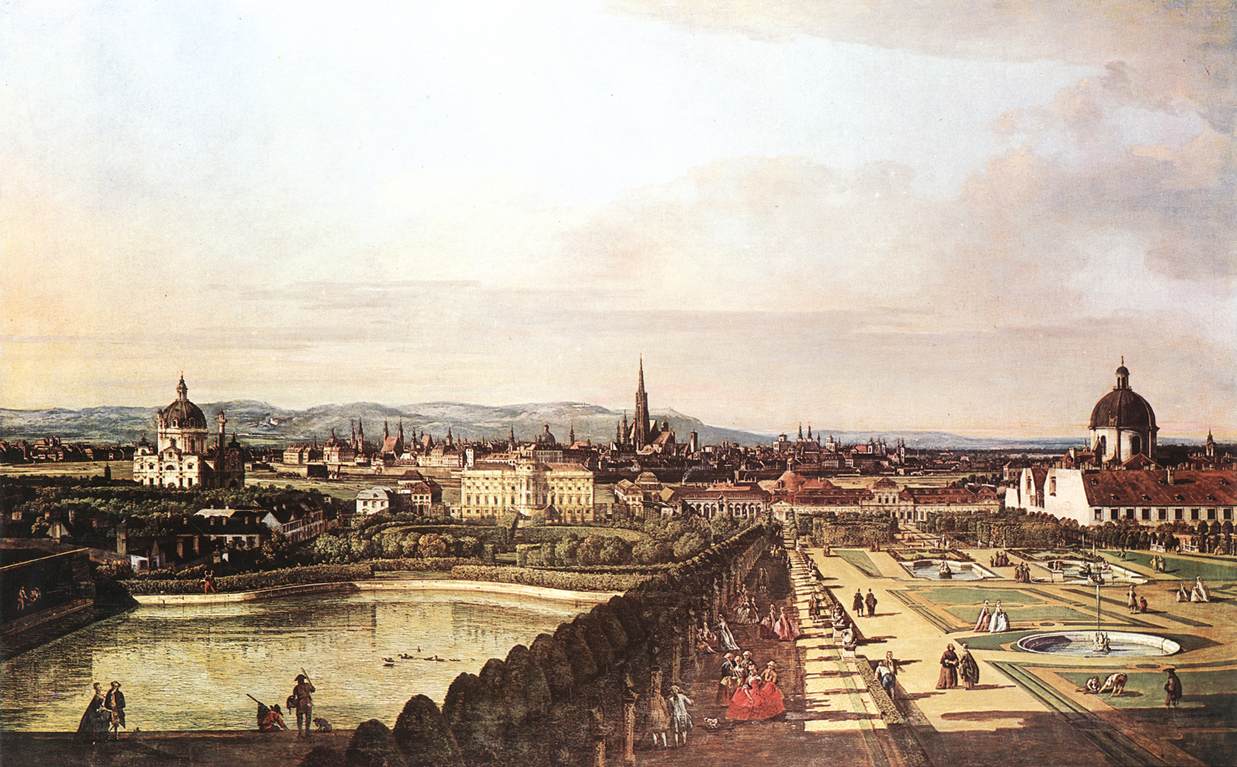
Since it was an imperial capital, Vienna was one of the main centres of musical life in Europe: the Viennese Classical school is nowadays best associated with the names of Mozart and Haydn, but the very transition from Baroque to Classical style was due to composers like Georg Matthias Monn. Monn, who was born in Vienna in 1717 and died in the same city in 1750, represents a school of Austrian composers who had thoroughly studied the principles of counterpoint as practised by Johann Sebastian Bach, but also effected a change from the formalistic and ornate Baroque style to the simpler, more graceful Galante music. Moreover, they renewed the sonata form by expanding the concepts of secondary theme and development. Even Czech-born composers Johann Baptist Wanhal and Josef Mysliveček (both born in the 1730s) are important representatives of the new style. Furthermore, many of Wanhal’s symphonies are in minor keys and are considered highly influential to the “Sturm und Drang” movement of his time. And, is renowned the influence that Josef Mysliveček had on the young Mozart. Monn, Vanhal and Myslivecek will be performed in our “Vienna” concert on 2nd June at 9 a.m. (Palazzo Te) and 10.30 p.m. (Palazzo Ducale).

Last but not least, Salzburg was obviously the town where Wolfgang Amadeus Mozart was born and where he started his career as a court composer to the Archbishop Hieronymus Colloredo: in 1772, when he was sixteen he wrote three Divertimenti after the second of three extended trips to Italy. A final trip to Italy was already in the planning and the Italian influence on Mozart’s writing is strong. The three-movement structure follows the pattern of the Italian Sinfonia, while the writing also nods in the direction of the widely respected Joseph Haydn and Johann Christian Bach – whom Mozart had met in London and whom he regarded as both friend and mentor. String Divertimentos n. 1 in D major and n. 3 in F major will be performed on 30th May at 9 a.m. and 10.30 a.m. (Teatro Bibiena) and on 31th May ah 10.30 a.m. (Galleria dei Fiumi di Palazzo Ducale).

Theresia’s strings will be conducted by Claudio Astronio with Gemma Longoni as violin concertmaster.

Da Mantova a Bolzano, i prossimi concerti

By Emilia Campagna - May 21, 2019
Ecco il calendario dettagliato dei prossimi concerti: in un'estate particolarmente ricca, Theresia sarà a Mantova, Ginevra, Bolzano, Rovereto e Milano

Saranno tre mesi intensi e ricchi di nuovi progetti quelli che attendono Theresia: dopo il successo dei concerti a Lodi e Mantova diretti da Alfredo Bernardini, l’orchestra è pronta a rimettersi in gioco.

I prossimi concerti saranno di nuovo a Mantova: il 4 maggio abbiamo inaugurato gli “Assaggi di Festival”, ora torniamo nella meravigliosa città che si fa teatro per centinaia di concerti con il Festival Trame Sonore. Dal 30 maggio al 2 giugno Theresia sarà presente a Trame Sonore per una serie di concerti in cui gli archi dell’orchestra, guidati dal direttore Claudio Astronio e da Gemma Longoni come primo violino concertatore, esploreranno le origini del repertorio classico per archi toccando i luoghi fondamentali – Salisburgo, Vienna e Mannheim – dove negli anni ‘60 del Settecento il linguaggio orchestrale si sviluppò per giungere a una sintesi nella sinfonia classica.

Il cartellone di Trame Sonore è davvero densissimo, con 200 concerti nell’arco di cinque giorni: il programma completo lo trovate qua, mentre in calce a questo articolo troverete nel dettaglio dove e quando sentire Theresia a Mantova.

In luglio ci spostiamo a Ginevra, città che ci ospita per la prima volta: Inauguriamo una nuova prestigiosa collaborazione con il festival estivo Concert d’été a Saint-Germain: sarà di nuovo un’Accademia per archi, questa volta guidati da Chiara Banchini in un programma che allarga decisamente i confini del nostro repertorio. Nei due concerti in programma il 7 e 8 luglio, accanto a pagine di W. A. Mozart (Adagio e Fuga in do minore K546) e C.P.E. Bach (Concerto per flauto e archi in re minore, solista Samuel Casale), gli archi di Theresia eseguiranno la Sinfonia n. 7 di Mendelssohn, pagina giovanile in cui la vibrante vena Sturm und Drang convive con l’eredità del contrappunto bachiano.

Il 15 Agosto Theresia sarà protagonista del Concerto di Ferragosto di Milano Arte Musica, e al termine del lungo stage che vedrà l’orchestra in residenza a Rovereto, Theresia tornerà al Bolzano Festival Bozen (22 Agosto), prestigioso festival di cui è già stata ospite per quattro edizioni consecutive dal 2013 al 2016: il progetto orchestrale che vedrà come direttore Claudio Astronio, sarà dedicato a un autore particolarmente amato dall’orchestra giovanile, Joseph Martin Kraus. Di Kraus (1756-1792), detto il “Mozart Svedese”, Theresia ha già affrontato in questi anni alcune delle più belle Sinfonie: ora si appresta ad eseguire l’integrale delle Ouverture, in un ambizioso progetto che sfocerà nella pubblicazione di un cd.


I concerti di Theresia al Festival Trame Sonore

Giovedì 30 Maggio – ore 9.00 e ore 10.30
Teatro Bibiena
“Giochiamo con Wolfgang!” – Concerto-laboratorio
Theresia Orchestra – Gemma Longoni primo violino
Conduce Remo Vinciguerra
W. A. Mozart (1756-1791)
Divertimento per archi n. 1 in re maggiore K136
Divertimento per archi n. 3 in fa maggiore K138

Venerdì 31 Maggio – ore 10.30
Theresia Orchestra – Gemma Longoni primo violino
Palazzo Ducale – Galleria dei Fiumi
“Salisburgo”
W. A. Mozart (1756-1791)
Divertimento per archi n. 1 in re maggiore K136
Divertimento per archi n. 3 in fa maggiore K138

Sabato 1 Giugno – ore 16.30
Theresia Orchestra – Claudio Astronio direttore
Palazzo Ducale – Galleria dei Fiumi
“Mannheim”
J. Stamitz (1717-1757)
Sinfonia a 4 in fa maggiore n. 6
F. X. Richter (1709-1789)
Sinfonia in Sol maggiore VB 19
Domenica 2 Giugno – ore 9.30
Palazzo Te – Loggia di David
Theresia Orchestra – Claudio Astronio direttore

Domenica 2 Giugno – ore 12.00
Theresia Orchestra – Claudio Astronio direttore
Palazzo Ducale – Galleria dei Fiumi
“Vienna”
M. G. Monn (1717-1750)
Sinfonia a 4 in sol maggiore
J. B. Vanhal (1739-1813)
Sinfonia in la maggiore op. 25 n. 5
J. Mysliveček (1737-1781)
Quartetto n. 1 in fa maggiore

Meet Theresia: Pantea Moshfegh

By Emilia Campagna - May 17, 2019
Meet violinist Pantea Moshfegh, a period instrument enthusiast and one of the newest member of Theresia: "It's a very pleasant feeling to make music with so many great musicians who have the same passion for music."

Let’s continue to getting to know musicians who have joined Theresia recently: today we have asked violinist Pantea Moshfegh, 27 years old, from Iran, to tell us something about her experience.

Pantea, where are you actually studying or working?

I came to Graz, Austria 8 years ago and started my bachelor at the university of music and performing arts in the field of modern violin. During my master I started baroque violin parallelly. After a while I was quite drawn to it and decided to take the entrance exam and start studying baroque violin. Now I’m studying baroque violin with Susanne Scholz in Graz and am also working as violin teacher and freelance musician.

Have you quit the modern one?

Not at all, I still play modern violin, mostly in orchestra and for teaching. In general, I love the music and playing violin, from any period! But what I like the most about baroque violin is the loyalty to music and historical performance practice which one can’t find easily in modern violin playing, studying or performing …

It’s very nice to get to know so many people from my age who chose the same path and have the same enthusiasm in historical performance practice studies.

When did your passion for the period instrument start?

The first time I heard/saw an early music Ensemble was on the TV channel Mezzo, I was about 16 years old. It was Jordi Savall Ensemble. I remember how fascinated I was. At that time I knew nothing about early music but after a while of reading and searching, it turned to one of my dearest passions… When I came to Graz I never thought I would choose it as my main activity and subject in music but my experience with modern violin and studying it changed my perspective completely. It’s been 2 years since I changed my direction and I couldn’t be happier.

How have you known about Theresia?

I heard about the orchestra from my colleagues in Graz who already played with Theresia Orchestra. I heard that there’s an audition soon and I thought it would be an interesting experience.

How has the experience gone so far?

Really nice, I’m very happy with the repertoire we have been playing. It’s a very pleasant feeling to make music with so many great musicians who have the same passion for music. I also appreciate working with Alfredo Bernandini very much. He has amazing ideas and express them so well that it comes naturally to us.
Beside, it’s very nice to get to know so many people from my age who chose the same path and have the same enthusiasm in historical performance practice studies. I’ve been mostly in Graz, where we have an amazing early music department, but I find it very important to meet people from other countries, exchange ideas and learn from each other.

Where do you see yourself in five or ten years? Do you think you’d rather be a soloist, have your own chamber ensemble or play in an orchestra?

“It’s a really difficult question. In general, I love performing – solo, in orchestra or small ensembles… And I’d be also very interested in researching and teaching. But I think I’d like mostly playing in a small ensemble, somewhere where one can share ideas and learn from other people. In Graz, I experienced this with the Violin Consort Ensemble which we founded with three of my colleagues. We play mostly music from the early baroque period. I think it’s very rewarding to play in a small ensemble because it helps you to discover and shape your own voice and taste in music.”

Meet Theresia: Irina Fârtat

By Emilia Campagna - May 8, 2019
Violist and violinist Irina Fârtat is one of the youngest in Theresia: she is 23 years old, and she's just started her experience in Theresia playing in Lodi and Mantua. Let's find more about her.

Violist and violinist Irina Fârtat is one of the youngest in Theresia: she is 23 years old, and she’s just started her experience in Theresia playing in Lodi and Mantova. Let’s find out more about her.

Irina, where are you from and where are you studying at the moment?

“I’m from Bucharest, and at the moment I am doing my first Master in Geneva with Florence Malgoire. I’m studying both historical violin and viola, but in Theresia I’m playing the viola.”

How did you know about Theresia?

“I was looking for some orchestral projects: I found the name of Theresia in some of my colleagues resumes; also, some of them told me about this project. Then I heard about the auditions, and I thought it would be a great idea to try. It has been an excellent choice, because I was interested both in the orchestral experience and in the kind of repertoire played by Theresia. Also, I am looking forward to learning from my colleagues, from the tutors, the conductors, from everyone.”

How has the experience gone so far?

“It’s great, I love it. I like the fact that Alfredo Bernardini is really creative in his way of working with us: he makes us feel as we are on the same level, and he has great ideas. I also found very interesting the lectures: it was great to get Bernardini’s point of view about his experience as a freelancer. We need advice, and it’s good to know other musicians’ stories, people who have already gone through it. I also liked very much listening to Professor David Wyn Jones: it’s great to get more information about the music we are going to perform from someone who has done so much research on exactly the type of repertoire that we are performing and the historical and social and political context behind it.

I like the fact that Alfredo Bernardini is really creative in his way of working with us: he makes us feel as we are on the same level, and he has great ideas

Are you specifically interested in becoming an orchestra player? Which are your plans for the future?

“Well, I think that solo life is not for me, I like working in a team, each having a bit of solo parts. The viola has much more repertoire in chamber and orchestral music, and it is a very important part of the harmony.”

Do you have a chamber group?

“Right now I enjoy playing chamber music and in orchestra projects at the university, and also whenever I am needed in freelance projects, but I don’t have a chamber music group or an ensemble of my own. I would love to, hopefully in the next years…”

It’s great to get more information about the music we are going to perform from someone who has done so much research on exactly the type of repertoire that we are performing and the historical and social and political context behind it.

Do you also play modern violin?

“Yes, I am actually. It is great that I get to play repertoire from the 16th and 17th century on the violin, and from the 18th and 19th century, the viola repertoire starts to develop more, so I get to play more on the viola as well. I am also open to play in projects with modern instruments, but right now I’m focused on the historical performance. It’s what I’ve been wanting for a very long time. I’ve always liked listening to Renaissance, Baroque and Classical music, up to Early Romantic: that has always been the music I would understand best, since I can remember. At a certain point, I heard orchestras and ensembles playing with historical instruments, and I really loved it! I realized that it was the way I wanted to play. But, you know, in Bucharest this kind of performance is not so popular: we have the Russian school, which is devoted to performing with great intensity and emotion every kind of repertoire. And, obviously, there’s nothing wrong about that, except I wanted to focus on the historical performance practice.”

When did you start to study baroque viola?

“I had been wanting to play historical viola since high school, but I actually didn’t have many opportunities. After finishing high school, I moved to Switzerland to do a Bachelor in modern viola. During my third year of Bachelor in Zurich, I found out that I could choose a secondary instrument, and I choose baroque viola with Ulrike Kaufmann. That was my first contact with historical performance, and it was so good that I decided to go on, and moved to Geneva. And here I am.”