Elisabeth Schmid on joining the New European Bauhaus initiative

By Emilia Campagna - February 8, 2024
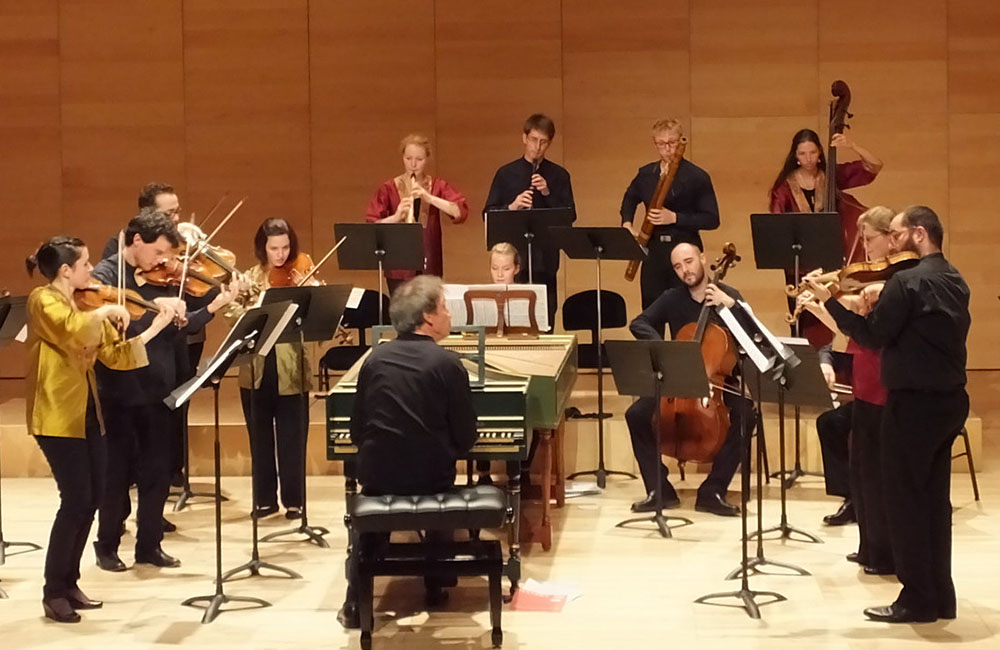
The ICONS Foundation has recently joined the New European Bauhaus Initiative, a European project that will have interesting implications for our orchestra's activities. We interviewed Elisabeth Schmid, Grant Office Director at ICONS, to find out more.

A new opportunity is on the horizon, which promises to involve our orchestra actively. Recently, ICONS Foundation joined the New European Bauhaus initiative as an official partner. The foundation that manages, develops and supports our orchestra is a leading non-profit organisation operating in the field of science communication, developing large-scale cultural projects.

We asked Elisabeth Schmid, Grant Office Director at ICONS, to tell us more about this initiative:

The New European Bauhaus serves as a link between the worlds of science and technology, arts and culture, aligning seamlessly with ICONS’ core activities. Joining the NEB network is a terrific opportunity for active involvement in shaping a more sustainable and inclusive Europe and pursue our values of beauty and culture.

Elisabeth Schmid, what is your role at the ICONS Foundation?

As the European Grant Office Director, I focus on developing new project ideas across various research and cultural domains and establishing European-level partnerships. I identify suitable open calls and funding opportunities, aligning them with ICONS’ expertise in science communication, business, and social innovation.

I seek out those opportunities for collaboration with stakeholders whose goals align with the values and mission of our foundation. Working with universities, companies, public authorities, civil society organisations and many others, we collectively aim to meet project scopes and anticipated outcomes from calls. All our project proposals aim to implement existing European policy agendas and future strategies contributing to a more sustainable, inclusive and liveable Europe, while preserving our culture and values. In my job, it is fundamental to maintain and expand  ICONS Foundation’s network to enhance collaboration and cross-fertilize knowledge, practices, and strengthen human capital, a key element of our mission.

What is the New European Bauhaus initiative and when did it start?

Launched by the European Commission in 2020, the New European Bauhaus initiative is a creative and interdisciplinary movement to rebuild a more sustainable and inclusive Europe. This initiative connects the European Green Deal to our daily lives, living spaces and experiences. Inspired by the German art school of the early 20th century, it integrates art, culture, and science to expresses the EU’s ambition for a sustainable and inclusive future.

Why has ICONS joined the NEB initiative?

ICONS Foundation’s commitment to science communication, business and social innovation, aligns perfectly with the NEB’s values of beauty, sustainability, and togetherness. Our daily work in making research and innovation accessible to all through awareness campaigns, social engagement strategies, co-creation processes, and roadmaps to facilitate the adoption of research results for the benefit of society at large, meet the NEB mission of inclusiveness (together). Sustainability is a key focus in the many projects ICONS is involved in addressing social, economic and environmental challenges and develop new solutions. ICONS is commitment to musical and philanthropic initiatives that emphasise societal impact and cultural excellence. By actively fostering artistic talents, managing and supporting international youth orchestras of early music such as Theresia Orchestra and the European Union Baroque Orchestra, we align with the NEB mission of promoting beauty.

In short, the NEB is perfectly summarises the Foundation’s spirit, and we are ready to support its intrinsic values. That’s why we decided to apply to the NEB initiative, and we have now officially become partners, together with many other non-profit organizations in Europe. Each partner has a role to help build, inspire, and act as key interlocutors for the initiative.
New European Bauhaus

“The New European Bauhaus Initiative is a creative and interdisciplinary movement for rebuilding a more sustainable and inclusive Europe”

What kind of projects does ICONS Foundation intend to carry out as part of the New European Bauhaus initiative?

ICONS’ experience in enhancing human capital, fostering intangible assets, and promoting philanthropic endeavours can significantly contribute to increase awareness and engagement around the New European Bauhaus. In 2021 ICONS successfully applied to the first round of Horizon Europe NEB-inspired calls and since 2022 we work on one of the first five NEB Lighthouse projects: Eyes Hearts Hands Urban Revolution.

As President Ursula von der Leyen said on occasion of launch of these new projects, they “[…] should become the starting point for a European and worldwide network of New European Bauhaus projects”. We feel somehow part of this first cornerstone, which set the path for an increasing social engagement with the NEB movement. Moreover, the Foundation is coordinating the Creative Europe EMPOWER project, further merges arts with sustainability, co-design and investing in the development of young talented professional musicians’ soft skills, which again are fully in line with the NEB spirit.

More recently we have joined new projects connected to NEB and are currently working on new research and cultural proposals inspired by NEB values , hoping they will soon turn into real projects.

What impact does ICONS expect from its participation in the New European Bauhaus initiative?

The participation in the NEB initiative enables ICONS to expand its network and reputation as a key player at European level. The NEB platform supports networking, community building and knowledge sharing, for which it will be possible to find and establish new partnerships with entities and communities aligned with NEB values to get involved in the development of new research and cultural projects. ICONS can intrinsically be considered as a natural ambassador for NEB, its involvement inspires our team but also resonates with those we engage with. Being a supporter and partner of such a movement will also inspire our team and the people we are getting in touch with. We should all be aware that we are contributing to building on a sustainable and inclusive future together through our daily efforts.

How do you think the New European Bauhaus initiative will influence the music projects supported by ICONS?

The Foundation’s support and management of of a unique system of international youth orchestras playing on period instruments – Theresia Orchestra and the European Union Baroque Orchestra – will continue to pursue the NEB values of beauty and culture and work in a new European movement that is gaining more and more attention in Europe and beyond, also thanks to the European Commission’s promotion of and commitment to the NEB initiative.

The New European Bauhaus platform is facilitating the engagement with many different cultural realities and organisations working both at a local and European level. It demonstrates inspiring projects and opportunities in which also the music projects supported by ICONS can find a place to join, sustain or cooperate with already existing or new cultural events, initiatives, festivals and campaigns. The network also gives substantial communication support to publish and promote events e.g. via their official Instragram account to increase outreach and engagement. Each year, the New European Bauhaus Festival is organised to celebrate its core values, which represents another opportunity for creative projects involving our two orchestras.

Explore the New European Bauhaus platform or visit ICONS Foundation’s website to find out more about their impactful projects.
ICONS foundation partners with Mozart Ways to begin an extraordinary new journey

By Emilia Campagna - January 23, 2024
All roads lead to Rome, they say. However, some lead to... Mozart. Today we like to tell you about Mozart Ways, an extraordinary network that brings together cities and cultural institutions associated with the great composer from Salzburg.

All roads lead to Rome, they say. However, some lead to… Mozart. Today we like to tell you about Mozart Ways, an extraordinary network that brings together cities and cultural institutions associated to the great composer from Salzburg. Fondazione ICONS has recently become part of this distinguished network, an official Cultural Route of the Council of Europe. Mozart Ways was established in 2002 through the initiative of the City of Salzburg, which played a crucial role in coordinating joint endeavours in planning the major celebrations commemorating the 250th anniversary of Mozart’s birth, which took place in 2006.

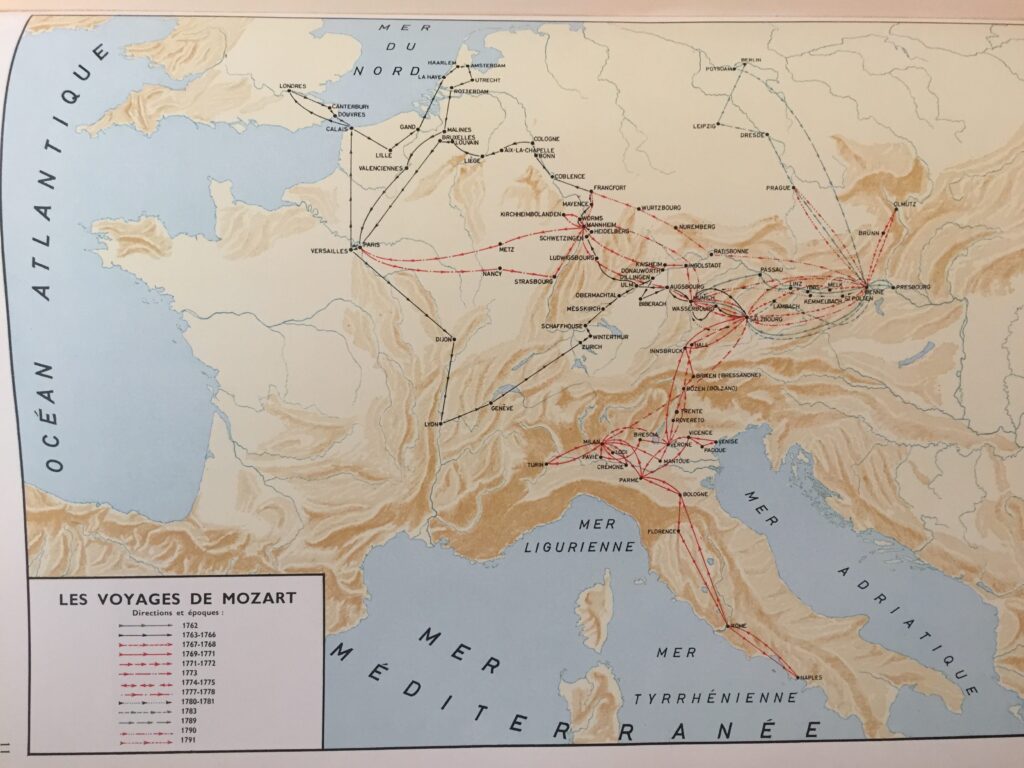
As you can read below, Mozart visited numerous European cities during his travels: while the complete list is too extensive to include here, you can find full details on the Mozart Ways website. Essentially, each of these European cities has a musical legacy associated with Mozart in some way. The purpose of the network is to enhance this legacy by fostering connections, promoting initiatives inspired by and named after Mozart, and providing support, particularly in the realm of cultural tourism.

Mozart’s travels

Mozart was an incredible composer, but he was also a great traveller.  He travelled from an early age with his family mainly to improve his education, to meet the great musicians of his time, and to promote his own compositions. Let’s take a quick look at some of his most important journeys.

Mozart Ways - The full map of Mozart's travels in Europe

The full map of Mozart’s travels in Europe as reported in the “Atlas historique de la musique”

A family trip

Mozart’s first journeys in 1762 were relatively short, at least by today’s standards: from Salzburg to Munich, and from Salzburg to Vienna. In 1763, the entire family of Leopold Mozart, his wife Anna Maria, and their two child prodigies, Maria Anna (Nannerl) and Wolfgang, set out on a Grand Tour of Europe. At the start of that journey, the children were eleven and seven years old, respectively. The first leg of the tour took the family via Munich and Frankfurt to Brussels, and then on to Paris, where they stayed for five months. They left then for London, where they stayed more than a year, and where Wolfgang made the acquaintance of some of the leading musicians of the day, heard lots of performances, and composed his first symphonies. The family moved on towards The Netherlands, where the performance schedule was interrupted by illness of both children, although Wolfgang continued to compose prolifically. The homeward journey included a second stop in Paris and a trip through Switzerland before the family returned to Salzburg in November 1766. The entire journey took three years!

Trips to Italy

Between 1769 and 1773, the young Wolfgang Amadeus Mozart and his father, Leopold, made three trips to Italy. The first trip, spanning 15 months, was an extended tour financed by performances for nobility and public concerts, leading them to the most significant Italian cities. The subsequent two trips centred on Milan, where Wolfgang fulfilled commissions for operas initiated during their first visit. In terms of Wolfgang’s musical development these journeys proved remarkably successful, as his talents were recognised through prestigious accolades such as a papal knighthood and memberships in leading philharmonic societies.

The first of Mozart’s three trips to Italy was the longest and took him all the way to Naples, passing through numerous cities including Verona, Milan, Lodi, Turin, Mantua, Bologna, Florence, Rome.

Heading North

In the early spring of 1789, Wolfgang Amadeus Mozart embarked on one of the most extensive journeys of his adulthood, exploring a several cities north of his adopted home in Vienna, including Prague, Leipzig, Dresden, and Berlin. Sadly, the trip took place at a difficult time in Mozart’s career, when he was no longer earning much money from concerts, and his income from composing operas had not made up the difference. He was borrowing money from friends, and his financial situation was very worrisome.

A unique network

As a Mozart city, Lodi is now fully part of the Mozart Ways thanks to Fondazione ICONS, which represents the city in the network. Our membership was warmly recommended by Maria Majno, chair of Mozart Ways, and also chair of SONG, an important initiative for music dissemination in Lombardy.

ICONS Foundation membership enriches the strong representation of Italian institutions and cities by joining Milan, Bologna, Rome, Turin, Padua, Rovereto and many others. We are only at the beginning of this extraordinary journey full of potential. We already look forward to telling you about the benefits coming from this new partnership.

Welcome back, EUBO!

By Emilia Campagna - November 25, 2022
After four years of stop, EUBO starts its activity again thanks to the philanthropic and financial support of ICONS. Let's find more in this interview with Mario Martinoli, President of ICONS and Founder and Artistic Director of Theresia Orchestra

After four years of inactivity, EUBO is back!

The European Union Baroque Orchestra was founded in 1985 by Paul James and Emma Wilkinson as a major initiative of European Music Year to celebrate the 300th anniversaries of three great baroque musicians: Johann Sebastian Bach, Domenico Scarlatti and George Friedrich Handel. Since then, it had been the leading training initiative in the field of Historically Informed Performance. The success of the project, under the direction of the world’s leading baroque musicians, could be measured in the number of ex-EUBO members who would play in Europe’s leading baroque orchestras. Then, in 2018, all activities stopped. Now, EUBO starts to play again and moves its headquarters to Italy thanks to the philanthropic and entrepreneurial support of ICONS. We talked with Mario Martinoli, President of ICONS and Founder and Artistic Director of Theresia Orchestra, to know more about this heartwarming story.

Mario Martinoli, after 10 years of the life of Theresia Orchestra, it seems like you started a new adventure, going to the rescue of EUBO: why did you decide to go for this venture?

The reasons are more than one: on one hand, there was the opportunity (EUBO has been inactive for the past four years, and it seemed like no activity was to come), on the other, we wanted to extend the cultural patronage model that gave birth to Theresia Orchestra. Furthermore, many of our musicians demanded to expand the orchestral repertoire to include Baroque music: but Theresia is focused on classical repertoire, and we never intended to change its artistic mission. We realized that EUBO could be the answer to many questions, and we decided to try and restart it.

How come that EUBO stopped its activity?

It was a matter of unfortunate coincidences: first, Brexit compelled Paul James and Emma Wilkinson, founders and managers of EUBO, to move the administrative headquarters (but also the musical archive and the instruments) to a country of the European Community. They moved to Antwerp, Belgium. That was probably a big deal, together with a different system of funding adopted in that years by the European Commission. Then, Covid happened! And it was probably too much.

So what happened? How did you contact EUBO?

The activities were entirely suspended, but the trademark is alive and well, tied to its creator, Paul James, whom I contacted, offering to finance and manage the orchestra. He answered enthusiastically, and we started to work together toward a new beginning.

What will the role of ICONS be, and will there be continuity with the previous management?

ICONS will ensure everything related to organization, financial support and ethics. EUBO becomes part of the European HIP Orchestral System run by ICONS, and in a sense, it is now Theresia Orchestra’s sister. The artistic direction is in my charge, and Paul James assists me as an advisor.

What are the differences and similarities between EUBO and Theresia?

It must be said that we were inspired by EUBO’s training model when we started Theresia, especially with regard to the residencies. That said, apart from the different repertoire, there are some differences: for example, EUBO changes its members every year, whilst Theresia, even organizing annual auditions, gives longer grants, so that the renewal of the organic is more gradual. We have differences also in the auditions: in Theresia, we introduced a first-step selection based on a video, for example. I think we’ll think of all the best practices from each project to improve the management of both orchestras.

“If Theresia is a Ferrari, EUBO is a vintage luxury car: it has a glorious past, but has been still for a while. We want to get the engine back to its perfection and put it back on the road!”

EUBO is going to perform under the baton of Alfredo Bernardini in Ravenna: why did you choose this town for this new beginning?

It sort of happened by chance. In June, I called Romano Valentini, artistic director of the “Angelo Mariani Society” that organizes the main concert season in Ravenna, telling him my news about EUBO and us. He was immediately interested and offered to host the orchestra. He managed to involve the city at many levels, including the local administration and important members of the cultural and economic system of this community. I was impressed, that was partly unexpected, and I have reasons to believe that the relationship between EUBO and Ravenna will go further: just for starters, we are going to be in Ravenna for the auditions which will be planned in May 2023.

Speaking of auditions, how did you find the musicians for this kick-off concert?

We didn’t have the time to set up auditions, so we invited members of the last editions of EUBO concerts.

What about the musical program of the concert?

It is a sort of European celebration through baroque music: we are starting with Concerto Grosso op.6 n.4 by Arcangelo Corelli, who by the way was born in Ravenna; then another Concerto Grosso, op.3 n.2 by Georg Friedrich Haendel, a composer who moved from Germany to London after having been in Italy for some years; we will hear Hypochondrie ZWV 187 by Jan Dismas Zelenka, whose Bohemian roots were transplanted in Dresden, Germany. The concert will end with Ouverture Suite BWV 1066 by Johann Sebastian Bach, who from Germany looks to Italy and France.

What are the next steps? 

Apart from the auditions, we are working on a residency in Belgium in October 2023. We are thinking of Antwerp as a venue for residencies, considering the strong connection with EUBO, but we are still working on it, so stay tuned for more news to come soon.

Ten years ago, you would say that you had founded an orchestra instead of buying a Ferrari. To keep the equation, if Theresia is a Ferrari, EUBO is….

A vintage luxury car: it has a glorious past, but has been still for a while, closed in a garage. We want to get the engine back to its perfection and put it back on the road!


EUBO’s concert will be held on Monday 28 November, Teatro Alighieri, Ravenna, 9 p.m. More info and tickets available here