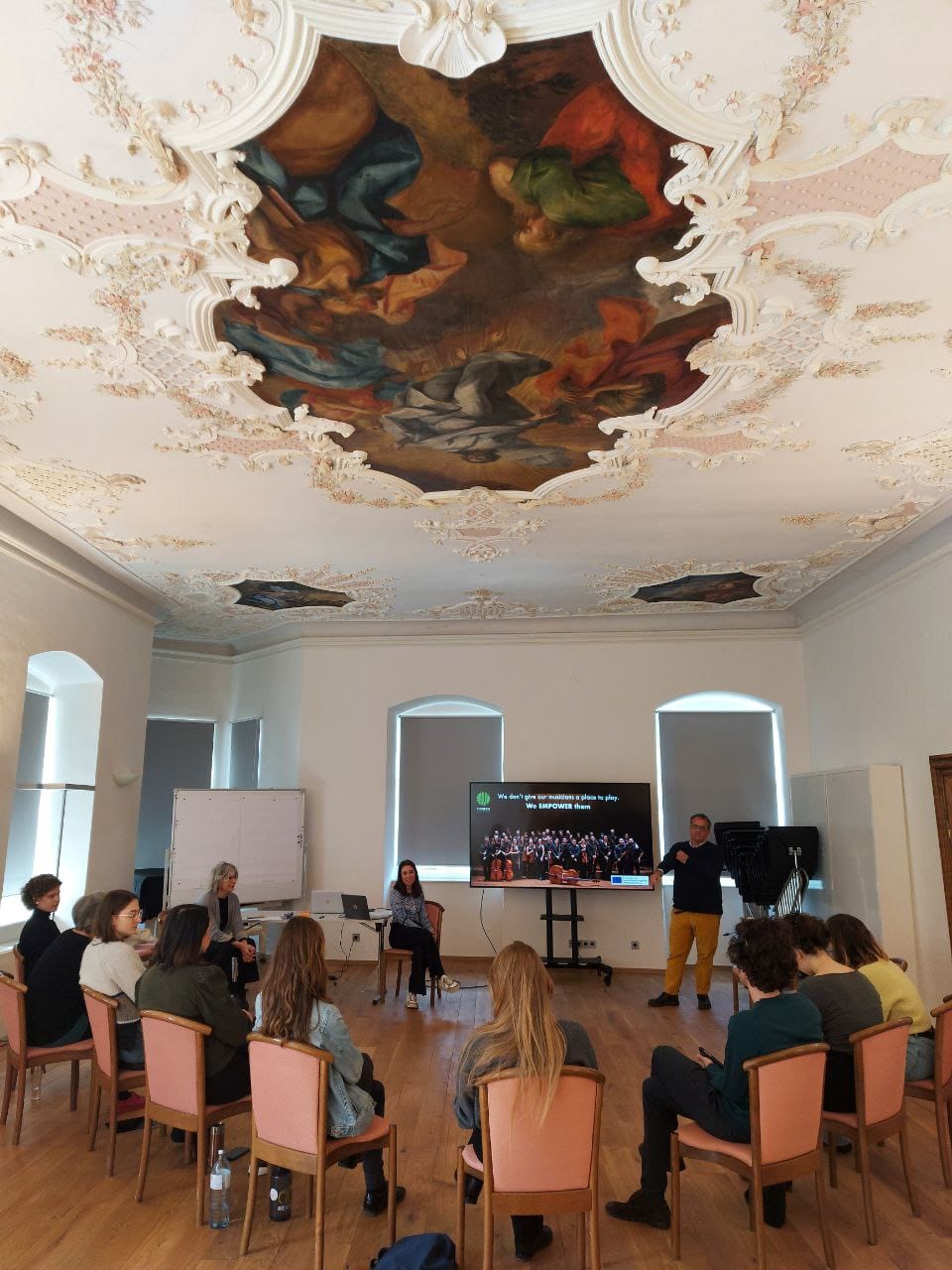
“A practice that deeply resonates in my body”.
Laura Catrani and the GYROKINESIS® method

By Emilia Campagna - June 27, 2022
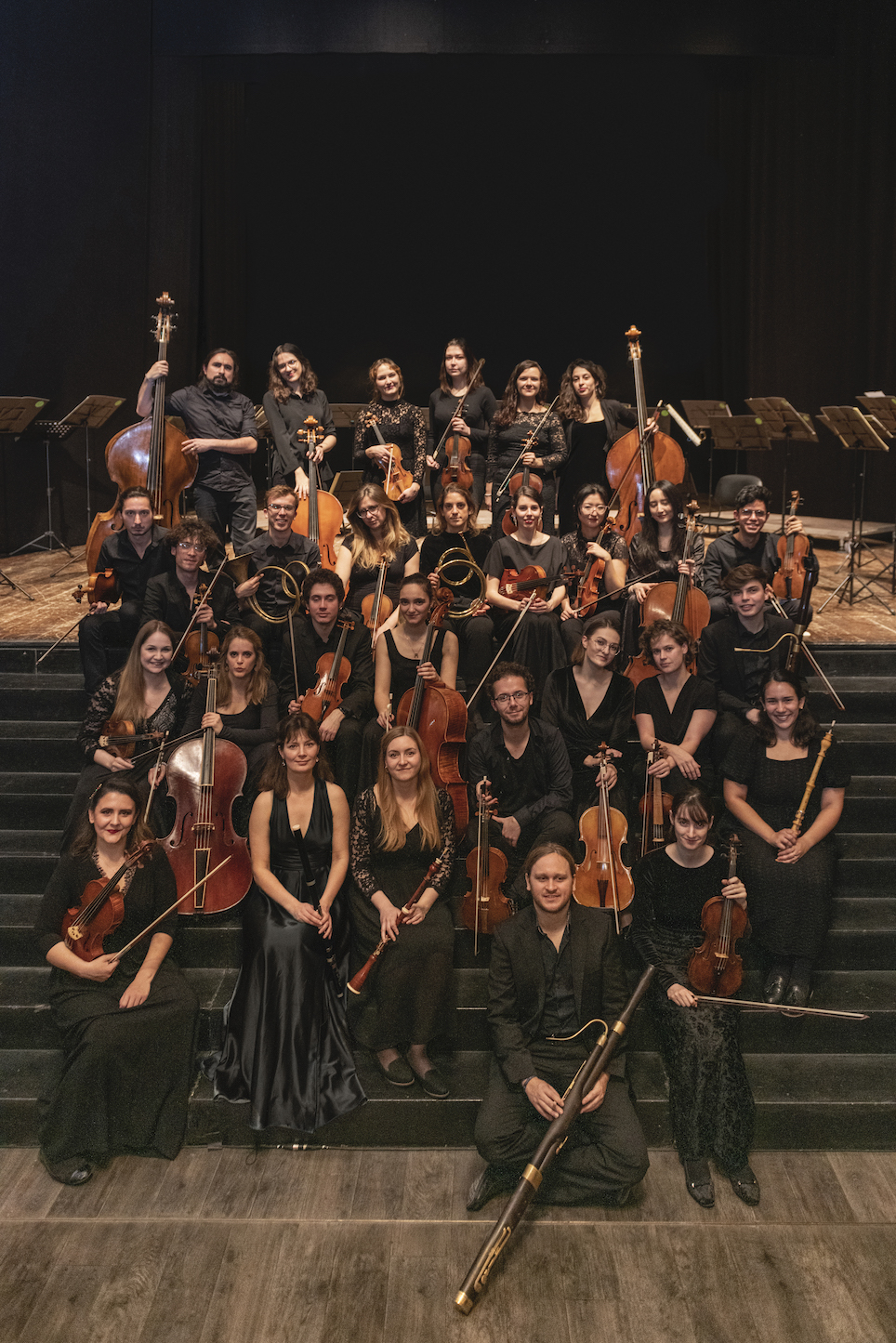
Soprano Laura Catrani talks about the GYROKINESIS® method on the occasion of the workshop she's holding for Theresia Orchestra as part of the EMPOWER project capacity-building module.

Soprano Laura Catrani talks about the GYROKINESIS® method on the occasion of the workshop she’s holding for Theresia Orchestra as part of the EMPOWER project capacity-building program.

Read the Italian version – Vai alla versione italiana

Laura Catrani escapes too narrow definitions: she is a soprano that ranges from contemporary to baroque repertoire, and is active in commissioning new works (entirely her is the recent project “Vox in Bestia”, a Dantesque Bestiary with music by Fabrizio De Rossi Re, Matteo Franceschini and Alessandro Solbiati) as well as studying ancient scores. She sings, studies, teaches but in her professional life she has also introduced a physical practice, the GYROKINESIS® method, which she will present during Theresia’s residency in Mondovì to initiate the young members of the orchestra to this practice.

How does a classically trained singer become a trainer of the GYROKINESIS® method? We asked Laura Catrani directly: “The roots start from far away, from my childhood. I have always been attracted by movement and as a girl, I practiced artistic gymnastics at a competitive level. To dedicate myself to music I had to abandon gymnastics, giving up a big piece of my happiness, and over the years I have always tried to do activities that would bring me back to that feeling of well-being and balance experienced in my youth.”

When and how did you first experience the GYROKINESIS® method?

“The meeting took place 10 years ago and was dazzling: the occasion was the preparation of a show with the dancer Valentina Moar to build a performance in which on stage I would be the music through my voice, and she would be the body. We treated ourselves to twenty days of immersive rehearsals in Austria, where Valentina lives. Our daily routine involved a body warm-up in which I was able to experiment and practice the GYROKINESIS® with her, who was already a method trainer. It was a bomb. Of course, I was physically and mentally predisposed, but I was particularly impressed; this way of moving the body resonated deeply inside me, being a forgotten athlete as well as an active singer.”

How did you develop this passion?

“Back in Italy I took courses and deepened the knowledge of this practice that 10 years ago was still little known and in a sense elite. I studied to become a trainer and got my diploma in 2019.”

Your experience as a musician has allowed you to decline this method, making it a particularly suitable practice for those who play: in what way?

“First of all, I experienced the benefits on myself: the change that gave me the practice is not only about my body in motion but also my vocal technique, which is definitely improved and the development of a more dynamic use of breathing. That’s why I thought I would pass on this experience to my colleagues and then to the music students, starting with my singing students. I filtered my experience as a singer and musician by selecting targeted exercises.”

What was the reaction?

“Extremely positive. In these years I have been able to teach in different realities, including the courses for the students of the Conservatory of Milan and Cesena, those for the singers of the Accademia Verdiana of the Teatro Regio of Parma, as well as in my singing courses receiving beautiful answers.”

What benefits can the practice of the GYROKINESIS® method give to a musician?

“Beyond all the benefits that come from having an active and conscious body, as for musicians, we must keep in mind that they are often forced to unnatural positions or to manage heavy and uncomfortable instruments. I see that they have a hard time relating to symmetry and that they tend to stiffen up and hold wrong postures. Through practice, they learn to relax their shoulders, to stretch their back, and to achieve a body awareness that remains present beyond the moment of the lesson, thus being able to manage it when they study and play their own musical instrument.”

The GYROKINESIS® workshop is being organized under the EU-supported EMPOWER project as part of the capacity-building program. After this first time, the workshop will be up again in October and November.


Italian version


Laura Catrani sfugge alle definizioni troppo strette: è un soprano che spazia dalla contemporanea al repertorio barocco, attiva nella commissione di opere nuove (interamente suo è il recente progetto “Vox in Bestia”, un Bestiario Dantesco con musiche di Fabrizio De Rossi Re, Matteo Franceschini e Alessandro Solbiat) così come nello studio di partiture antiche; canta, studia, insegna ma nella sua vita professionale ha fatto entrare anche una pratica fisica, il metodo GYROKINESIS®, che presenterà durante la residenza di Theresia a Mondovì per iniziare a questa pratica i giovani componenti dell’orchestra.

In che modo una cantante di formazione classica diventa trainer del metodo GYROKINESIS®? L’abbiamo chiesto direttamente a Laura Catrani: “Le radici partono da molto lontano, dalla mia infanzia. Sono sempre stata attratta dal movimento e da ragazzina ho praticato la ginnastica artistica a livello agonistico. Per dedicarmi alla musica ho dovuto abbandonare la ginnastica, rinunciando a un pezzo grosso della mia felicità e negli anni ho sempre cercato di fare attività che mi riportassero a quella sensazione di benessere ed equilibrio sperimentata in gioventù.”

Quando e come è avvenuto l’incontro con il metodo GYROKINESIS®?

L’incontro è avvenuto 10 anni fa ed è stato folgorante: l’occasione è stata la preparazione di uno spettacolo con la danzatrice Valentina Moar per costruire una performance in cui in scena io sarei stata la musica attraverso la mia voce e lei il corpo. Ci siamo così concesse venti giorni di prove immersive in Austria, dove Valentina vive. La nostra routine giornaliera prevedeva un riscaldamento del corpo in cui ho potuto sperimentare e praticare con lei, già trainer del metodo, la GYROKINESIS®. È stata una bomba. Certo, io ero predisposta fisicamente e mentalmente, ma sono stata particolarmente colpita; il modo di muovere il corpo risuonava profondamente dentro di me, nel “me” atleta dimenticata oltre che cantante attiva.”

Come hai sviluppato questa tua passione?

Tornata in Italia ho seguito dei corsi e approfondito la conoscenza di questa pratica che 10 anni fa era ancora poco conosciuta e in un certo senso d’elite. Ho studiato per diventare trainer ottenendo nel 2019 il diploma.”

La tua esperienza come musicista ti ha permesso di declinare questo metodo facendone una pratica particolarmente adatta a chi suona: in che modo?

Innanzitutto ne ho sperimentato i benefici su me stessa: il cambiamento che mi ha dato la pratica non riguarda solo il mio corpo in movimento ma anche la mia tecnica vocale, che è decisamente migliorata e lo sviluppo di un uso della respirazione più dinamico. Per questo ho pensato di trasmettere questa esperienza ai miei colleghi e poi agli studenti di musica, iniziando dai miei studenti dei corsi di canto. Ho filtrato la mia esperienza di cantante e musicista selezionando esercizi mirati.”

Qual è stata la reazione?

Estremamente positiva. In questi anni ho potuto insegnare in diverse realtà, tra cui i corsi per gli allievi del Conservatorio di Milano e di Cesena, quelli per i cantanti dell’Accademia verdiana del Teatro Regio di Parma, oltre che nei miei corsi di canto ricevendo risposte bellissime.”

Che benefici può dare la pratica del metodo GYROKINESIS® a un musicista?

Al di là di tutti i benefici che derivano dall’avere un corpo attivo e consapevole, per quanto riguarda i musicisti bisogna tenere presente che spesso sono costretti a posizioni innaturali o a gestire strumenti pesanti e scomodi. Io li vedo che fanno fatica a relazionarsi con la simmetria, che tendono a irrigidirsi e a tenere posture scorrette. Tramite la pratica imparano a rilassare le spalle, ad allungare la schiena, e a raggiungere una consapevolezza del corpo che rimane al di là del momento della pratica presente al di là del momento della lezione, potendola così gestire quando studiano e suonano il proprio strumento musicale.”

Il workshop sul metodo GYROKINESIS® è realizzato nell’ambito del progetto EMPOWER, sostenuto dall’Unione Europea.
Discovering EMPOWER

By Emilia Campagna - June 16, 2022
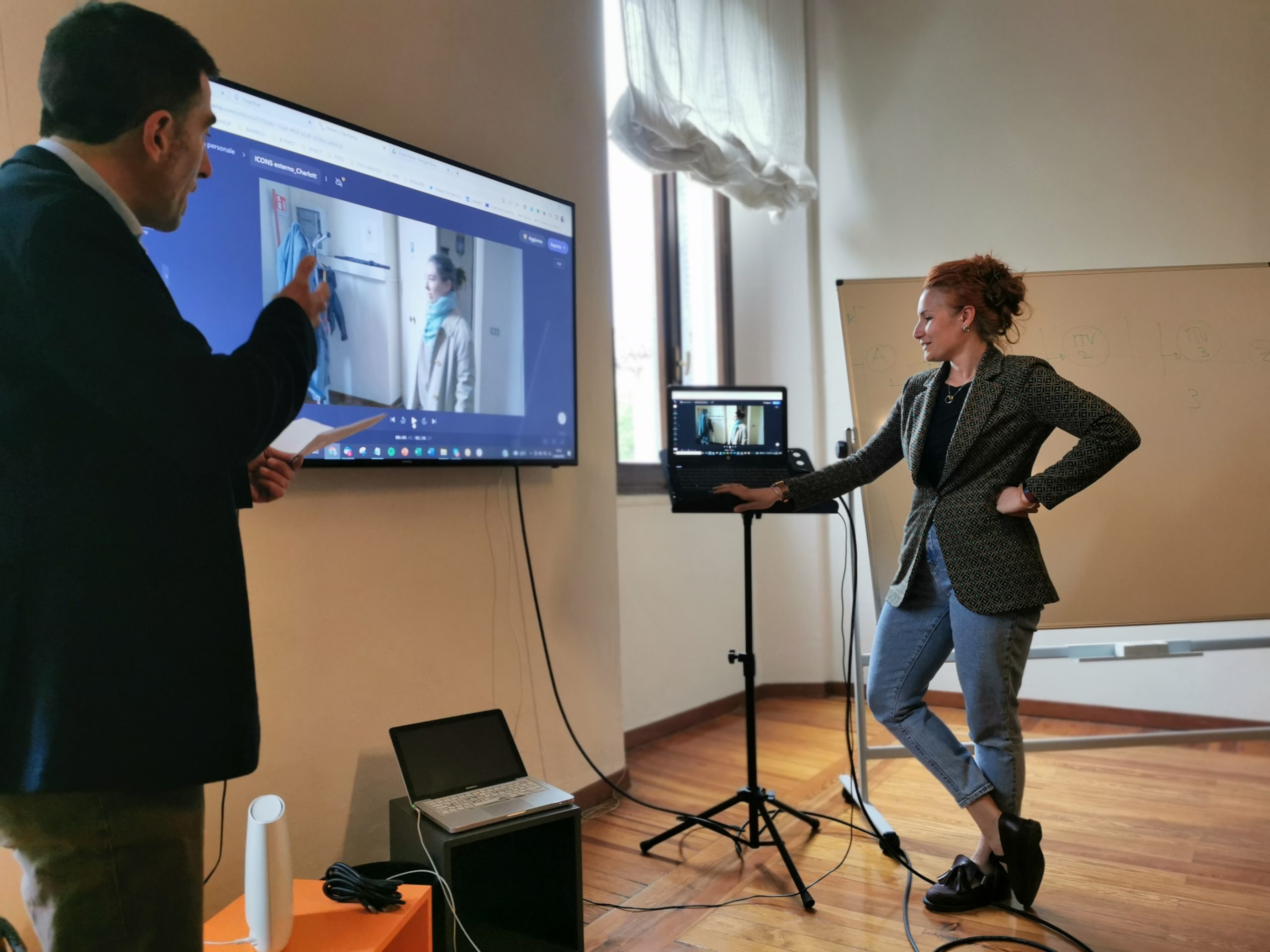
Let's get into the heart of EMPOWER and discover the five different skills that we want our musicians to improve

How do you empower a musician? Traditionally, masterclasses and workshops are the places where young talented musicians improve their technique, deepen their knowledge of the repertoire, and challenge themselves in playing in front of an audience and with colleagues. Music, though, is not a musician’s entire life, not even when you think only of their work life. One has to manage the business side of the whole thing, take care of one’s physical health, and even promote oneself. That’s a lot.

We kept this kind of complexity in mind when we found ourselves planning the training modules of the capacity-building activity, a program at the very core of the European funded project EMPOWER. We defined five different competences that we want our musicians to improve: artistic performance, naturally, but also organisational, economic and managerial skills; digital and technological skills for marketing and communication; personal development and well-being; ecological transition.

As Silvia Raimondi, project manager at ICONS pointed out, we aim to “give young musicians the skills to manage themselves by the means of business management, communication, by coping with stress and also by acting sustainably”.

Eleven seminars are planned to cover all five areas: the seminars are going to be held mainly online and initially they will be intended for Theresia musicians only, but the plan is to expand our audience in the future including Theresia’s alumni and Theresia’s partners that may be interested. 

In this first phase of the project, the formative offer will be tailored according to the specific need of every musician, through a preliminary interview that will state the needs; the plan will be then adjourned every six months.

Teachers involved are Simone Laghi, Artistic Secretary of Theresia Orchestra, who will discuss specific aspects of organology of the classical period, providing information about the development of the Orchestra as a musical entity during the period between 1750 and 1800; conductor Vanni Moretto, who will provide musicians with the tools to understand and interpret eighteenth-century music, through the precious information provided by 18th century’s essayists; musicologist Bertil Van Boer, Professor Emeritus of Musicology-Theory at Western Washington University, who will deepen the general historical context and the question research of sources and references in archives. Looking at the managerial side of a musician’s life, Claudia Crippa, Senior business analyst at ICONS, will hold a two-part seminar focused firstly on improving knowledge about the musical “sector” and their economics, the way economics impact a musician’s career and secondly to improving knowledge about self-resources to cope with the “market”. Charlotte Michi, Director of the Innovation Farm Unit and Project Manager at ICONS will help musicians to strengthen personal digital communication skills, by giving an overview of the different online channels and providing musicians with the basic digital skills to promote their work on them. A second seminar will focus on the creation of content to be shared online. Soprano and performer Laura Catrani will guide musicians to experiment with the beneficial effects of postural techniques and GYROKINESIS® specifically designed for musicians. Speaking of well-being, Alessandra Calzarossa, professional coach and senior HR expert, will address the area of the “inner game” and emotional impact on performance and results to improve the musician’s performance and professionalism. Last but not least, Veronica Meneghello, Project coordinator for national and international projects on sustainability in ICONS, will help musicians to understand how to improve their knowledge of the environmental impact of their lifestyle choices, especially those connected to their work and travels, and thus lower it. 

The series of seminars will start during the next residency and will be focused on well-being through the practice of postural techniques and GYROKINESIS®. Stay tuned to read further details on both the residency and the seminar on our blog!

Download our catalogue and find more about the capacity building program

New auditions coming soon!

By Emilia Campagna - May 20, 2022
Theresia is looking for talented musicians: don't miss the chance of the next auditions!

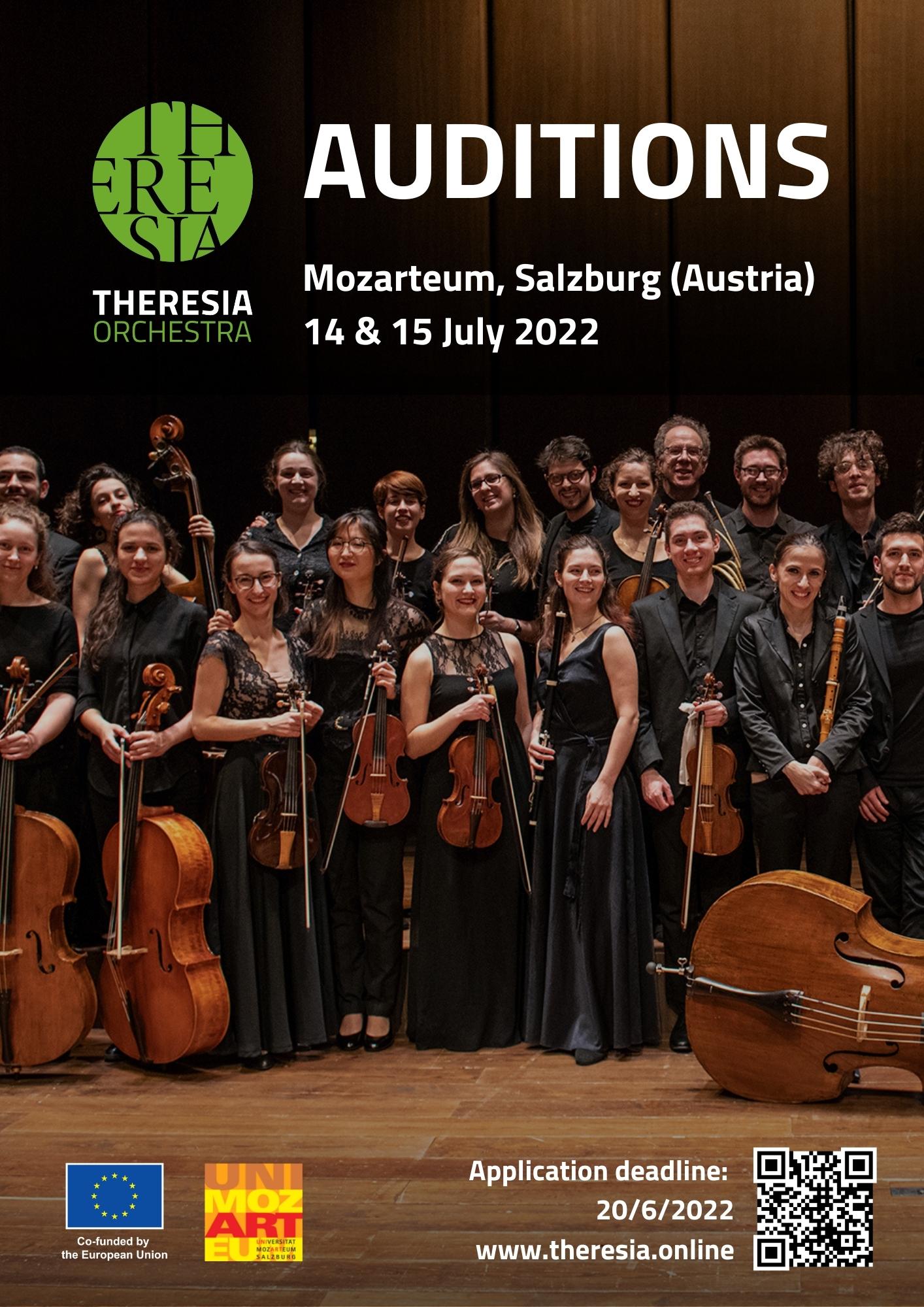
Good news for young talented musicians: a contest based on merit was launched to award Learning Grants to musicians wishing to enter Theresia Orchestra and participate in its learning activities for the period August 2022 – November 2023! Meaning, auditions are to be held soon.

Instruments involved are violin, viola, cello, double bass, flute, oboe, clarinet, bassoon and horn. Auditions, during which candidates will be asked not only to play but also to express their motivations to participate in the project, will be held at Schloss Frohnburg in Salzburg (Austria) thanks to the collaboration with Salzburg Mozarteum, on 14 July 2022 for wind instruments and on 15 July 2022 for string instruments, and will be run as chamber music workshops under the supervision of the Board of Examiners. Components of the Board of Examiner will be Alfredo Bernardini, Theresia’s Principal Conductor, violinist Gemma Longoni (Concertmaster), Artistic Director Mario Martinoli, Charlotte Michi (Fondazione ICONS Director), and Elena Gaboardi (Fondazione ICONS Board Member).

Selected musicians will participate in five of the residencies from August 2022 to November 2023: the first two of them, both in August, will be chamber music residencies, for string players in Geneva (Switzerland) and wind instruments in Totana (Spain). An opera production is also scheduled: residency n. 36 is devoted to Cimarosa’s opera “Le astuzie femminili”, with concerts in Rieti and Rome in October. Orchestral residencies will follow, with projects in which Theresia Orchestra will be conducted by Alfredo Bernardini, Alessandro De Marchi and Giovanni Antonini. Check the website for more info and updates!

Joining Theresia is a great opportunity: in addition to being involved in such musical projects, the musicians who will be particularly distinguished by artistic merit at the end of their granting period may have the possibility to extend their grant for one more year and may be invited to join the professional alumni orchestra named Concerto Theresia. Moreover, musicians will be involved in the activities made possible by the European project Empower: some of them will be “ambassadors” at the very centre of a program (Ambassador Program and Audience Development), which aims to engage new audiences in part thanks to some of our musicians acting as testimonials.Still, Empower will affect all musicians involved in Theresia, thanks to its learning program and capacity building modules..

Of course, not everybody can participate, and some requirements are mandatory: applicants must be born after (or on) 1 January 1994 and must be citizens of one of the Countries of the European Union or the European Economic Area. Non-EU citizens may apply if they have a residence permit for study in one of the Countries of the European Union. They must have in-depth knowledge of performance praxis on authentic instruments and of the use of period instruments. Last but not least, the use of the classical bow for strings and classical instruments for winds is mandatory during the Auditions.

Download the full regulation here and don’t forget to spread the news!

Empower, we are ready to go!

By Emilia Campagna - March 31, 2022
The chamber music residency in Ossiach wasn’t only the chance to study and perform wonderful music under the guidance of Chiara Banchini: during the five-day stay, our musicians were told about the new important European project involving Theresia, EMPOWER.

The chamber music residency in Ossiach wasn’t only the chance to study and perform wonderful music under the guidance of Chiara Banchini: during the five-day stay, our musicians were told about the new important European project involving Theresia, EMPOWER.

As we have announced recently, a 3-years grant has been awarded to Theresia Orchestra by the Creative Europe Programme to develop excellence in orchestral learning and soft skills acquisition by our young artistic talents. Thanks to this achievement, Theresia Orchestra has entered into the group of the leading European youth orchestras, together with EUYO – The European Union Youth Orchestra and other few acknowledged ensembles. 

The Chamber Music Residency in Ossiach was the first initiative developed within EMPOWER, involving a selected group of string players. As you know, they studied and performed string quartets by Haydn, Mozart, and Boccherini with a final concert at Kultur Forum Amthof

During the residency, we scheduled a meeting to explain the project to the people who will be the most involved onesour musicians. We especially focused on one of the branches of activity, the Ambassador Program and Audience Development, which aims to engage new audiences in part thanks to some of our musicians acting as testimonials (Ambassadors). As Charlotte Michi, Project Manager of Empower, explained to us, “Empower is strongly devoted to promoting engagement, so we didn’t want to explain the whole thing giving our musicians a traditional speech. After a brief introduction, we started a role game to find out together which may be the characteristics both of an Ambassador and of a new member of the audience.” 

Theresians were enthusiasts, and together they pictured the ideal ambassador and the possible new member of the audience: “Words that came up frequently to describe the ambassador were open-minded and emphatic (meaning able to listen to others and not just to teach). Regarding the audience, foremost they should be young, as people over 50 are already part of their audience, a thing that can be seen in concert halls and YouTube demographics. They should be interested in music, but preferably in other genres. One of the musicians stated that it is easier to approach someone who is interested in jazz, for example, instead of someone who already listens to classical music.” The problem of how to expand the audience seemed very important to our musicians: “Some noted that Sometimes it is easier to bring music to the people instead of expecting people to go there. They pointed out that it would be interesting to play in “unusual” locations, because classical musicians usually play in beautiful places, but it is difficult to reach new audiences there”.

Young musicians are especially keen on using social media to promote themselves and their activity, and Tommaso Toni offered to narrate the experience of Ossiach through a “take over” on his Instagram channel: you can find it here.

The project was so welcomed that we had three self-candidatures for being ambassador. The next step will be a workshop in Lodi to train them and plan their first actions. We are looking forward to it!

Theresia Orchestra and a year in music

By Emilia Campagna - December 28, 2021
Let's give a look to the six things that made us proud and happy in 2021!

­How was your 2021? There are only a few days until New Year’s Eve, and this is the typically time of the year to look back and make a report about what happened in the last twelve months. Covid related issues continue to be in everybody’s thoughts: during 2021 we also faced difficulties in organizing events and in traveling, but in the second half of the year, we finally saw things changed, returning to travel and to meet in person again.

Nevertheless, here six stunning successes we were able to achieve this year!

1. Auditions at Mozarteum Salzburg

Not only we could manage to set up auditions to enroll new musicians, but we were also able to organize it abroad: it was held in one of the very centers of music in Europe, Salzburg’s Mozarteum. They were scheduled on 15 and 16 July, and 50 musicians (playing string instruments, oboe, horn and bassoon) coming from 23 different countries sent their candidature to take part. At the end of the auditions, 12 musicians from 13 different countries were invited to join Theresia!
Read more about our 2021 auditions in an interesting interview with our artistic director Mario Martinoli.

2. A night at the Opera!

Actually, an entire week: since our projects are mainly devoted to symphonic and chamber music, it was thrilling to be part of an opera production. Concerto Theresia, our alumni orchestra, performed Mattheson’s Boris Goudenow under the baton of Andrea Marchiol last August. Everybody was enthusiast about the experience, and it was a success with audiences and critics: Frankfurter Allgemeine Zeitung’s music reviewer wrote that “the Ensemble Concerto Theresia under the baton of Andrea Marchiol makes the rich and virtuosic music from both vocal and instrumental points of view flourish in all its colours”.

3. Discovering hidden gems in Geneva

We were in Geneva last summer with nine musicians from Theresia Orchestra for a chamber music project held by Chiara Banchini and Alfredo Bernardini. Some true musical jewels by Cambini, Canabich, Boccherini, Michael Haydn and Johann Christian Bach were unveiled to the audience of Festival Les Concerts d’Été à Saint Germain in two concerts, on 22 and 23 August.
Find more in this detailed interview with conductor and oboist Alfredo Bernardini.

4. Some round figures from the residency in Lodi

The concert held on 27 November in Lodi was our 60th, and the residency was the 30th. Something to be proud of! Plus, residency in Lodi was the first orchestral project after Covid started, and the very first for musicians enrolled in the last auditions. Definitely, there’s a lot to celebrate! The orchestra was conducted by Alfredo Bernardini, supported by Gemma Longoni as a tutor of 29 musicians from 20 different countries. And, the residency was the chance for a whole series of initiatives in addition to the concert. Find out more here.

5. Meeting with our counterparts from all over Europe

REMA (Réseau Européen de Musique Ancienne) is the most extensive network for Early Music in Europe, with a membership of 130 organizations in 23 countries.
Theresia joined Rema this year and in September, our team took part in a conference that brought together more than 30 representatives of musical institutions from all over Europe: the first live event after the Covid emergency started!

Read more about our experience here.

6. A thrilling breakthrough!

Last but not least….. a 3-years grant has been awarded to Theresia Orchestra by the Creative Europe Programme to develop excellence in orchestral learning and soft skills acquisition by our young artistic talents. That is, Theresia Orchestra enters today in the group of the leading European youth orchestras, together with EUYO – The European Union Youth Orchestra and other few acknowledged ensembles. This is a deserved international recognition of the work done by Theresia over the past 9 years and the beginning of a new exciting era for our orchestra!

The project is called EMPOWER and it will be coordinated by ICONS. This is a huge milestone that will allow Theresia to complete the pathway towards the creation of a truly pan-European orchestra, unique in addressing the classical repertoire on period instruments. EMPOWER will design and implement activities fostering the artistic excellence of young talented musicians Furthermore, it will make this artistic legacy accessible to the whole society.

To read more about the further development of Theresia, stay tuned!