Picking a fight… or how to survive a train journey with a double bass

By theresia - April 16, 2024
Theresia's double bass player, Ariel Walton, shares her experiences and useful tips on how to travel by train as a musician: even with a bulky companion!

Theresia’s double bass player, Ariel Walton, shares her experiences and useful tips on how to travel by train as a musician: even with a bulky companion!

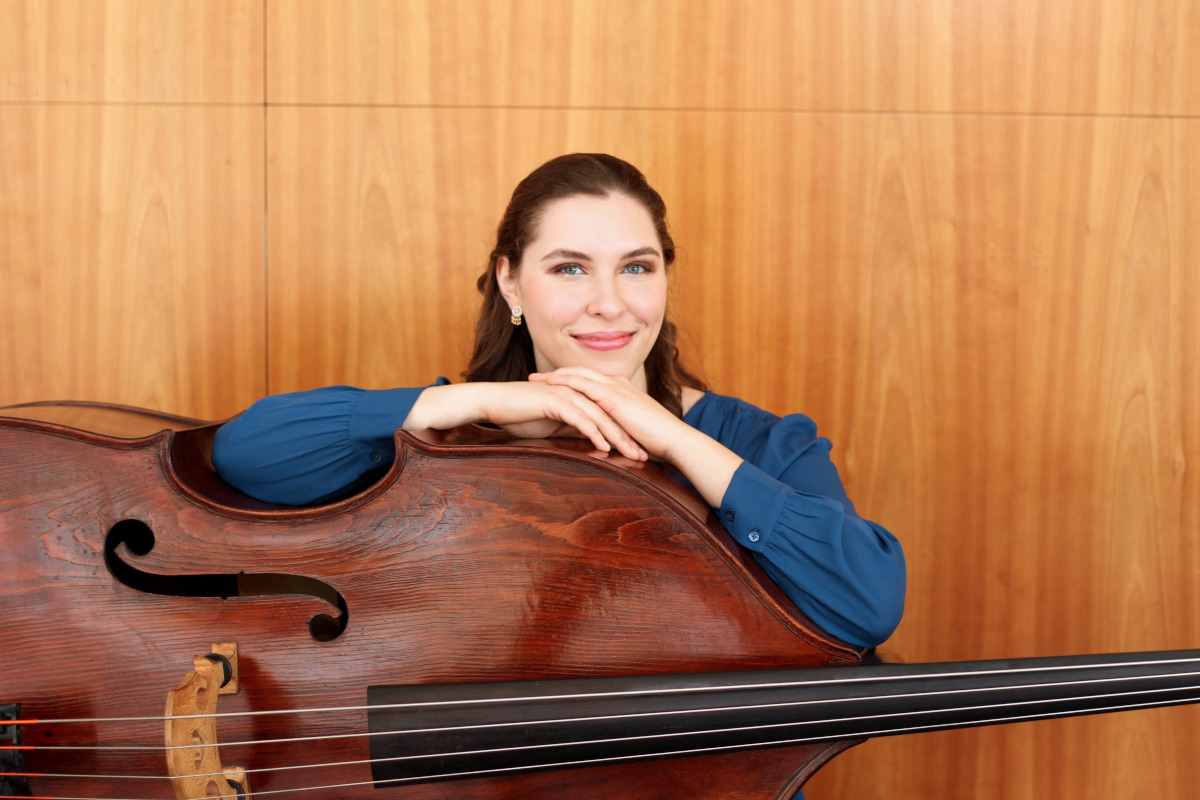
by Ariel Walton

I never thought about picking a fight with a drunk, burly tattooed and pierced guy until he almost sat on my double bass. Let’s backtrack about how I got here…

Hello lovely reader, my name is Ariel, and I have been playing the double bass for most of my life. I’m from the beautiful state of Pennsylvania in the United States of America. As much as I enjoyed living there, there were more music opportunities for me by traveling across the Atlantic to live in the Netherlands.
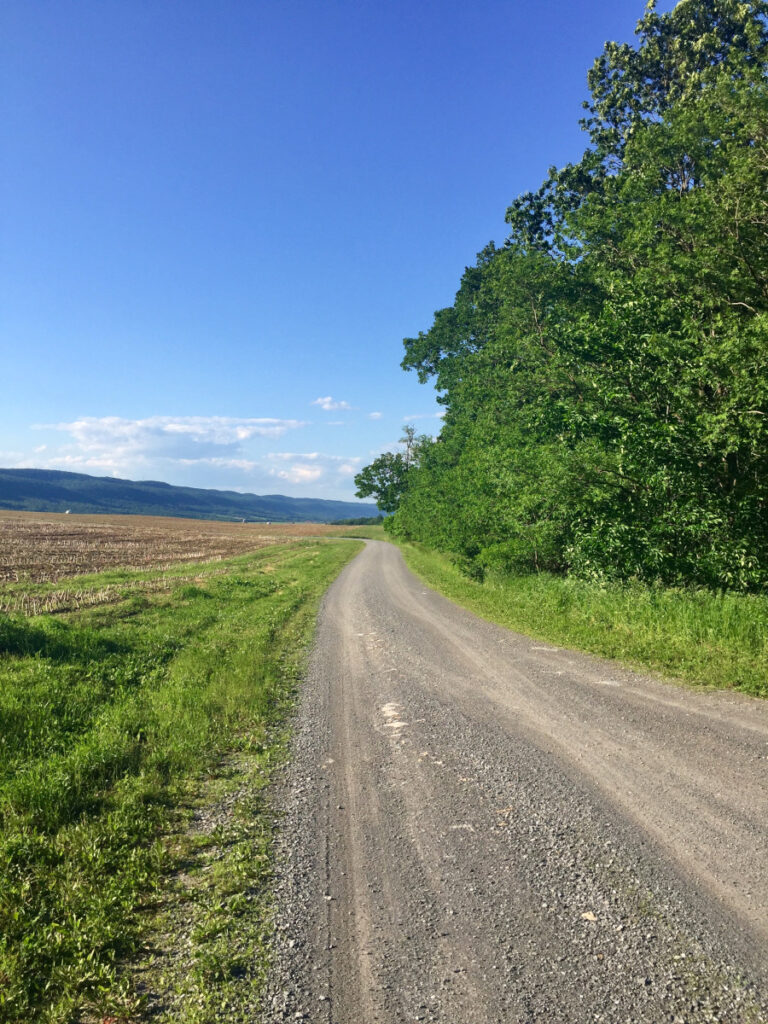
Beautiful Pensylvania… As much as I enjoyed living there, there were more music opportunities for me by traveling across the Atlantic to live in the Netherlands.

To say it’s been a complete culture shock is an understatement. While I could ramble ad nauseam about the minute details between these two countries, I would like to focus on one today: Transportation.

Like most of Europe, there has been an eco-friendly push to use public transit. No problem if you play the kazoo, but when you have an instrument larger than you, it can pose quite an “adventure.” This includes taking trams, subways, buses, and of course the topic of today: the train.

Honestly, I had no previous experience relying on trains to transport my instrument before I moved to Europe. When I was in youth orchestra, my parents would drive me an hour one way to rehearse in State College. Later, I would frequently go to Pittsburgh, a two-and-a-half hour commute, for private lessons. That is the norm, and it makes sense since 90% of households in the US have at least one car. The car represents flexibility and efficiency to travel wherever one needs to go. Realistically, it was the only option in the area I grew up.

Consequently, I had to quickly learn the dos and don’ts of traveling with my large and cumbersome companion when in Europe. Based on the short time I have been using European trains to travel, here’s what I recommend:

1. DO look for train cars with handicap, bicycle, or baby-stroller markings… engineers have designed them specifically for those items to fit. Your baby — ahem I mean bass will be most comfortable there.

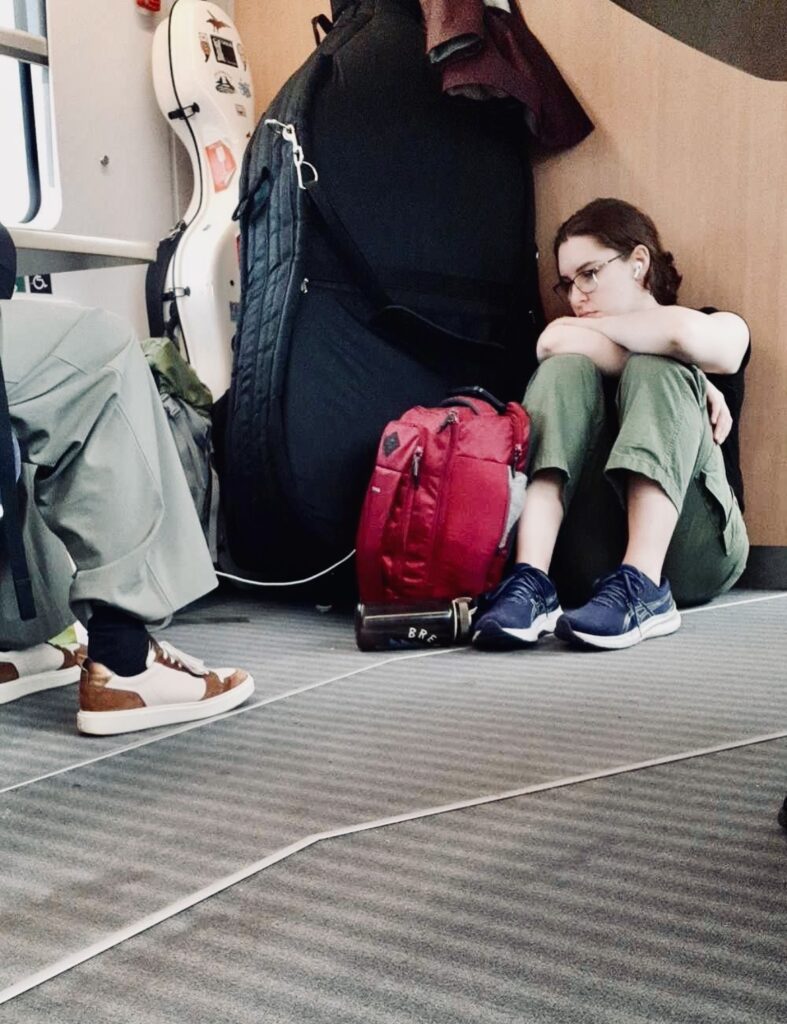
2. DO plan on getting dirty sitting on the floor, in the aisle, or wedged into a door frame. It’s not traveling in style, but it gets the job done.

3. DO pack snacks. No one wants to deal with a hungry and stressed musician.

4. DON’T expect to make every train. Even an Olympic sprinter couldn’t make it across the platform if the area is packed full of people.

5. DON’T forget to smile and be appreciative of the transportation staff. They’re just doing their job.

6. DON’T pick a fight with a drunk burly tattooed and pierced guy in Arnhem when he goes to sit on your bass!
Public transport

…sitting on the floor of a train… It’s not traveling in style, but it gets the job done.

As climatic as it would have been to tackle that man american-football-style to the ground, I quickly realized it was not worth it to try reasoning with a person who was drunk and twice my size. I simply offered him my seat, which he willingly took. While sitting on the floor was not the most comfortable position, I knew that my instrument was safe from him sitting on it. Did he learn his lesson? Probably not… (the real question that concerns me is what led him to being drunk at 10 am on a train!?)

The one positive aspect of this experience was knowing that I was being environmentally friendly by using public transportation. Furthermore, the project I was traveling for, the Theresia Orchestra, is part of a larger group called ICONS who works with an outside party to carbon-offset all the travel its musicians do. They have projects in four different countries and have already captured 74.44 tons of CO2. By choosing to take a train over a car, these emissions for each individual are more than halved. Additionally, consider that these trains can seat 450-900 people, compared to most cars only seating 5. For perspective, a single average car owner in America produces 4.6 tons of CO2 annually. While public transportation is not the most glamorous way to travel with a bass, I argue it is the sustainable thing to do for our planet.
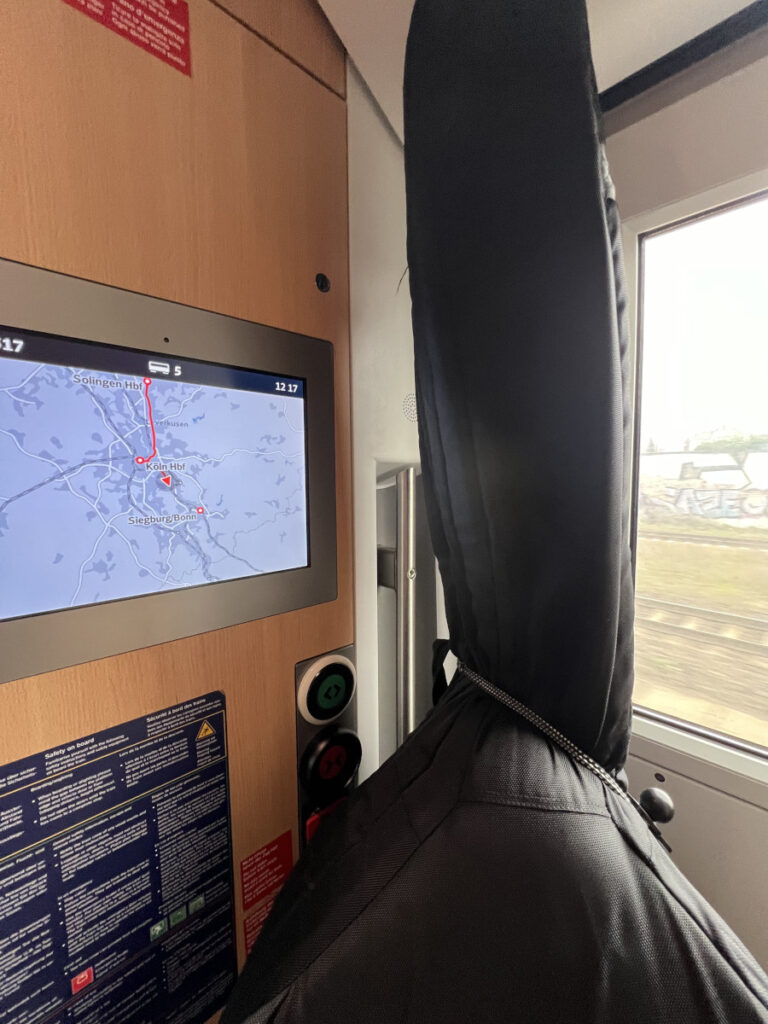
Bass by the door: at the very least, we will be the first to go down!

Hopefully these ramblings have been insightful and amusing. I’m curious to hear your instrument travel adventures.

Your hysterical-bassist* Ariel

*@hystericalbass is my instagram handle
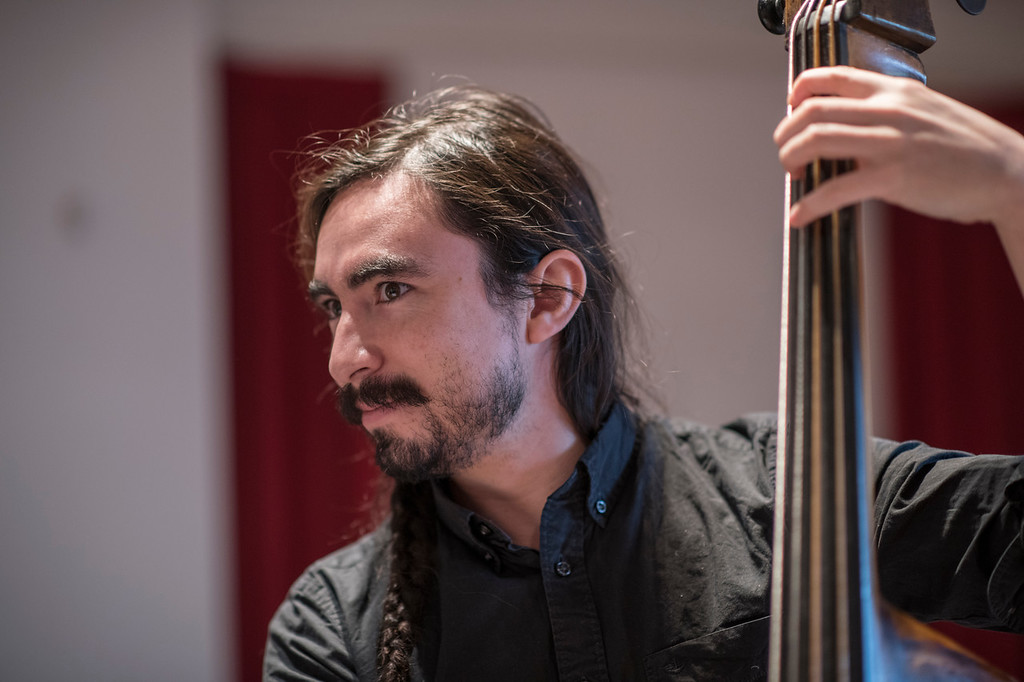
 

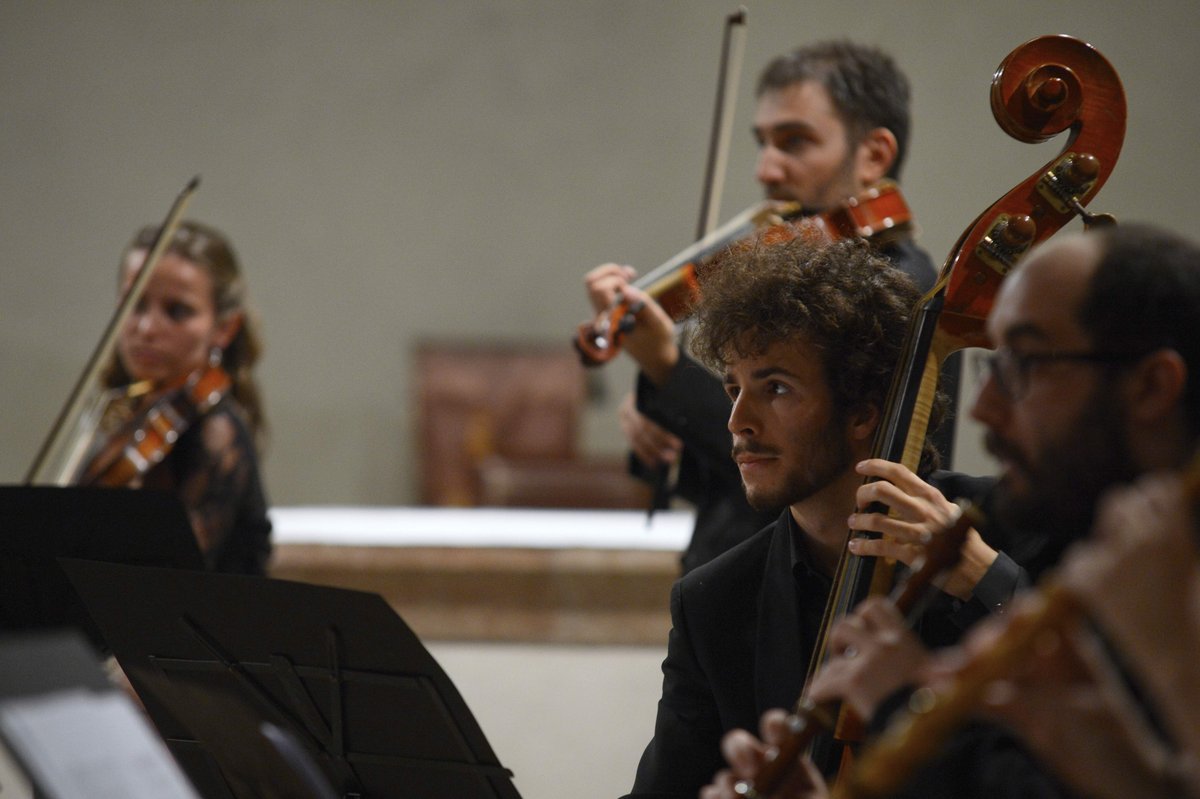
Meet Theresia: Lino Mendoza

By Emilia Campagna - February 22, 2019
"Theresia has a very particular way to bond between the members of the projects: since the beginning you can feel like you are part of a family. "

People of Theresia come from many places in the world: double bass player Lino Mendoza, 31 years old, came to study in Europe from Mexico. Let’s know something more about this musician, his past and his wishes for the future.

Lino, when did you start to study music and decide to be a double-bass player?

“As a child I didn’t have a musical education. Around 15 years old, my brother and me started to have curiosity for music, so we started around that age. In particular,  I started to play the double bass when I was 16, so my childhood was not in a musical education environment. Both of my parents aren’t musicians or had any musical formation during their education; however, both of them are big musical lovers. At home in Mexico we listen music very often, and they were always making my brother, my sister and me interested in music and dancing. So I do not come from a family of musicians but from a very musical one.”

When did you move to Europe and why?

“I moved more than three years ago, in September 2015. I came to Bern to achieve a Master in Performance at the Hochschule der Künste with David Sinclair.”

When and how did you decide to perform on period instrument?

“Since I started with the double bass I’ve had a lot of curiosity for the instrument and its history: I find it very particular and attractive. Speaking of the period instrument performance, it looked to me like the natural result of that curiosity.”

You still perform modern repertoire, and also contemporary, as our readers can see here. How does it work? Do you have two instruments or do you “simply” change the bow? Is it natural for you to switch between them?

“Yes, I still play modern music. Repertoire for modern orchestra is amazing and challenging for the bass and, of course, playing it is a beautiful challenge. The modern bass had an incredible boom during the 20th century and luckily it is still alive in these times: there are a lot of fine examples of it and maybe the music of Stefano Scodanibbio is one of the most refined.

Regarding the period instrument performance, I’ve been more and more playing chamber and orchestra music with the Viennese violone, in general the one originally thought for this beautiful instrument; the experience is really overwhelming and I try to do it more and more often. With the double bass I use a set of gut strings and I experiment as much as possible with different period bows: I love this huge variety of options!”

When did you join Theresia? How many Theresia’s projects have you been involved in and how was the experience?

“I joined Theresia for the first time in November 2015, and by now I’ve been already involved in four projects. Theresia has a very particular way to bond between the members of the projects: since the beginning you can feel like you are part of a family.  The lovely thing is that every time you can experience the joy of meeting again your colleagues, the wonderful teachers and the people of the organization that make it possible.”

Do you see yourself as a student or as a professional?

“I like to see myself as a professional that will never stop learning, and that makes me a life long student.”

Do you think that Theresia is giving you the tools to improve your professional status?

“Yes, this kind of performance is an experience that is still hard to find somewhere else in general; working with the experts that conduct and guide the projects has been a vast resource of knowledge for me.”

Theresia has a very particular way to bond between the members of the projects: since the beginning you can feel like you are part of a family.

You are from Mexico and study in Europe: is it hard to manage your travels? How do you cope with flight rules?

“In general, inside Europe I travel by train for carrying my double bass; but I’ve just made two continental flights from Europe to Mexico and back with the instrument and it is very frightening. It’s always a mess to fly with a double bass but luckily my instrument has arrived always good.
Mexico is far, so sadly I don’t often go over there. But I hope with time I can start going back there more and more, hopefully also to make concerts.”

What do you like to do when you aren’t playing?

“I used to read a lot: now, I like to watch movies or just have a nice walk in the city, outside in the nature or visiting a nice museum. I also enjoy eating, so whenever I have time I like to cook, even when I have any background in the matter.”

Where do you see yourself in five years?

“Five years ago I could not imagine myself doing what I’m doing now so it’s a very hard question. Maybe it is better for me to think that I trust in music and wherever it takes me I’m going to be fine with it and my double bass.”

Meet Theresia: Adrien Alix (English version)

By Emilia Campagna - August 31, 2015
translation by: Charlotte Michi The youngest member of the orchestra is also the one who plays the biggest instrument: and we could say that he literally is at the basis of the harmony of Theresia, considering that he plays the double bass. Adrien is 21 years old and started his experience with Theresia in May […]

translation by: Charlotte Michi

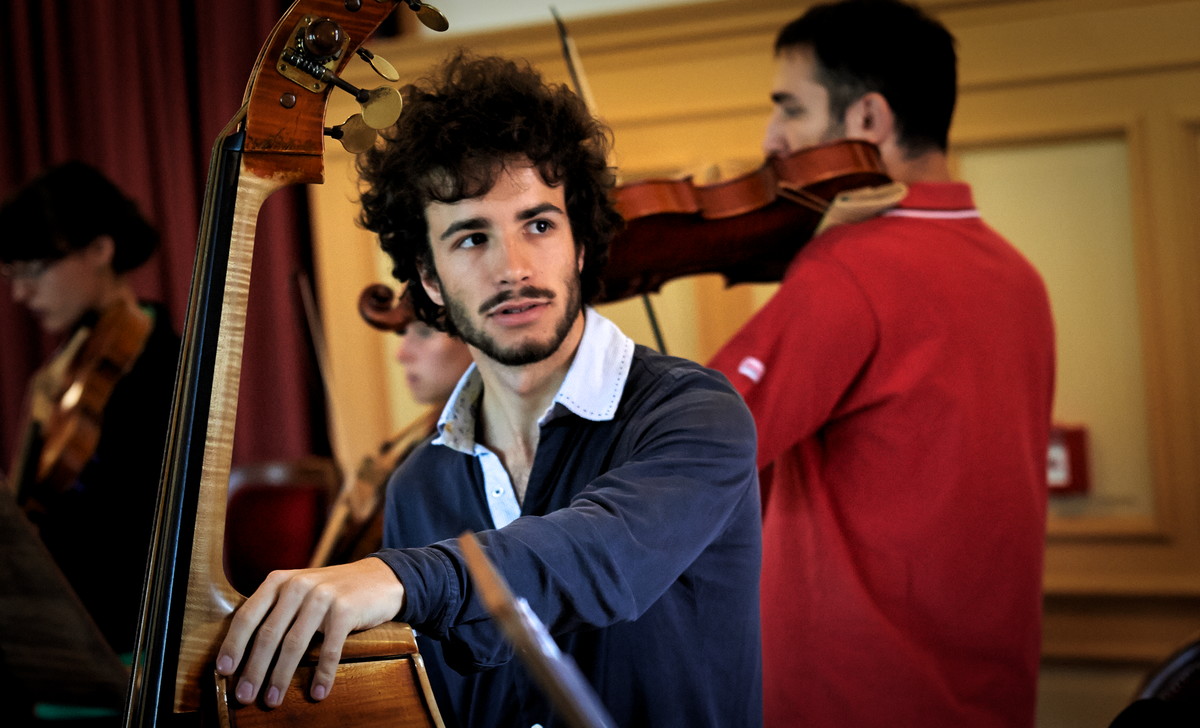
The youngest member of the orchestra is also the one who plays the biggest instrument: and we could say that he literally is at the basis of the harmony of Theresia, considering that he plays the double bass. Adrien is 21 years old and started his experience with Theresia in May 2014: “I auditioned in 2014: I had heard about Theresia from Klaudia Matlak, which I had met in Strasbourg and who had just played with the Orchestra in the final of Premio Bonporti. She told me about the competition, about the project for young musicians and about the orchestra: I decided to have a try.”

In these years beside the improvement in his instrument Adrien has decided to deepen also the musicological knowledge: “I am studying musicology at the University in Paris and I have just finished an Erasmus in Bologna. The musicological study gives me the opportunity to make a stylistic reflection on the music I perform, and I hope to manage to go on on both sides, the instrumental and the theoretical.”

How was your year of study in Bologna and what do you expect now? “I loved studying in Bologna, also the town is beautiful and full of students; I explored themes linked to the Renaissance music and now I will complete an essay on Adriano Banchieri. Then I will take up university classes in Paris, but I will also start a master in historical double bass.”

Your choice to study historical bass is univocal? Or do you also play “modern music” or even other genres? Frequently double bass players are devoted to jazz: The historical double bass is my instrument, along with the violone. But sometimes I also play in modern ensembles or orchestras, what changes are the strings and the bow; occasionally I also play in small jazz groups: but I do this for fun. Anyway the concept of earlyinstrument is very broad: beside the vastness of the repertory considered generally “ancient”, ranging from ‘500 to the end of ‘700, it happened to me to perform, with ensamble using original instruments, also Mahler and even Stravinsky.”

Let’s talk about your job in the orchestra: you are a group of musicians all of different countries and schools who meet a week before the concerts to study together: are there some differences in the approach? “Each of us has its features of course, but the group is very united and we manage to fit to each other well also because it’s composed by very good musicians: for me the best are the wind instruments.”

You worked both with Claudio Astronio and Chiara Banchini: what are the differences in their way of working with the orchestra? “Claudio Astronio works more on a macroscopic level and Chiara Banchini more on the details: I think the reason is that Astronio is harpsichordist, and has a strong vision of the whole, of the structure, of the harmony, while Chiara Banchini, as a violinist, has an outstanding sensitiveness for bow strokes, the phrasing, the production of sound. In this sense they are complementary and to work alternately with both is a great occasion to grow. Anyway I think that the orchestra maintains its identity regardless from the conductor.”

What did you like playing with Theresia and what would you like to become part of the repertory? “In this last project I really appreciated playing the Symphony of Boccherini. And I’d like to play Mozart again with the orchestra, after the experience of this summer.”

Are there solo concerts for double bass that you would like to play with the orchestra? “Every musician would like to play as a soloist with the orchestra, and there is repertory for double bass and orchestra, like the concert of Hoffmeister (composer to whom Mozart dedicated a Quartet) and those of Sperger. There is also a big repertory for Viennese bass, a kind of big violone tuned in thirds and in fourth and in Italy the concerts for double bass by Dragonetti and Bottesini.”

How do you see yourself in 10 years? What will you be doing and where will you be living? “Of course I hope I will be still playing both in the orchestra and in chamber groups: if the perspective is that of teaching, I see myself more on the theoretical side rather than as an instrument teacher, maybe because till now I never had the chance to teach double bass. And regarding the place where to live, I don’t know: I love Italy, where I spent one year, but it’s not important where I will be living: I fell European.”

_GKB6229


Meet Theresia: Adrien Alix

By Emilia Campagna - August 24, 2015
Il più giovane dell’orchestra è anche quello che suona lo strumento più grande: e potremmo dire che sta letteramente alla base dell’armonia di Theresia, visto che suona il contrabbasso. Adrien Alix, 21 anni, è con Theresia dal maggio 2014: “Ho fatto le audizioni nel 2014: avevo saputo di Theresia da Klaudia Matlak, che avevo incontrato […]

Il più giovane dell’orchestra è anche quello che suona lo strumento più grande: e potremmo dire che sta letteramente alla base dell’armonia di Theresia, visto che suona il contrabbasso. Adrien Alix, 21 anni, è con Theresia dal maggio 2014: “Ho fatto le audizioni nel 2014: avevo saputo di Theresia da Klaudia Matlak, che avevo incontrato a Strasburgo e che aveva appena suonato con l’orchestra nelle Finali del Premio Bonporti. Mi aveva raccontato del concorso, del progetto rivolto ai giovani, dell’orchestra: e ho deciso di tentare.”

In questi anni accanto al perfezionamento nel suo strumento Adrien ha deciso di approfondire anche la dimensione musicologica: “Sono iscritto all’Università di Musicologia a Parigi ed ho appena finito un anno di Erasmus a Bologna. Lo studio della musicologia mi dà la possibilità di una riflessione stilistica sulla musica che faccio, e spero di poter continuare su entrambi i fronti, quello dello strumento e quello dello studio teorico.”

Com’è stato l’anno di studio a Bologna e cosa ti aspetta adesso? “Studiare a Bologna mi è piaciuto molto, anche la città è molto bella e piena di studenti; ho approfondito temi legati alla musica rinascimentale e ora completerò una tesina su Adriano Banchieri. Poi riprenderò le lezioni universitarie a Parigi, ma inizierò anche il biennio di contrabbasso storico.”

La tua scelta di studiare contrabbasso storico è univoca? O ti capita anche di suonare “moderno” o addirittura altri generi? Spesso i contrabbassisti si dedicano al jazz: “Il contrabbasso storico è il mio strumento, assieme al violone. Però mi capita anche di suonare in ensemble o orchestre moderne, cambiando le corde e l’arco; e occasionalmente suono in piccoli gruppi jazz: ma questo lo faccio per gioco, per divertirmi. Comunque il concetto di strumento antico è molto vasto: a parte la vastità del repertorio considerato generalmente “antico”, che va dal ‘500 alla fine del ‘700, a me è capitato di eseguire, con ensemble che usavano strumenti originali, anche Mahler e addirittura Stravinsky.”

Paliamo del lavoro in orchestra: siete un gruppo di musicisti di diversa provenienza che si trovano a studiare assieme per una settimana prima dei concerti: ci sono delle differenze di approccio? “Ognuno ha le sue caratteristiche naturalmente, ma il gruppo è molto unito e ci si “incastra” bene anche perchè composto di musicisti molto bravi: per me i migliori sono i fiati.”

Hai lavorato sia con Claudio Astronio che con Chiara Banchini: quali sono le differenze nel modo di lavorare con l’orchestra? “Claudio Astronio lavora a livello più macroscopico e Chiara Banchini più sui dettagli: credo che il motivo sia perchè Astronio è cembalista, ed ha una visione forte dell’insieme, della struttura, dell’armonia, mentre Chiara Banchini, da violinista, ha una spiccata sensibilità per le arcate, il fraseggio, la produzione del suono. In questo senso sono complementari e lavorare alternativamente con entrambi è una bella occasione per crescere. Comunque credo che in parte l’orchestra mantenga la propria identità indipendentemente dal direttore.”

Cosa ti è piaciuto suonare con Theresia e cosa ti piacerebbe entrasse in repertorio? “In quest’ultima produzione ho apprezzato molto suonare la Sinfonia di Boccherini. E mi piacerebbe che l’orchestra suonasse ancora Mozart, dopo l’esperienza dell’estate scorsa.”

Ci sono concerti solistici per contrabbasso che ti piacerebbe suonare con l’orchestra? “Ogni strumentista vorrebbe suonare da solista con l’orchestra, e repertorio per contrabbasso e orchestra ce n’è, come il concerto di Hoffmeister (compositore a cui Mozart dedicò un Quartetto) e quelli di Sperger. Poi c’è un vasto repertorio per contrabbasso viennese, una sorta di grande violone accordato per terze e per quarte e in Italia i concerti per contrabbasso di Dragonetti e Bottesini.”

Dove ti vedi tra 10 anni? Cosa farai e dove vivrai? “Naturalmente spero di continuare a suonare, sia in orchestra che in gruppi da camera: se la prospettiva sarà quella dell’insegnamento, mi vedo più sul lato teorico che come docente di strumento, forse perchè finora non mi è mai capitato di insegnare contrabbasso. E sul posto in cui vivere, non saprei: mi piace l’Italia, dove ho passato un anno, ma è indifferente: io mi sento Europeo.”

_GKB6229