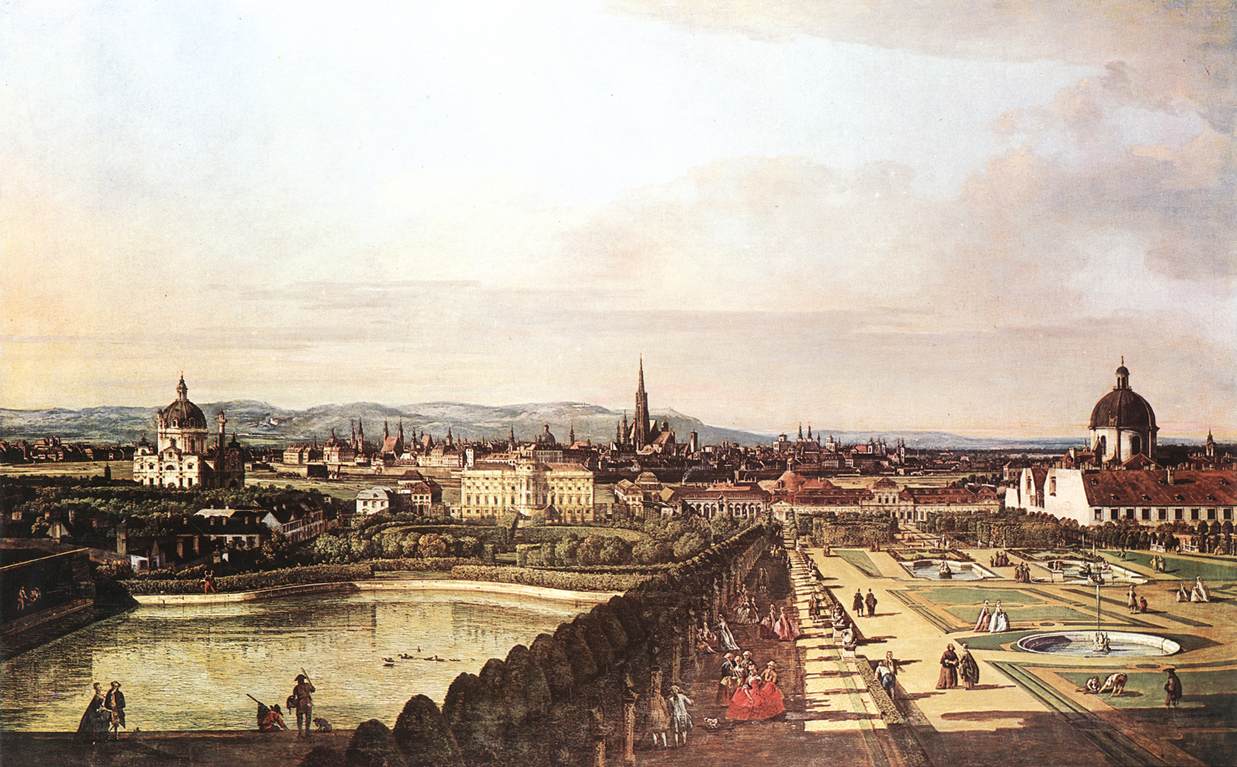
Vienna, Salzburg, Mannheim:
Theresia’s musical journey at Trame Sonore

By Emilia Campagna - May 23, 2019
We are about to embark on an enlightening musical journey. It will bring us and our audience through the three main towns when it comes to Classicism: Vienna, Salzburg and Mannheim

We are about to embark on an enlightening musical journey: it will bring us and our audience through the three main towns when it comes to Classicism: Vienna, Salzburg and Mannheim. And yet, nobody will have to leave at all the beautiful centre of Mantua, where we will be hosts of “Trame Sonore – Mantova Chamber Music Festival”.

Music is constantly appreciated as the most powerful way for time-travelling: this is even truer for orchestras that, like Theresia, perform on period instruments, deepening the historical performance practice.

So, this time we are headed for the very roots of Classical style, in search of the origins of Symphony and Sonata form.

Mannheim is considered to be a true school of classical style, thank both to the orchestral techniques pioneered by the court orchestra of Mannheim in the latter half of the 18th century and to the group of composers of the early classical period, who composed for the orchestra itself. The orchestra had an excellent reputation, due to its excellent discipline and the individual skill of its players; the English traveller Charles Burney called it “an army of generals”. The father of the school is considered to be the Bohemian composer Johann Stamitz, whose Symphony in F major n. 6 will be performed together with F. X. Richter‘s Symphony in G major VB 19 (concert on 1st June at 4.30 pm at Palazzo Ducale, Galleria dei Fiumi).

Since it was an imperial capital, Vienna was one of the main centres of musical life in Europe: the Viennese Classical school is nowadays best associated with the names of Mozart and Haydn, but the very transition from Baroque to Classical style was due to composers like Georg Matthias Monn. Monn, who was born in Vienna in 1717 and died in the same city in 1750, represents a school of Austrian composers who had thoroughly studied the principles of counterpoint as practised by Johann Sebastian Bach, but also effected a change from the formalistic and ornate Baroque style to the simpler, more graceful Galante music. Moreover, they renewed the sonata form by expanding the concepts of secondary theme and development. Even Czech-born composers Johann Baptist Wanhal and Josef Mysliveček (both born in the 1730s) are important representatives of the new style. Furthermore, many of Wanhal’s symphonies are in minor keys and are considered highly influential to the “Sturm und Drang” movement of his time. And, is renowned the influence that Josef Mysliveček had on the young Mozart. Monn, Vanhal and Myslivecek will be performed in our “Vienna” concert on 2nd June at 9 a.m. (Palazzo Te) and 10.30 p.m. (Palazzo Ducale).

Last but not least, Salzburg was obviously the town where Wolfgang Amadeus Mozart was born and where he started his career as a court composer to the Archbishop Hieronymus Colloredo: in 1772, when he was sixteen he wrote three Divertimenti after the second of three extended trips to Italy. A final trip to Italy was already in the planning and the Italian influence on Mozart’s writing is strong. The three-movement structure follows the pattern of the Italian Sinfonia, while the writing also nods in the direction of the widely respected Joseph Haydn and Johann Christian Bach – whom Mozart had met in London and whom he regarded as both friend and mentor. String Divertimentos n. 1 in D major and n. 3 in F major will be performed on 30th May at 9 a.m. and 10.30 a.m. (Teatro Bibiena) and on 31th May ah 10.30 a.m. (Galleria dei Fiumi di Palazzo Ducale).

Theresia’s strings will be conducted by Claudio Astronio with Gemma Longoni as violin concertmaster.
Our places: Salone del Parlamento, Castello di Udine

By Emilia Campagna - June 6, 2018
In our new fairly-tale setting residency, a Castle is involved

We wrote about the fairy-tale setting of our current residency: and it’s not only a matter of the enchanting woods surrounding Malborghetto, all of them full of red spruces, perfect for making violins and other instruments. A castle is involved, too.

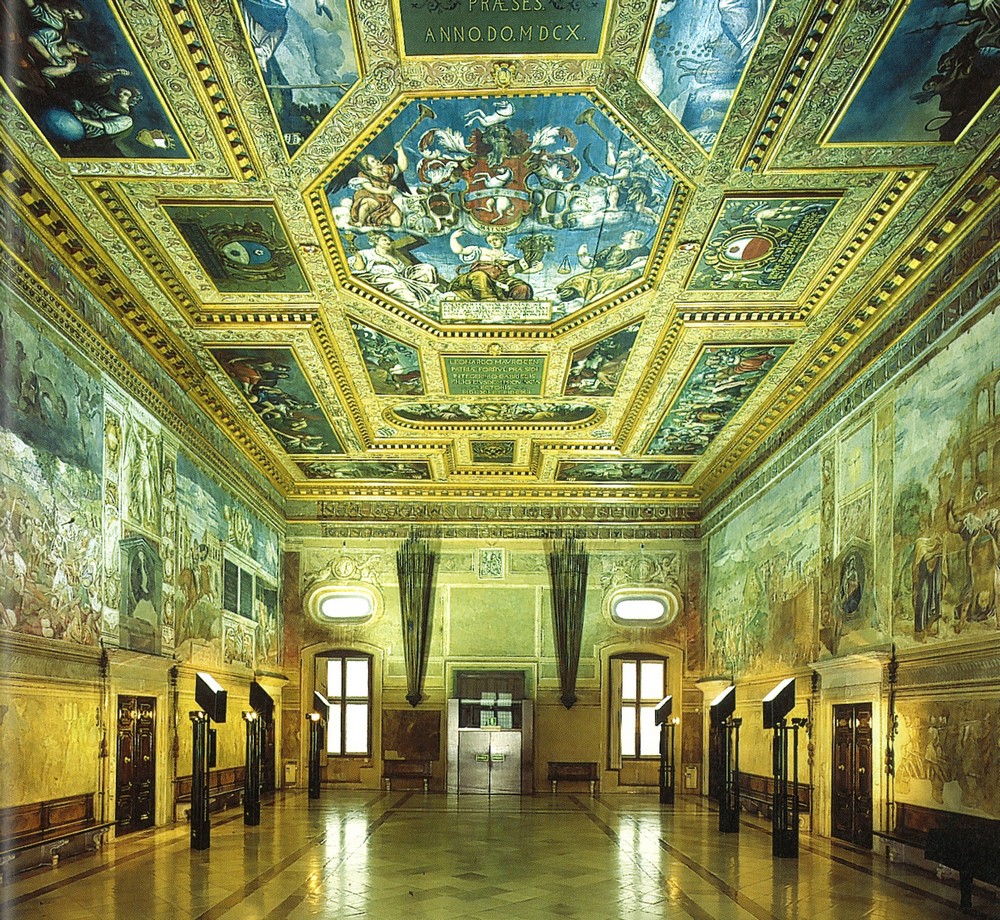
As a matter of fact, the second concert of our residency will be in Udine, precisely in the “Salone del Parlamento” inside the Castle.

The Castle of Udine is a historical building, built upon a hill in the historical centre of the city. The hill is made of drift accumulating for centuries. However, a legend about its origin says that when Attila the Hun (also called the Scourge of God) plundered Aquileia (one of the biggest cities of the Roman Empire at that time) in the year 452, he asked his soldiers to build a hill to see the Aquileia burning. It is told that this was made by filling the helmet of each soldier with the ground.

The first official statement of the existence of a building on the hill dates back to 983: the Holy Roman Emperor Otto II donated to Rodoaldo, Patriarch of Aquileia, a “castrum”, i.e. a military building.

The present building has the form of a palace and it was built on the ruins of a fortress destroyed by an earthquake in 1511. The construction had started in 1517 and the works had lasted for 50 years.

The most important hall in the castle is the Parliament Hall (Salone del Parlamento), whose paintings are due to Giovanni da Udine, one of the pupils of Raphael. This hall was the venue of the council of the Patria del Friuli, one of the first parliaments in the world, and it was suppressed after the French occupation in 1797.

And this is where we will play! The Orchestra will perform music by Mozart and Kraus conducted by Claudio Astronio on 9th June. See you at the Castle!

Un tuffo nelle note!

By theresia - May 3, 2014
Dalle finestre si vede il verde dei boschi e a pochi metri partirebbe la bellissima passeggiata del lungolago: ma Theresia lavora e pieno ritmo, e qua a Baselga di Pinè l’unico tuffo immaginabile è quello nelle note (di Mozart e Kraus). Anche perché la musica da suonare è davvero tanta, e sia i musicisti dell’orchestra […]

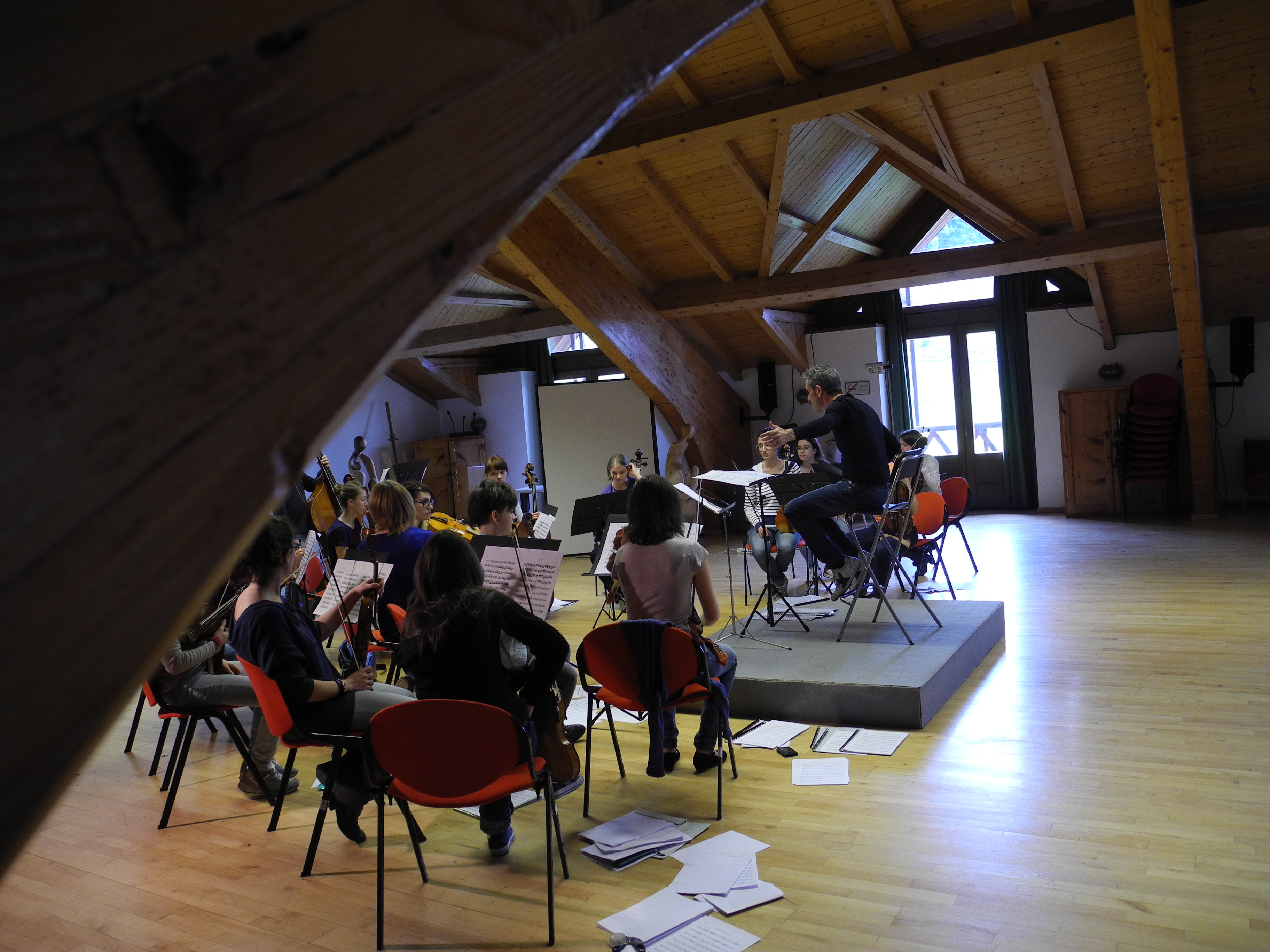
Dalle finestre si vede il verde dei boschi e a pochi metri partirebbe la bellissima passeggiata del lungolago: ma Theresia lavora e pieno ritmo, e qua a Baselga di Pinè l’unico tuffo immaginabile è quello nelle note (di Mozart e Kraus). Anche perché la musica da suonare è davvero tanta, e sia i musicisti dell’orchestra che il loro direttore, Claudio Astronio, instancabili, sembrano nutrirsene. L’aria è frizzantissima, perché l’età media degli orchestrali corre sul 25 e le provenienze sono ben assortite, con otto italiani, cinque polacche, due francesi, una spagnola e una russa: e il gender gap, questa volta, è al contrario, perché tra gli archi ci sono solo due maschi su 17 componenti dell’organico!

Ecco un po’ di foto delle prove:

E questi i nomi dei nostri theresiani:

Violini I
Esther Crazzolara – Italia
Klaudia Matlak – Polonia
Agnieszka Papierska – Polonia
Valentina Russo – Italia
Alessia Pazzaglia – Italia

Violini II
Katia Viel – Francia
Maria Kaluzhskikh – Russia
Annarita Lorusso – Italia
Raffaele Nicoletti – Italia

Viole
Maria Bocelli – Italia
Jennifer Gomez Vilar – Spagna
Cecilia Baesso – Italia
Manuela Masenello – Italia

Violoncelli
Maria Misiarz – Polonia
Paulina Ptak – Polonia
Aleksandra Rybak- Polonia

Contrabbassi
Adrien Alix – Francia

“In viaggio” con Theresia

By theresia - June 19, 2013
Annunciati i prossimi concerti di Theresia Youth Baroque Orchestra, l’1 agosto a Rovereto (20.45, Chiesa Arcipretale di San Marco) e il 3 agosto a Bolzano (20.30, Eurac) Per l’estate 2013 Theresia annuncia il suo nuovo progetto orchestrale: ideato dal direttore musicale Claudio Astronio, il programma porta il titolo “…in viaggio”, ed è un percorso tra […]

Annunciati i prossimi concerti di Theresia Youth Baroque Orchestra, l’1 agosto a Rovereto (20.45, Chiesa Arcipretale di San Marco) e il 3 agosto a Bolzano (20.30, Eurac)

Per l’estate 2013 Theresia annuncia il suo nuovo progetto orchestrale: ideato dal direttore musicale Claudio Astronio, il programma porta il titolo “…in viaggio”, ed è un percorso tra musiche di Wilhelm Friedemann Bach (Sinfonia in re maggiore Fk 64 “Dies ist der Tag”), Franz Joseph Haydn (Concerto per violoncello e orchestra in do maggiore Hob. viib:1), Wolfgang Amadeus Mozart (Concerto per violino e orchestra in re maggiore K 211)e Joseph Martin Kraus (Sinfonia in mi minore VB 141).

Il programma “In viaggio” proposto dalla Theresia Youth Baroque Orchestra è un viaggio ideale attraverso luoghi e tempi del classicismo musicale europeo: dalla brulicante Vienna di Mozart ai silenzi della corte di Esteraháza dove Haydn scrisse la maggior parte delle sue opere, dalla Dresda del giovane Wilhelm Friedmann Bach alla lontana Stoccolma di Kraus. Un viaggio nella geografia, dunque ma anche nei generi affrontati: due Concerti tra i più famosi del repertorio per violino e per violoncello e due Sinfonie, ancora poco eseguite, di autori di prima grandezza del periodo classico.

Con questo programma Theresia valorizza ulteriormente i propri giovani componenti, selezionati nel corso di audizioni svolte nella primavera 2013: i solisti sono infatti musicisti dell’orchestra, la “spalla” Esther Crazzolara (Italia) solista nel Concerto per violino di Mozart e la violoncellista austriaca Magdalena Dür nel Concerto di Haydn.

La data roveretana è inserita nell’ampio cartellone di Rovereto Estate, quella bolzanina nel prestigioso Bolzano Festival Bozen.

Claudio Astronio alla testa della TYBO

By theresia - September 19, 2012
La direzione artistica della THERESIA Youth Baroque Orchestra è affidata al direttore e clavicembalista bolzanino Claudio Astronio, che guiderà la compagine fin dal suo debutto durante la Finale del Premio Ferrari nel Concerto KV 271 “Jeunhomme” di Wolfgang Amadeus Mozart e nel Concerto n.1 in Do maggiore op. 5 “dedié a son intime ami Bridi” […]

La direzione artistica della THERESIA Youth Baroque Orchestra è affidata al direttore e clavicembalista bolzanino Claudio Astronio, che guiderà la compagine fin dal suo debutto durante la Finale del Premio Ferrari nel Concerto KV 271 “Jeunhomme” di Wolfgang Amadeus Mozart e nel Concerto n.1 in Do maggiore op. 5 “dedié a son intime ami Bridi” di Giacomo Gotifredo Ferrari.

Qui la biografia del direttore e clavicembalista (dal sito www.astronio.com)

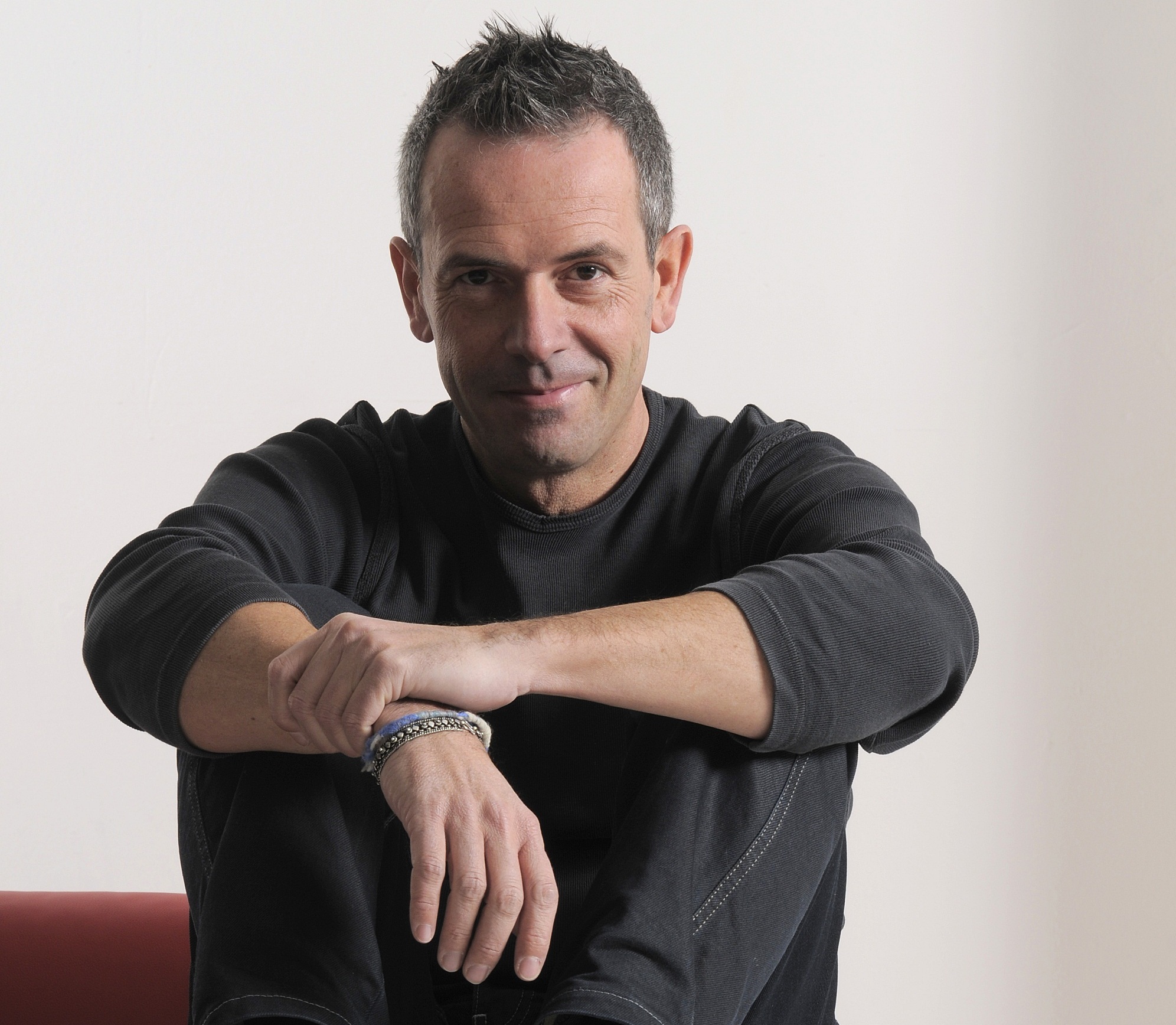
Claudio Astronio

Musicista poliedrico, affianca l’attività di organista e clavicembalista a quella di direttore. La sua attività si svolge prevalentemente nella musica antica con strumenti originali, dirigendo il gruppo “Harmonices Mundi” e la “Bozen Baroque Orchestra” e suonando regolarmente presso i più importanti Festival di musica antica e non in Italia, Europa, USA, Canada e Giappone. Ha collaborato, collabora e suona in duo con musicisti come Gordon Murray, Doron Sherwin, Max Van Egmond, Dan Laurin, Gemma Bertagnolli, Susanne Ryden, Emma Kirkby, Yuri Bashmet e Gustav Leonhardt .


E’ stato solista invitato dalla Mahler Chamber Orchestra con Alan Gilbert, Moskow e Yuri Bashmet, ha tenuto recitals in prestigiose sale come Carnegie Hall di New York, Opera City House e Musashino Hall di Tokyo, Palau de la musica di Valencia, Auditorium di Las Palmas, Boston College e Oberl in University.

Da qualche anno è inoltre assai attivo come direttore d’orchestra: ha diretto la Filarmonica di Piacenza, l’Orchestra Haydn, l’Accademia Montis Regalis e dirige stabilmente l’ Orchestra Barocca Harmonices Mundi nelle quali ha diretto artisti quali Dan Laurin, Susanne Ryden, Roberto Balconi, Sergio Foresti, Gemma Bertagnolli, Makoto Sakurada, Emanuele Segre . Nel 2007/2008 è stato impegnato nella Passione secondo Matteo di Johann Sebastian Bach in una versione teatrale con coreografie e scena, che nel 2008 verrà portata in tour nei principali teatri italiani; nel campo operistico ha recentemente diretto Orfeo e Euridice di Christoph Willibald Gluck con la regia di Graham Vick al Teatro “ D. Alighieri” di Ravenna per Ravennafestival, replicando con grande successo nei principali teatri italiani quali Ferrara, Treviso, Rovigo, Lucca, Pisa, Modena e Reggio Emilia.

Incide per l’etichetta “STRADIVARIUS” e i suoi Cd sono recensiti presso le più importanti riviste specializzate italiane ed estere come Musica, CD Classica, Amadeus, Classic Voice, Alte Musik Aktuelle, Diapason, Repertoire, El Paìs, Ritmo, Diverdi, Goldberg, Le Monde de la musique, Continuo e Fanfare (USA); tra questi si segnalano particolarmente l’opera omnia per tastiera di Antonio de Cabezon, la terza parte del Klavieruebung ed i Corali di Lipsia di Johann Sebastian Bach, premiati dalle riviste francesi Repertoire (10), Diapason (5), Goldberg e le Monde de la Musique (Choc). La rivista Amadeus gli ha dedicato copertina e CD con i concerti Op. X di Tommaso Albinoni nel gennaio 2005 e recentemente con l’Oratorio “Der Mensch ein Gottesmoerder” di Leopold Mozart con il numero di ottobre 2007.