by Anna Freer
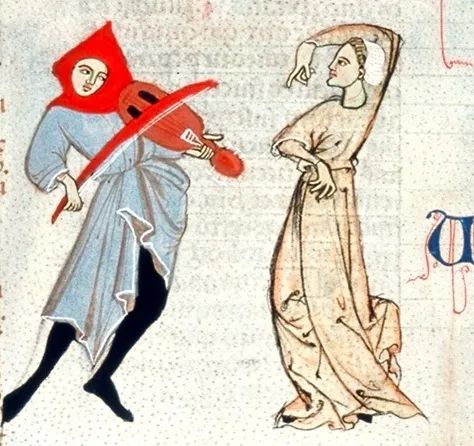
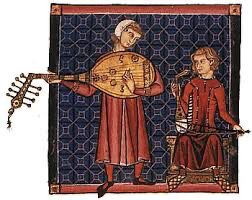
Self-accompaniment (the art of singing while playing an instrument, both activities happening at the same time) occupies a funny place in the ‘art music’ canon. In antiquity, it was something so common as to be never remarked upon as a practice in texts (in ancient Greece, there is a word psile-kitharsis, to denote solo playing on the kitharsis, a lute-like instrument, without singing). The same goes for music making in medieval times, where it was a matter of course for singers to accompany themselves with improvisations on a plucked or bowed instrument, through to the Renaissance and the baroque, where it is only documented in terms of ‘remarkable and astounding beauty’, as in the case of Tarquina Molza. (For more information on the topic, I’d really recommend reading the second chapter of Robin Tier’s The ideal Orpheus, an incredibly detailed look into the place of self-accompaniment in classical music!) Up until the late Romantic era, it was common for singers to accompany themselves on the piano in a salon or concert setting.
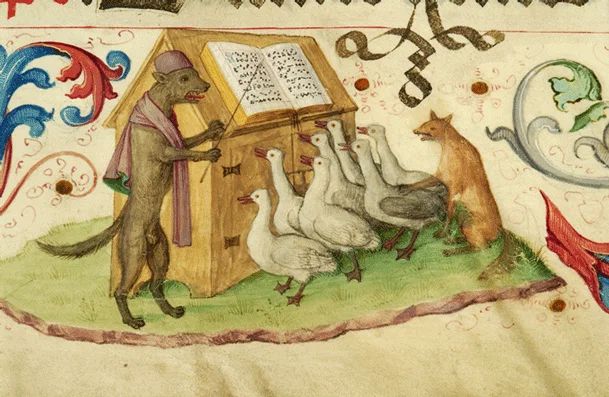
Fast forward to today, and the practice of self-accompaniment seems to have disappeared in classical (or ‘art’) music. We see it in pop music – it’s ubiquitous for artists who sing to either play the piano, guitar, or in the case of young guns like Laufey, the cello. We see it over and over again in folk music – Irish, Norwegian, Austrian, Romanian and American fiddlers and guitarists. Why have we lost it in classical music?
In my last article for Theresia’s blog, I detailed my preparation process for an international violin competition (read it here!) – its ups and downs, the lessons learned. The months on either side of the competition dealt with their own questions and brought me pause many times. It may sound pretentious and overblown, but going through the process made me think a lot about what it means for me personally to be a violinist and a musician.
Why have we lost self-accompaniment in classical music?
I grew up in a house with music as its heart and core, as two things – a reluctant violinist and an eager singer. Somewhere along the way (thanks to a fantastic mentor at a very formative time), the violin part became less reluctant and positively exciting, but going on choir camps and tours and eventually singing in an excellent chamber choir alongside my violin studies was a vital part of my musical life. Singing and singing together, making music with others using only the most basic instrument, was always to me one of the most magical things, human connection in a direct way through the heart and the voice.
I put the violin playing and the singing in two separate and very distinct boxes. As a young teen, I was told that The Choice loomed in front of me on whether to pursue violin studies or vocal studies. Obviously it wouldn’t work to do both at the same time – and to achieve a high level on both? Impossible.
This – the question of technique, brilliance, and virtuosity, is where we lost the practice of self-accompaniment. In the case of piano playing – a very common form of self accompaniment even through the 17th and 18th centuries, with Schubert himself playing the piano and singing in performances of Winterreise – the more complicated accompaniments became in song cycles, the more the ‘art’ side of both instruments was developed, the less common it became for a performer to do both at the same time. In violin playing, with the rise of virtuosic works from Paganini, Brahms, Wieniawski, Sarasate, Ysaÿe – the staples of ‘standard repertoire’ today – singing and playing at the same time became totally out of the question. The perfect execution and presentation of ‘masterworks’ rose to the forefront of how we view and consume classical music, and the space for a performer to accompany themselves, or for a family or group of friends to come together and make raucous happy music with both instruments and voices, became relegated to something of a curiosity, rather than a central aspect of music making.
The question then becomes – how has the shift from generalised music learning (for the soul, for connection, and as part of our daily life) to specialised music learning (purely as a higher form of art, practised by professionals) affected us all? Is it even something to consider or think about anymore? What is music for?
It was 2020 when I first experimented with singing and playing at the same time, with an incredibly beautiful chant from Hildegard von Bingen (that I still love to play today, and you can listen to here). I remember there being some sort of lightbulb moment – you can combine these! It might be possible! – and also feeling like both sides of my musical life were finally converging.
In the four years since then, I’ve experimented a lot more, with written song cycles from Vaughan Williams and Holst (here you can see a little excerpt from Vaughan Williams’ Along the Field), and making my own arrangements of folk songs and Renaissance motets. It has been an incredibly rewarding process and has expanded my musical horizons immeasurably to develop these skills hand in hand – to feel like I can tell new stories through this medium and that I am presenting myself as a whole through music. However – I come from a path of very specialised music learning. When I present concerts where I sing and play at the same time, it’s viewed by audiences as a curiosity, something extremely outside the box, something that’s not possible to achieve for people who haven’t had the same specialised music training. Is this true?
 \
\
I’d like to think and say a resounding no to that. Playing and singing has been a part of music making since the very beginning, even if the playing aspect is simply providing a beat for yourself with body percussion. It develops our brains in bigger and more exciting ways (multitasking, two different stories going on at once), and gives whoever does it a huge feeling of accomplishment and fulfilment. With that end in mind, I’m in the process of developing a workshop in conjuction with Theresia’s Ambassadorship program and Raum236 in Zürich – SING-PLAY: FOR ALL. In the span of an afternoon, we’ll go through some singing basics, including how to connect to your voice and breath with movement, discover ancient examples of self-accompanied song, learn folk-songs with simple accompaniments (using instruments we have or body percussion) and end with singing and playing together at Raum236’s Classical Jam. It will be open to all experience levels, whether you play an instrument or not, and promises to be a really joyful event, mixing music making with human connection in a fresh and fun way. More details (date/time and how to sign up) will be released next week, so keep an eye out! In the meantime, I will leave you with some of my favourite examples of self-accompanied singing from contemporary, classical, and folk performers, and wish you a happy week:
Pekka Kuusisto – My Darling is Beautiful (folk song)
Concerto di Margherita – Io non compro piu’ speranza (Marchetto Cara)
Giovanna Baviera – Hor ch’el ciel e la terra
Katie Yap – Aftermath (Emily Sheppard)
Rachel Fenlon – Come lovely and soothing death (George Crumb)

