New year, new plans: what 2022 brings to us

By Emilia Campagna - January 18, 2022
Chamber music, orchestral residencies and the new European project EMPOWER: let's go through Theresia's activities for 2022

The new year has started, full of promises and good resolutions. And here an overview of our upcoming activity!

As you know, last year ended with a bang, and that’s the best good wish we could expect: a 3-years grant was awarded to Theresia Orchestra by the Creative Europe Programme to develop excellence in orchestral learning and soft skills acquisition by our young artistic talents. The project is going to start in a few weeks, so we will keep you updated on any further development.

So, let’s go through our plans for 2022!

We are going to start with two chamber music projects: developing ensemble performances and deepening chamber music repertoire are two things at the very core of our mission. Also, we’ll get back to places we’ve been before, renewing some meaningful partnerships.

From 14 to 20 March, we’ll be in Ossiach (Austria), with such tutors as Chiara Banchini (violin) and Emilio Moreno (violin and viola). The program will be devoted to string quartets by Mozart, Haydn, Pleyel and Boccherini, which will give our musicians the chance to widen their knowledge of classical repertoire.


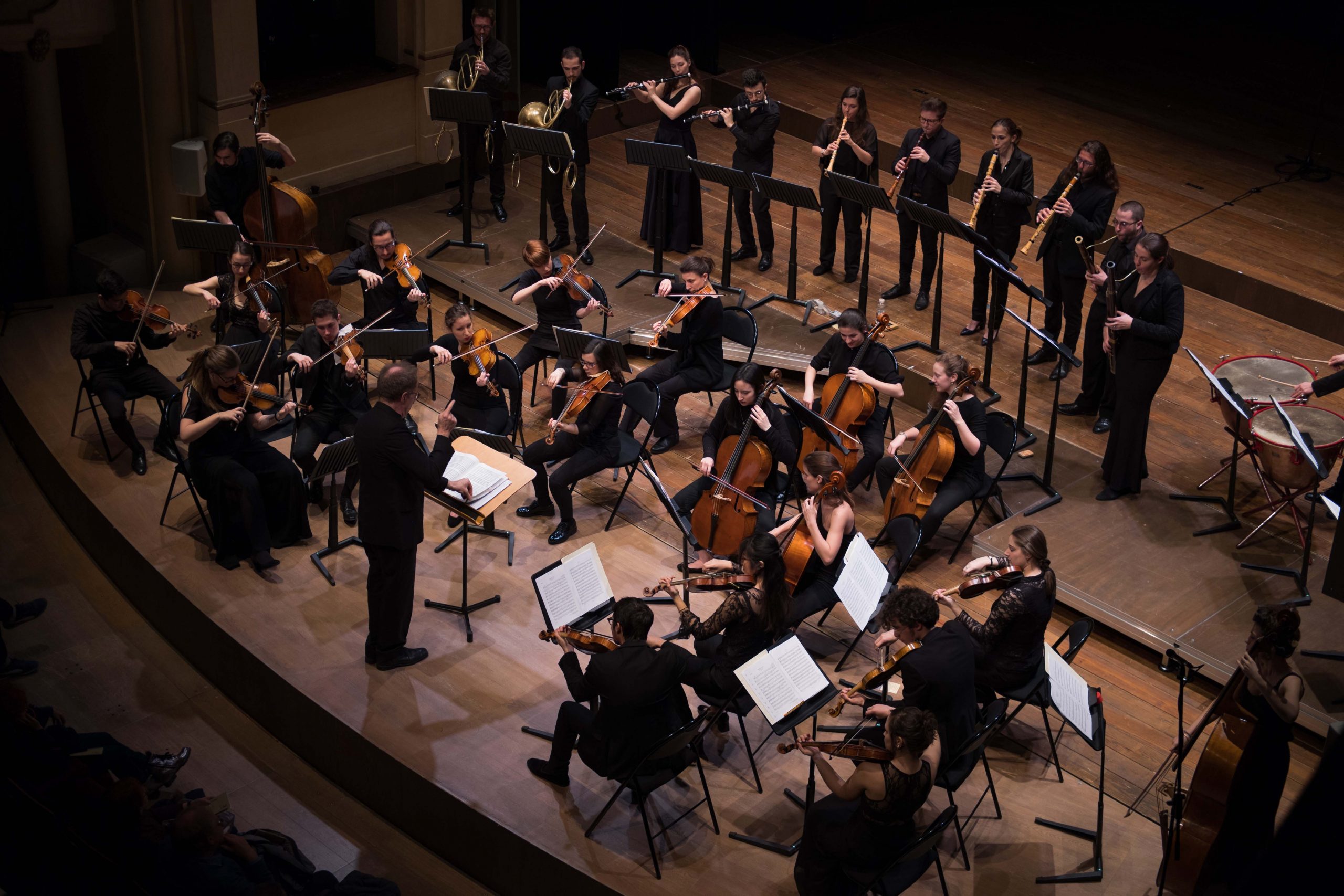
A shot from chamber music residency in Ossiach in 2018


Wind players will have their moment in the spring: from 2 to 9 May, they will be in Lodi, following the lead of oboist Alfredo Bernardini and deepening some important pieces of music, like Krommer’s B flat major Partita P4:30 and Beethoven’s E flat major Partita op.113. Concerts in Lodi, Trieste and Turin will top off the residency, and we are looking forward to them.

Then, a new chamber music project will bring us back to Geneva, Switzerland, guests of Les Concerts d’été à St-Germain: Chiara Banchini and Alfredo Bernardini will be the tutors in this project, scheduled from 17 to 22 August, with concerts on 21 and 22 August.

A moment of 2021 performance at Les Concerts d’été à St-Germain, in Geneve

The whole orchestra will rejoin at the end of June in Mondovì: this residency (from 27 June to 3 July, with concerts in Susa and Cuneo) will mark the beginning of the collaboration with a new conductor, Vanni Moretto, which we are excited to start.

Last but not least, we are working hard on a new project that at the end of the year will celebrate our first 10 years of activity: stay tuned for that!

Theresia Orchestra and a year in music

By Emilia Campagna - December 28, 2021
Let's give a look to the six things that made us proud and happy in 2021!

­How was your 2021? There are only a few days until New Year’s Eve, and this is the typically time of the year to look back and make a report about what happened in the last twelve months. Covid related issues continue to be in everybody’s thoughts: during 2021 we also faced difficulties in organizing events and in traveling, but in the second half of the year, we finally saw things changed, returning to travel and to meet in person again.

Nevertheless, here six stunning successes we were able to achieve this year!

1. Auditions at Mozarteum Salzburg

Not only we could manage to set up auditions to enroll new musicians, but we were also able to organize it abroad: it was held in one of the very centers of music in Europe, Salzburg’s Mozarteum. They were scheduled on 15 and 16 July, and 50 musicians (playing string instruments, oboe, horn and bassoon) coming from 23 different countries sent their candidature to take part. At the end of the auditions, 12 musicians from 13 different countries were invited to join Theresia!
Read more about our 2021 auditions in an interesting interview with our artistic director Mario Martinoli.

2. A night at the Opera!

Actually, an entire week: since our projects are mainly devoted to symphonic and chamber music, it was thrilling to be part of an opera production. Concerto Theresia, our alumni orchestra, performed Mattheson’s Boris Goudenow under the baton of Andrea Marchiol last August. Everybody was enthusiast about the experience, and it was a success with audiences and critics: Frankfurter Allgemeine Zeitung’s music reviewer wrote that “the Ensemble Concerto Theresia under the baton of Andrea Marchiol makes the rich and virtuosic music from both vocal and instrumental points of view flourish in all its colours”.

3. Discovering hidden gems in Geneva

We were in Geneva last summer with nine musicians from Theresia Orchestra for a chamber music project held by Chiara Banchini and Alfredo Bernardini. Some true musical jewels by Cambini, Canabich, Boccherini, Michael Haydn and Johann Christian Bach were unveiled to the audience of Festival Les Concerts d’Été à Saint Germain in two concerts, on 22 and 23 August.
Find more in this detailed interview with conductor and oboist Alfredo Bernardini.

4. Some round figures from the residency in Lodi

The concert held on 27 November in Lodi was our 60th, and the residency was the 30th. Something to be proud of! Plus, residency in Lodi was the first orchestral project after Covid started, and the very first for musicians enrolled in the last auditions. Definitely, there’s a lot to celebrate! The orchestra was conducted by Alfredo Bernardini, supported by Gemma Longoni as a tutor of 29 musicians from 20 different countries. And, the residency was the chance for a whole series of initiatives in addition to the concert. Find out more here.

5. Meeting with our counterparts from all over Europe

REMA (Réseau Européen de Musique Ancienne) is the most extensive network for Early Music in Europe, with a membership of 130 organizations in 23 countries.
Theresia joined Rema this year and in September, our team took part in a conference that brought together more than 30 representatives of musical institutions from all over Europe: the first live event after the Covid emergency started!

Read more about our experience here.

6. A thrilling breakthrough!

Last but not least….. a 3-years grant has been awarded to Theresia Orchestra by the Creative Europe Programme to develop excellence in orchestral learning and soft skills acquisition by our young artistic talents. That is, Theresia Orchestra enters today in the group of the leading European youth orchestras, together with EUYO – The European Union Youth Orchestra and other few acknowledged ensembles. This is a deserved international recognition of the work done by Theresia over the past 9 years and the beginning of a new exciting era for our orchestra!

The project is called EMPOWER and it will be coordinated by ICONS. This is a huge milestone that will allow Theresia to complete the pathway towards the creation of a truly pan-European orchestra, unique in addressing the classical repertoire on period instruments. EMPOWER will design and implement activities fostering the artistic excellence of young talented musicians Furthermore, it will make this artistic legacy accessible to the whole society.

To read more about the further development of Theresia, stay tuned!

The intense days of Theresia

By Emilia Campagna - December 21, 2021
An orchestral residency is not only hours of rehearsals, but it is also a precious opportunity for exchanging ideas and sharing experiences. We wanted to highlight this opportunity, and we did it.

A couple of weeks have passed since our last residency: it’s good to look back to that wonderful days. They meant so much because it was the first orchestral in Italy after Covid started, and after a long pause.

As you must know, an orchestral residency is not only hours and hours of rehearsals and hard work on the concert’s programme: as many of our musicians often point out, a residency is a chance for exchanging ideas, sharing experiences, discovering new things. We decided not to turn down this precious opportunity and decided to devote an entire afternoon of the residency to a chamber music workshop which programme would be chosen entirely by our musicians. We gave them the chance to present repertoire to rehearse with their colleagues, and we were overwhelmed by the number of musical pieces put out forward!

In order to play as much as possible, we divided the groups into three different locations (ICONS’ offices, and two rehearsal rooms at Teatro alle Vigne): music performed went from Mendelssohn’s String Octet to Beethoven’s Sextet for 2 horns and strings, from String Quartets by Mozart and Schubert to solo parts of Carl Philipp Emanuel Bach’Sinfonia in a minor for two violins.


At the end of the day, we had a beautiful informal performance: no audience was admitted from outside, obviously, but our musicians could share the joy of performing in front of their own colleagues and Theresia’s staff, including conductor Alfredo Bernardini and Artistic Director Mario Martinoli.

Here there are some shots from the evening performance:

Still, sharing music with a proper audience is our main aim: but it is also important to let people know how we work and prepare for concerts. So, another special initiative held during the residency was an open house rehearsal. That was made possible by Fondazione Cariplo, who contributed the residency as part of the project “Sinfonia in città” (Symphony in town).
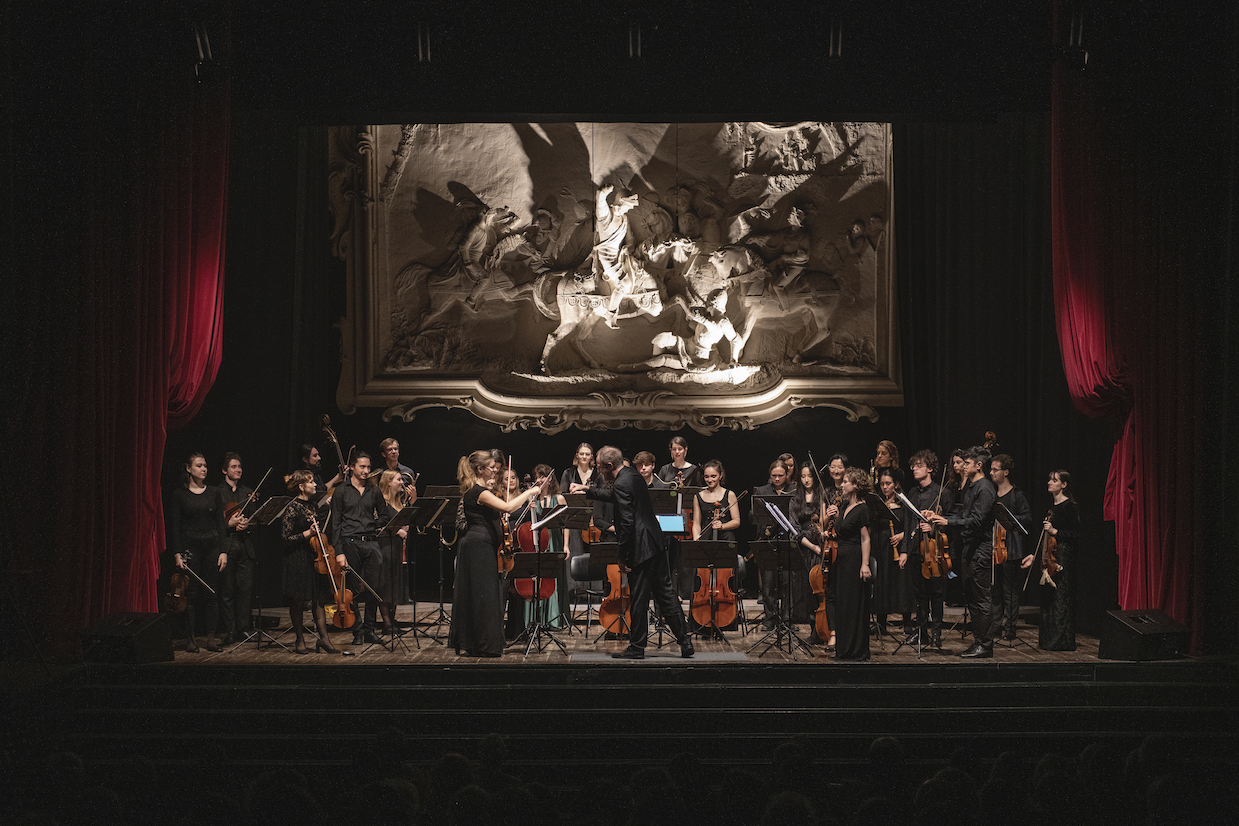
It goes without saying that the most exciting moment of the residency was the concert itself which was a real success! The concert attracted a large number of participants who filled the hall of the Teatro alle Vigne in Lodi and appreciated the performance.

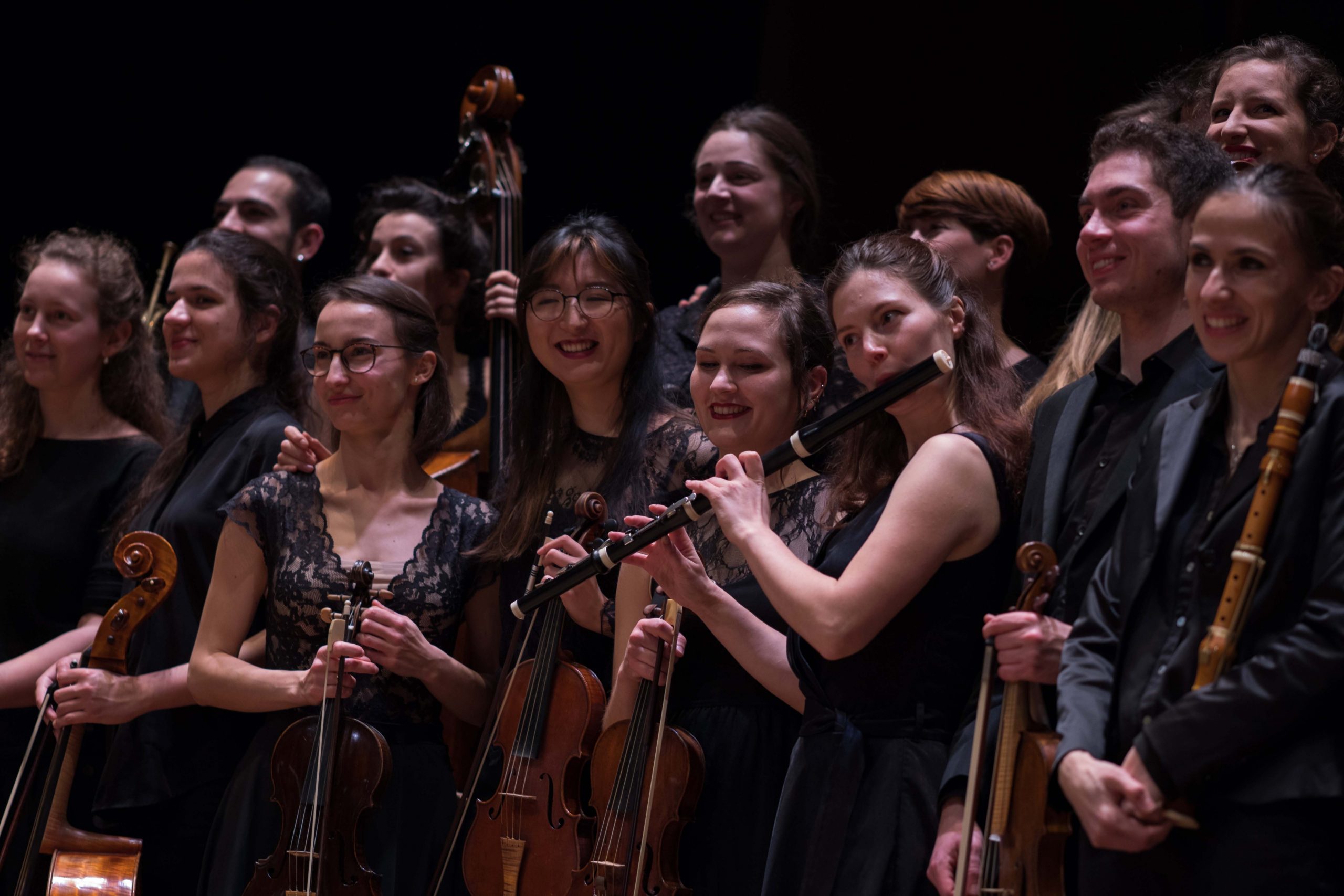
Performing on Teatro alle Vigne’s stage felt so good that we stayed a moment more for a photoshoot! Looking forward to next concert in Lodi!

Theresia in Lodi: a town, its theatre and our orchestra

By Emilia Campagna - November 19, 2021
Anticipating our concert to be held in Lodi on the 27th November, we exchanged some talks with Teatro alle Vigne's artistic director, musicologist and cultural manager Angelo Curtolo

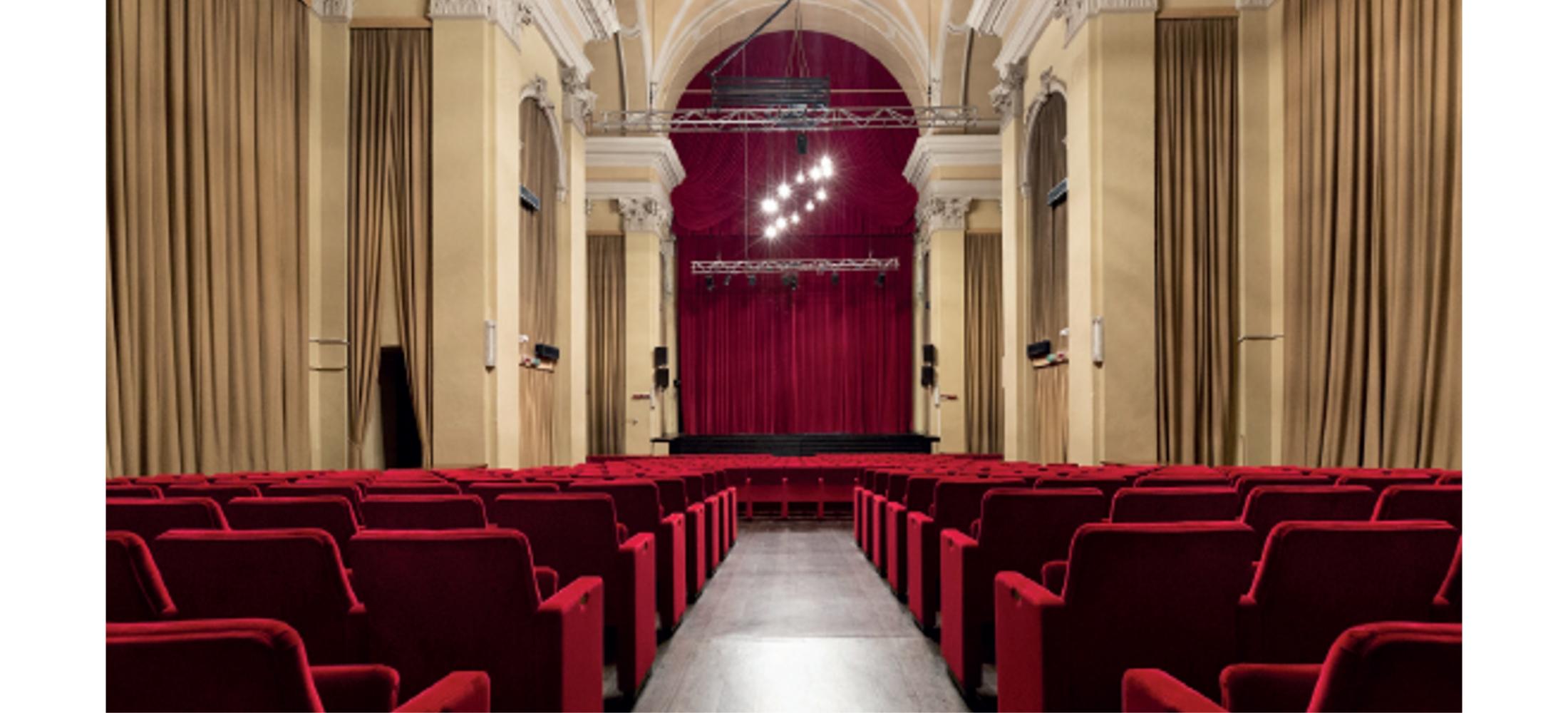
We have been to Lodi several times, both for concerts and auditions: as a matter of fact, Lodi is the venue of ICONS, the organization that supports and develops our project, so it’s always good to be here. In this blog, we told about some interesting anecdotes from the musical past of the town: now we want to tell you about its Theatre, Teatro alle Vigne, where we are going to perform on the 27th November.

The story of this building is incredibly fascinating: the location was born as a church, then was turned into a school held by priests; in the XIX century it went through a time of decay and was turned firstly into a storeroom and then in a gym. Only in 1976 the town’s administration decided to renovate the building which eventually became what it is nowadays, the main theatre of Lodi and the very center of the cultural life of the town: according to its artistic director, musicologist and cultural manager Angelo Curtolo, “in general terms, a theatre is a cultural organisation: as such, we can point among its objectives to increase creativity, to educate public opinion, to perpetuate memory and knowledge, to preserve the identity of the community. It’s the place where our desire to go further through artistic experience is manifested.”

In these weeks, Teatro alle Vigne has started again with his artistic production, which includes drama theatre, comedy, music: a variety of activities with “a cycle of classical plays; the series “Ridi a Lodi” (“Laugh in Lodi”), with the best comedians; classical concerts cycle; and, on Sunday afternoons, shows specifically intended for families with children. Unfortunately, our traditional cycle of shows intended for schools won’t take place this year, as, due to Covid restrictions, students are not allowed yet to participate in such activities.”

Speaking of Covid, the town was among the first places in Italy hit by the virus: very sadly, the town also lost one of the most active cultural organizers, President of Amici della Musica Paolo Motta; and, due to lockdown, cultural life was reduced to a minimum. The theatre managed to keep alive the flame of culture: “During the lockdown, we streamed a number of plays, showcasing local talented artists. Now we have started again, specifically with Oblivion Rhapsody, which got an enthusiastic and joyful response from the audience.”

Aside from the ongoing problems related to the Covid pandemic, Lodi and its theatre keep on being very active culturally speaking: the proximity with Milan, 30 minutes of train away, is not really conditioning. Moreover, the presence of the Theresia project in town has further enriched the scene: “The presence of Theresia is very important for both the town and its province, which lacked such an orchestra. Since I started to manage the activity of Teatro alle Vigne, I immediately initiated a collaboration with the Orchestra: besides the concerts that we can offer to the audience, during the residencies we have always opened the Theatre to students, who could thus be having a powerful musical experience, by listening to music performed by young people (almost) of their same age.”

Meet Theresia: Claudia Pallaver

By Emilia Campagna - October 20, 2021
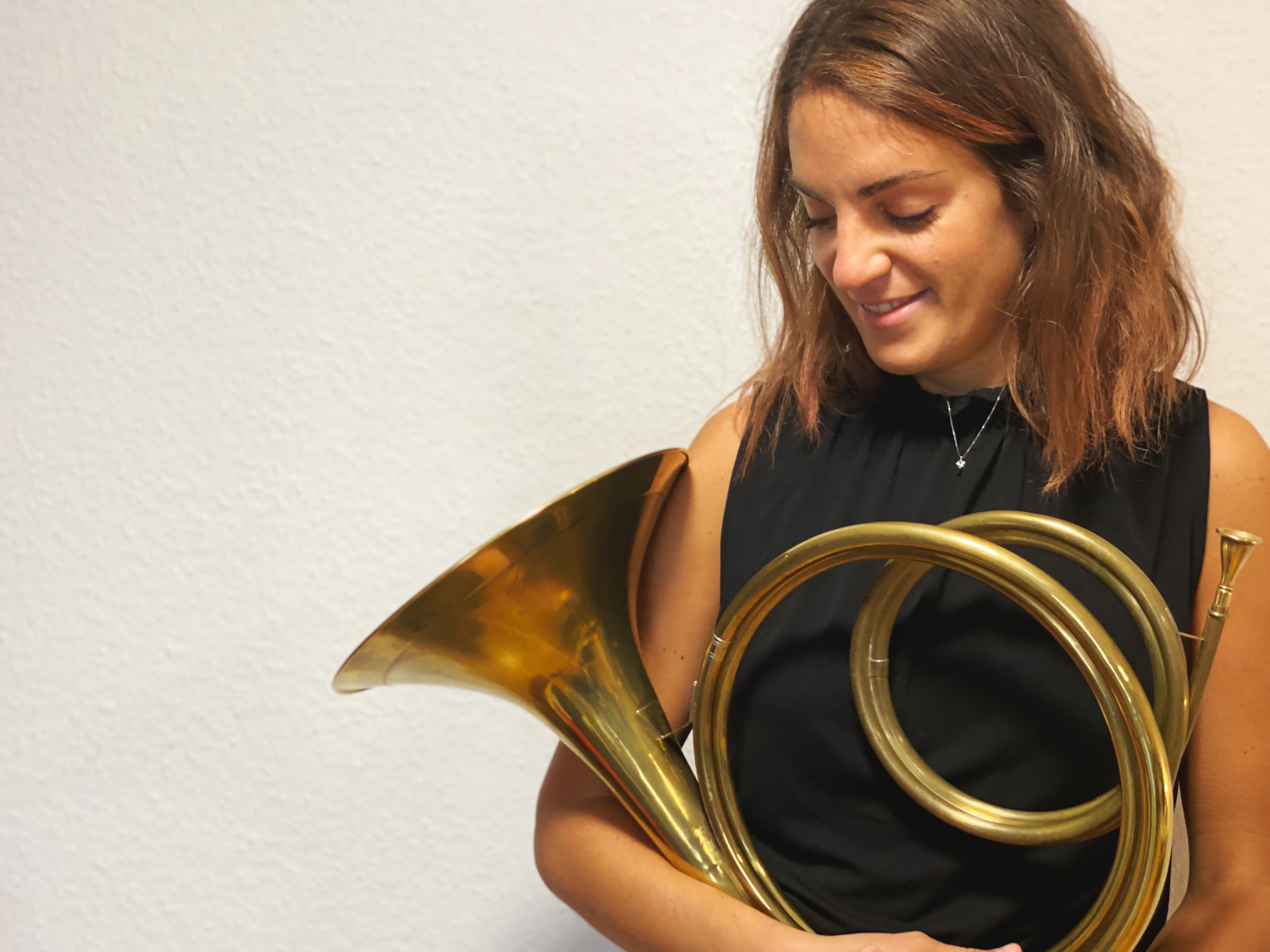
Let's meet Italian horn player Claudia Pallaver who joined Theresia in 2018.

Italian horn player Claudia Pallaver has been playing with Theresia since 2018. Both horn and piano player, she has a lot to tell: let’s get to know her better!

Claudia, how did you start to play horn and when did you decide to focus on period instruments?

I grew up in a family of musicians: my parents are both horn players (my father has been second horn of the Arena di Verona’s Orchestra for 30 years) and my sister is a pianist. I started to study piano at the age of 5 and only later, when I was 14 years old, I set about studying horn.

I carried on the study of both instruments, graduating at the Conservatory of Verona E. F. Dall’Abaco. The first encounter with natural horn was on the occasion of my graduation: as a matter of fact, among the several exams I had to take in order to get my diploma, I was supposed to perform a short piece playing the natural horn. I must confess I don’t remember being particularly fascinated after this first meeting… the horn had been in the storeroom for such a long time that it had a terrible musty smell!

How and when did you change your mind?

My passion for natural horn grew up later, thanks to Prof. Dileno Baldin, with whom I studied at the Conservatory of Vicenza. For the first time I felt the possibilities and potentialities of an instrument that I had previously classified as an old “stinking dumpster”. Thanks to Dileno, who opened me a window onto the fascinating world of period instruments, I decided to further my studies in Leipzig in Germany, at first as an Erasmus student, then attending the F. B. Mendelssohn Conservatory in the same city. There I had my first experience in a period instruments orchestra, and I continue to discover a world that I didn’t know before.

Let’s talk about your experience with Theresia: what was the first project you were involved in? And the latter?

I started playing with Theresia in 2018, after hearing about it through friends who were already playing or had played there in the past. My first project was set in Malborghetto: we played Kraus’s Symphony in C minor and Mozart’s Ouverture from “Le Nozze di Figaro” and Symphony n.35. My latest residence with Theresia was in summer 2019 in Rovereto: we recorded the whole corpus of Kraus’s Ouvertures, followed by concerts in Milan and Bolzano. Both projects were under the baton of Claudio Astronio.

What have you learnt while playing with Theresia during these years?

With Theresia, I learned what it means to create a synergic group of people of different nationalities who have a common goal, namely making music. In all the projects I participated in I was very fascinated to see that not only the study and the daily rehearsals improved the quality of the orchestra but also our spare time was important: we would spend most of it cooking together, organizing soccer tournaments, volleyball, walking or jogging, and also reading new pieces of chamber music without too many pretensions but only for the sake of discovering new repertoires. With Theresia, I learnt what it’s like to be part of an orchestra.

The next project you will be involved in will be under the baton of Alfredo Bernardini, a conductor you have previously worked with. What do you like most about Maestro Bernardini? Being himself a wind player makes things more interesting for you?

I am happy that Alfredo is going to conduct the project in November. I like having him as our conductor because he is very charismatic and can convey a lot of tranquillity; moreover, he has clear musical ideas and manages to communicate them very well to the orchestra. Often it happens that the conductor poses a step on top of all the musicians. With Alfredo, this is not the case: he behaves like he is a component of the orchestra like all of us, without any superiority.

Theresia’s member come from all over the world: what this international nature of the orchestra means to you?

I love Theresia’s internationality: every residence, even though it is in Italy and not too far from home, it seems like I’m travelling around the world thanks to my partners’ shared experience.

Recently you were involved in a CD recording: what was it about?

I was in Erlangen all last week recording a CD for Alpha classics with the Hofkapelle München orchestra. We recorded arias from the classical period on a theme from Mozart’s Zaubeflöte, obviously playing original instruments, and with Konstantin Krimmel, a very talented baritone.

What do you do when you are not playing in the Orchestra?

At the moment, as I also graduated in piano, I alternate playing the horn with my work as a piano accompanist at the Conservatory of Leipzig, a position that I won two years ago. Then, I really love chamber music and I’m part of different ensembles with whom I play both classical repertoire and arrangements written on purpose for us.

Where do you see yourself in ten years?

In ten years, I hope to have still more to discover. But, if I have to pick out one thing, in ten years I wish I will have travelled and have done at least once a tour in South America playing Bach’s B minor Mass or Bach’s first Brandenburg concert!

Theresia’s team at the REMA conference

By Emilia Campagna - October 12, 2021
Two-day conference of round-table discussions and workshops to enhance knowledge, information and co-operations in the early music field.

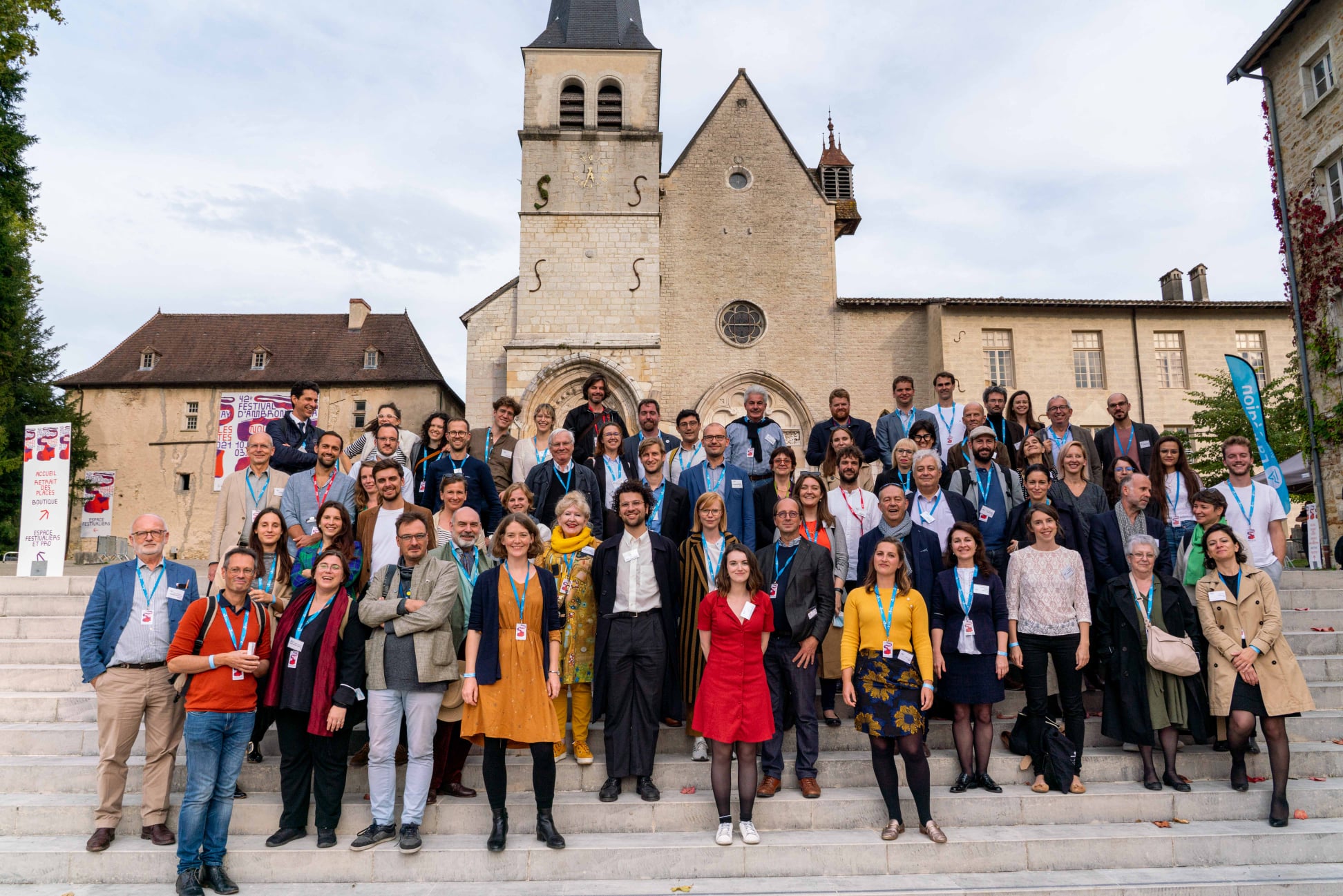
Everybody knows that there’s strength in numbers: cooperating, being part of a network, sharing information are essential things in the communication age. We have such a thing in our musical world, thanks to REMA (Réseau Européen de Musique Ancienne) the most extensive network for Early Music in Europe. Created in 2000 in Ambronay (France) with an office in Versailles, its main aim is to act as a network for its members, encouraging the exchange of knowledge, information and co-operations in the early music field. Nowadays, Rema boasts a membership of 130 organizations in 23 countries. And now, Theresia is part of it: our orchestra joined the team thanks to the decision to open the membership to new categories of Early Music professionals, in order to represent the field’s full spectrum. Rema was born to represent musical institutions and Festivals, now it includes musicians, ensembles, scholars, promoters and record producers. The decision was an immediate success, and in 2021 25 new entities joined the network in 2021 for a trial year.

Being part of Rema is very important for Theresia: this allows us not only to broaden and share our network, but above all, to work together on important issues like audience engagement, promote a less performed repertoire and enhance performance on period instruments.

We recently took part in a conference that brought together more than 30 representatives of musical institutions from all over Europe: the first live event after the Covid emergency started. 

The two-day conference was very intense, with a busy schedule of round-table discussions and workshops, organized to actively engage all participants. In the first meeting, we had the chance to present Theresia Orchestra, explaining our system of scholarships and announcing our upcoming projects. In one of the workshops, we debated on REMA added value regarding the promotions of young professionals.

Then, a very extended round-table discussion focused on international globalization and on the “ecosystem” of early music’s world: it was a very interesting comparison of different points of view that pointed out how important it is to work on each “local” environment, especially with all the Covid-related constraints. Last but not least, we joined a workshop focused on drawing up a European cooperative project: obviously, it was a simulation, but a lot of ideas and issues came up.

The two days weren’t only devoted to discussions: we had the chance to listen to some very talented young musicians in live concerts hosted by the CCR Ambronay as part of the project EEEmerging, aimed at supporting young musicians from the early music field.

All the experience was incredibly stimulating: the challenges are many, but so were the ideas shared during the conference. We are looking forward to the new opportunities that being part of Rema will give us.

Meet Theresia: Léna Ruisz

By Emilia Campagna - September 22, 2021
Let's meet a new member of Theresia: Léna Ruisz, violinist from Hungary that joined the orchestra after the last auditions.

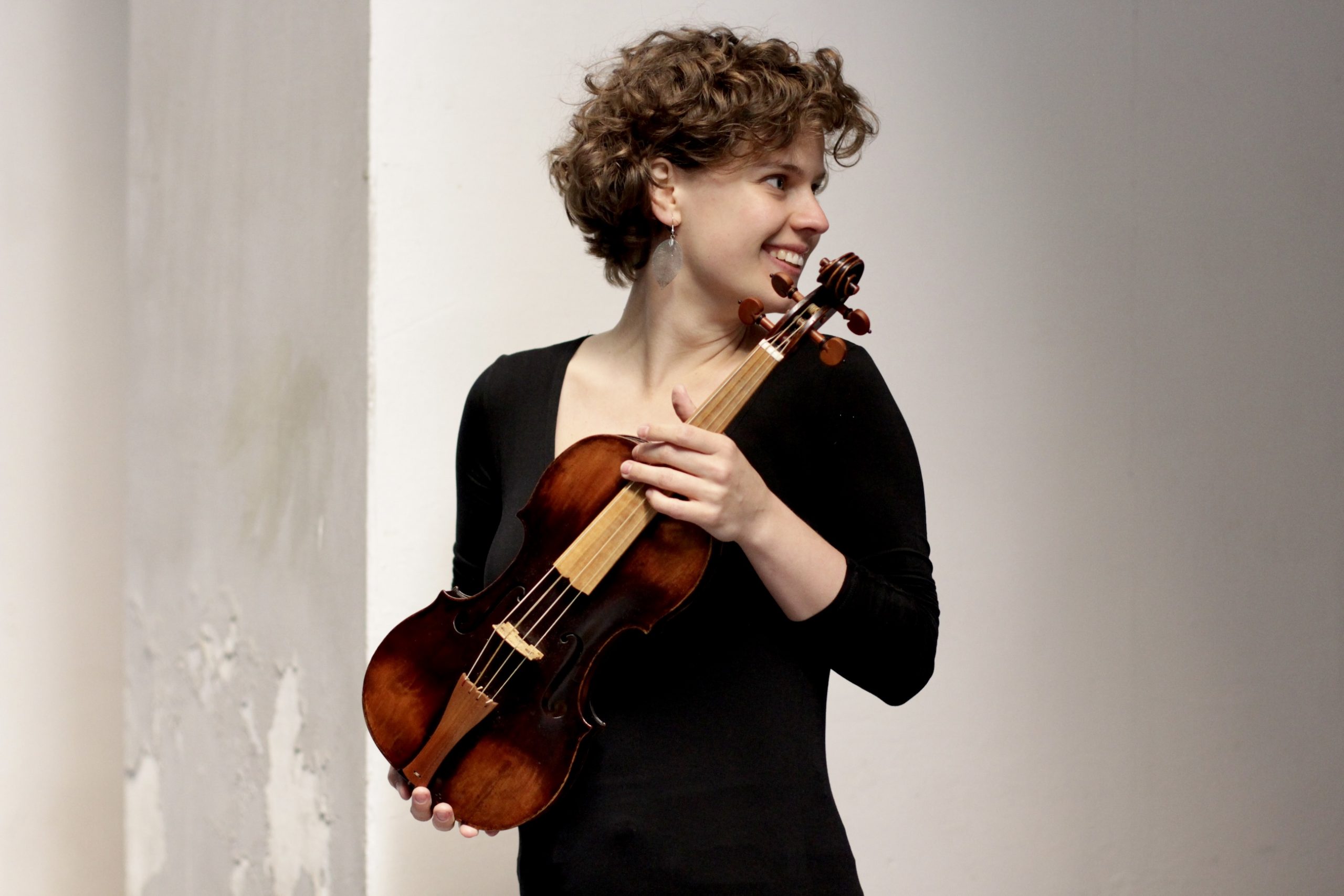
Léna Ruisz, violinist from Hungary, is a new member of Theresia: she joined the orchestra after the last auditions, and took part in the chamber project in Geneve in the last August. We met her and asked her to tell us about herself and the musical world around her activities.

Tell us about your musical history: when and how did you start to play the violin?

I have the good fortune of having an amazing, music-loving mum, so I decided to start playing the violin already at the age of four, after listening to lots of live Hungarian folk music with her. The first violinist of the group was quite a character — he made me fall in love with the instrument, and we have stayed friends ever since.

You decided to focus on historical performance when you met Monika Toth: what did impress you so much?

Monika is a wonderful teacher who helps you find yourself in music; freedom, light, and colours — she allows you to experiment and discover your own musical language. She uses the whole world to demonstrate what music has to tell; suddenly, the violin starts to speak. There is nothing more inspiring than that.

How did you learn about Theresia, and why did you decide to join it?

Quite a few good friends of mine were already playing there, and they told me a lot about it — but only now I had the feeling that I am ready to play a later repertoire. After being busy with the period before 1750, I am thrilled to broaden my understanding of the world of classical and early romantic composers as a member of such an excellent orchestra!

Your first experience was a chamber project: how was it?

Well, it was quite a start within the confines of a renowned festival like Les Concerts de Saint-Germain, under the guidance of Chiara Bianchini and Alfredo Bernardini. After four days of intense rehearsals, cooking sessions and lovely talks on the beach of Lake Geneva, the group grew together, and we played two great concerts at the end of this intensive week. 

Are you more an orchestral player or a chamber music one?

This is a hard question; both have their advantages… being part of one big, gorgeous sound, playing along the others, cannot be compared to anything — but my heart belongs to smaller ensembles. I enjoy the complexity, the responsibility and the intense personal discussions that one has in such a setup. 

You have studied mostly in Hungary, your country, Austria and Italy: how was your experience abroad?

I enjoy being challenged in a new artistic environment – I find the change of the working language the most interesting. I remember being incredibly touched while playing Matthäus-Passion for the first time understanding every word. We spent time with Ulrike Engel – my beloved professor in Vienna – finding a German text for the g-minor fugue for solo violin by J.S.Bach – all of a sudden, the melody became much easier to form. I can’t wait to be able to follow L’Orfeo by Monteverdi in Italian…

How important is music and music education in Hungary?

The deep-rooted respect of the long tradition of violin playing of Joachim József (Joseph Joachim), Jenő Hubay, Leopold Auer and Stefi Geyer is still alive in our music education. Every single one of us is a grand-grandchild of one of the “greatests” thanks to the passed-on legacy from our teachers. I believe that this is a priceless heritage. 

What do you like more about your country, regarding music and generally speaking?

The nature! Our mountains and forests are filled with secret hiking trails, breathtaking views, hidden places for an evening around the fire with friends… not to mention, that it is legal to sleep outside for one night in the forest. One of the nicest experiences is to get up to the birds at the crack of dawn. Folk music is also an integral part of our lives; we have “dance houses” — folk dance events with live music where everyone is dancing and singing together deep into the night.

During a residency like Theresia’s one, you find yourself working with musicians from many countries, how is it like? Do you think this fact enhances your experience?

Even after years of living abroad, it never ceases to amaze me how diverse personalities artists have; and how easy it is to make those differences to enchant every performance. Nevertheless, I believe that those differences are coming from each individual rather than their nationalities. I am fascinated by studying new languages – I somewhat believe that each language unlocks a new personality trait… yet another benefit of being a musician: there is always someone with whom I can practice the current language I am learning.

How is a typical day of yours?

It contains lots of fresh air, walk and yoga in the morning, several hours of discovering new repertoire as a warm-up and an intense session of working on the current pieces, preferably with others in a form of an early music jam session. After practicing  a good cup of coffee is in order alongside with a nice chat with my colleagues. I like to keep my evenings free for parties, movie nights or even walks in the forest by myself.

What do you like to do when you are not studying/playing?

As I am in general obsessed with colours, one can most probably find me painting a scene of some kind of enchanted story with tiny details, capturing an interesting part of a leaf with my camera, or hiking or running out in the forest with friends. 

Where do you see yourself in ten years?

I suppose I am open to anything. As long as it includes me being happy playing music, painting and discovering the world as an artist… I am good to go.

Photo credit: Róza Radnóti
The international heart of Theresia

By Emilia Campagna - September 8, 2021
Do you know how many nationalities are composing Theresia Orchestra? The project has been international from its very beginning, but the number of members coming from abroad has spread up during the years. Let’s give a look at the numbers!

Do you know how many nationalities are composing Theresia Orchestra? Since its foundation, the project wanted to address young musicians from all over the world. This focus continues also today and has been confirmed during the recent auditions, held in Salzburg in July. There, not only the level of applicants was very high, but the number of applications was particularly high with musicians coming from many different countries, from Europe and beyond. Want to know more? Let’s give a look at the numbers!

This year’s orchestra is made of 8 musicians from Italy, 4 from both Poland and Spain, 3 both from France and United States, 2 from both Colombia and Cuba and 1 from a series of countries: Australia, Austria, Belgium, Canada, Costa Rica, Denmark, Ecuador, Hungary, Ireland, Japan, Mexico, Netherlands, Portugal, Romania, Russia, Switzerland, UK. Out of 43 musicians, 27 come from a country of the European Union. Though, among Theresia’s members who aren’t EU citizens, many of them study in a EU country, like a Colombian in Germany, an Australian in the Netherlands.

Theresia has been international from its very beginning, but the number of members coming from abroad has spread up during the years. In 2016-17, for example, Italian members were a huge majority, 26 out of 58, followed by 8 musicians from Spain, 7 from Poland, 4 from France and 2 from the Netherlands.

In the 2018-19 biennium, Italians were 14 out of 44, and other well represented countries were Spain (8), France (4) and Poland (3). Musicians from totally new countries, like New Zealand, were among the members, enlarging the number of represented countries.

Internationality is something at the very heart of the project, just as much as all the projects ICONS is working on. Settled in Italy, ICONS emphasizes the importance of philanthropy in the society, creating and supporting projects for young people to improve their skills in music, arts, and humanities. In this view, philanthropy is an open, connected and dynamic process, not limited to its own initiatives, but actively promoting the creation of a new cultural development model involving citizens, companies, organizations, and society at large.

Alfredo Bernardini and Theresia’s hidden gems

By Emilia Campagna - August 19, 2021
During the concerts in Geneva (on Sunday 22nd and Monday 23rd August), as part of the Festival ‘Concerts d’été à St-Germain’, Theresia Orchestra will perform five pieces - one for strings, one for woodwinds and three for mixed woodwinds and strings - composed at the end of the XVIII century. True jewels by Boccherini, Cambini, Haydn, Bach and Cannabich, that fell into oblivion but deserve to be rediscovered. The program in details told by one of the tutors, Alfredo Bernardini.

Theresia is ready for a new chamber music program: on Sunday 22nd and Monday 23rd August, two concerts will take place in Geneva as part of the Festival Concerts d’été à St-Germain’.

Musicians involved are Saaya Ikenoya and Léna Ruisz (violin), Irina Fartat and Elena Gelmi (viola), Sophia Witmer and Anne-Linde Visser (cello), Samuel Casale (flute), Antonello Cola (oboe) and Vicente Beltrán (bassoon): they are going to prepare the musical project under the supervision of two amazing tutors, Chiara Banchini and Alfredo Bernardini.

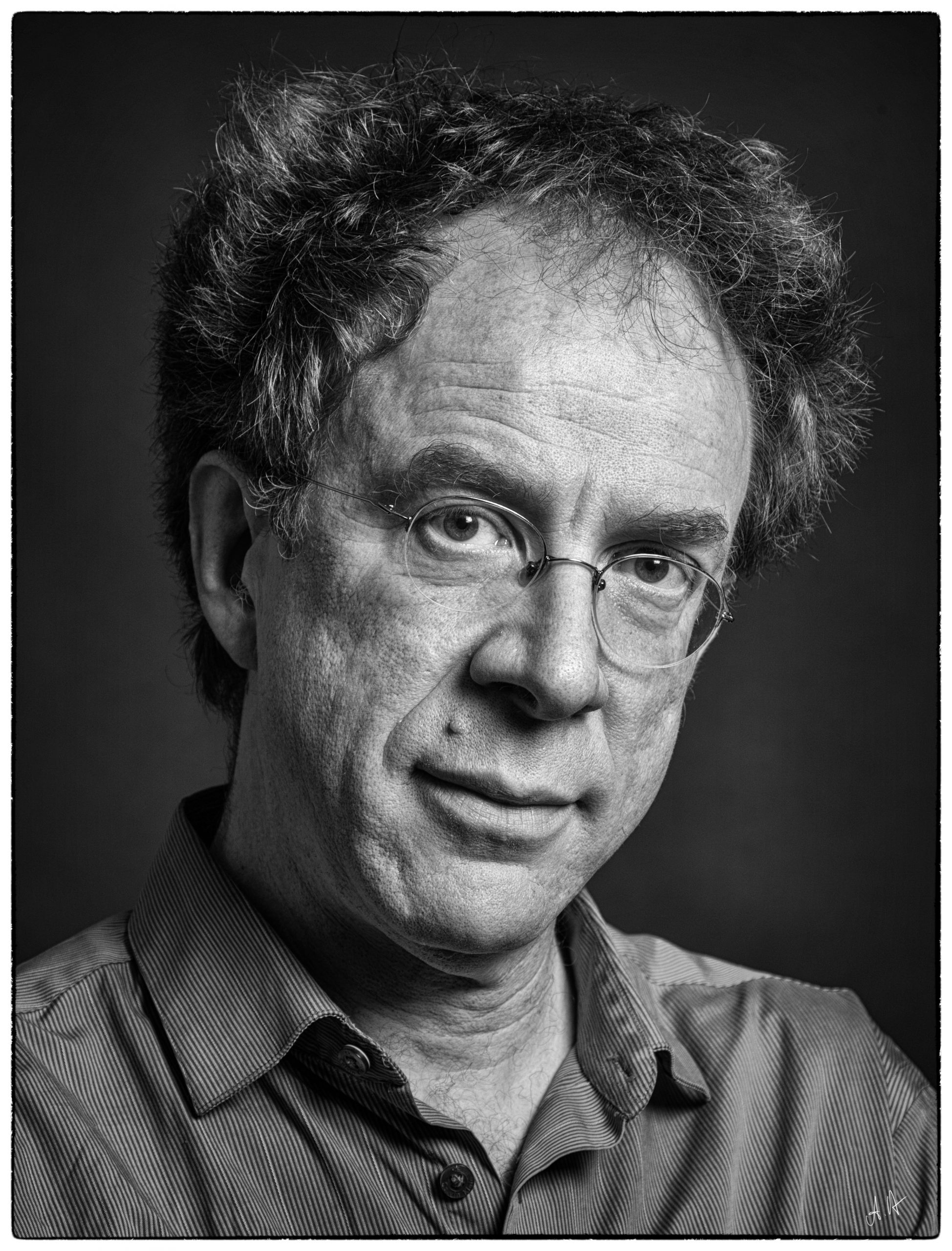
We talked to Alfredo Bernardini and asked him to tell us something about the musical program:

“In line with the artistic mission of Theresia, this project focuses on missed gems, music composed at the end of the XVIII century and then forgotten. I am talking about true jewels that fell into oblivion but deserve to be rediscovered. These pieces of music will be performed by a group of chamber musicians, strings and woodwinds, like a miniature orchestra.”

Let’s talk about the program in detail:

“The program includes five pieces: one for strings, one for woodwinds and three for mixed woodwinds and strings. Boccherini’s sextet in F major for strings is a very profound piece: Boccherini was an excellent cello player, who moved from Lucca, in Italy, to Madrid, where he was a very appreciated composer. Giuseppe Cambini was an illustrious migrant too, who worked successfully in Paris: Theresia will perform his woodwind Trio in D major.

Michael Haydn’s Divertimento for oboe, bassoon, and string trio is like a little symphony, in four movements and rich in humorous ideas. Michael Haydn is the youngest brother of the more famous Franz Joseph: he was very appreciated by Mozart, that got inspiration from some of his works, especially by a Symphony in C that Theresia performed some years ago.

Another piece in the program is the flute quartet by Johann Christian Bach, another musician that influenced the young Mozart and that, oddly enough, was born the very same year as Michael Haydn. Theresia will perform the C major Quartet for flute and string trio: this was a very popular ensemble, that took over the baroque trio sonata.

Last but not least, the C major sextet by Christian Cannabich involves flute, oboe, bassoon, and the string trio: Cannabich was one of the conductors of the celebrated Mannheim orchestra, that Charles Burney called ‘an army of generals’. It was made of the finest musicians of their time. In Cannabich scores, one can’t but be amazed by the richness and the accurateness of all the dynamic markings, meaning that he used to work with extremely thorough performers.”

You will be tutor together with Chiara Banchini: how are you going to work?

“First, I want to say that I am very happy to work with Chiara Banchini: I’m sure I will learn a lot of things in the first place! And as for the working method, at the beginning of the residency, we are going to give some space to the young musicians of Theresia, so that they can rehearse by themselves and take responsibility for their choice: on our part, we will have the chance to observe their working method and give them some pieces of advice on how to play together, on technical problems and the interpretation. Obviously, I will focus more on the woodwinds and Chiara on the strings. Two of the ensembles can work at the same time, so we will occasionally split up to work with one or the other group.”

This will be the first project of Theresia you are involved in after the health emergency: how did you deal with the lockdown?

“I can say I did quite fine during the first lockdown: it was a totally unprecedented situation for everybody, and I found myself with so much time for studying new pieces. The second lock-down, though, was really hard, because it seemed like we didn’t know when it would end. And, especially for ancient music performers, who are mainly freelancer professionals, the lack of concerts began to be a huge problem and a source of unbearable uncertainty.”

During the lockdown, many musicians tried to keep in touch with their audience through streaming performances: what do you think about it?

“Streaming was a valid surrogate both of live performance and teaching: there was a high risk of losing motivation, and, as it often happens in moments of deep crisis, many persons found alternative ways of doing things. It cannot replace live performance though we need an audience to perform because audience itself is an essential part of the creative and emotional process.”

Which were your feelings when you started to live-perform again? 

“It was intense, both performing and being part of an audience: some days ago I saw a performance of Haendel’s Il Trionfo del Tempo e del Disinganno, and I was moved to tears. Also, I am particularly happy for the young participants of Theresia’s residency in Geneve: they will have once again the chance to make music together and in front of an audience, giving rise to a moment of beauty together.”

A glimpse on the oncoming Theresia’s activity

By Emilia Campagna - August 6, 2021
After a long and forced pause due to Covid pandemic, Theresia is back on track with bigger projects for both the youth orchestra and the alumni orchestra. Artistic Director Mario Martinoli talks about news and future of Theresia Project.

After a long and forced pause, Theresia is back on track. And with a lot on the line. Waiting for the next performances and concerts (19, 20, 22 and 24 August in Innsbruck and 22 and 23 August in Geneva) we have met Artistic Director Mario Martinoli to ask him about what happened during the last months and which are the next projects.

Mario Martinoli, how did Covid affect Theresia’s activity?

Covid-19 affected us as it affected all. But, unlike others, we have not tried to perform at any cost: for instance, we didn’t try to perform using Plexiglass protection shields, or distancing the musicians. This, because any orchestra is a very specific object, with its own dynamics, and there is not an alternative way of doing it. In a violin section, for instance, musicians need to be near, or they won’t be able to thoroughly listen to each other: it becomes a bunch of individuals instead of being a cohesive group.

Initially, we wanted to start again only after the end of the pandemic, but the Green Pass let everybody avoid such restrictions. In addition, in 2020 we missed a series of auditions, and we risked irreparably losing the continuity of our programming. Now we can start again, and it is a positive sign.

Eventually, Covid has provoked both a proactive and resilient response from us: in 2020 we created Concerto Theresia, which is an alumni orchestra, definitely professional, whereas Theresia Orchestra keeps on being formative and professionalizing.

Besides Concerto Theresia, in which other ways does Theresia professionally exploit her talented members?

Unlike the majority of youth orchestras, we do not have senior tutors playing like concertmasters or sections leaders. Instead, we empower young musicians putting them at the forefront. A brilliant example of this is violinist Gemma Longoni, who joined Theresia in 2015 for the Zoroastro Project: she demonstrated such skills and talents that we turned her into concertmaster.

Speaking of young talents, you recently held new auditions: how did they go?

Brilliant. First of all, we were very happy to hold them at Salzburg’s Mozarteum, a new international collaboration to which we attach great importance. Secondly, we received a high number of applications, fifty, and from many different places. Applicants had to submit a video, on the basis of which we choose forty musicians and invited them to the actual auditions. Finally, the auditions themselves were a very intense day, both for us and the musicians. The selection was based on a chamber music rehearsal, on the fly and in front of the commission: this was an excellent way to evaluate individual musical skills but also the musicians’ personality and interactions with colleagues. Also, we interviewed all the candidates, and we could notice that Theresia has a great reputation and that many of them went through a lot of trouble in order to join us.

In your opinion, what do young musicians look for in Theresia?

Theresia is the only youth orchestra where one can perform classical repertoire on period instruments, and interviews showed that this is something very important for all the candidates. In Conservatories all over Europe it is common to study baroque music or ancient music, but classic repertoire has its own specific way to be played, and that needs a specific approach.

Now Theresia is starting to perform again: which are the oncoming projects?

After a long pause, we have two projects happening at the same time! Concerto Theresia is guest of the Ancient Music Festival in Innsbruck: one year ago we were orchestra-in-residence of the International Cesti Competition, now we will perform the opera Boris Goudenow by Johann Mattheson with the winners of last year competition. Orchestra Theresia in the same time will be in Geneva for a project devoted to chamber music repertoire, with Chiara Banchini and Alfredo Bernardini as tutors.

Where is Theresia going to be in five years?

There’s a lot going on: Theresia is already the benchmark for the classical repertoire performance on period instruments. After nine years of focusing on the music written between 1770 and 1790 in 2022 and 2023 we will expand our horizons performing the first Symphonies by Beethoven. We may move the limit of our repertoire to 1820: after this year massive changes in building wind instrument happened, so it is a rigid boundary for us. And, there are still unexplored areas, like French music of late XVIII century.

We are going to work with new conductors too: besides Alfredo Bernardini, who is our main conductor and a sort of “mentor” who enthusiastically embraced the project, and Chiara Banchini, who will focus on string chamber music projects, in the next two years we are going to work with Vanni Moretto, Giovanni Antonini and Fabio Ciofini. We are looking forward to these new collaborations.

Theresia is a project entirely supported by ICONS, which deals with scientific research and communications: how is the musical project related with the main focus of the organisation?

Theresia is a very special and philanthropic project. In this way, it is a practical expression of the values at the very heart of ICONS. It has a very ethical basis and is focused on human capital development. Moreover, communication is more a matter of culture that of technology, so we can proudly say that the common denominator of all these activities is culture, serving society and its improvement.