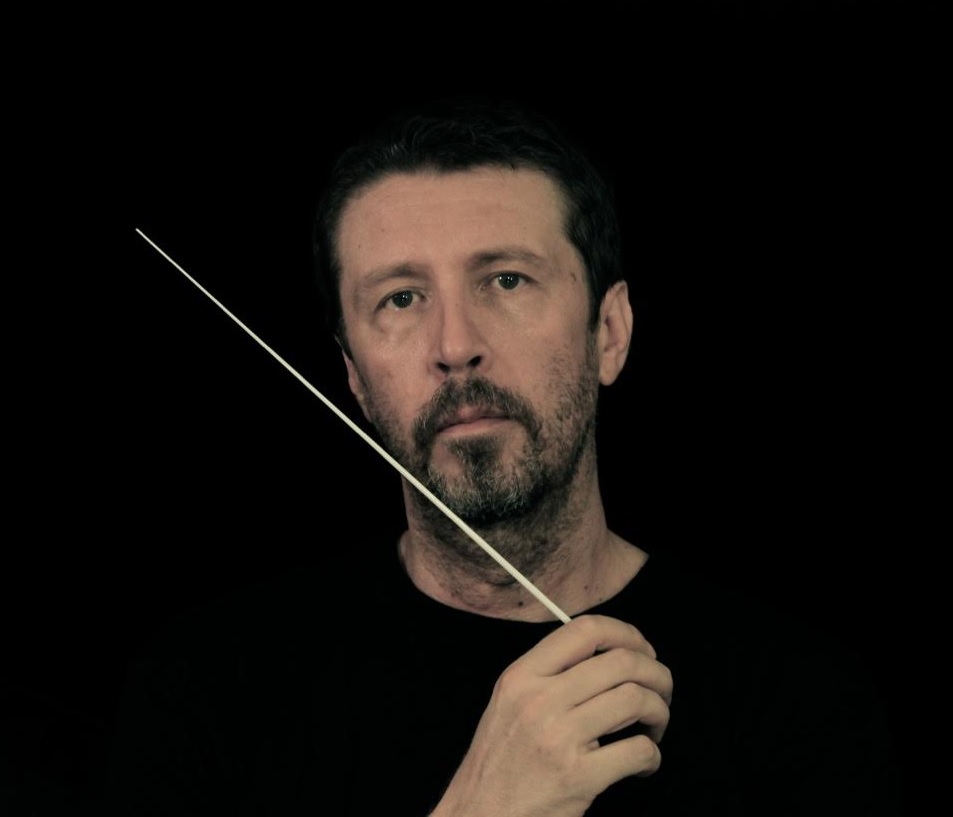
Alessandro De Marchi, Theresia and “Le Astuzie Femminili”

By Emilia Campagna - October 4, 2022
"Cimarosa’s style is something in between Mozart and Rossini: as a matter of fact, his style is very personal, and, as though it is mostly comical, it has some very lyrical moments. This is an opera you can’t help but fall in love with, and this is what is happening to us right us."

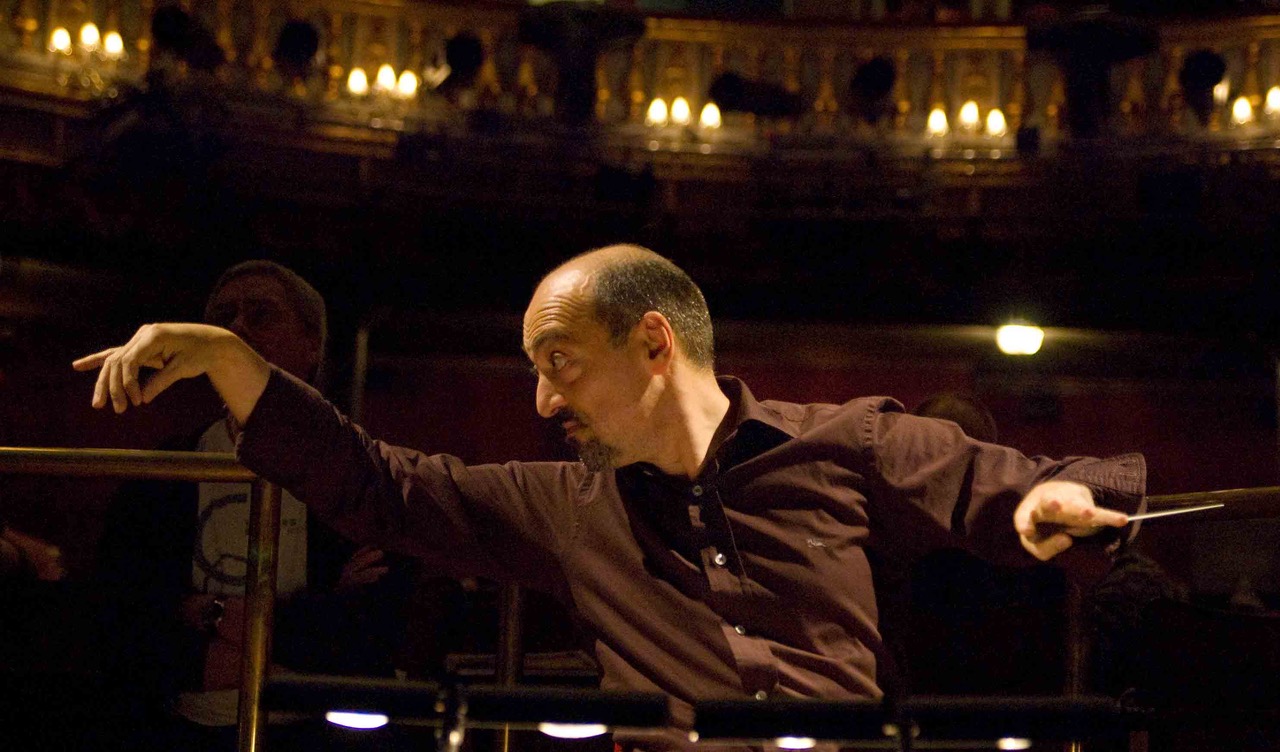
In a few days, Theresia is going to take part to the performance of the opera “Le astuzie femminili” (Female Shrewdness) by Domenico Cimarosa as part of Reate Festival: a great chance of experiencing the staging of an opera under the baton of one of the major expert of this repertoire, Alessandro De Marchi. We met him and asked him to share with the blog some details of the project.

Maestro De Marchi, you are going to conduct Theresia in the staging of “Le astuzie femminili” by Domenico Cimarosa: what can you tell us about this opera?

When we come to Cimarosa, we are dealing with one of the best opera composers of the XVII century: he was a major exponent of the Neapolitan school, and his career was divided between more than one city: precisely he worked in Naples, Vienna and Saint Petersburg. He was an international composer, and it is very interesting that while composing this very opera, he used part of works written in Saint Petersburg and Vienna, in that giving us a summa of his international activity.

Le Astuzie Femminili is a comic opera, written for the Teatro dei Fiorentini just after his most famous opera, Il Matrimonio Segreto. Speaking of which, I like to remember that Il Matrimonio Segreto is the only opera in the history of classical music that was performed again, as an “encore” at the end of the first performance in Vienna: this was the grade of Cimarosa’s success! Le Astuzie Femminili and Il Matrimonio Segreto have a lot of things in common, as it normally happens when it comes to comic opera. And, the cast that performed the “prima” was the same, formed by professionals, specialized in this sort of roles.

Which are the peculiarities of the libretto?

The original libretto had been written in Vienna by a renowned poet, Giovanni Bertati. It was then adapted and partly translated into Neapolitan by Palomba. As a matter of fact, Italian is not the only language of this opera: we have one of the characters (Giampaolo Lasagna) singing in the Neapolitan dialect, and we can also hear a macaronic German when the two main characters disguise themselves as soldiers and pretend to speak German: it is a botched gibberish, totally funny especially when the Neapolitan character tries to answer as he can. And we enjoy enormously the fact that Bellina and Filandro, the two amorous roles, get to be comical.

How is Cimarosa’s style, and how does he deal with a series of long-established comical situations?

Cimarosa’s style is something in between Mozart and Rossini: as a matter of fact, his style is very personal, and, as though it is mostly comical, it has some very lyrical moments. This is an opera you can’t help but fall in love with, and this is what is happening to us right us. The plot indeed follows a series of comical stereotypes, but Cimarosa had unique ease in transforming the text into music and his best peculiarity is a vein of melancholy that pops out also in the most comical situation: it is the authentic Neapolitan sense of comic that in the XX century the theatre companies of Scarpetta and De Filippo have entirely inherited.

Have you already worked with the singers involved? How is the cast?

I have worked several times with Eleonora Bellocci, who will be Bellina, the main female character, and I know very well Rocco Cavalluzzi, the bass performing Don Giovanni Lasagna. The other members of the cast are young singers that won the competition organized by Reate Festival: the level is very high and this is going to be an unforgettable experience for Theresia’s musicians, as always is the making of an opera.

Working with the youth is essential in your musical activity: you have also founded an International Vocal competition, the Cesti Competition, set in Innsbruck.

Starting the vocal competition was one of the first thing I did when I was nominated artistic director of the Innsbruck Festival For Early Music: I wanted to fill a gap, because at the time there were a series of baroque singing competitions, but not even one devoted to the opera. It was a winning formula, and in very little time has become a point of reference, with hundreds of applications. They are so many that we must select the candidates on the basis of a video, and we have a really high level in the final stage of the competition.

One of the strength of the Cesti Competition is that the Jury is made of professionals working in the world of opera production: artistic directors, stage managers, casting directors… so that taking part in the competition is like having multiple auditions in some of the main theatres around the world, and this represents a great chance for young talented singers. And, in fact, we have seen bright careers that were born among us.

Theresia was at Cesti a couple of years ago: what do you like of this orchestra and of its philosophy?

Theresia was the orchestra accompanying the finalists of the 2020 edition and came back for the staging of the Boris Goudenow the year after. I really admire this orchestra and I like the project, especially the idea of offering training paths that bring to a truly professional experience. And, most importantly, this project is in very competent and capable hands, so I see a bright future.

Theresia’s autumn concert season

By Emilia Campagna - September 27, 2022
After an intense summer, our musicians are ready to start rehearsing again and diving into new exciting musical adventures

For a lot of people, September is synonymous with a fresh start: it’s probably because of our school memories, or because after the summer we are full of energy, ready to start a new project with enthusiasm. And so we are, too, ready to start rehearsing again and diving into new exciting adventures during our autumn concert season. Yet, our summer was pretty intense, but being part of an orchestra like Theresia means being always ready for new projects.

Staging an opera

Definitely, the first project represents a whole new experience: the staging of an opera, “Le astuzie femminili” (Female Shrewdness) by Domenico Cimarosa. Being an ensemble devoted to symphonic (and sometimes chamber music) repertoire, working with voices is not usual for Theresia: it happened to us three times, when we joined the film-concert production “Zoroastro”, and then, more recently, on two different occasions in Innsbruck as part of the opera production “Boris Goudenow” by Johann Mattheson and as the orchestra of the international singing competition for baroque opera “Pietro Antonio Cesti”.

But, staging an opera is much more than just performing vocal music. It is a complex process that needs a lot of rehearsals and many different professionals: a director, a set designer, a stage manager and various technicians in addition to the musicians involved. So, the next project promises to be an exciting experience both for its musical meaning (“Le astuzie femminili” is a stunning comic opera among the best works by Cimarosa) and the thing that we can professionally learn about the world of musical production.

“Le astuzie femminili” is scheduled on 8th and 9th October in Rieti (Teatro Flavio Vespasiano) and 14th and 15th October in Rome (Teatro di Villa Torlonia) as part of Reate Festival (more info here). Theresia will be conducted by Alessandro De Marchi: coming soon an interview with him!

A warm-up residency

Speaking of professional growth, we know that precisely this is at the very heart of Theresia’s mission. Recently, new members were selected to join the orchestra: a “warm-up” chamber music academy now awaits them, the perfect occasion to know each other better and blend in, looking for the ideal ensemble sound while rehearsing and performing chamber music for strings and woodwinds.

The Academy will take place in an exclusive and amazing location, the Tuscan village Montecastelli, in collaboration with the organization Sience and Music, and tutor will be Paolo Beschi, cellist of the renowned ensemble Giardino Armonico. Stay tuned for more info about the musical program and the concerts to come!

New voices on our blog

By Emilia Campagna - August 30, 2022
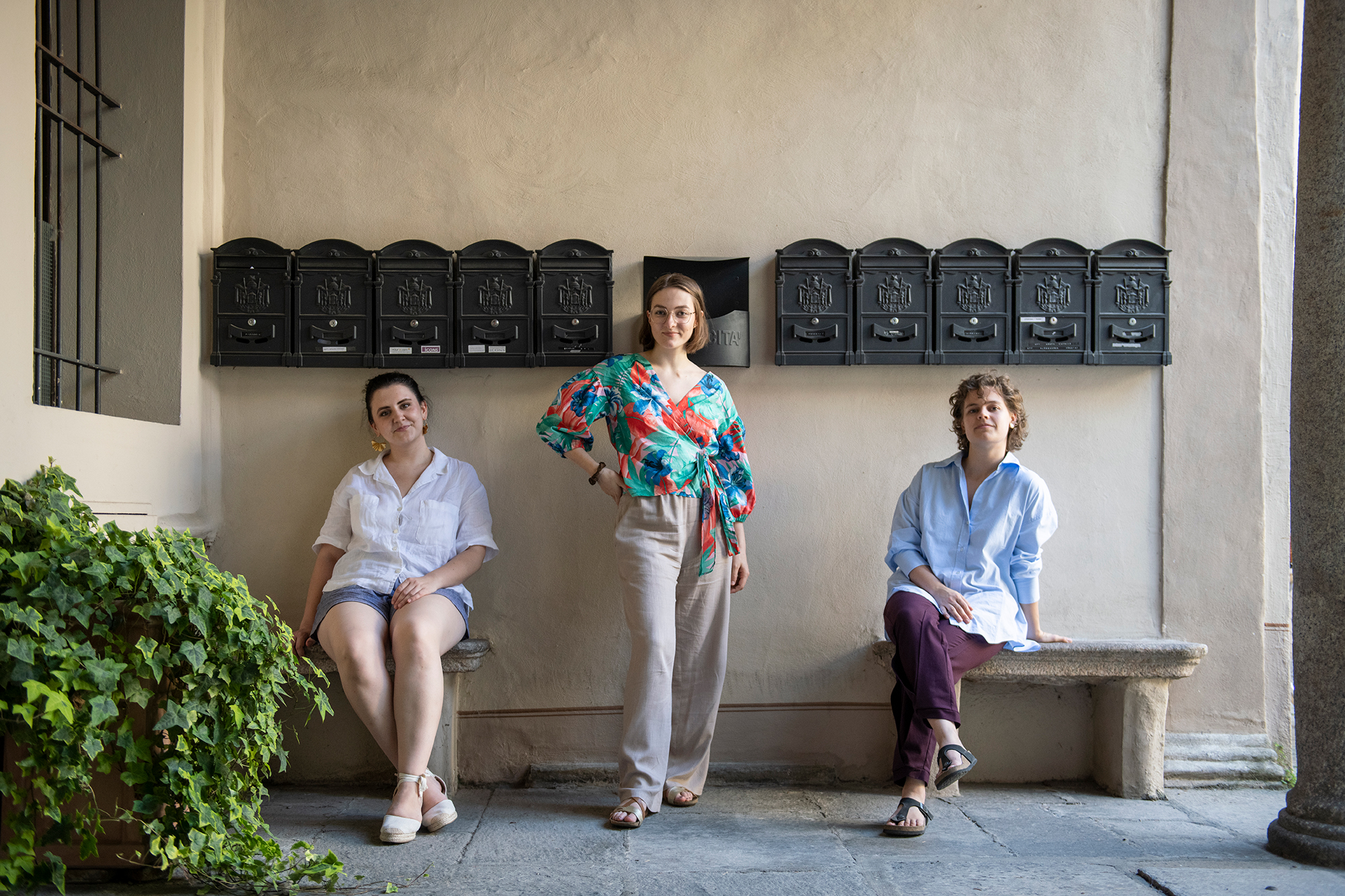
We are happy and proud to welcome our Ambassadresses as contributors to Theresia’s blog!

We are happy and proud to welcome our Ambassadresses as contributors to Theresia’s blog! As part of the Ambassadorship program in which they were involved, Anna Krzyżak, Irina Fârtat and Lena Ruisz are now part of the editorial team of the blog. This is one of the outcomes of the four-day co-creation workshop that we held in July, when ICONS’ experts gave them information and explanations about various types of communication.

How to write a blog post was part of the workshop, and we decided to make the experience more complete by suggesting that our Ambassadresses contribute to a real blog, Theresia’s one, seen as a place where they could share and recount their experiences, give their fresh point of view on the music we play, help to increase awareness and knowledge of HIP.

Moreover, as they come from three different European countries, we decided to enhance the chance to reach new readers by publishing in both English and their own language. So, for the first time, you will be able to read their blog posts in turn in Polish, Rumanian and Hungarian!

The first post to be published is by Anna Krzyżak, who helps us discover some hidden gems in the 19-century viola repertoire. Enjoy, and stay tuned for more posts to come!

Ecos Festival: music and sustainability in the heart of Spain

By Emilia Campagna - August 24, 2022
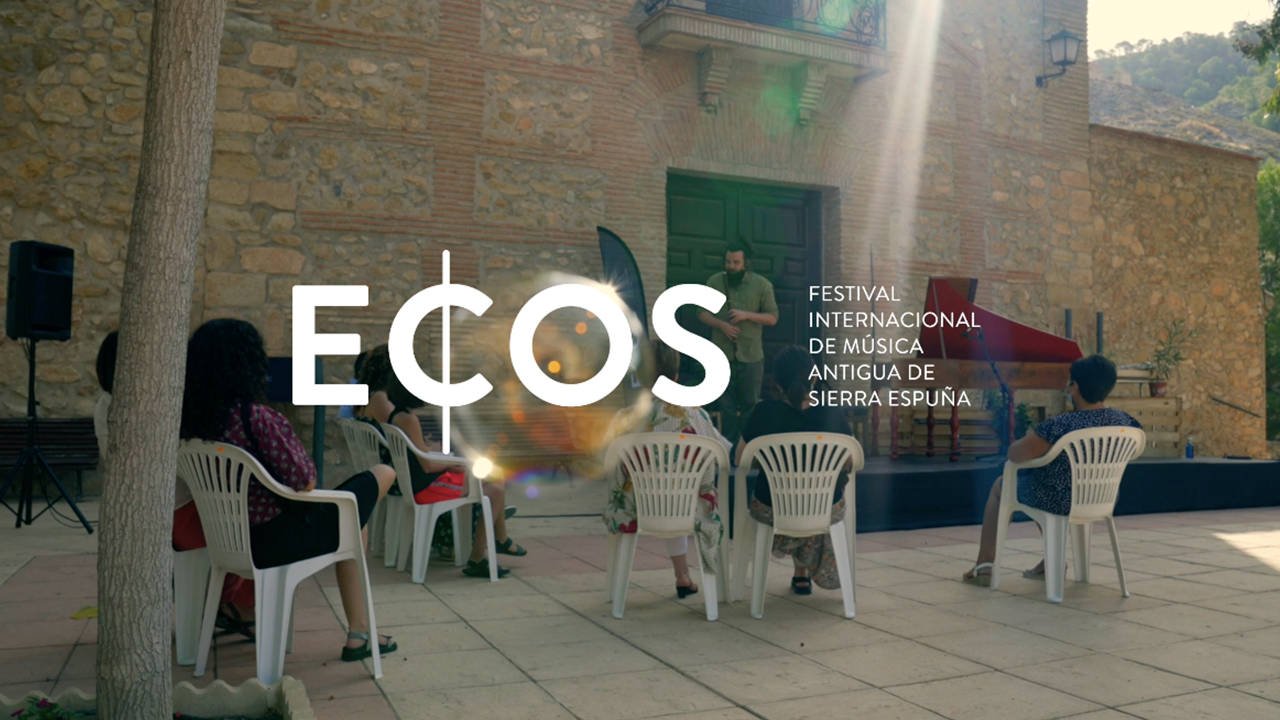
Our wind ensemble will be at Ecos Festival, a dynamic project set in Spain, where music and sustainability meet. Let's find more in this interview with Ecos Festival's artistic director, Jorge Losada

For the first time, Theresia will perform in Alhama (Murcia region, Spain) as part of Ecos Festival. That is an honour for us, as Ecos Festival is among Europe’s most dynamic and interesting artistic projects. We have spoken about this musical initiative with its Artistic Director, Jorge Losana: a baroque singer (he mostly performs with the vocal ensemble La Cantoria), he’s from Murcia himself, and he was the soul of the project from its very beginning.

When and how did Ecos Festival start?

In 2016, with a group of colleagues musicians from the University, we wanted to rehearse Monteverdi and needed a place where to do it. We met in Aledo, rehearsed for ten days, experimenting with a different way of doing things: we involved local people, and invited them to listen to our performances. They were very welcoming, and the outcome was really nice: so, the idea to make a treasure of this experience came naturally. The next year, thanks to the support of Sierra Espuña and six different villages that had decided to support forms of sustainable and natural tourism, we were able to make a series of concerts in some of the most emblematic places of the area.”

You started with early music: did you stick to the original artistic project during these years?

Yes, we went on hosting chamber music and little ensemble who perform according to the historically informed practice. What we really focused on are young musicians: we tend to organize residencies, like the one Theresia is involved in, with workshops and situations where musicians can share their experience and learn from their peers and other guests.”

Which kind of audience do you have? Do you have a specific target?

Audience mainly consists of local people, tourists, and English and German people who live on the coast. We have “professional concerts” which are meant to be for a general audience and “familiar concerts” especially designed for families and children.”

Ecos Festival is set in Murcia, and it appears to be closely related to the area: how is this part of Spain?

Murcia is a small region between Alicante and Granada, always famous for the seaside, the good weather, the food and very different climate and landscape from other parts of Spain. People find especially exotic some semi desert-like landscapes and the singular forest from Sierra Espuña, which has geology caves and lakes. With its Castles and historical place, it is a very fascinating area, with the sea only one hour and a half far away.”

Together with the artistic value of the concerts, sustainability is one of the missions of Ecos Festival: how do you pursue it?

“Firstly, we chose to focus on chamber music because we perform in small venues and when it comes to the audience a limited number of people is definitely more sustainable. Then, apart from the implementation of ecological habits (we have no plastic going around, and we encourage the use of electric cars) we also organize three conferences involving ensembles and other festivals where participants can discuss and share ideas about how to deal with sustainability diversity and demographic challenge. In short, we try to be sustainable as we can, to give conscience to our audience, and we also try to develop new ideas.”

Theresia will be at Ecos Festival with its wind ensemble, prepared by tutor Javier Zafra. Two concerts are scheduled on 26th August at 9 pm and 11 pm at Patio del Museo Arqueológico de Los Baños: Theresia wind ensemble will perform an all-Mozart program (Divertimento in F major K. 213, Divertimento in F major K. 253, and Divertimento in B flat major K. 270). The day after at 10.30 am  the ensemble will perform in a family concert.

These concerts end our summer concert season. But autumn is just around the corner, and we have some good news in store, so stay tuned!


How to empower the youth: getting to the heart of the Ambassadorship Project

By Emilia Campagna - August 11, 2022
Not only scores and music: Theresia is much more than that, especially for musicians involved in our “Ambassador Project”.

Not only scores and music: Theresia is much more than that, especially for musicians involved in our Ambassadorship Project.

What is the Ambassadorship Project?

Music needs people studying and playing it, but also people able to divulge, communicate and promote it. And not necessarily they have to be different people. Actually, gaining soft skills in the field of communication can empower young musicians and help them build solid careers. That’s at the core of our EU-funded project EMPOWER, an important part of which is trying to engage new audiences, especially the youth, and this is where the Ambassadorship Project catches on. To do so, over the course of three years, a total of nine young musicians, representing nine different European countries, will be Ambassadors and Ambassadresses, embodying and transmitting the core values of classical music and its importance to their countries.

​First to be Ambassadresses are Anna Krzyżak from Poland, Léna Ruisz from Hungary, and Irina Fârtat from Romania, with the task of promoting HIP in their own countries and engaging new audiences through their own and/or Theresia’s activity.

Getting to the heart of the Ambassadorship Project: the workshop

Our job with the Ambassadresses started with an intense four-day co-creation workshop: initially, ICONS’ experts (Social media manager Oyku Dogan, Journalist & Blogger Emilia Campagna, Videomaker Luca Meneghel, and Graphic designer Orazio Di Maria) gave them information and explanations about various types of communication: graphic, multimedia, and written materials, included in a Handbook made available to the participants. From the golden rules in writing a blog post to how to organize graphically information, from managing the process of filming to navigating the over-crowded world of social media: the points experts dealt with in the Handbook were multiple and all of them were sharing a priority: how to define our audience and target, establish our tone of voice and then lay out the hierarchy of information we want to convey.

Particularly, we devoted the first day to jointly discussing the new target audiences, the key messages, and the channels and formats that may better reach a new audience. All three Ambassadresses decided to target different groups of young people: children for Irina, who wants to promote a music atelier; young talented musicians for Anna, who wants to reach the talented young people of the Polish Children’s Fund, a foundation that organizes courses and insights for children (up to 18 years); young musicians studying in the conservatory or university for Léna, who plans to produce in-depth materials on HIP.

Speaking of materials, Ambassadresses were invited right away to put into action what they were learning: during the workshop, they produced videos, leaflets and blog posts. Specifically, they created leaflets to illustrate and promote their own teaching activity or explain to the audience what HIP (historically informed performance) means; videos were even more creative, with tutorials about how to change gut strings and how to put on make-up before a concert. Coming to blog posts… well, you will have the chance to read them because we are going to publish them and keep a special place for Ambassadress’s contributions.

It goes without saying that the experience was extremely positive: Léna enjoyed the friendly atmosphere and the collegiality. I learnt that I am not one for marketing on social media. I am super happy to have a platform (on Theresia’s website) where I have the chance to post in-depth and also lighter articles about early music.” Anna appreciated particularly the first day of the co-creation workshop: “That is because we worked on keywords, and we all got to know what the Ambassador Program is actually about. It was amazing to see how creative everyone was. We inspired each other, and we eventually came up with some nice and catchy sentences. It was a real brainstorm, and it somehow pushed me into creating my own idea of what I want to do as an Ambassador.” Irina was happy that “Every day we did something different, from brainstorming together to learning how to edit video and create materials to attract new audiences. It was a great experience and I love that I get to be still in contact with the creators of the workshop, so I am motivated, and my brain is constantly on fire, trying to come up with new ideas.”

And regarding expectations and possible developments of their careers thanks to things they have learnt, Irina is aware that “in a world that is constantly evolving and changing, if we want classical music to survive, we have to find new ways to bring it closer to the people, and to attract new audiences. This workshop gave me the tools to make myself heard, and to promote culture and classical music, whilst stimulating my creativity and imagination.” Léna reckons that now she hasa better overview of the marketing options thanks to the very well-together-put Handbook by you guys” whereas Anna thinks that “all the things that I learned during the workshop were hugely interesting, and I find them very useful for my musical path. The one that I find the most valuable is that I will learn how to communicate with foundations, institutions etc. Of course, it is a process that will be developed during the years, but I think that this is a very good beginning.”

Theresia’s summer concert season

By Emilia Campagna - August 1, 2022
August promises to be an intense month, with five concerts in three different European countries: Italy, Switzerland and Spain

Five concerts in three different European countries: as July was devoted to our annual auditions, Theresia’s summer concert season is concentrated in August, which promises to be an intense month.

A first modern performance for Concerto Theresia

Concerto Theresia, our alumni ensemble, will perform in the first event, scheduled on 4th August in Bagnocavallo (Ravenna, Italy): the musical program is entirely devoted to a rarely performed composer, Elia Vannini. Concerto Theresia and “I luoghi dello Spirito” Ensemble will be cooperating to bring back to life music that modern audiences has never listened to: specifically, Concerto Theresia will play six Sonatas that Elia Vannini, a musician and a priest who lived beween 1644 and 1709 and was Maestro di Cappella of Ravenna’s Cathedral, dedicated to his Archbishop Fabio Guinigi in 1691.

Musicians involved are Gemma Longoni and Valentina Russo (violin), Francesca Camagni (viola), Giulia Gillio Gianetta (cello) and Federico Bagnasco (doublebass), with the collaboration of harpsichordist Maria Luisa Baldassari and organist Marina Scaioli (“Ensemble I Luoghi dello Spirito”).

A welcome comeback in Geneva

For the third time, our string ensemble has been invited to perform within the framework of a renowned festival, “Concerts d’été à Saint Germain”, in Geneva. That is a great honour and good opportunity too, especially for the orchestra members, who will have the chance to work with Chiara Banchini, thanks to the collaboration with the Société Genevoise d’Utilité Publique. Theresians will perform Boccherini’s Quintet in B flat major G 337 Op. 39 n. 1 plus an absolute rarity, a string transcription by M. G. Fischer of Beethoven’s Symphony n. 6 Pastorale in F major Op. 68. Two concerts are scheduled on 21 and 22 August.

Musicians involved in the project are violinists Léna Ruisz and Natasha Pichler, violists Anna Luiza Aleksandrow and Alioša Šolak, cellist Sara Vicioso Usero and doublebassist Yussif Barakat,

Performing in a new place

As well as we love going back to places we have performed in, we are delighted to explore new venues: it means knowing people, starting a new partnership, and enriching our network. So, our third summer project means a lot to us, as it will be in Spain, a country where we have never been (but from whom a lot of Theresians have come during these years). Specifically, we are going to be part of ECOS Festival in Totana, and on 26 and 27 August our woodwinds ensemble will work under the guidance of bassoonist Javier Zafra: the musical program is enchanting, as it is entirely devoted to Mozart’s Divertimentos for winds (Divertimento in F major K. 213, Divertimento in F major K. 253, Divertimento in B flat major K. 270)

Musicans involved are oboists Linda Alijaj and María Jesús Moreno Ciudad, bassoonists Angel Alvarez and Vincente Beltràn, and hornists Jonathan van der Beek and Etienne Devigne.

Stay tuned for further details!

Welcome, Theresians!

By Emilia Campagna - July 25, 2022
Nine new members and seven eligible musicians were selected in Theresia's annual auditions: let's find out something about their motivations and expectations

Theresia’s annual auditions at a glance

It was in mid-July that we held Theresia’s annual auditions: for the second time they were in Schloss Frohnburg in Salzburg, thanks to a partnership with the Mozarteum. And, as it always is when it comes to Theresia, it was an intense and rich experience.

One day for string players, one for woodwinds: our Concertmaster, violinist Gemma Longoni, and oboist Alfredo Bernardini, one of Theresia’s principal conductors, coordinated the full two days of rehearsals, as Theresia’s auditions are not merely hearings where you play your piece of music in front of a commission, but it goes way beyond that.

Of 28 invited candidates, we chose nine of them: they were awarded the Learning Grants that will let them participate in Theresia’s learning activities for the period August 2022 – November 2023. Plus, we included in a ranking seven eligible musicians who may be called for single projects and can participate in selected capacity building activities as well.

In the ranks of strings, new members are: Violinists Melanie Gruwez (Belgium), Natascha Pichler (Austria) Guillermo Santonja di Fonzo and Julia Hernández Sánchez (both Spanish); violist Hannah Gardner (UK) and German cellist Ena Market. As for woodwinds, we welcome Spanish oboist María Jesús Moreno Ciudad, Dutch horn player Hugo Pieters and Taiwanese flutist Ching-Yao Wang.

Eligible musicians are: Italian clarinetists Elia Bianucci and Carolina Guiducci, flutist Tommaso Simonetta Sandri (also from Italy), bassoonists William Gough (UK) and Francisco Javier Sánchez Castillo (Spain), Costarican hornist Andres Alberto Sanchez Trejos, and Hungarian violinist Zsófia Noémi Bréda.

Getting to know the candidates

We are looking forward to starting working with new members of the orchestra, who will be involved in August projects. Nevertheless, we had the chance to know them, their experiences and their expectations, during a series of interviews conducted by Elena Gaboardi (Board Member at Fondazione ICONS, the organisation supporting the Theresia project) and Charlotte Michi (Director at Fondazione ICONS).

As Charlotte Michi explains to us “our main purpose when interviewing the candidates is to know their motivations, and their attitude to commit to a project like Theresia.” In particular, interviewers asked about candidates’ interest in the HIP (Historically informed performance): “Most answers pointed out that this kind of performance gives you a complete and richer view of the music you are playing; generally speaking, string players tend to go on playing both period and modern instrument, while woodwinds players usually stick to the period one, for technical reasons mostly. Almost everybody has a strong attitude to exploring and deepening the historical and artistic aspects connected with the music they study. In this way, they also become better at communicating to the audience interesting facts related to the repertoire. By the way, improving communication techniques is something many candidates are interested in, and we are happy we will be able to help them effectively with our training modules.

Our places: Schloss Frohnburg

By Emilia Campagna - July 11, 2022
Not only “The Sound of Music” was an iconic musical shot in Salzburg, but it also happened to be shot at our auditions’ venue, Schloss Fohnburg – and the rich coincidence can have a meaningful relevance for our candidates.

Not only “The Sound of Music” was an iconic musical shot in Salzburg, but it also happened to be shot at our auditions’ venue, Schloss Frohnburg – and the rich coincidence can have a meaningful relevance for our candidates.

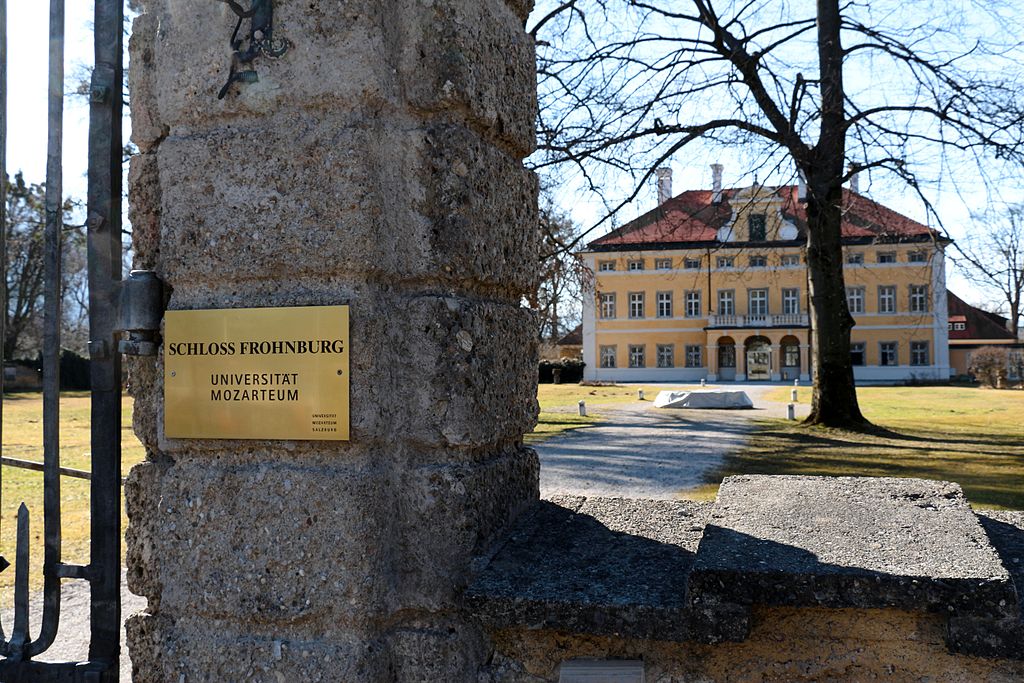
Have you ever heard of a Schloss Frohnburg? This German name sounds like fairy tale places and old times splendour, and actually, it is a very special place where two very different things somehow meet: the renowned Salzburg’s Mozarteum and the American 1965 musical movie “The Sound of Music”.

What is Schloss Frohnburg’s story?

Originally, Schloss Frohnburg was built between 1660 and 1680 by Prince-Archbishop Max Gandolf as a summer manor and called “Schloss Grafenau”. Through marriage, the castle went to the family of the Counts of Frohnberg who gave the new name to the building. Later it became the property of the Counts of Kuenberg. Schloss Frohnburg went through its prime around 1700, when its extensive parks and gardens were maintained by 13 gardeners! The castle had orangeries and orchards and the site now used as a library was originally a bathhouse, these days only a marble plaque saying “Limpida perluor unda” (bathing in the clear wave) commemorates this fact.

For those familiar with Salzburg’s topography, it is situated along Hellbrunner Allee, which connects the Residenz Palace (probably the most important historic building of Salzburg) and the old town of Salzburg with Hellbrunn Castle in the South over a distance of about 5 kilometres. Prince-Archbishop Markus Sittikus ordered the construction of the straight alley to get comfortably to the castle and gardens built by Santino Solari in 1613.

How Schloss Frohnburg turned into becoming a house for music

After the Second World War, the American occupiers confiscated the building. In 1960, the Republic of Austria acquired Schloss Frohnburg to allocate it to the Carl Orff Institute as part of the Mozarteum. Nowadays, the historic concert hall and the adjoining rooms are used by the Mozarteum University for performances and can also be rented, making it an ideal location for concerts, seminars and much more, thanks to its concert hall and the adjoining conference hall. And right here are scheduled Theresia’s 2022 auditions, to be held in a few days (on 14th July and 15th July).

A location for “The Sound of Music”

Salzburg is so full of gems, that Schloss Frohnburg is not at the top of the list of the standard tourist. Thousands of people, though, worship it in the movie “The Sound of Music”, in which it was used for the exterior shots of the Trapp villa. Do you remember the story? In 1938 Maria (a charming Julie Andrews), a young nun to be, uncertain whether to take vows or not, is sent to Captain von Trapp’s home to be the governess to his seven children. She falls in love with the children and their widowed father who, ordered to accept a commission in the German navy, opposes the Nazis so that he and Maria decide to flee from Austria with the children. Music is at the very core of the movie, as it is the force that unites the Captain, Maria and the seven children. What people usually do not know is that this is a true story: the Trapp family really flew to the United States before the II World War, making a name for themselves as the Trapp Family Singers.

The first appearance of the castle is particularly evocative for us because it happens to be when Maria leaves the convent to face her new task. She’s afraid and apprehensive: will she be up to the job? Will she make a good impression? That’s exactly what a young musician facing an audition may think. Well, first of all, we can assure you reminding the words of hour horn player Jonathan van der Beek, who joined Theresia after last year’s auditions: “It is called an audition because they are making a selection in the end, but it felt more like a workshop or even a masterclass in a beautiful environment. We got to prepare certain pieces, and we had to ‘rehearse’ in front of a jury the whole day. This made me very comfortable as I wasn’t judged only on the 5 first minutes of playing. When I went out of the audition, I was just so grateful that I got the opportunity to work with Alfredo Bernardini and all the great musicians that participated.” 

Then we could all get inspired by Maria, singing “I have confidence” on her way to Trapp Villa – Schloss Frohnburg: “With each step I am more certain / Everything will turn out fine / I have confidence / The world can all be mine!”.

Good luck with your auditions and… have confidence!


“A practice that deeply resonates in my body”.
Laura Catrani and the GYROKINESIS® method

By Emilia Campagna - June 27, 2022
Soprano Laura Catrani talks about the GYROKINESIS® method on the occasion of the workshop she's holding for Theresia Orchestra as part of the EMPOWER project capacity-building module.

Soprano Laura Catrani talks about the GYROKINESIS® method on the occasion of the workshop she’s holding for Theresia Orchestra as part of the EMPOWER project capacity-building program.

Read the Italian version – Vai alla versione italiana

Laura Catrani escapes too narrow definitions: she is a soprano that ranges from contemporary to baroque repertoire, and is active in commissioning new works (entirely her is the recent project “Vox in Bestia”, a Dantesque Bestiary with music by Fabrizio De Rossi Re, Matteo Franceschini and Alessandro Solbiati) as well as studying ancient scores. She sings, studies, teaches but in her professional life she has also introduced a physical practice, the GYROKINESIS® method, which she will present during Theresia’s residency in Mondovì to initiate the young members of the orchestra to this practice.

How does a classically trained singer become a trainer of the GYROKINESIS® method? We asked Laura Catrani directly: “The roots start from far away, from my childhood. I have always been attracted by movement and as a girl, I practiced artistic gymnastics at a competitive level. To dedicate myself to music I had to abandon gymnastics, giving up a big piece of my happiness, and over the years I have always tried to do activities that would bring me back to that feeling of well-being and balance experienced in my youth.”

When and how did you first experience the GYROKINESIS® method?

“The meeting took place 10 years ago and was dazzling: the occasion was the preparation of a show with the dancer Valentina Moar to build a performance in which on stage I would be the music through my voice, and she would be the body. We treated ourselves to twenty days of immersive rehearsals in Austria, where Valentina lives. Our daily routine involved a body warm-up in which I was able to experiment and practice the GYROKINESIS® with her, who was already a method trainer. It was a bomb. Of course, I was physically and mentally predisposed, but I was particularly impressed; this way of moving the body resonated deeply inside me, being a forgotten athlete as well as an active singer.”

How did you develop this passion?

“Back in Italy I took courses and deepened the knowledge of this practice that 10 years ago was still little known and in a sense elite. I studied to become a trainer and got my diploma in 2019.”

Your experience as a musician has allowed you to decline this method, making it a particularly suitable practice for those who play: in what way?

“First of all, I experienced the benefits on myself: the change that gave me the practice is not only about my body in motion but also my vocal technique, which is definitely improved and the development of a more dynamic use of breathing. That’s why I thought I would pass on this experience to my colleagues and then to the music students, starting with my singing students. I filtered my experience as a singer and musician by selecting targeted exercises.”

What was the reaction?

“Extremely positive. In these years I have been able to teach in different realities, including the courses for the students of the Conservatory of Milan and Cesena, those for the singers of the Accademia Verdiana of the Teatro Regio of Parma, as well as in my singing courses receiving beautiful answers.”

What benefits can the practice of the GYROKINESIS® method give to a musician?

“Beyond all the benefits that come from having an active and conscious body, as for musicians, we must keep in mind that they are often forced to unnatural positions or to manage heavy and uncomfortable instruments. I see that they have a hard time relating to symmetry and that they tend to stiffen up and hold wrong postures. Through practice, they learn to relax their shoulders, to stretch their back, and to achieve a body awareness that remains present beyond the moment of the lesson, thus being able to manage it when they study and play their own musical instrument.”

The GYROKINESIS® workshop is being organized under the EU-supported EMPOWER project as part of the capacity-building program. After this first time, the workshop will be up again in October and November.


Italian version


Laura Catrani sfugge alle definizioni troppo strette: è un soprano che spazia dalla contemporanea al repertorio barocco, attiva nella commissione di opere nuove (interamente suo è il recente progetto “Vox in Bestia”, un Bestiario Dantesco con musiche di Fabrizio De Rossi Re, Matteo Franceschini e Alessandro Solbiat) così come nello studio di partiture antiche; canta, studia, insegna ma nella sua vita professionale ha fatto entrare anche una pratica fisica, il metodo GYROKINESIS®, che presenterà durante la residenza di Theresia a Mondovì per iniziare a questa pratica i giovani componenti dell’orchestra.

In che modo una cantante di formazione classica diventa trainer del metodo GYROKINESIS®? L’abbiamo chiesto direttamente a Laura Catrani: “Le radici partono da molto lontano, dalla mia infanzia. Sono sempre stata attratta dal movimento e da ragazzina ho praticato la ginnastica artistica a livello agonistico. Per dedicarmi alla musica ho dovuto abbandonare la ginnastica, rinunciando a un pezzo grosso della mia felicità e negli anni ho sempre cercato di fare attività che mi riportassero a quella sensazione di benessere ed equilibrio sperimentata in gioventù.”

Quando e come è avvenuto l’incontro con il metodo GYROKINESIS®?

L’incontro è avvenuto 10 anni fa ed è stato folgorante: l’occasione è stata la preparazione di uno spettacolo con la danzatrice Valentina Moar per costruire una performance in cui in scena io sarei stata la musica attraverso la mia voce e lei il corpo. Ci siamo così concesse venti giorni di prove immersive in Austria, dove Valentina vive. La nostra routine giornaliera prevedeva un riscaldamento del corpo in cui ho potuto sperimentare e praticare con lei, già trainer del metodo, la GYROKINESIS®. È stata una bomba. Certo, io ero predisposta fisicamente e mentalmente, ma sono stata particolarmente colpita; il modo di muovere il corpo risuonava profondamente dentro di me, nel “me” atleta dimenticata oltre che cantante attiva.”

Come hai sviluppato questa tua passione?

Tornata in Italia ho seguito dei corsi e approfondito la conoscenza di questa pratica che 10 anni fa era ancora poco conosciuta e in un certo senso d’elite. Ho studiato per diventare trainer ottenendo nel 2019 il diploma.”

La tua esperienza come musicista ti ha permesso di declinare questo metodo facendone una pratica particolarmente adatta a chi suona: in che modo?

Innanzitutto ne ho sperimentato i benefici su me stessa: il cambiamento che mi ha dato la pratica non riguarda solo il mio corpo in movimento ma anche la mia tecnica vocale, che è decisamente migliorata e lo sviluppo di un uso della respirazione più dinamico. Per questo ho pensato di trasmettere questa esperienza ai miei colleghi e poi agli studenti di musica, iniziando dai miei studenti dei corsi di canto. Ho filtrato la mia esperienza di cantante e musicista selezionando esercizi mirati.”

Qual è stata la reazione?

Estremamente positiva. In questi anni ho potuto insegnare in diverse realtà, tra cui i corsi per gli allievi del Conservatorio di Milano e di Cesena, quelli per i cantanti dell’Accademia verdiana del Teatro Regio di Parma, oltre che nei miei corsi di canto ricevendo risposte bellissime.”

Che benefici può dare la pratica del metodo GYROKINESIS® a un musicista?

Al di là di tutti i benefici che derivano dall’avere un corpo attivo e consapevole, per quanto riguarda i musicisti bisogna tenere presente che spesso sono costretti a posizioni innaturali o a gestire strumenti pesanti e scomodi. Io li vedo che fanno fatica a relazionarsi con la simmetria, che tendono a irrigidirsi e a tenere posture scorrette. Tramite la pratica imparano a rilassare le spalle, ad allungare la schiena, e a raggiungere una consapevolezza del corpo che rimane al di là del momento della pratica presente al di là del momento della lezione, potendola così gestire quando studiano e suonano il proprio strumento musicale.”

Il workshop sul metodo GYROKINESIS® è realizzato nell’ambito del progetto EMPOWER, sostenuto dall’Unione Europea.

Vanni Moretto, the music digger

By Emilia Campagna - June 21, 2022
"I found a mine full of priceless gems" - let's meet conductor Vanni Moretto, who is going to lead Theresia in a beautiful musical program devoted to Ernst Eichner's Symphonies

“I found a mine full of priceless gems” – let’s meet conductor Vanni Moretto, who is going to lead Theresia in a beautiful musical program devoted to Ernst Eichner’s Symphonies

Read the Italian version – Vai alla versione italiana

New orchestral project for Theresia that will be in residence in Mondovì, Piedmont, from 25 June working on a musical program on the Symphonies of Ernst Eichner. Theresia will be directed by Vanni Moretto and the residency will end with two concerts in Asti (1st July) and Mondovì (2nd July).

We met Vanni Moretto and asked him to tell us some details about the program and about his musical activity.

Maestro, you will conduct Theresia for the first time: how did this collaboration come about and what do you expect from this relatively young orchestra?

I’ve known Theresia for a long time and its reputation precedes it: the orchestra has always realized interesting and valuable projects, so I expect great things. I have been working for some time on Northern Italian authors active between 1730 and 1830, and this has led me to develop many concert programs focused on the relationship of these authors with European composers. Since I have been working for a long time on a repertoire in many respects ideal for an orchestra like Theresia, after a series of meetings with the Artistic Director Mario Martinoli we decided to venture into a recording of some unpublished symphonic works by Ernst Eichner, a composer with great potential.

Not only the conductor but also the composer is new to Theresia: what can you tell us about Eichner?

He is a very interesting composer because he suffers from at least three influences. On one hand, he brings in his music the elements of Northern Germany, the Empfindsamkeit or “sensitive style” made of multiple affections and changes of mood; on the other hand, we feel the gallant influence of the Italian school of Galuppi, a style that I jokingly define (without any desire to be simplistic) “prefabricated”, made of modules that can be combined and interchangeable; finally, the most known influence is that which comes from the School of Mannheim, from whom it takes some formal expedients such as the very long crescendo and the wide melodic development typical of the violin writing of that particular place and moment.

The program includes some Symphonies: what kind of orchestra is that of Eichner?

It is a fairly rich orchestra, with two horns and two oboes in addition to strings. It is quite surprising that apart from a Symphony in Eichner’s orchestra there is never a part of “obligated bassoon”, and this in spite of the fact that he was a virtuoso bassoon and that he wrote several Concertos for his instrument.

How do you explain this absence?

I think it’s because Eichner had two very distinct careers, as a composer and as a bassoonist. But it’s my guess, based mainly on how his life is told in the sources.

Speaking of distinguished careers, you are also a composer: how would you describe your works?

The careers in my case are four and not two (in addition to conducting and composing, I do research and play the violone). It’s always hard to talk about yourself as a composer. Let’s say I like to play with the known: we live in a very “semantic” world in which some pieces of music, or even simple “sound signals” have reached a permanence and a sort of shared sense. There are some “classics” that everyone recognizes, and I’m not just talking about Mozart or Beethoven, but also about the theme song on the news. I like to wink and play with materials, even if my music is also much more.

Regarding your activity as a researcher, it is very intense: scrolling through the list of authors you performed (Antonio Brioschi, Francesco Zappa, Pasquale Ricci just to name a few) it seems to be in front of an “explorer” of Italian music of the eighteenth century. Do you recognize yourself in this definition?

I avoid calling myself a musicologist in the first place because I would not have the title to make use of this term. I like the term “explorer” but even better I would say that I found a mine full of priceless gems: at a certain point, I realized how in Milan, in the city and the surrounding area, since the 30s of the 1700s much has been invested in instrumental music. You see, music sources mostly talk about vocal music, but if we look at other, less obvious sources, such as administrative documents, we see how politicians financed orchestras and therefore the creation of new repertoire. The problem is that then many archives were stolen during the many invasions that have occurred; the consequence is that to find music then you have to go and look for it in Darmstadt, Paris, Prague or Stockholm.

Which was your most exciting discovery?

The first, absolutely: Antonio Brioschi, who I started studying in 2004. At the time he was mentioned with two lines in the New Grove Dictionary, and there was some excellent university research by Sarah Mandel Yehuda and Bathia Churgin, but nothing about the aspect of performance practice. We (the society Archivio della Sinfonia Milanese, which also deals with research, recording and publication) have discovered new sources, studied the places where his music was performed and revived the performance practice, recording four CDs for a total of 28 symphonies, which I still propose to the orchestras I conduct.

What do you think the mine still has for you in this activity of “music digger”? Is the vein still rich?

Not only is the vein still rich, but it is also connected to the Mitteleuropean one, with composers who came to study in Milan like Cannabich and Christian Bach. Although he never came to Italy,  Eichner is certainly among the authors who could make their own and elaborate the fruitful stylistic experiences gained by the Italian exponents of the gallant style; in this way he, more than others, contributed to complete the sumptuous fresco of the European classicism season. But we are still talking about drops in an endless sea!

Sometimes I am overcome with melancholy at the thought that I will come to the end of my days having done only a very small part of what I would like. But then I look at these beautiful scores of Eichner and I understand that it is already a great gift to be able to do my part in this endless, wonderful path of knowledge.


Italian version


Nuovo progetto orchestrale per Theresia che sarà in residenza a Mondovì, in Piemonte, dal 25 giugno per un programma sulle sinfonie di Ernst Eichner. Theresia sarà diretta da Vanni Moretto e la residenza si concluderà con due concerti ad Asti (1° luglio) e a Mondovì (2 luglio). Abbiamo incontrato Vanni Moretto per farci raccontare qualche dettaglio del programma e della sua attività musicale.

Maestro, Lei dirigerà Theresia per la prima volta: come è nata questa collaborazione e cosa si aspetta da quest’orchestra relativamente giovane?

Conosco Theresia da tempo e la fama precede l’orchestra, che ha realizzato sempre progetti interessanti e di valore, quindi mi aspetto ottime cose. Io mi occupo da tempo di autori nord italiani attivi tra il 1730 e il 1830, e questo mi ha portato a sviluppare molti programmi concertistici centrati sulla circuitazione e sulla relazione di questi autori con i compositori europei. Dato che da tempo sto lavorando ad un repertorio sotto molti aspetti ideale per un’orchestra come Theresia, dopo una serie di incontri con il Direttore Artistico Mario Martinoli abbiamo deciso di azzardare una registrazione di alcuni lavori sinfonici inediti di Ernst Eichner, un compositore dalle grandi potenzialità.

Anche il compositore, e non solo il direttore, è una novità per Theresia: cosa ci dice di Eichner?

È un compositore interessantissimo, perché risente almeno di tre influenze. Intanto porta nella sua musica gli elementi del Nord della Germania, l’Empfindsamkeit ovvero “stile sensibile” fatto di molteplici affetti e cambi di stato d’animo; poi sentiamo l’influenza galante della scuola italiana di Galuppi, una scrittura che io scherzosamente definisco (senza assolutamente voler essere riduttivo) “prefabbricata”; ovvero fatta di moduli accostabili e intercambiabili; e infine l’influsso più noto è quello che gli viene dalla Scuola di Mannheim, di cui prende soprattutto alcuni espedienti formali come i lunghissimi crescendo e lo sviluppo melodico ampio tipico della scrittura violinistica di quel particolare luogo e momento.

Il programma prevede alcune Sinfonie: che tipo di orchestra è quella di Eichner?

È un’orchestra abbastanza ricca, con due corni e due oboi oltre agli archi. Ci colpisce, nell’orchestra di Eichner, che a parte una Sinfonia non si trovi mai una parte di “fagotto obbligato”, e questo a dispetto del fatto che lui fosse un fagottista virtuoso e che avesse scritto diversi Concerti per il suo strumento.

Lei come si spiega quest’assenza?

Credo sia dovuto al fatto che Eichner aveva due carriere ben distinte, quella di compositore e quella di fagottista, ma si tratta di una mia supposizione, basata soprattutto su come la sua vita viene raccontata nelle fonti.

A proposito di carriere distinte, lei è anche compositore: come descriverebbe i suoi lavori?

Le carriere nel mio caso sono quattro e non due (oltre a dirigere e comporre, faccio ricerca e suono il violone). E’ sempre difficile parlare di sé come compositore. Diciamo che mi piace giocare con il conosciuto: viviamo in un mondo molto “semantizzato” in cui alcuni brani musicali, o anche semplici “segnali sonori” hanno raggiunto una permanenza e una sorta di senso condiviso. Ci sono dei “classici” che tutti riconoscono, e non parlo solo di Mozart o Beethoven, ma anche della sigla del telegiornale. A me piace ammiccare, giocare con i materiali, anche se la mia musica poi è anche molto altro.

Per quanto riguarda la ricerca, la sua attività è intensissima: scorrendo l’elenco degli autori da lei resi nuovamente all’ascolto del pubblico (Antonio Brioschi, Francesco Zappa, Pasuale Ricci solo per citarne alcuni) sembra di trovarsi di fronte a un “esploratore” della musica italiana del Settecento. Si riconosce in questa definizione?

In effetti io evito di definirmi un musicologo innanzitutto perché non avrei il titolo per fregiarmi di questo termine. Esploratore mi piace ma ancora meglio io direi che ho trovato una miniera piena di gemme inestimabili: a un certo punto mi sono reso conto come a Milano, in città e nel circondario e poi a macchia d’olio in territori ben più estesi, a partire dagli anni 30 del ‘700 si sia molto investito sulla musica strumentale. Vede, le fonti musicali parlano prevalentemente di musica vocale, ma se andiamo a cercare in altre fonti, meno ovvie, ad esempio documenti amministrativi, si vede come i politici finanziassero le orchestre e quindi la creazione di nuovo repertorio. Il problema è che poi tanti archivi sono stati trafugati durante le molte invasioni che si sono succedute e per trovare la musica poi bisogna andare a cercarla a Darmstadt, a Parigi, a Praga o a Stoccolma.

Qual è stata la sua scoperta più entusiasmante?

La prima, assolutamente: Antonio Brioschi, che iniziai a studiare nel 2004. All’epoca era citato con due righe sul New Grove, e c’erano alcune ottime ricerche universitarie di Sarah Mandel Yehuda e Bathia Churgin, ma nulla che riguardasse l’aspetto della prassi esecutiva. Noi (l’associazione Archivio della Sinfonia Milanese, che si occupa anche di ricerca, registrazione e pubblicazione) abbiamo scoperto nuove fonti, studiato i luoghi in cui la sua musica veniva eseguita e ridato vita ad una prassi esecutiva, arrivando a registrare ben quattro cd per un totale di 28 sinfonie, che io ancora propongo alle orchestre che dirigo.

In questa sua attività di “picconatore” della musica cosa pensa che le riservi ancora la miniera? La vena è ancora ricca?

Non solo la vena è ancora ricca, ma è anche collegata a quella mitteleuropea, con i compositori che vennero a studiare a Milano come Cannabich e Christian Bach. Eichner, pur non essendo mai venuto in Italia, è sicuramente tra gli autori che, facendo proprie ed elaborando anche le fruttuose esperienze stilistiche maturate dagli autori galanti del bel paese, più di altri contribuirono a completare il sontuoso affresco della stagione del classicismo europeo. Ma stiamo pur sempre parlando di gocce in un mare sterminato!

A volte sono assalito da malinconia al pensiero che arriverò a finire i miei giorni avendo fatto solo una piccolissima parte di quello che vorrei, ma poi guardo a queste bellissime partiture di Eichner e capisco che è già un grande dono poter fare la mia parte in questo sterminato, meraviglioso percorso di conoscenza.