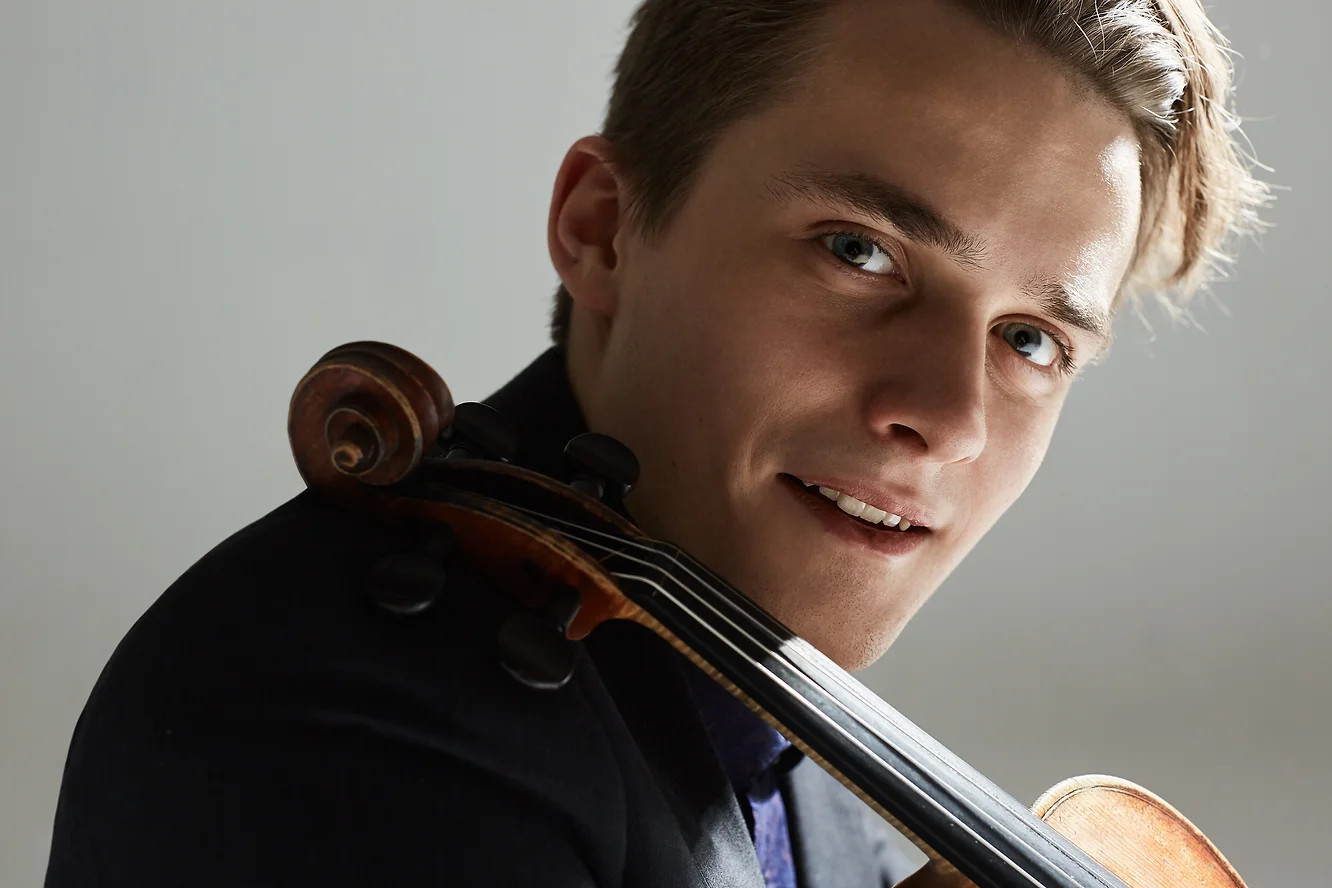
Dmitry Smirnov: “Gut strings taught me a great deal”

By Emilia Campagna - February 28, 2023
Dmitry Smirnov is the extraordinary soloist who accompanied us on our Beethoven adventure: let's get to know him better in this interview

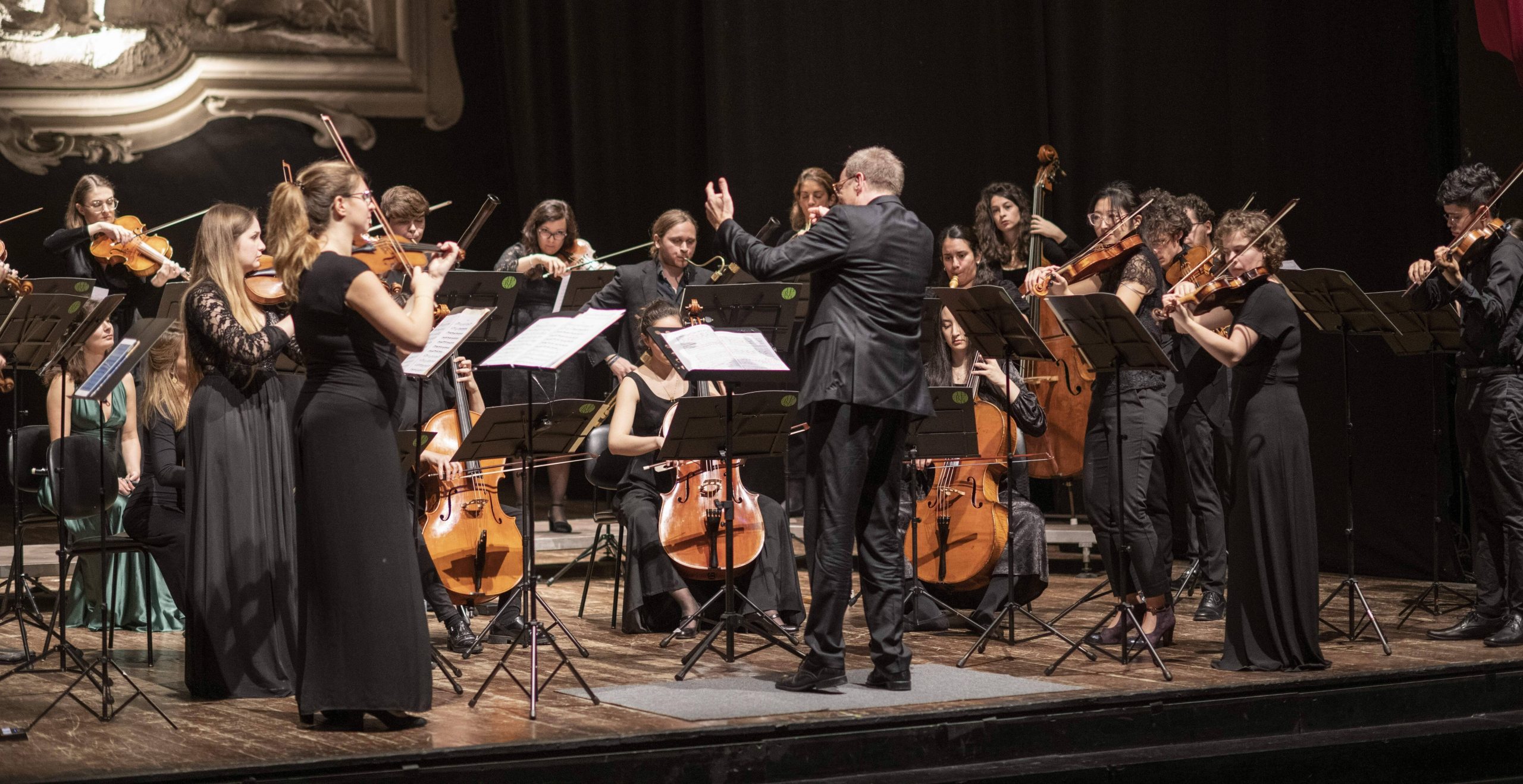
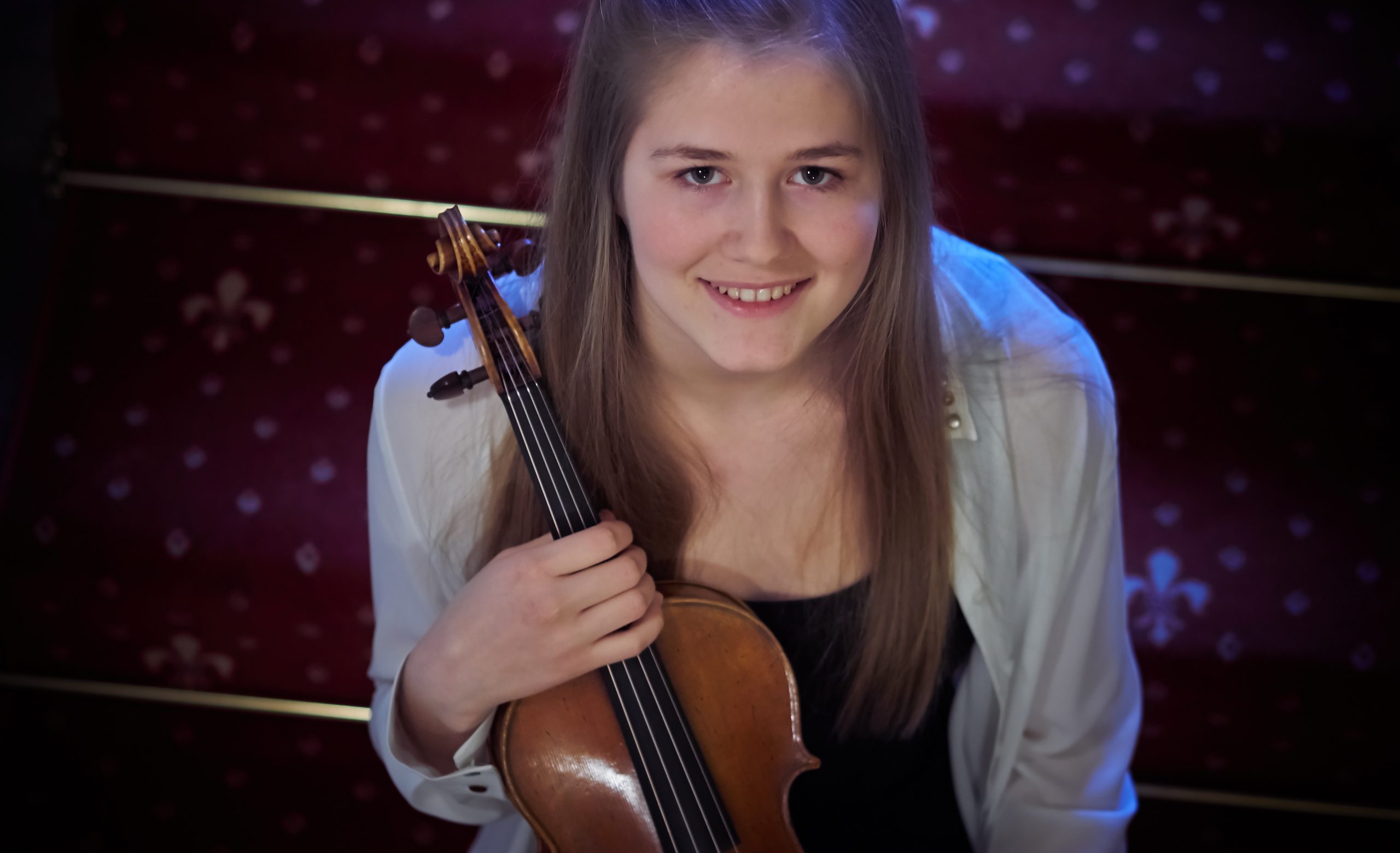
The residency during which Theresia was conducted by Giovanni Antonini came to an end with two extraordinary concerts. The two evenings were great success, where the orchestra received applause from a truly enthusiastic audience; two concerts in which Beethoven’s music sparked with energy, transparency, and expressiveness. This was also thanks to the extraordinary soloist who accompanied us on our Beethoven adventure, a first both for Theresia and 28-year-old Russian violinist Dmitry Smirnov.

In a break between the balance rehearsal and a concert, we had a long chat with Dmitry and we’d like you to get to know him a little better too. And we highly recommend to follow his brilliant career!

We started at the very beginning, when Dmitry Smirnov was only a small little boy who started to play the violin…

“I started to play the violin when I was five years old: it was thanks to my parents, who are both professional musicians, specifically singers. They took care of the first part of my education. I was obviously trained to play the modern violin since it is not so easy to approach the baroque instrument in Russia as a young pupil: I realised that in Italy many of my peers were given the opportunity to try the baroque violin at a very young age, probably because there’s a stronger tradition in historically informed performance here.”

At some point you did turn to the baroque violin: how did this come about?

“I had moved to Switzerland to study at the University of Basel, where I met a great musician: Rainer Schmidt, who was my violin and chamber music teacher. I learned a lot from him, although the work was always focused on the modern violin. But just at that time, when I was 20 years old, I attended a concert of Il Giardino Armonico in Basel: and it was there that I finally discovered a different way of playing, which affected me deeply.”

What struck you in particular?

“At that moment, the rhythm which had an energy all of its own, but also the simplicity of the act of performing. Then, over time, I realised that what struck me came from articulation, from intonation, from a number of things.”

And what did you do next?

“I kept on researching, listening, informing myself. Then, in 2017, I tried gut strings on my own instrument. It was amazing because I realised that by playing with gut strings and the baroque bow I was learning a great deal: it’s as if the gut strings taught me again about the articulation of sound, phrasing, things that I had learned, that were taught to me but somehow I had forgotten or kept at the back of my mind.”

Did you take lessons?

“Of course I did. Among other things, I was lucky enough to take a masterclass with Amandine Beyer: I played Bach, and she taught me so many things, with such an open mind. Like me, she comes from modern violin background too, but nowadays she’s a leading reference for those who want to play the baroque violin.”

So today, what relevance does the baroque violin have in your career?

“Well, it is not my primary activity, but I try to play the baroque violin as often as I can. And, I would love to end this separation between modern playing and historically informed playing, as you can apply HIP’s approach to any repertoire.”

When did you meet Maestro Giovanni Antonini and started working with him?

“This was in 2019: we had had some encounters in Zurich, where I had attended some performances of Il Giardino Armonico. I remember listening to Handel’s Alcina and Mozart’s Idomeneo. He probably had listened to some of my recordings, because he invited me to join Il Giardino Armonico for a recording of three of Haydn’s Symphonies.”

How was the experience of being conducted by Giovanni Antonini?

“It was great! Giovanni Antonini is at the heart of the orchestra, he lets something incredible happen: I found myself surrounded by wonderful instrumentalists, where everybody was humble and generous at the same time.”

Did you experience the same feeling with Theresia Orchestra?

“Sure I did. It’s an amazing ensemble, the musicians are so energetic. And I must acknowledge that the organisation was impeccable, they have a wonderful team of staff working behind the scenes.”

Speaking of ensembles, you founded your own a few years ago: what kind of ensemble is Camerata Rhein” and what repertoire does it focus on?

“It is a variable chamber music ensemble based on a trio of clarinet, violin and piano: I must confess it was born as a sort of pet project, just to spend time reading new music and playing with friends, with the idea to let others join us (for example, inviting a cellist to perform Messiaen’s Quatour pour la fin du temps). Giving it a name was in the first place a way to justify the amount of time we spent together playing! But then we were lucky enough to be invited to many festivals in Switzerland, where our project was really well received.”

What do you do when you’re not playing? Do you have any hobbies or is music taking up hundred percent of your life?

“Music took most of my time when I was young especially due to bad time management: today, music is indeed my passion, and when your job coincides with your biggest passion in order to save yourself, you have to pull the brake sometimes and let it cook. I love to learn new things, like languages, but also spend more time with my family, and obviously with my wife, who I married one year ago. I also like to listen to a different kind of music than the one I play: I especially like Thom Yorke and Jonny Greenwood, two artists who by the way often work together, and I recently discovered Gregory Porter, a fantastic singer.”

With Theresia, you rehearsed in Ravenna, and performed in Rovereto and Florence: what did you enjoy most on this Italian tour?

“I would say the food, but that’s not very original, is it? Well, Ravenna and Rovereto are two places I didn’t know at all and I very much enjoyed visiting both cities. I noticed that Rovereto is very close to Lake Garda, which I love very much, but there was no time to get there as we only stayed there shortly. Luckily, we had more time in Ravenna: the mosaics are astonishing and as it often happens while in Italy, I enjoyed being surrounded by things that bring you into the history of the place.”
Giovanni Antonini and Beethoven as you do not expect

By Emilia Campagna - February 22, 2023
A few days away from the concert where he will conduct Theresia, we caught up with Maestro Giovanni Antonini for a well-rounded chat about his musical career and his relationship with Beethoven

A few days ahead of the concerts in which he will conduct Theresia (in Rovereto on February 26 and in Florence the next day), we caught up with Maestro Giovanni Antonini for an insightful chat about his musical career and his relationship with Beethoven.

Giovanni Antonini, you will conduct the orchestra in an entirely Beethoven focused programme, such an iconic composer: what is your relationship with Beethoven?

I have had an ongoing connection with Beethoven since 2005 when I started a recording project of the complete Symphonies with the Kammerorchester Basel. The project lasted 10 years, so the whole work was very thoughtful and thorough. My starting point with Beethoven was similar as Theresia Orchestra’s today: the orchestra has a very extensive experience in the classical repertoire (Haydn, Mozart, but also a lot of less familiar composers) but never approached the Beethoven Symphonies. That was the situation for me as well. From a certain point of view, it was an advantage: Beethoven is perhaps the most performed composer, and over time he has been attributed even with extramusical, often political, meanings. By coming to his music after considerable experience in the earlier repertoire, I was able to approach it with freshness and a new outlook, free of bias.

It must be said that a remarkable technical leap was taken by Beethoven: his music was extremely difficult at the time, specifically because of its technical complexity, which often had to do with the required dynamics. Beethoven was the first composer to demand such a high degree of intensity from the orchestra, which was truly unheard of in those days. Taking on Beethoven is quite a challenge and also an opportunity for both technical and musical growth.

Compared to less historically informed performance approaches, what does playing on period instruments tell us about Beethoven?

Playing Beethoven according to historically informed performance practice allows us to rediscover aspects otherwise overlooked: one of these is frailty, an aspect that is hardly associated with this composer. Beethoven is the titan, the hero, in his most stereotypical depiction. But Beethoven also has another side: he explores our human dimension, of which frailty is an important aspect. And that aspect emerges powerfully from playing on original instruments, the ones that were used in his time and for which he composed.

Because of its complexity, Beethoven’s music gave an incredible boost to the technical development of instruments. Today’s string instruments have metal strings that produce a mighty sound, or we have bright and powerful woodwinds, but at the time of the creation of this music, this was not the case. Think of the flute for example: in the 1800s it was an instrument that would express sweetness, with a soft sound: then it changes and becomes powerful, but the modern flute has very little to do with the instrument Beethoven had in mind.

You will be conducting Theresia, an important step in their professional and musical training for many members of our youth orchestra: thinking of you at that age, what were the key events or encounters at the beginning of your career?

The most important encounter was with my colleagues with whom I founded the ensemble Il Giardino Armonico. Our work together has been a true musical journey: we rehearsed so much, exploring the 17th century Italian repertoire, and our joint effort paid off with great success.

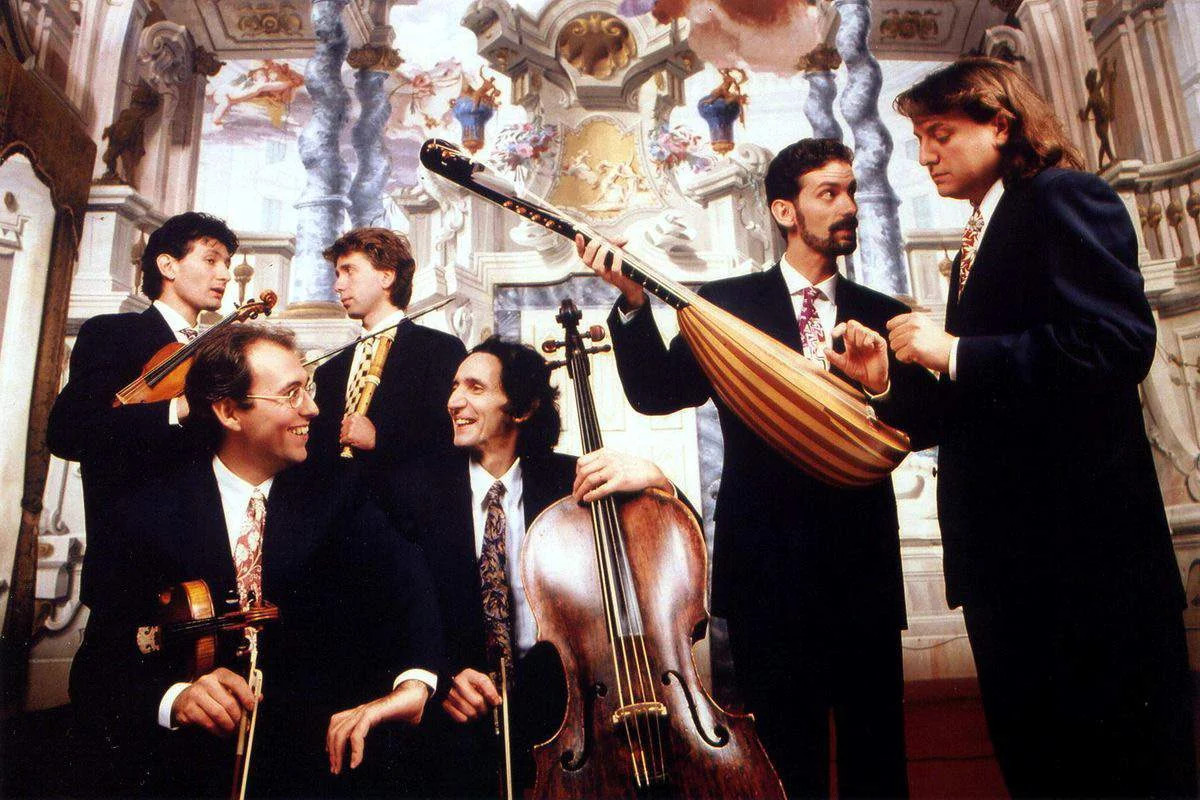
A music lesson… Giardino Armonico in the early days

As far as my role models are concerned, even though I did never had the chance to engage with them directly, I owe a great deal to both Nikolaus Harnoncourt and Franz Brüggen. Harnoncourt changed the vision of Italian Baroque music and not only: I remember for example his recording of Vivaldi’s Four Seasons, a scratchy sound that was both ancient and brand new; and then Mozart’s Symphony No. 40, where he gave great prominence to the woodwinds; on the other hand, Brüggen took the flute, which was considered a second-rate instrument, and proved to everyone that it could be a leading instrument.

How did you start conducting?

It was thanks to the work with Il Giardino Armonico: at a certain point we had the chance to perform with a larger ensemble and we needed someone to conduct, so I volunteered… and I learned to do it. It went on for years and I discovered that conducting is an expansion of musical potential: the conductor doesn’t produce any sound but builds the whole performance step by step. I had conducted Il Giardino Armonico exclusively for years, when in 1998 other orchestras started inviting me: it was the time when modern orchestras started to be interested in the historically informed practice and of course, they needed someone trained in the field.

Let’s talk about Dmitry Smirnov, the violinist who will perform as a soloist with Theresia and with whom you have already worked: what do you like about this young talent?

Smirnov is a violinist at the highest technical and musical level: a violinist of the modern school who can play anything and who, as happens to be more often the case, is also interested in performing on original instruments. He is part of a generation of musicians for whom it is not mandatory to choose between the modern instrument and the period one: indeed, as a violinist trained in the modern school, he absorbs the experience of historically informed performance like a sponge. That gives him the ability to tackle with Beethoven without adhering to stereotypical models.

Do not miss Giovanni Antonini conducting Theresia: concerts take place on February 26 in Rovereto and February 27 in Florence!

Lots to celebrate: Theresia’s first ten years

By Emilia Campagna - February 16, 2023
Theresia is proud and happy to celebrate its first 10 years of activity with a concert in the very town where everything started!

Do you know that special feeling when you are both fulfilled and satisfied with what you  have achieved, and eager to move forward and break new grounds? That is exactly where Theresia is today; celebrating an important milestone and paving the way for new projects.

What’s to celebrate? No less than our first ten years of activity!

Back in the autumn of 2012 the orchestra gave its debut performance. The occasion was Premio Ferrari, an international competition set in Rovereto and dedicated to fortepiano performance: this was the prestigious frame to launch the cultural patronage and youth promotion project intensely wished for by our founder and artistic director Mario Martinoli.

Mario Martinoli, founder and artistic director of Theresia

The challenge at stake in this venture was twofold: to support the orchestra almost exclusively with private capital from a group of cultural patrons, and to focus on the classical repertoire.
Both ideas were innovative, especially in Italy. Cultural patronage wasn’t something that was talked about widely in Italy at the time; and as the classical repertoire was concerned, HIP orchestras up to that point had almost almost exclusively focused on performing Baroque music, neglecting the repertoire from 1750 to 1815.

The challenge was taken. In the beginning, the enthusiastic endorsement of renowned directors such as Claudio Astronio, Chiara Banchini, and Alfredo Bernardini was crucial. They, together with a dedicated staff, ensured that the orchestra consolidated and developed a solid international reputation.

Claudio Astronio conducting Theresia in 2014

Lady of the baroque bow: Chiara Banchini performing with Theresia in 2014

2016: Alfredo Bernardini conducts Theresia in Rimini

2016: Alfredo Bernardini conducts Theresia in Rimini

Today, after 37 residencies, and 77 concerts in 6 different European countries, Theresia is stronger than ever: we offered tuition in Classical music to more than 200 young musicians from over 40 world countries, for a grand total of 1300 hours of orchestral training. From an organisational point of view, Theresia makes for a solid partner as part of ICONS Foundation, capable of planning for the future. Additionally, Theresia is now funded by the European Union thanks to the Empower project!

As you can see, we have a lot to celebrate. And we are happy to do that in the very place where everything once started: Rovereto! Theresia will perform at the stunning Teatro Zandonai on February 26, which will be very special. The concert has a particular focus on the music by Ludwig van Beethoven with the Egmont Overture, as well as Symphony No.8 in F major, Op. 93. The orchestra will be conducted by Giovanni Antonini and is joined by violinist Dmitry Smirnov for Beethoven’s famous violin concerto.  Theresia will perform the same programme in Florence the next day: stay tuned for more details on the blog.

These February concerts will be the first of the full concert season in 2023, which we are incredibly looking forward to .

Let’s take a moment to remember those first days back in 2012, when we were full of enthusiasm and willingness, feelings that haven’t abandoned us. So, let’s browse together through the photo album of our debut at Premio Ferrari: enjoy the gallery!

Theresia’s 2023 concert season

By Emilia Campagna - January 27, 2023
2023 is shaping up to be a marvellous year, full of concerts, new collaborations, and great music. Here it is, in detail, Theresia’s 2023 concert season!

2023 is shaping up to be a marvellous year, full of concerts, new collaborations, and great music. Here it is, in detail, Theresia’s 2023 concert season!

We’ll start our 2023 concert season where it all began…. in Rovereto, the little town in Northern Italy where Theresia made its debut in 2012! We’ll tell more about this special circumstance in one of the next posts. As for the program, it is amazing! Speaking of first times, not only the orchestra will perform a program entirely devoted to Beethoven (with masterpieces such as Egmont Overture, Violin Concerto Op. 61, and Symphony N. 8), but it will also be conducted by Giovanni Antonini as the beginning of a new collaboration. The soloist will be Russian violinist Dmitry Smirnov. All the residency will be a little tour in some beautiful Italian locations: the phase of rehearsal, from 17th to 25th February, will be entirely in Ravenna, a town with whom we started an intense partnership, especially related to the relaunch of EUBO. Concerts will be, as said, in Rovereto on 26th February, and in Florence (Teatro Goldoni) on 27th February. We bet our musicians will be happy to end the residency in one of the most beautiful towns in the world!

Giovanni Antonini will conduct Theresia in the first 2023’s project! (Photo: Marco Borggreve)

The second step of our 2023 concert season will be a chamber music residency, back to one of our favourite places, Lodi: thanks to the partnership with Teatro alle Vigne, where we performed several times, our wind players will be involved in a musical project led by conductor and oboist Alfredo Bernardini. The musical program includes Franz Krommer’s Partita Op. 71, Wolfgang Amadeus Mozart’s Serenade K. 388/384a, and Gioacchino Rossini’s Overture and Arias from Il Barbiere di Siviglia (arranged by Wenzel Sedlak). Concerts are scheduled in Lodi (May 5) and Koper, Slovenia (May 9) but stay tuned for further developments.

Theresia will then fly to Germany for a residency near Berlin! That’s another “first one” of this thrilling 2023 concert season, and we are looking forward to it. A very rich program, which includes music by Mozart (Paris Symphony), Cambini (Andromaque, scène lyrique for soprano and orchestra), Davaux (Symphonie concertante mêlée d’airs patriotiques), Devienne (Flute Concerto N. 7), and Rigel (La destruction de Jéricho) will be conducted by Alexis Kossenko and a concert is scheduled on 17 June in Schloss Rheinsberg, in collaboration with Musikfestspiele Potsdam Sanssouci, Potsdam.

After the June residency in Germany, we’ll stay abroad for a while: in July we will move to Geneva for what has become a summer classic for Theresia, a chamber string academy led by violinist Chiara Banchini and hosted by Les Concerts d’été à St-Germain. An ambitious musical program, focused on an arrangement for a chamber ensemble of Beethoven’s Seventh Symphony, will be performed on 30 and 31 July.

That already sounds like a lot, but it’s not quite over yet: three other very important projects are planned for the second part of the 2023 concert season. Ready?

In August Theresia will be in Innsbruck, as part of Festwochen der Alten Musik, and on 18 August will perform the oratorio Rex Salomon by Tommaso Traetta conducted by Christophe Rousset. Working with such a Maestro is a great achievement, and we already know it will be an unforgettable experience, especially since in the occasion of this revival a premiere recording of this oratorio will be done in the frame of Theresia’s collaboration with the German label CPO! The musicological research and edition is by Theresia’s scientific advisor Simone Laghi.

After Germany, Switzerland, and Austria, Theresia will be in Poland too! Again, a new collaboration, this time with All’Improvviso Festival in Gliwice, will make it possible for our orchestra to perform under the baton of Dirk Vermeulen. The musical program? Amazing: Haydn’s Symphony N. 80 in d minor Hob. I:80, Karol Lipiński’ s Symphony Op 2. N. 3, and fortepianist Aleksandra Świgut will be the soloist in Mozart’s Jeunehomme Piano Concerto. Concerts are scheduled on September 21 (Ruins of the Victoria Theatre, Gliwice), 22 (Cavatina Hall, Bielsko-Biała), and 23 (Krzysztof Penderecki European Centre for Music, Lusławice).

After much wandering we will be back in Italy, to repeat a truly intense experience: surely you remember the opera production under the direction of Alessandro De Marchi in which Theresia was involved as part of the Reate Festival. Well, we will be back in Rieti (October 21-22) and Rome (October 25-26), this time performing the opera L’inganno felice by Gioachino Rossini.

There’s really a lot going on, so keep in touch and don’t miss the next blog posts!

How was your year? Theresia’s remarkable things of 2022

By Emilia Campagna - December 27, 2022
How was your 2022? We hope it was stunning, surprising, and full of new and exciting projects. Like Theresia’s! We are very proud and happy about the year that’s about to end: and now that only a handful of days stand between us and the new year, we want to run through the remarkable things of 2022 together.

How was your 2022? We hope it was stunning, surprising, and full of new and exciting projects. Like Theresia’s!

Yes, we are very proud and happy about the year that’s about to end: and now that only a handful of days stand between us and the new year, we want to run through the remarkable things of 2022 together.

A year at full speed

With eight residencies (five devoted to chamber music, three to orchestral projects), we really got back to normal after the restrictions due to the Covid pandemic. Eight residencies mean an average of one every month and a half, and even if a residency lasts about a week between rehearsals and concerts, it takes a lot of preparation work, all done behind the scenes by our valuable staff led by artistic director Mario Martinoli and project manager Susanna Bucher. Congratulations on your excellent work!

New places, new friends

In 2022, we’ve been in familiar places, such as Ossiach and Geneva, but we happened also to land in new places, like Mondovì and Montecastelli, and also countries where Theresia had never performed before: like Spain! Being in Totana as part of Ecos Festival was a great experience, especially for the peculiarities of the event. Ecos Festival is devoted to music but also to sustainability and to finding new approaches to the audience, and we couldn’t help but love it

Find more in the interview with Ecos Festival’s artistic director

Performing opera in a fairy tale place

Not only opera is an exceptional event, as Theresia is devoted mainly to orchestral repertoire, but doing it in a place such as Teatro Torlonia in Rome is breathtaking! We had the chance to being part in the production of “Le astuzie femminili” by Domenico Cimarosa, organized by Reate Festival. Teatro Torlonia is a stunning little theater in the heart of a neoclassical villa set in Rome. A few people were among the privileged to attend the event: have a glimpse of it in this beautiful photogallery.

Find more about the opera production in this interview with conductor Alessandro De Marchi

Find more about Teatro Torlonia in this “Our places” series post

Not only rehearsals and concerts: the Ambassadorship project

Some may think we are never satisfied and always want to go further: that’s right! As a matter of fact, one of the remarkable things of 2022 was not a musical project – not strictly speaking, at least. Last July, we involved three Theresia’s musicians in an Ambassadorship project as part of the EU-funded project EMPOWER. Over the course of three years, the Ambassadorship project is going to involve a total of nine young musicians, representing nine different European countries, to be Ambassadors and Ambassadresses, embodying and transmitting the core values of classical music and its importance to their countries. First to participate in the initiative were Anna Krzyżak from Poland, Léna Ruisz from Hungary, and Irina Fârtat from Romania, with the task of promoting HIP in their own countries and engaging new audiences through their own and/or Theresia’s activity.

The task is not easy, and it is our job to help them, so in July we organized a co-creation workshop, involving our expert in communication and social media management: it was incredibly stimulating and inspiring. Here are some shots from the workshop:

Find more about the Ambassadorship project here.

New voices on the blog

As part of their activity, the Ambassadresses were suggested to contribute to the blog. That was a welcome breath of fresh air, with very interesting posts, from well-being to some hidden viola repertoire.

You can find all them here!

An old friend back on track

For more than 30 years, students of baroque music had looked to Eubo, the European Union Baroque Orchestra, as a reference point. But, first because of Brexit, then Covid, Eubo had ceased its activities in 2019. Now, thanks to ICONS foundations, Eubo starts its activity again: the new phase started with a concert in Ravenna, and auditions are to be announced soon! That’s great news that adds happiness to all baroque music lovers. Well done, ICONS!

Find more in this interview with President of ICONS and Founder and Artistic Director of Theresia Orchestra Mario Martinoli

Meet Theresia: Natascha Pichler

By Emilia Campagna - December 21, 2022
It's been a while since the last time we introduced a member of Theresia: Natascha Pichler joined the orchestra this year, and made her debut with Theresia in Geneva. Let's find more about this Austrian violinist, about her musical experiences and her expectations!

It’s been a while since the last time we introduced a member of Theresia: Natascha Pichler joined the orchestra this year, and made her debut with Theresia in Geneva. Let’s find more about this Austrian violinist, about her musical experiences and her expectations!

When did you start to study music? Was it a desire of yours or – as it often happens – was it an idea of your parents?

I started learning the violin when I was six years old. I had taken piano lessons previously, because my mum, who played the piano as a child, had encouraged me to. Starting the violin was my own idea. I came up with it out of the blue, I don’t even remember, if there was any specific inspiration for it. One day, I told my mother: “I want to play the violin.” And since then, my parents have supported me every step of the way. None of my family members are professional musicians, but they all love music.

When and how did you start to play the baroque violin? Was it a slow process, or did something trick you into it?

I started the baroque violin because at the Royal College of Music, where I did my Bachelor’s degree, there was the option to have Baroque violin lessons as a second study, in addition to lessons on the modern violin. I made many friends in the Early Music department and started playing chamber music with them, just for fun. I liked the friendly atmosphere and admired how much they all knew about the different musical styles. That is how I slowly got the idea of focusing on Early Music as my main study.

What do you like more in historically informed practice?

What I like about historically informed performance is that I feel a deeper connection to the music. Knowing about a piece’s origins, and about how it might have been performed back in the days, helps me identify with the music better. Drawing from different sources of information also helps me create my own personal, unique interpretation and be convinced of it.

You participated in an orchestral tournèe with a star of the violin, Anne Sophie Mutter: what did you learn after this experience?

Anne Sophie Mutter led the orchestra from her violin, without a conductor, playing a Mozart concerto. The most inspiring thing about working with her was her way to communicate with the other musicians on stage, showing us exactly what she wanted in every single passage of the piece. Even while playing difficult passages, she was always aware of what was going on around her. It was the first time that I experienced the power of non-verbal communication in music with such intensity.

How did you know about Theresia Orchestra, and why did you decide to try the auditions?

Some of my colleagues in The Hague were part of the orchestra and of course, I also saw posts about the auditions on social media. I decided to try the auditions because I had the feeling that the classical style that Theresia specializes in really suits me and also interests me very much.

Which Theresia’s residencies were you involved in? What did you appreciate more about performing with Theresia?

I have been involved in three Theresia residencies so far: chamber music in Geneva, the Cimarosa opera, and chamber music in Montecastelli. I appreciate the very high level of musicianship and the professionality of all the participants. It is a pleasure to work with people who have a similar mindset as me. I also really enjoyed working with the very experienced tutors (especially in the chamber residencies) who are experts in their field. Last but not least, the Theresia community is very welcoming, and the atmosphere is friendly and supportive.

2022 is going to end soon… this was the first year that things seemed to get to normal after Covid: how was your year in that sense?

It was a big relief after Covid, which was a hard time for me personally as I started to question my value as a musician. Being able to organise concerts and play together with people again brought back my motivation and reminded me how much joy music brings me.

Do you have hobbies? How is your typical day?

My hobbies are cycling or hiking in the nature. I love spending time at the sea, which is only a short bicycle ride away from my flat. I also like reading books and learning new languages. I spend most of my days at the conservatoire, so there is not always time for hobbies. Sometimes, I do Yoga in the morning, then I go to the conservatoire and in the evenings I cook, study and socialize with my flatmates.

Recently on the blog we talked how to take care of themselves: how much is important for you, and what do you do for taking care of your well-being?

Well-being is of course very important, and something that musicians often forget. For my physical well-being, I am doing Yoga, which helps me relax, stretch my muscles and release back pain. Regarding mental health, I have little things that bring me joy which I can do whenever I am not feeling well. Going for a walk outside to get some fresh air is on top of my list, I enjoy nature because it helps me see the bigger picture when I get stuck in a certain mindset or obsessed with some problem. Other strategies are talking to family members or friends, reading or taking care of my plants.

Bonne chance! New auditions in Paris

By Emilia Campagna - December 8, 2022
Theresia has launched a new slot of auditions, to be held in Paris in January. Hurry up, the deadline for applications is on 20th December!

Theresia has launched new auditions, to be held in Paris in January. Hurry up, the deadline for applications is on 20th December!

Theresia has launched a slot of new auditions, specifically for violin, viola, cello, double bass, oboe, bassoon and horn. For the first time, the audition will be held in Boulogne-Billancourt, near Paris, a great location, thanks to the partnership with the Conservatoire à Rayonnement Régional de Boulogne-Billancourt. We are very happy with the widening of our network, and in particular, this new partnership let us set the auditions in a place which is both prestigious and convenient from a logistical point of view. The deadline for the submission of applications is Tuesday 20 December 2022.

Download the full regulation here

We usually schedule the auditions during the Summer (the last ones were in Salzburg’s Mozarteum, last July), and for the first time we are going to have more than one audition per year: that’s because a lot of exciting projects are about to start, and 2023 promise to be a thrilling year! (We are going to tell more in the next posts, so stay tuned!)

Some additional information: the new auditions are scheduled on 13 January 2023 for wind instruments and double basses, and on 14 January 2023 for string instruments. Candidates will play in front of our artistic board, composed of conductor and oboist Alfredo Bernardini, concertmaster Gemma Longoni and Theresia’s artistic director Mario Martinoli. Auditions also include a motivational interview with Elena Gaboardi, founder and co-chair of Icons, the Foundation that supports Theresia Orchestra. Candidates will be asked to perform not only a solistic or orchestral piece: auditions in Theresia are more than that, as candidates are involved in chamber music rehearsals and workshops: this allows the artistic board to better know the individual musical skills and also the ability to work in groups, which is essential to fit in the orchestral environment!

As one of our members, horn player Jonathan van der Beek, pointed out, “normally, an audition is a quite frightening and sometimes disappointing experience. In the case of the Theresia audition, this was exactly the opposite. It is called an audition because they are making a selection in the end, but it felt more like a workshop or even a masterclass in a beautiful environment. We got to prepare certain pieces, and we had to ‘rehearse’ in front of a jury the whole day. This made me very comfortable as I wasn’t judged only on the 5 first minutes of playing. When I went out of the audition, I was just so grateful that I got the opportunity to work with Alfredo Bernardini and all the great musicians that participated. If I were not selected, I would still take this great experience home.”

Selected candidates will be granted a sum of 2,500 and will be involved in the learning and artistic activities of Theresia Orchestra, including orchestra residencies, chamber music academies, specialized workshops and much more, to improve skills and gain experience in the performance of the symphonic and chamber music repertoire of the Classical Era on period instruments.

Don’t miss the chance! Download the full regulation here


Welcome back, EUBO!

By Emilia Campagna - November 25, 2022
After four years of stop, EUBO starts its activity again thanks to the philanthropic and financial support of ICONS. Let's find more in this interview with Mario Martinoli, President of ICONS and Founder and Artistic Director of Theresia Orchestra

After four years of inactivity, EUBO is back!

The European Union Baroque Orchestra was founded in 1985 by Paul James and Emma Wilkinson as a major initiative of European Music Year to celebrate the 300th anniversaries of three great baroque musicians: Johann Sebastian Bach, Domenico Scarlatti and George Friedrich Handel. Since then, it had been the leading training initiative in the field of Historically Informed Performance. The success of the project, under the direction of the world’s leading baroque musicians, could be measured in the number of ex-EUBO members who would play in Europe’s leading baroque orchestras. Then, in 2018, all activities stopped. Now, EUBO starts to play again and moves its headquarters to Italy thanks to the philanthropic and entrepreneurial support of ICONS. We talked with Mario Martinoli, President of ICONS and Founder and Artistic Director of Theresia Orchestra, to know more about this heartwarming story.

Mario Martinoli, after 10 years of the life of Theresia Orchestra, it seems like you started a new adventure, going to the rescue of EUBO: why did you decide to go for this venture?

The reasons are more than one: on one hand, there was the opportunity (EUBO has been inactive for the past four years, and it seemed like no activity was to come), on the other, we wanted to extend the cultural patronage model that gave birth to Theresia Orchestra. Furthermore, many of our musicians demanded to expand the orchestral repertoire to include Baroque music: but Theresia is focused on classical repertoire, and we never intended to change its artistic mission. We realized that EUBO could be the answer to many questions, and we decided to try and restart it.

How come that EUBO stopped its activity?

It was a matter of unfortunate coincidences: first, Brexit compelled Paul James and Emma Wilkinson, founders and managers of EUBO, to move the administrative headquarters (but also the musical archive and the instruments) to a country of the European Community. They moved to Antwerp, Belgium. That was probably a big deal, together with a different system of funding adopted in that years by the European Commission. Then, Covid happened! And it was probably too much.

So what happened? How did you contact EUBO?

The activities were entirely suspended, but the trademark is alive and well, tied to its creator, Paul James, whom I contacted, offering to finance and manage the orchestra. He answered enthusiastically, and we started to work together toward a new beginning.

What will the role of ICONS be, and will there be continuity with the previous management?

ICONS will ensure everything related to organization, financial support and ethics. EUBO becomes part of the European HIP Orchestral System run by ICONS, and in a sense, it is now Theresia Orchestra’s sister. The artistic direction is in my charge, and Paul James assists me as an advisor.

What are the differences and similarities between EUBO and Theresia?

It must be said that we were inspired by EUBO’s training model when we started Theresia, especially with regard to the residencies. That said, apart from the different repertoire, there are some differences: for example, EUBO changes its members every year, whilst Theresia, even organizing annual auditions, gives longer grants, so that the renewal of the organic is more gradual. We have differences also in the auditions: in Theresia, we introduced a first-step selection based on a video, for example. I think we’ll think of all the best practices from each project to improve the management of both orchestras.

“If Theresia is a Ferrari, EUBO is a vintage luxury car: it has a glorious past, but has been still for a while. We want to get the engine back to its perfection and put it back on the road!”

EUBO is going to perform under the baton of Alfredo Bernardini in Ravenna: why did you choose this town for this new beginning?

It sort of happened by chance. In June, I called Romano Valentini, artistic director of the “Angelo Mariani Society” that organizes the main concert season in Ravenna, telling him my news about EUBO and us. He was immediately interested and offered to host the orchestra. He managed to involve the city at many levels, including the local administration and important members of the cultural and economic system of this community. I was impressed, that was partly unexpected, and I have reasons to believe that the relationship between EUBO and Ravenna will go further: just for starters, we are going to be in Ravenna for the auditions which will be planned in May 2023.

Speaking of auditions, how did you find the musicians for this kick-off concert?

We didn’t have the time to set up auditions, so we invited members of the last editions of EUBO concerts.

What about the musical program of the concert?

It is a sort of European celebration through baroque music: we are starting with Concerto Grosso op.6 n.4 by Arcangelo Corelli, who by the way was born in Ravenna; then another Concerto Grosso, op.3 n.2 by Georg Friedrich Haendel, a composer who moved from Germany to London after having been in Italy for some years; we will hear Hypochondrie ZWV 187 by Jan Dismas Zelenka, whose Bohemian roots were transplanted in Dresden, Germany. The concert will end with Ouverture Suite BWV 1066 by Johann Sebastian Bach, who from Germany looks to Italy and France.

What are the next steps? 

Apart from the auditions, we are working on a residency in Belgium in October 2023. We are thinking of Antwerp as a venue for residencies, considering the strong connection with EUBO, but we are still working on it, so stay tuned for more news to come soon.

Ten years ago, you would say that you had founded an orchestra instead of buying a Ferrari. To keep the equation, if Theresia is a Ferrari, EUBO is….

A vintage luxury car: it has a glorious past, but has been still for a while, closed in a garage. We want to get the engine back to its perfection and put it back on the road!


EUBO’s concert will be held on Monday 28 November, Teatro Alighieri, Ravenna, 9 p.m. More info and tickets available here

Paolo Beschi, a life in music

By Emilia Campagna - October 27, 2022
Paolo Beschi, tutor at Montecastelli chamber music residency, speaks about his musical experience, how he fell in love with period cello and how music fullfills his life

The new Theresia project is a chamber music residency involving a group of string and woodwind players: set in Montecastelli, the residency has a prestigious tutor, the cellist Paolo Beschi. We asked him to tell us about his experience and his relationship with music.

Maestro Paolo Beschi, you studied with Franco Rossi, cellist of the renowned Quartetto Italiano and started your musical career as a modern cellist: initially, you were also particularly active as a contemporary music performer. How did it come that you switched to the period instrument?

It is always very interesting to know how one of us musicians discovered the period instrument and fell in love with it, because these are quite always stories of enlightenment. And so it was for me, a sort of conversion, even though the path to get there was somehow unexpected. As you said, I worked a lot with an ensemble of contemporary music, and had the luck to play with soprano Cathy Berberian: she was Luciano Berios’s wife and an excellent performer of contemporary music. But she was also very active in the field of historically informed performance practice: she had the perfect voice for baroque repertoire and worked with Harnoncourt. And as an ensemble, we used to combine for example Monteverdi’s Combattimento di Tancredi e Clorinda and Schoenberg’s Pierrot Lunaire. I was really young, and she was a lovely person, very keen on sharing her experience: talking a lot with her, I started to reckon that there was something that attracted me to baroque music. Then, one night I went to listen to a concert by cellist Anner Bijlsma, and that was the moment of my enlightenment, of my total conversion. It was as if in a dark room, all the windows were opened at the same time and the light came in: I couldn’t ignore that, and I started to study at Scuola Civica di Milano with Robert Gini and to take classes with Anner Bijlsma.

“I went to listen to a concert by cellist Anner Bijlsma, and it was as if in a dark room, all the windows were opened at the same time and the light came in”

In your career as a period cellist, you were very active in the chamber music field: with “La Gaia Scienza” ensemble, in duo with your wife, the pianist Federica Valli, you performed even romantic repertoire, like Brahms’ and Schubert’s Sonatas: how far one can go, speaking of historically informed practice?

There is no limit: at the moment when a composer sends their music to the world, and the music starts to be performed, then ideas, interpretations, and different approaches begin to settle: and I’ve learnt this while performing contemporary music! Obviously, the more we go back into the past, performing music some centuries old, the more this layer of sediment is deep, and you must dig more.

Cathy Berberian, CCO

“Cathy Berberian was very keen on sharing her experience: talking a lot with her, I started to reckon that there was something that attracted me to baroque music.”

You were also an enthusiastic teacher, for 40 years Professor of Cello and String Quartet at Como’s Conservatory: what aspect of teaching are you most passionate about?

Teaching chamber music, I have always loved succeeding in making something meaningful with the pupil that came to study with me, whatever their level. And manage to do that also with the less gifted, and get together to the very heart of music.

Going back to your activity as a performer, you founded “Il Giardino Armonico” in 1985: tell us more about this ensemble, which is still very active.

Yes, after almost 40 years “Il Giardino Armonico” is very stable and active: well, the activity is not so frenetic, in a sense it is a bit reduced compared to our “roaring years”, but in a way that I appreciate. The projects are more diluted in time, but always intense and super-interesting. We recently performed Cavalieri’s Rappresentazione di Anima e Corpo, actually the first opera ever written. We are in the middle of a huge project devoted to the full performance of Haydn’s Symphonies. And we have our battle horses, performing XVII and XVIII centuries music also in little ensembles.

You mentioned your “roaring years”: thinking back to that time, what do you suggest to a young musician who wants to engage in a professional career?

My advice is to aim high: not in a superficial sense, but in the sense of striving for the highest level. I founded “Il Giardino Armonico” with Giovanni Antonini, Vittorio Ghielmi and Luca Bianca, musicians with different backgrounds, a lot of ideas, and the same desire of doing the best we could. We would rehearse a lot, even without concerts to come, just to improve ourselves and enrich our repertoire. This was the strength of our beginning.

Roaring years… “We would rehearse a lot, even without concerts to come, just to improve ourselves and enrich our repertoire. This was the strength of our beginning.” – © Il Giardino Armonico

These days, you are tutoring some of Theresia’s musicians: which is the repertoire you are focusing on?

We are working on chamber music for strings and for woodwinds and strings: Mozart’s String quartet in D major K155 is the most known, then we have two pieces by Joseph Martin Kraus (a string quartet and a flute quintet) and then two almost unknown pieces: a Quartet by Louis Massonneau and an Oboe Quintet by Jiří Družecký: it will be interesting to work on such a variety of repertoire.

Beschi performing with Il Giardino Armonico in a recent shot ©festivalterrassemsombra

Music has the main role in your life: do you have other passions?

As you said, music is extremely important in my life, it almost fills it. As my wife is a musician too, music has always been part of our family life too. We have always studied and played and made projects together, and for example, when the lockdown due to Covid happened, we didn’t get bored at all staying all the time at home: we had so much to play! Also in our workplace, as my wife is a teacher in the same Conservatory I was, we did a lot of projects together: she teaches chamber music, and with my String Quartet class, I can say that every student of the Conservatory studied with one (or both) of us at some time. But yes, I have other passion: I especially love photography and walking in the mountains, two essential parts of my spare time that enrich my life.

The residency in Montecastelli will end with a concert scheduled on 29 October, don’t miss it! Info for tickets and reservations at info@ilpoggiomontecastelli.it

Our places: Teatro di Villa Torlonia

By Emilia Campagna - October 12, 2022
It seems like we can’t help but perform in beautiful and fairytale places. And our next destination is no less. Follow us in Teatro di Villa Torlonia.

It seems like we can’t help but perform in beautiful and fairytale places. It is not that we are looking deliberately for them: maybe we are especially lucky, or we are good at seeing the beauty that surrounds us, but if you pore over the “Our places” series of blog posts, you’ll see it’s just like that. And the next destination is no less.

Thanks to Reate Festival, who invited Theresia Orchestra to stage Cimarosa’s “Le astuzie femminili” under the baton of Alessandro De Marchi (click here if you lost the interview), we will perform in a real jewel in the heart of Rome, the Villa Torlonia Theatre.

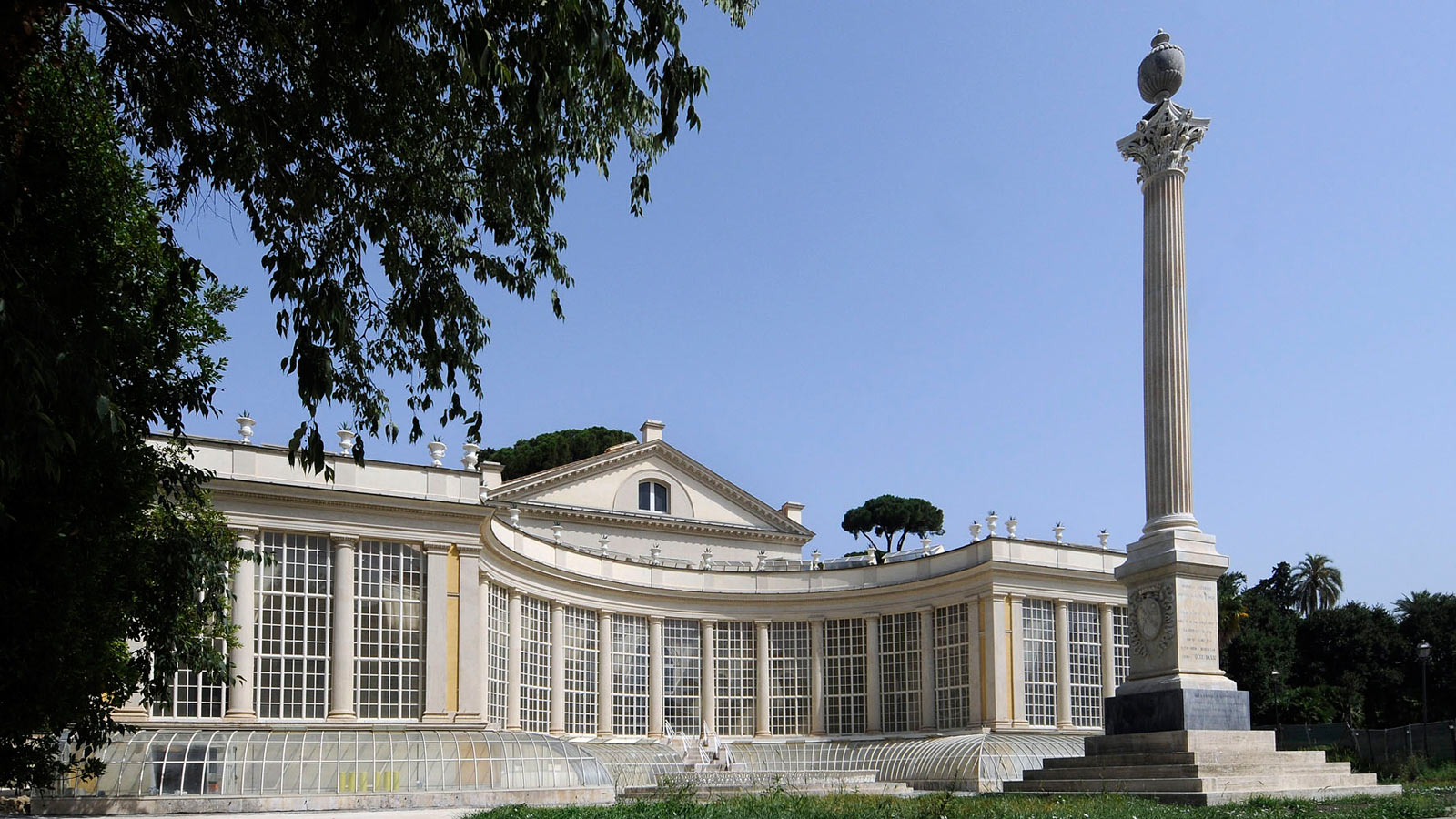
Villa Torlonia, with its magnificent neoclassical building and the surrounding gardens, was designed by the renowned architect Giuseppe Valadier on behalf of the banker Giovanni Torlonia, who lived between 1756 and 1829. The construction began in 1806 and was finished by the owner’s son Alessandro (1800–1880). It was Alessandro who decided to add a theater to the complex, starting its construction in 1847.

Not proudly, it is mainly known as having been for sixteen years the residency of the Italian dictator Benito Mussolini, who rented it for only one lira a year – a symbolic prize that spared him the accusation of appropriating it by force. After the fall of the dictator, Villa Torlonia became the headquarters of the Anglo-American command and returned to Torlonia familiy’s possession in 1947.

Sadly, a long time of decay followed, until the entire property was bought by Rome’s Municipality in 1978. The first thing to happen was that the garden was made public and open free of charge to all. In 1991, big renovation works started: they made it possible to retrieve various buildings (besides the main one, among them you have some fascinating ones, like the “Casina delle Civette”, the “Casino dei Principi”, the “Serra Moresca”) and turn them into museum venues.

The Theater was one of the last buildings to be renovated: it was opened in 2013 after decades of abandonment.

Roma-villa torlonia01.jpg

A crumbling beauty… a glimpse to the Theater before the renovation – credit Patrick DenkerFlickr, CC BY 2.0

After the war, furniture and furnishings were subject to theft, but nobody could remove the beautiful loggias and the magnificent frescos by Costantino Brumidi, an Italian painter renowned in the US as the author of Whashington’s Capitol Palace frescos. The theater is quite small, though, as it was meant to serve a villa, so only few people will be among the lucky ones who share this special occasion of seeing a performance in such a historical place. We hope you’ll be among them! If you won’t, stay in touch on our social media channel for pictures to come.

Theresia Orchestra is performing Cimarosa’s “Le Astuzie Femminili” in Villa Torlonia’s theater on Friday 14 and Saturday 15 October (8 p.m.) More info on Reate Festival‘s website