Simone Laghi guides us in the discovery of two hidden treasures

By Emilia Campagna - July 18, 2023
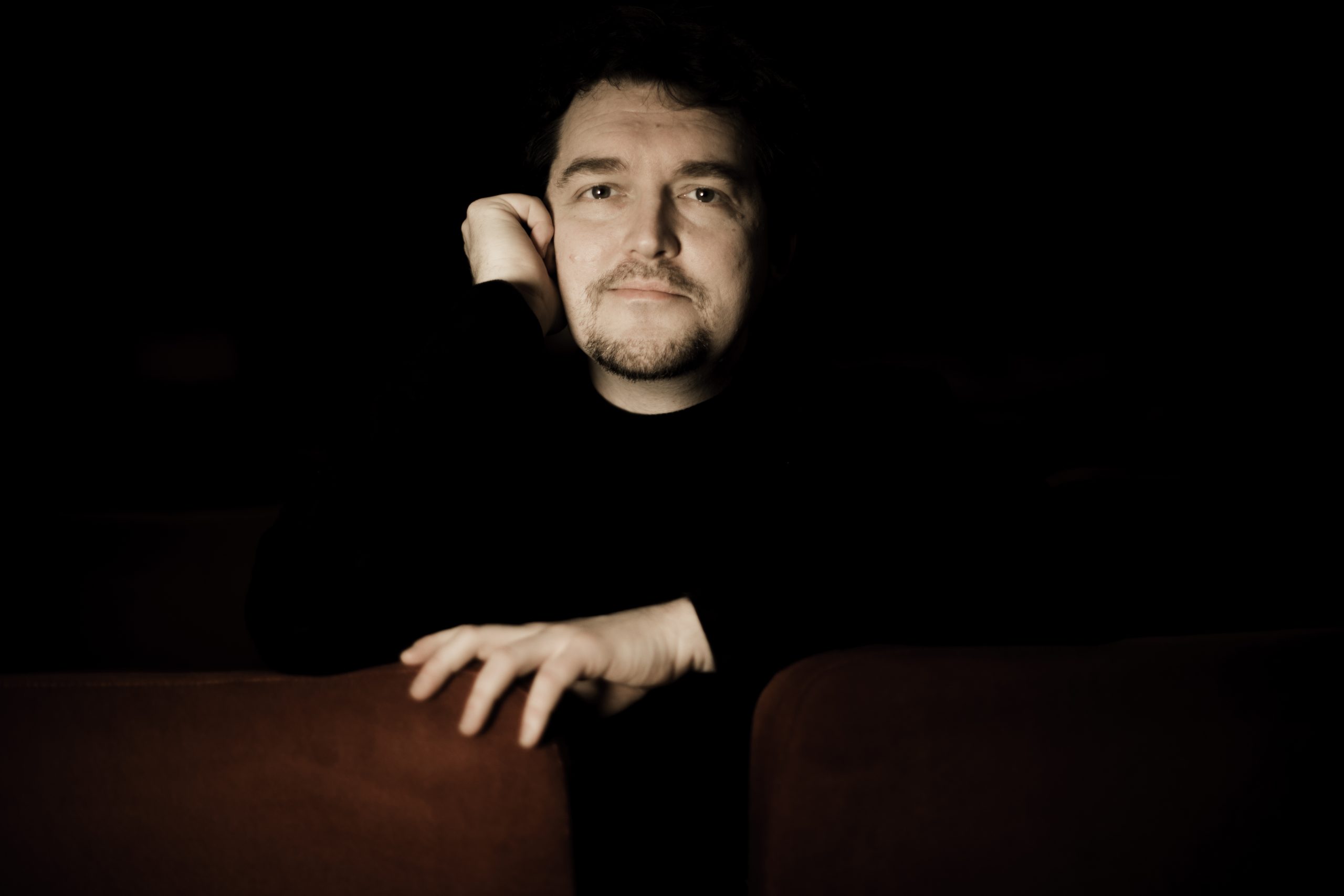
Although very different, the programmes for our next two projects have one thing in common that is very important to us. Both the historical chamber music transcription of Beethoven's 7th Symphony and Traetta's oratorio Rex Salomon have been critically edited by Simone Laghi, Scientific Advisor of Theresia, who gives us an interesting insight to these hidden treasures.

Theresia musicians have two big events coming up this summer: a chamber music residency in Geneva -a welcome return – led by Chiara Banchini from 24-31 July, and an orchestral production as guests of the Early Music Festival in Innsbruck conducted by Christophe Rousset, from 12-18 August, performing with the NovoCanto choir.

Although the programmes are very different (music by Beethoven and Boccherini in Geneva, music by Tommaso Traetta in Innsbruck), they have one thing in common which is very important to us. The core of the Geneva programme, a historical chamber music transcription of Beethoven’s Seventh Symphony, and Traetta’s oratorio Rex Salomon were both critically edited by Simone Laghi, Scientific Advisor of Theresia, with whom we’ve had a brief interview.

Simone Laghi, let’s start with Beethoven’s Seventh Symphony in the transcription for flute and string sextet. What can you tell us about this work?

The transcription was written by Nicolas Mori, an Italian-English violinist who was active in London in the first half of the 19th century. This type of transcription was very common in Europe at the time, to bring symphonic and orchestral works into a chamber dimension (and thus for domestic performance). In this case, it is a very interesting work, especially for the ensemble used, namely flute and string sextet (specifically two violins, two violas, cello and double bass): there are no particular changes in the writing, the flute takes over the role of the wind parts, sometimes flanked by the second viola.

How did you get to work on this transcription and edit the critical edition?

In my research at Cardiff University I dealt with the string quartet repertoire of early 19th-century Italian composers active in London, so I came across the work of Nicolas Mori. A few years ago I had the opportunity to edit the critical edition of this transcription, which was then published by the HH publishing house. However, I believe that Theresia’s is the first performance in modern times. There are, however, other interesting transcriptions by Mori, such as those of Beethoven’s Overtures: unfortunately the double bass parts are missing, so it is impossible to make a critical edition for now.

Beyond the existence of this ‘English’ transcription, is there a relationship between Beethoven and London?

Absolutely. We know, for example, that Beethoven composed the Ninth Symphony at the invitation of the London Philharmonic Society: it is true that the first performance took place in Vienna, but then the Symphony was naturally performed in the English capital. And then it seems that Beethoven had planned to go to London, as Haydn had done years before, but it never actually took place.

Now let’s talk about Traetta’s Oratorio “Rex Salomon”, which Theresia will perform on 18 August as part of the Innsbruck Early Music Festival: what do we know about this composition?

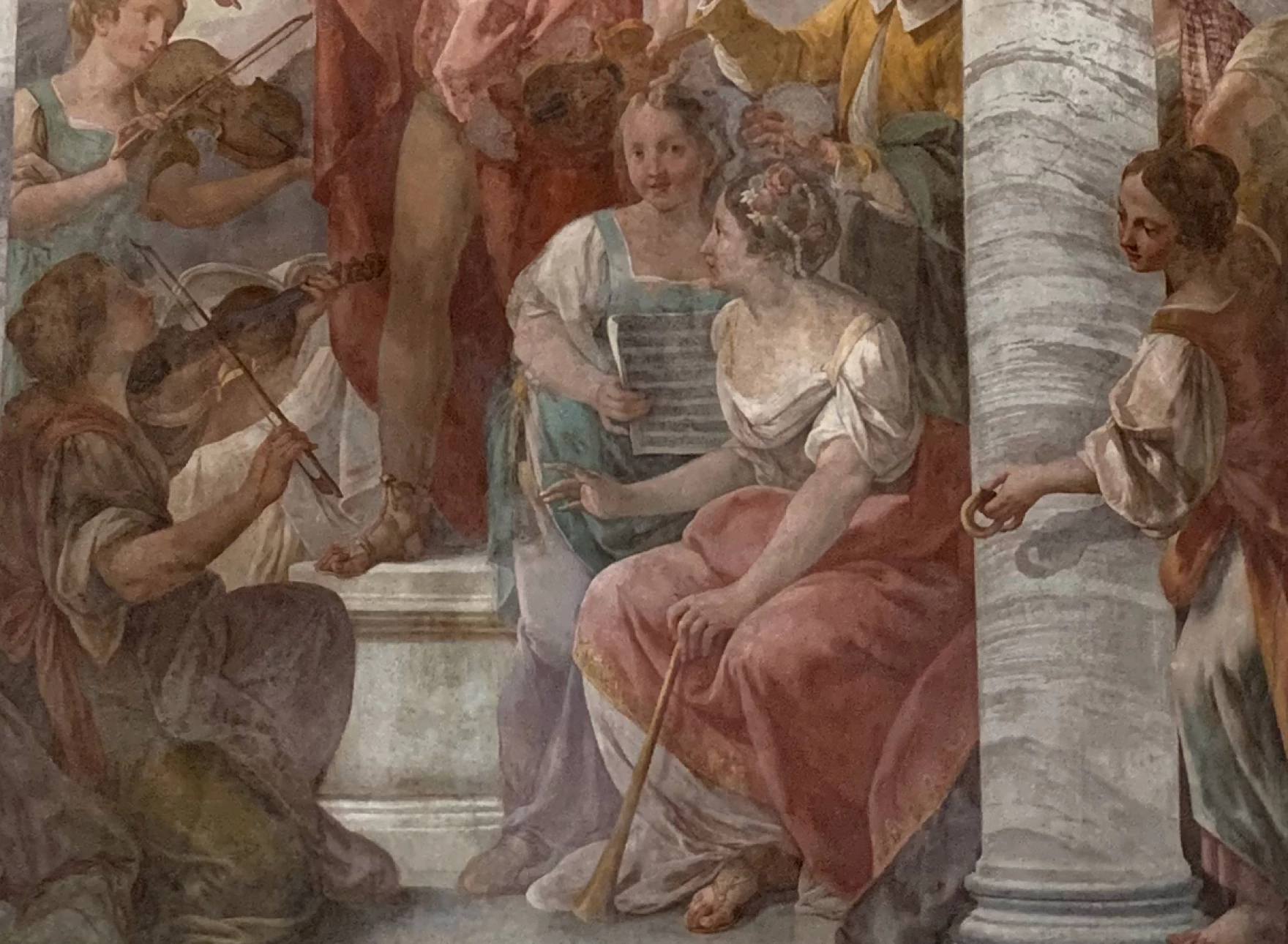
The Rex Salomon was composed by Tommaso Traetta in 1766 to be performed at the Ospedale dei Derelitti in Venice by the ‘Putte’, i.e. the girls residing in this charitable institution. Precisely because it was intended to be performed within the Ospedale dei Derelitti, the vocal ensemble is female only, making it a rather special work within this genre.

What was the occasion for the composition?

Rex Salomon was composed to be performed on the Feast of the Assumption, 15 August 1766. On this particular occasion Traetta had the task of restoring the former glory of the Ospedaletto’s orchestra and choir, which had been neglected in recent years and were experiencing a period of decline. With this oratorio, which was performed four more times in the following ten years, he succeeded in doing so, even though we are in the last years of the glorious history of the Serenissima: with 1797 and the fall of the Republic, even the musical vitality of realities such as the Ospedaletto dei Derelitti faded away.

How did the ‘Putte’ become part of the orchestra and choir?

Often they were girls who had been taken in as children because they were orphans, but in many other cases they were so-called ‘adult daughters’ who were taken in because of their musical merits: it was not easy to get in, the selection process was quite strict. Nor was it easy to get out, because once these talented young girls had been trained, the institution wanted to keep them. Those who managed to pursue a musical career on their own had to do so outside Venetian territory, or if they performed in the city, they did so in secret and under a false name.

What is the source on which you have based the edition from which Theresia will perform?

It is a manuscript kept in Brussels and part of the Fétis collection: this important musicologist, who lived in the 19th century and was the author of a monumental Encyclopaedia of Music and Musicians, probably bought the manuscript on the antiques market, and it is a somewhat unusual piece in the collection. Moreover, the manuscript refers to the last performance, that of 1776, which Traetta partially revised because one of the singers, originally a alto, had been replaced by a soprano.

What are the musical characteristics of Rex Salomon?

The main peculiarity is the vocal ensemble, which is necessarily all female. There is a certain complexity to the writing, although it is far from the excessive virtuosity typical of the theatre of the time. However, there is still a great deal of coloratura and a certain amount of elaboration, a sign that the level of the performers was quite high and that they were addressing an audience with high expectations. It is curious, and gives us a measure of a peculiar situation, that each of the five soloists has two arias, so there is no measurable hierarchy in the increasing number of arias according to degree of importance. The instrumental part, especially the first violins, is also well worked out, detailed in its articulations.

There is a fine record of the very first performance, a letter written by the philosopher Giammaria Ortes to the composer Johann Adolph Hasse on 16 August 1766: Yesterday I went to a new musical oratory at the Ospedaletto, and I have realized how, without singing well, one can still avoid singing poorly, and how in similar conservatories, the combination of docility and moderate skill can provide more pleasure than abundant skill combined with presumption. If these girls continue in this manner, this could be the case in which music, having generally fallen into the excess in which it currently resides, returns back to that mediocrity that constitutes its perfection.”

Simone Laghi is Sicentific Consultant of the Theresia Orchestra and a digital communication expert. He holds a PhD in music performance from Cardiff University. He has a background as professional musician in the historical performance practice field, and he has collaborated with a large number of groups and ensembles in Europe. He has produced and organised recordings. He has published several musical editions of eighteenth-century works, and has written articles and editorials for Ad Parnassum, Early Music Performer, and Eighteenth-century Music.
Ambassadorship Program part two:
meet the new Ambassadors of Theresia

By Emilia Campagna - July 5, 2023
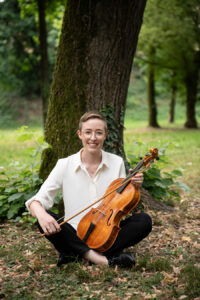
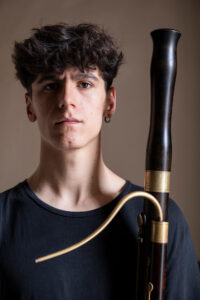
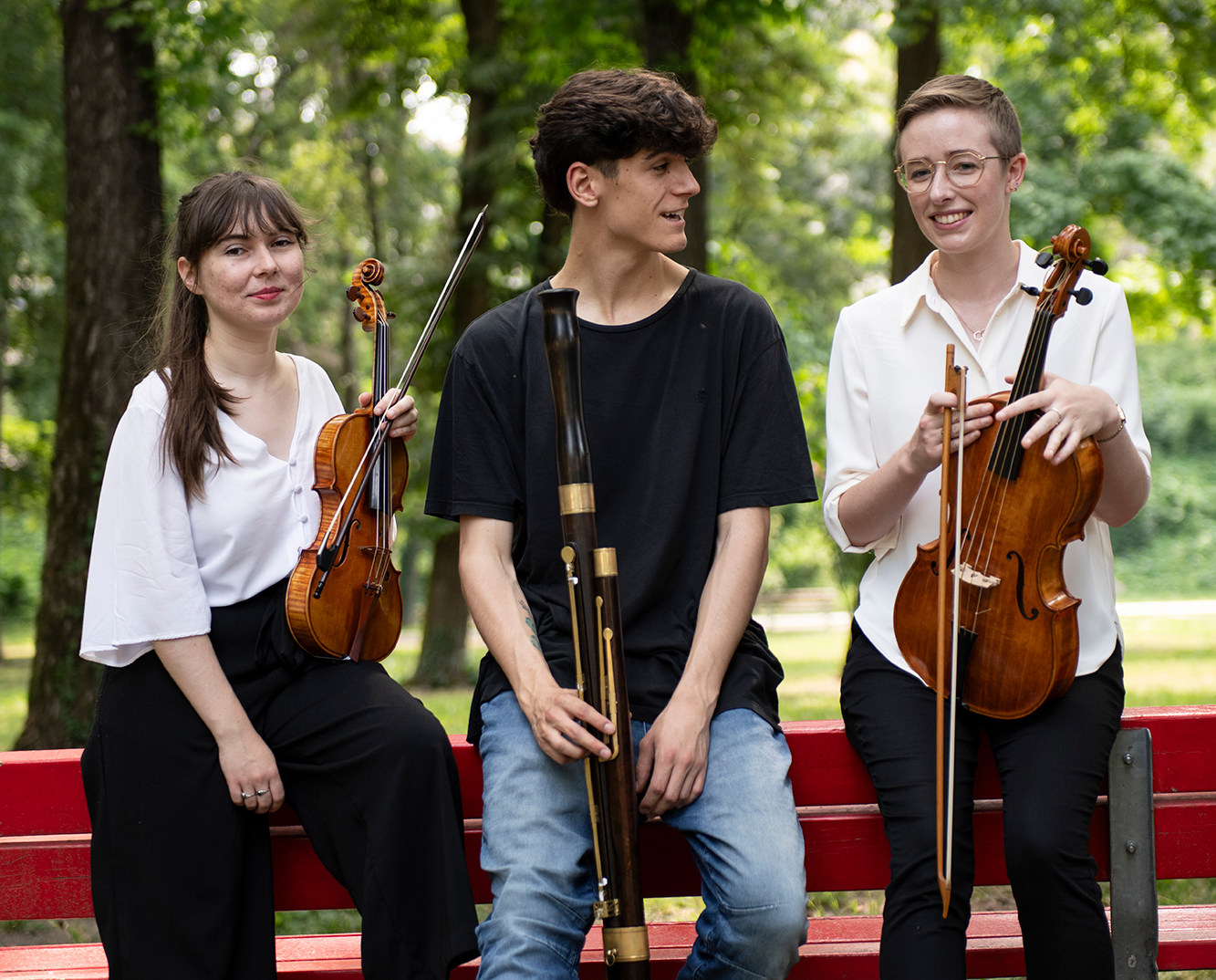
Laurène Patard, French violinist, Ciara Sudlow, Irish/Australian violinist and violist and Javier Sanchez Castillo, Spanish bassoonist, are the musicians that will represent Theresia as part of the Ambassadorship Program.

Theresia has three new Ambassadors!

Laurène Patard, French violinist, Ciara Sudlow, Irish/Australian violinist and violist, and Javier Sanchez Castillo, Spanish bassoonist, are the new flag bearers who will have the honour of representing Theresia in their home countries as part of the Ambassadorship Program.

What is the Ambassadorship program?

The Ambassadorship program was launched in 2022 as part of the EU-funded project EMPOWER. At the core of the project is the idea that music needs people who study and play it, but also people who can disseminate, communicate and promote music. And not necessarily they have to be different groups of people, like professional musicians on one and communication professionals on the other hand. Actually, gaining soft skills in the field of communication can empower young musicians and help them build solid careers. This is at the heart of The Ambassadorship program of which trying to engage new audiences –  especially young people – is an important part. To do so, over the course of three years, a total of nine young musicians, representing nine different European countries, are asked be Ambassadors and Ambassadresses, embodying and conveying the core values of classical music and its importance for their countries. A heartfelt THANK YOU to our first three Ambassadress – Anna Krzyżak, Irina Fârtat and Lena Ruisz – who have completed their tasks. Now, it is the turn of three new Theresians to champion hip-music.

Let’s meet the new ambassadors

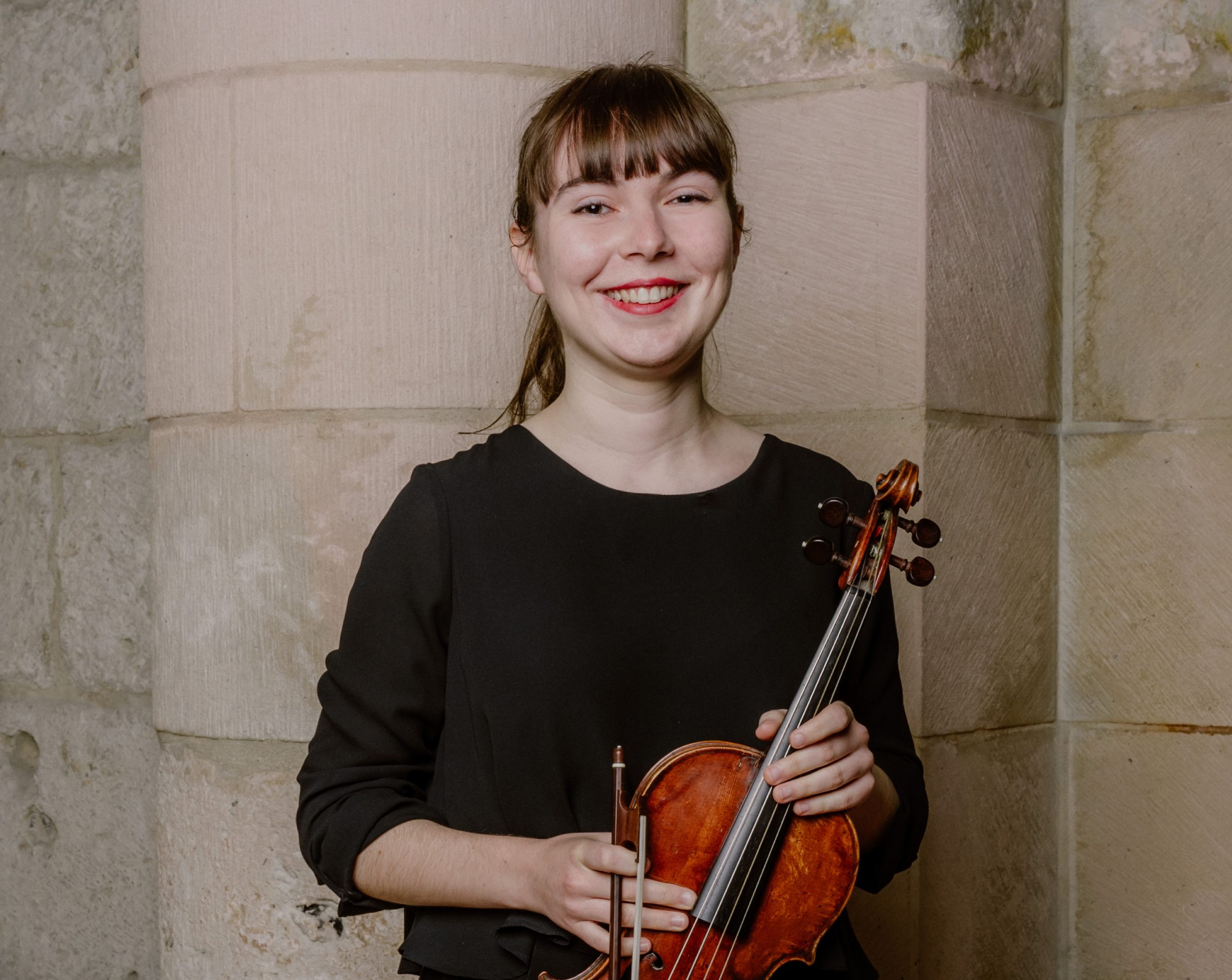
We have already met Laurène Patard-Moreau, French violinist who studied in Toulouse and moved to Canada in 2019 for a Bachelor in Modern Violin. Now focusing on HIP, Laurène currently lives in Amsterdam and she is passionate and curios about many things, as she told us in her interview.

Laurène Patard-Moreau

Ciara Sudlow, Irish/Australian violinist and violist, is studying a masters in historical violin and viola at the Conservatorium van Amsterdam who has a Bachelor of Music Honours (First Class) in Baroque Violin performance from the Western Australian Academy of Performing Arts. She came to historical performance practice from a background in playing traditional Irish music. We are looking forward to knowing more about her and see her at work as an Ambassadress!

Ciara Sudlow

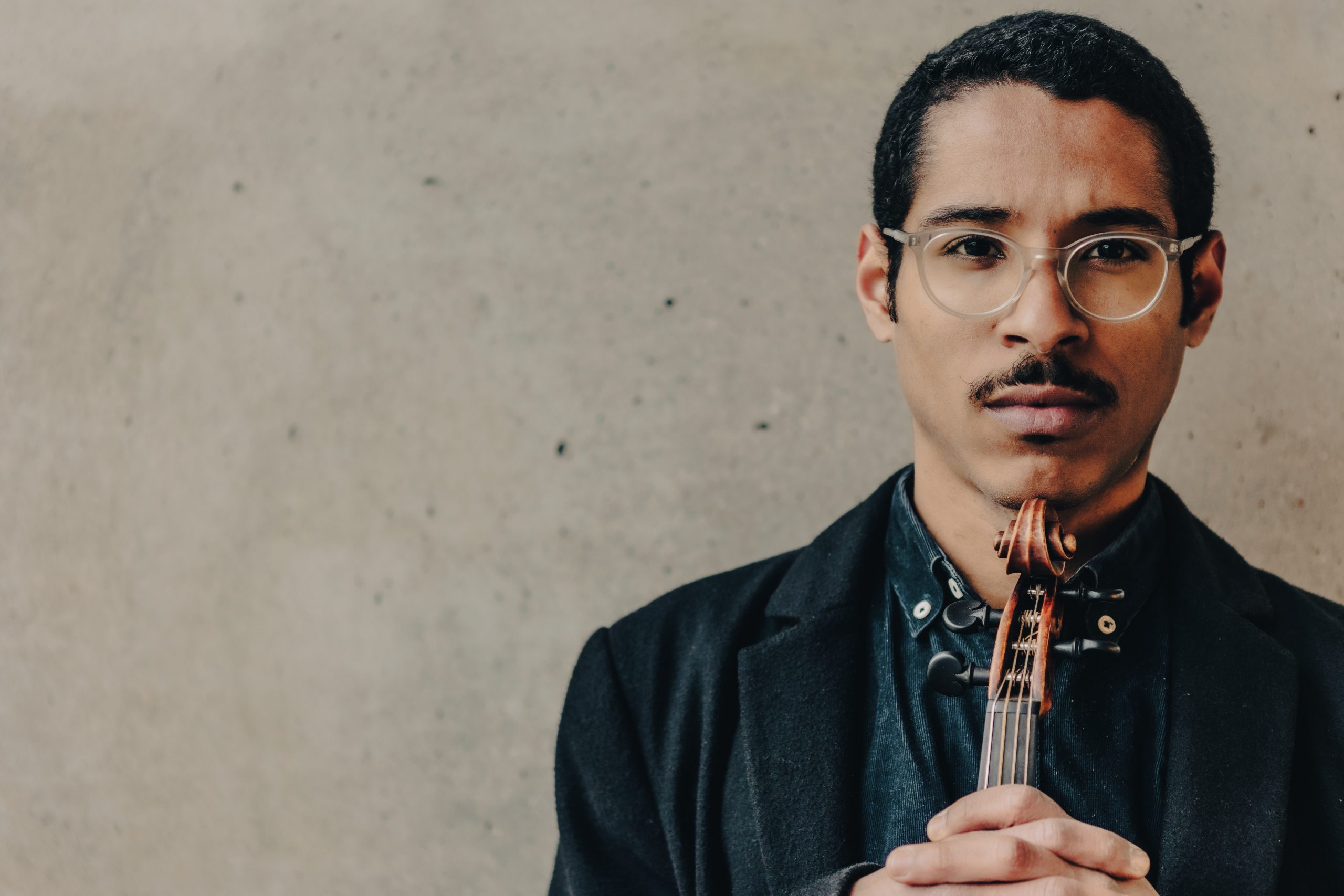
Last but certainly not least, we’d like to introduce you to Javier Sanchez Castillo, the very first wind player and male to be Ambassador for Theresia. He defines himself as an “enthusiastic musician who loves baroque music. Since I was 12 years old, I was sure that I wanted to achieve a life dedicated to music, particularly in early music. I am currently finishing my studies for a master’s degree in modern bassoon, combined with a minor in baroque and classical bassoon.”

Javier Sanchez Castillo

Ambassadors at work

Our ambassadors’ journey began with an intensive multi-day workshop in which communication experts of the wider Theresia team at Fondazione ICONS showed them how to use key communication tools, such as social media, blogs, filmed videos, and graphic design to promote their activities. In the coming months, they will be busy implementing communication strategies to develop, and promote HIP projects that mainly targeted at young audiences in their home country. Parts of their journeys will be published on the blog and we look forward to featuring these new voices. Follow us for more updates!

Alexis Kossenko and the joy of sharing a passion for music

By Emilia Campagna - June 16, 2023
Flutist and conductor Alexis Kossenko talks about his work, his dreams and working with Theresia Orchestra

Alexis Kossenko conducts Theresia Orchestra in the ‘Rendezvous in Paris’ concert on Saturday 17 June at the Musikfestspiele Potsdam Sanssouci. During a rehearsal break, we caught up with him for a chat and to learn more about the renowned flautist and new guest conductor of our orchestra.

Alexis Kossenko, how are rehearsals going? And what is your impression of Theresia Orchestra so far?

It’s a fantastic team with many incredible talents! At our first rehearsal I was impressed by the sound and we were able to start working on the details straight away, with everyone’s full involvement and commitment.

What do you enjoy most about conducting a youth orchestra?

Unlike a professional orchestra, a youth orchestra is made up of people of the same generation: some are professionals, others are students but have the same skills as professionals. In this kind of environment one does not have to worry about routines or established habits. The best thing is that there is a lot of flexibility and what is changing in the way I work is that I feel I actually have more time to experiment. I like the fact that I can bring my vision to a group of people who, because of their age, have a very different experience. The only downside is that everyone wants to call me ‘Maestro’, which makes me feel a bit old!

Is teaching part of your daily activity as a musician? What do you like most from teaching?

Actually, I don’t have a teaching position (or not yet) because I prioritise my activity as a player and conductor. But I love teaching, I have private students, mainly flautists and singers: and I love it because teaching is sharing and communicating, not just telling someone what to do. It’s much richer than that.

Our musicians are between 20 and 30 years old: what were you doing at that age? And what were your dreams and expectations?

Well, my dream was to do what I’m actually doing now, and luckily I was only at the beginning! When I was about 20 years old, I started playing extensively with EUBO: it was my introduction to performing early music and it was fantastic. In the following years I had some wonderful experiences, founded my first ensemble (which no longer exists), and started building up my own collection of period instruments.

What do you think were the most important experiences and encounters you had when you were young?

There are so many…. but if I had to choose, I would definitely say the ensemble L’Arte dei Suonatori: they allowed me to start conducting – at first small projects, then more and more important works, up to operas. Also very important was my work with La Grande Écurie et la Chambre du Roy: Jean-Claude Malgoire gave me responsibility and taught me a great deal, and I can say that I have taken up his legacy. Important role models for me were Sir John Eliot Gardiner and Philippe Herreweghe: both were demanding and so attentive to details like intonation, texture, sound, which are so important to me now.

Now that you are in the prime of your career as a flautist and conductor, do you any specific dreams?

Yes, I do! I’m happy to say that some of my dreams are now being realised, such as performing all of Bach’s cantatas or Mendelssohn’s complete works. Then I have some dreams that seem a little more distant, like performing orchestral works by Dvořák, Janáček, Ravel… I hope to achieve all of this in the future. But I think the most important thing is that we all have enough opportunities and budget to realise our dreams: the classical music world in general is in danger and we must always fight to keep it alive!

Theresia in Potsdam: a short guide to our next musical adventure

By Emilia Campagna - June 15, 2023
Theresia adds a new flag to its personal globe: on Saturday 17 June we will perform for the first time in Potsdam, Germany, as part of the Musikfestspiele Potsdam Sanssouci.

Theresia adds a new flag to its personal globe: on Saturday 17 June we will perform for the first time in Potsdam, Germany, as part of the Musikfestspiele Potsdam Sanssouci. It promises to be an intense and rich experience: an extremely multifaceted festival and a new artistic collaboration of which we are particularly proud, namely with conductor and flautist Alexis Kossenko. Read on to find out more about Theresia in Potsdam!

The festival: musical friendship

Let’s take a closer look at this year’s festival theme, which started on the 9th of June and runs until the 25th of this month: recorder player Dorothee Oberlinger, artistic director of the festival, invites to explore the theme of friendship, namely “family ties, fraternal strife and elective affinities in the world of music”. As youth orchestras are often the birthplace of long-term friendships, it’s a theme that intrigues us: how does it translate into music? As the organisers explain, “the concerts of the 2023 Music Festival will bridge the gap from human friendship in the Old Testament, through medieval chant, the musician and composer circles around Heinrich Schütz, Dietrich Buxtehude and Johann Sebastian Bach, to Franz Schubert’s poet friends and the fantasy circle invented by Robert Schumann for the piano.” There is so much richness and musical substance in this journey on the concept of friendship and music that it is truly a privilege to be part of it. If you are curious and would like to know more, check out the programme at the following link.

Flautist and conductor: Alexis Kossenko

Over the years we have forged beautiful friendships with the musicians we have worked with: after all, isn’t it always like that when there is a shared sense of purpose and understanding in doing the most beautiful thing in the world, which is making music? We are therefore delighted to have the opportunity of making new friends with a fantastic musician who will conduct Theresia Orchestra in Potsdam, Alexis Kossenko.

Alexis Kossenko is an experienced conductor and flautist in all historical forms of the instrument, from the ‘modern’ flute to the baroque and renaissance flutes, as well as the recorder. His intense career on the modern and baroque flute was quickly established after graduating with Alain Marion in Paris and with Marten Root in Amsterdam. In 1997, his acclaimed interpretation of the Quantz and Vivaldi concertos with the EUBO, conducted by Ton Koopman and Roy Goodman, marked the beginning of his solo career. Since then, he has been invited as a soloist by numerous European ensembles. With his own orchestra, Les Ambassadeurs, he rediscovered forgotten repertoire – music from the Golden Age of Dresden.

Our musical project: hidden gems

As always, our musical programme is anything but ordinary. In addition to the widely performed and much-loved ‘Paris’ Symphony by Mozart, the programme includes some truly rare gems. It goes without saying that the programme was conceived in line with the spirit of the festival. In particular, the venue where we will be performing was the inspiration for an authentic musical journey which is entitled ‘Rendezvous in Paris‘. Rheinsberg Palace (another dream place where we happen to play!) was Prince Henri of Prussia’s residence for 50 years. In 1784, at the invitation of the King of France, Heinrich (Henri) travelled to Paris. Based on the repertoire of the Parisian “Concerts Spirituels”, Alexis Kossenko and the Theresia Orchestra have created a concert evening that evokes the international flair of the musical metropolis, through forgotten works by contemporaries living in the French capital at the time: Jean-Baptiste Davaux, Giuseppe Cambini, François Devienne. Also on the stand is the overture to the oratorio ‘La destruction de Jéricho’ by Henri-Joseph Rigel.

Music and… bicycle!

That sounds new: a bicycle is not exactly the first thing that springs to mind when you think of a classical music concert: but it’s probably what you think of when you imagine a get-together with friends on a beautiful day in spring, isn’t it? Well, the organisers of the Musikfestspiele Potsdam Sanssouci have managed to bring music and cycling together in a series of open-air concerts along a route to which the audience members are encouraged to cycle along. Theresia’s wind quintet and a trio of trumpets and timpani will be part of these special bicycle-concerts. Find more here.

To sum up: great music, with great people, in a great place. That’s Theresia! We are immensely looking forward to our concert. How about you?


SoundSouci Podcast

Für alle deutschsprachigen Leserinnen und Leser: Hört euch den SoundSouci-Podcast an, in dem der Geiger Guillermo Santonja di Fonzo, die Cellistin Ena Markert und Theresias Projektleiterin Susanna Bucher im Interview vorgestellt werden:

The magic of summer and Theresia’s auditions

By Emilia Campagna - May 18, 2023
The magic of summer? The chance to travel and gain new experiences. How about adding a new orchestral experience to your CV? Theresia invites young musicians to join the orchestra and audition. Find out more about the next auditions taking place this summer!

The magic of summer? The chance to travel and gain new experiences. How about adding a new orchestral experience to your CV? Theresia invites young musicians to join the orchestra and audition. Find out more about the next auditions taking place this summer!

Summer is a magical time: it is the time of year to travel, to see new places, to gain new experiences. It is also a time to recharge batteries! For us at Theresia, summer also means auditions as we look for new musicians to join the orchestra. For some years now, we have met many fantastic young period instrument players during the summer who all have one thing in common: they want to add value to their CV with a new orchestral experience that crosses borders. Why? Maybe they heard about it from colleagues, teachers or listened to some of our concerts online.  Most of all, they realised that at Theresia you can do something that is not so common: play classical repertoire on period instruments.

Theresia’s auditions in Salzburg

Here some more details:

Theresia’s next auditions take place from 13 to 15 July and we’re looking for trumpets, timpani, oboes, horns, bassoons, and string instruments. The application deadline is Thursday 8 June.  Just like last year, auditions are organised in partnership with the Mozarteum University and will take place in Salzburg, in Austria at the beautiful Schloss Frohnburg.

Who can audition?

Any emerging period instrumentalist can join Theresia. However, there are some mandatory requirements you should know about. You need to be under 28 – born either on or after 1 January 1995 – and all candidates should be being citizens of the European Union or of the European Economic Area. Non-EU citizens may apply if they hold a residence permit for study in one of the EU countries. Candidates must have in-depth knowledge of performance practice on authentic instruments and must use period instruments or copies of them. During auditions, the use of the classical bow for strings and classical instruments for winds is mandatory.​

What’s on offer?

Candidates who will be selected are offered a grant of €3000, allowing them to participate in up to five projects or so called residencies, in the period from August 2023 to November 2024. Musicians are specifically invited to participate in the learning and artistic activities of Theresia Orchestra such as the orchestral residencies, chamber music academies, and specialised workshops to improve skills and gain more experience in the performance of symphonic and chamber music repertoire of the Classical Era on period instruments. This includes the participation in the concerts and recording activities which are scheduled at the end of each orchestral residency or chamber music academy, as well as the active participation in Theresia Academy’s educational activities such as the capacity building sessions, development of soft-skills, co-creation workshops, musicological seminars.

Want to know more? Download the full application form! We can’t wait to hear from you to get involved in Theresia!

Meet Theresia: Laura Hoeven

By Emilia Campagna - May 5, 2023
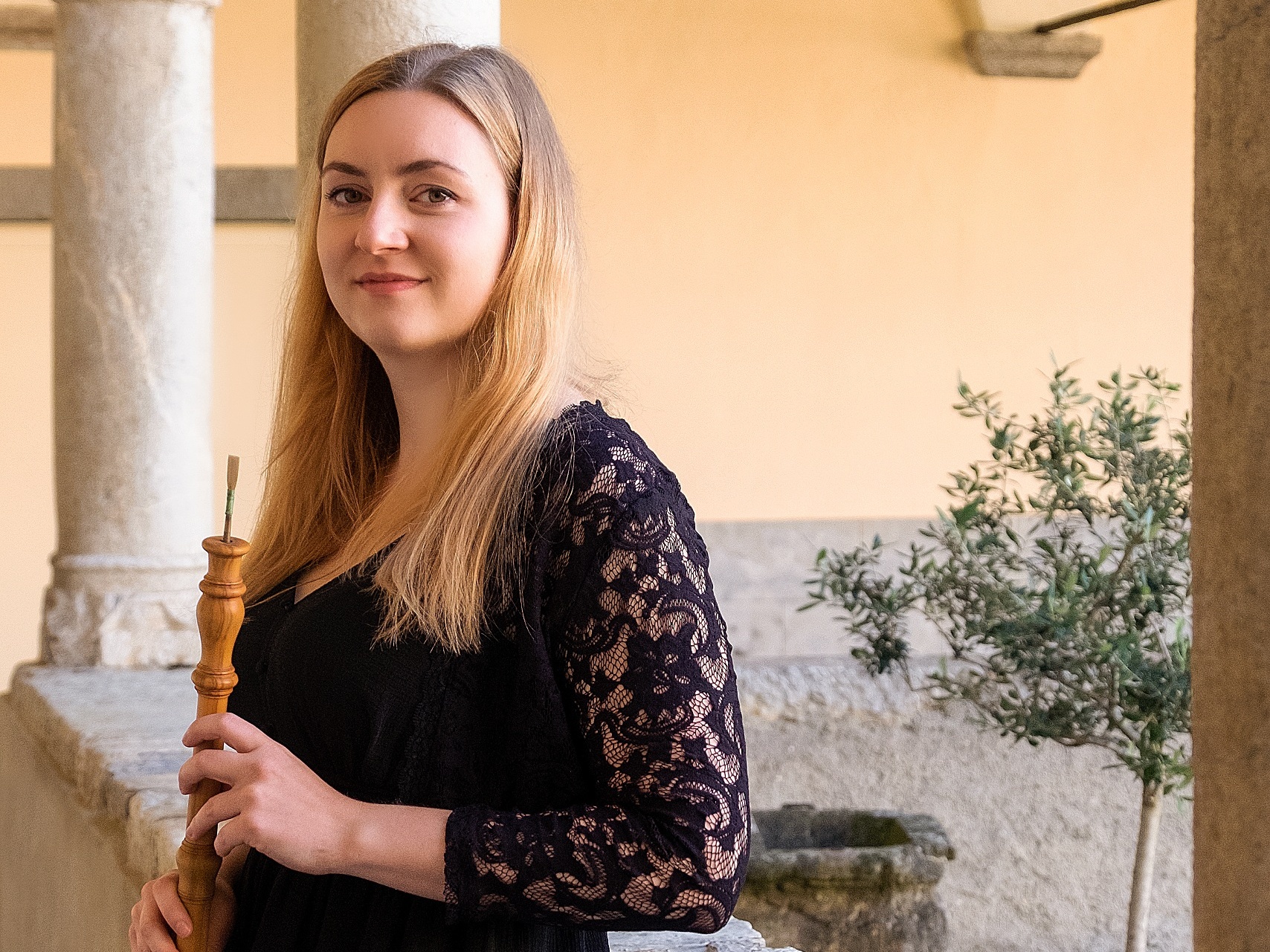
Austrian oboist Laura Hoeven joined Theresia in 2021 and in these very days she is playing with Theresia Wind Ensemble: let's find more about her upbringing, her love for music and the three most important things she learnt playing with our orchestra!

Austrian oboist Laura Hoeven joined Theresia in 2021 and she is currently playing with Theresia Wind Ensemble: let’s find out more about her upbringing, her love of music, and the three most important things she learnt while playing in our orchestra!

Laura, tell us about your musical upbringing: how did you start playing the oboe? And when did you turn to the period instrument?

As a child, I started playing the recorder. When my parents listened to classical music at home, I really loved the sound of oboes, so I was interested in taking up oboe lessons. Unfortunately, there was no oboe teacher at my music school. One day when I was in high school, my recorder teacher told me that I could have a recorder lesson at the Music and Arts University of Vienna to see if I would be interested in studying music. Surprisingly, it turned out that the university teacher taught historical oboe instruments too. I got the chance to try out the baroque oboe and I managed to produce some sound – of course not super beautiful, but at least some notes came out of the instrument. I definitely knew that I want to learn the baroque oboe. I took historical oboe lessons and started a pre-study at the university. Later, I also started playing the Viennese oboe because I was very interested in the development of the oboe in the course of history. So, I actually started playing the period instrument first. Now, I’m about to finish my Master in ‘historical oboe instruments’.

What were the most important experiences that made you realise that music was where you wanted to go?

My parents always enjoyed listening to music and they both played musical instruments (piano and saxophone). I guess this is also why I discovered my love for music. When I was five years old, a friend of mine took music lessons, which inspired me to learn an instrument too. I think it actually happened step by step that I realised that music is where I wanted to go. I can recall the moment I got the chance to play the baroque oboe in an orchestra for the first time. After that, I could picture myself doing this professionally and studying music because I really enjoyed it.

Your first project with Theresia was with Alfredo Bernardini in Lodi in the autumn of 2021: what do you recollect of that experience?

I remember it as a very fun project. It was my first one and I didn’t really know what to expect, but I learned a lot during that residency. First of all, it’s fantastic to work with Alfredo Bernardini because he knows how to get the best out of everyone through his energy, his ideas and imaginative pictures of passages in the music. I also enjoyed that we experimented with the distribution of the instruments in the orchestra. In the rehearsal, we ended up playing the pieces next to instruments from other sections as an exercise. Suddenly, we could hear voices that we haven’t noticed before and it was easier to become aware of similar passages that we share with other instruments. The sound of the orchestra changed completely after that experiment because everyone was very attentive and reacting to everything that was happening. As a group, you really grow together after such an orchestral project.

You are involved in a chamber music project with Theresia Winds instruments, but you have joined orchestral residencies as well: in terms of rehearsal and performance experience, how much does playing in an ensemble differ from playing in an orchestra?

Yes, there is a difference between playing wind ensemble or orchestral music. The music that is composed for wind instruments demands something different from every musician than orchestral music. During the rehearsals with the Theresia Winds, we grow together as a group because there is no conductor. Sometimes, you need to lead the group with your instrument, or you have to react. This changes constantly, and you are required to be very flexible, which is fun and challenging at the same time. In orchestral music the function of the wind instruments is different. They have to blend with the strings, be a harmonic framework or play melodic passages. So, it’s good to be aware of that. Both ways of playing are enjoyable and demanding and there is a lot to learn for the professional life as a musician.

After two years, which in your opinion are the three most important things that Theresia has taught you?

1. No matter where you come from – music is a universal language. Even though we all come from various countries, it is really easy to connect through music.
2. Try to take a risk and use this opportunity to learn and to try out.
3. Most importantly, enjoy the time that you get to make music together!

They say that playing in a youth orchestra lets you meet people who will be your friends for life: do you think this happened to you in Theresia?

Yes, I definitely think so!

Which are your plans for your musical future?

I would like to continue playing in orchestras and ensembles. Also, it would be great to start my own chamber music ensemble. Basically, I would love to get the chance to do various projects.

What do you do when you do not play? Do you have any other passions that do not involve music?

When I’m not playing an instrument, I like to go for hikes, play badminton or cook. Sometimes, I also sing in a Big Band in my hometown for fun. My other passion is science. I also study ‘food science and biotechnology’. It is a completely different field compared to music, but I really like that they are so contrasting, which makes them fit together really well.

Theresia Wind Ensemble’s whistle-stop spring tour

By Emilia Campagna - April 28, 2023
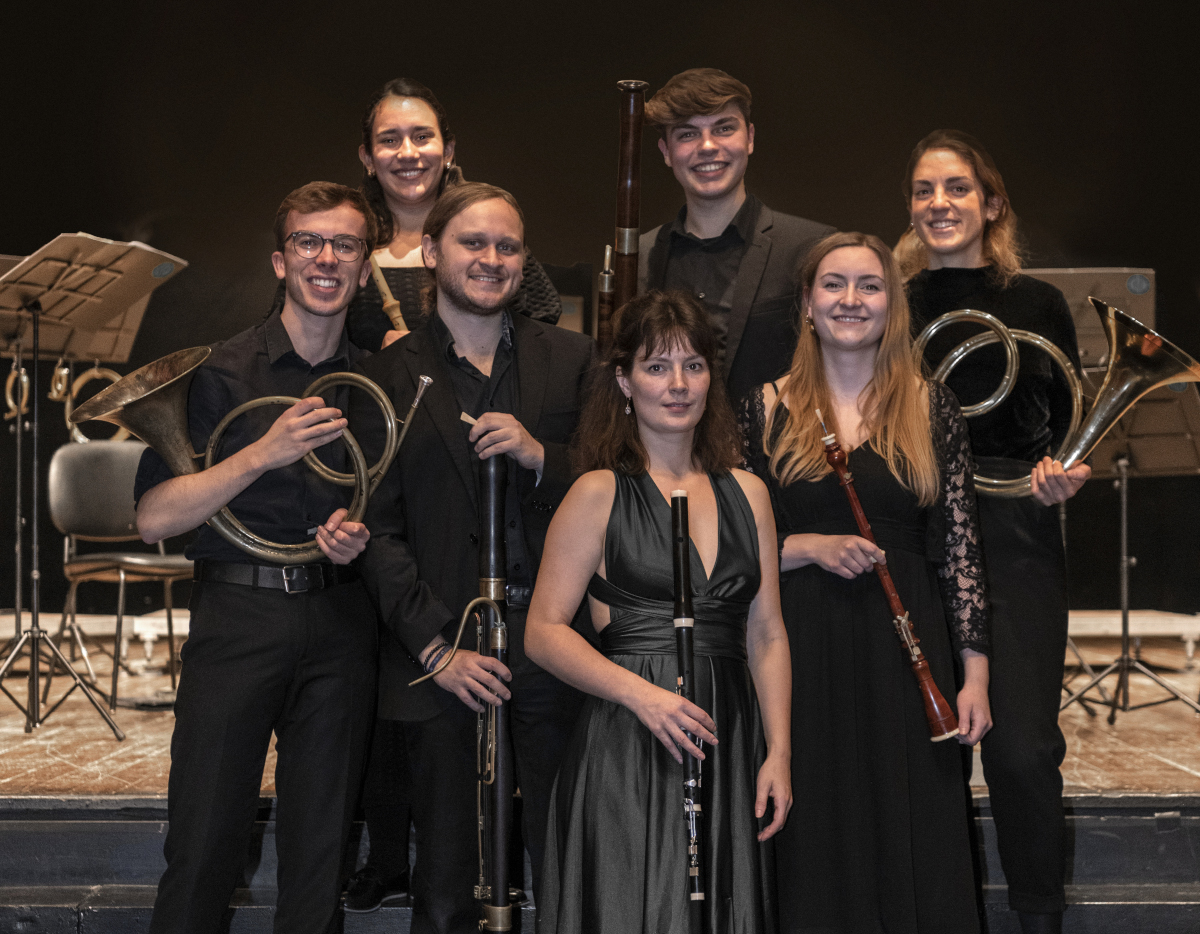
Ready for a nice spring trip? The season is blooming, the weather is mild, and we are sure our musicians will be overjoyed for the three-stage tour that will take Theresia Wind Ensemble from Lodi to Rome to end in Koper (Slovienia).


Ready for a nice spring city trip? The season is in bloom, the weather is mild, and we are pretty sure our wind musicians are excited to embark on are excited to embark on a three-stop tour which takes the Theresia Wind Ensemble to Lodi, Rome and finishes in Koper (Slovenia).

Theresia Wind Ensemble’s tour venues

Starting from 1st May, the wind players of Theresia Orchestra will meet in Lodi, home of the iCons Foundation and regular starting point of many of orchestra’s residencies. Five full rehearsal days studying music by Krommer, Mozart and Rossini under the guidance of Alfredo Bernardini, will culminate in a concert on Friday 5 May at 9:00pm at the Aula Magna of the Liceo Verri as part of the concert season of Lodi’s Teatro alle Vigne.  

The next day, we’ll travel to Rome! Part of the afternoon and evening may be used to enjoy the beauty of the Eternal City, as the capital of Italy is often called. No doubt there are plenty of opportunities to savour blissful moments in Rome, strolling along the Tiber, enjoying legendary ice creams, being enchanted by majestic monuments, Baroque fountains and lush gardens.

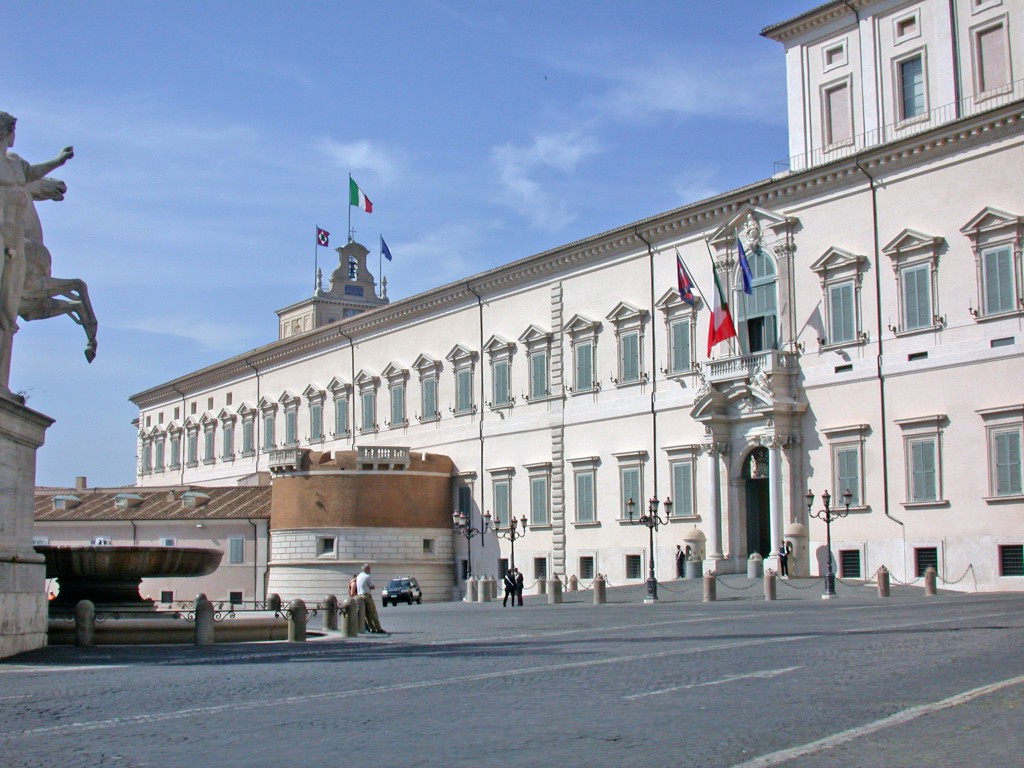
Without pushing it too far, the wind players will perform the next day at the Quirinale Palace, the residence of the President of Italy. The concert of Sunday 7 May, 11.50 am will be broadcast live (!) on Rai Radio 3 as part of the weekly concert series from the Quirinale organised by Italy’s national broadcaster.

The concert series “I concerti della Rai al Quirinale” started in 2001 and for over twenty years, every Sunday (with rare exceptions) has made it possible to listen to great chamber music thanks to live radio broadcasting on Rai Radio 3 and all other stations in the Euroradio network of the European Broadcasting Union. Performing at the Quirinale is a great honour and a great opportunities for Theresia to connect live with our remote audience. However, this is not the first time for us at the Quirinale: the orchestra also performed at the Quirinale in 2015. If you want, you can take a little trip back in time and listen to our previous concert following this link!

The entrance to Quirinale Palace: the free concert ticket also includes a visit to the prestigious location

The spring tour of Theresia Wind Ensemble will end in Koper, a lovely, friendly city we’ve visited before. The wind players will perform on Monday 8 May, at 7.30 pm in a beautiful and historically rich venue, the Regional Museum. This concert will be broadcast and streamed live too (this time by RTV Slovenia) about which we are absolutely thrilled!

Another stunning location…. The Regional Museum of Koper (Capodistria, Slovenia)

What’s on the music stand?

This wind academy will focus on Harmoniemusik: this term originally identified an ensemble derived from the military band and composed of five to fifteen musicians. The name is due to the fact that in the early days of classicism, in the orchestral context, the wind instruments had the task of supporting the harmony of the pieces, instead of the now increasingly obsolete basso continuo. With the technical improvement of wind instruments and the increasing technical skill of the players, this formation gained partial independence, thanks in part to a vast repertoire of compositions dedicated to it.

Wind ensembles became particularly sought after in certain contexts, such as outdoor concerts (Serenades or Nocturnes) or during short marches and parades. They became increasingly popular and widespread, as evidenced by the presence of an large, specially composed repertoire and transcriptions from operas, ballets and symphonies.

Franz Krommer’s Partita op. 71, Wolfgang Amadeus Mozart’s Divertimento K388, and Wenzel Sedlak’s transcription of the most famous parts of Gioacchino Rossini’s Barbiere di Siviglia will be the musical program. Enjoy!


Celebrating Earth Day: how Theresia is improving its impact as an orchestra

By Emilia Campagna - April 22, 2023
Every year on April 22, it is Earth Day! Find out what Theresia is doing to reduce its environmental impact as a travelling orchestra.

Every year on April 22, Earth Day marks the anniversary of the birth of the modern environmental movement in 1970.

What is Earth Day?

More than 50 years ago,  a group of activists led by U.S. Senator Gaylord Nelson launched the movement in the wake of a natural disaster, the devastation of a massive oil spill in Santa Barbara, California in January 1969. On 22 April 1970 more than 20 million people took to the streets: the first Earth Day remains the largest single-day protest in human history and it achieved a rare political alignment. In 1990, Earth Day went global, mobilising 200 million people in 141 countries and bringing environmental issues to the world stage. Over the course of decades, Earth Day has drawn hundreds of millions of people into the environmental movement, creating opportunities for citizens to engage and volunteer in more than 193 countries.

Today, Earth Day is widely recognised as the largest secular observance in the world, marked by more than one billion people each year as a day of action to change human behaviour and forge policy changes at a global, national, and local level.

How Theresia embraces the philosophy of Earth Day

Earth Day calls people to action: we can all do something for the planet, by starting to change habits that are no longer sustainable. Of course, this also applies to Theresia! With the help of project manager Veronica Meneghello, our Corporate Social Responsibility (CSR) expert at ICONS, we asked ourselves how we could improve our impact as an orchestra and developed a scheme that aims to raise awareness among our musicians and offset their emissions.

We decided to dedicate one of the training modules we offer our musicians to sustainability and ecological transition as part of our capacity-building activities, a programme at the heart of the European funded EMPOWER project. ICONS’ CSR and project manager Veronica Meneghello tell us more…

How do sustainability and ecological transition issues fit into EMPOWER’s capacity building?

We decided to start by raising awareness of sustainable mobility, since travelling, especially long distances, is a fundamental part of musicians’ professional lives, and of sustainable behaviour in general in everyday life. Therefore, on the one hand, the aim is to encourage the players to reduce their ecological footprint and, on the other hand, to inform them about offsetting, namely the possibility of offsetting emissions that cannot be avoided. We created an interactive presentation with quizzes and videos to facilitate understanding of the topic and commissioned an external provider to create a digital guide explaining in detail the two aspects of reduction and offsetting, and outlining the offsetting projects available through EMPOWER.

What does Theresia’s “carbon offsetting activity” consist of?

After the training on carbon offsetting, we moved on to practical implementation. ICONS collaborates with a supplier to offset emissions from orchestra travel. The calculation is done on an annual basis and includes all travel, both from each individual musician’s home to the concert residency and any travel within the residency itself. The musicians who have participated in this year’s residencies are given a personal code through which each of them can offset their emissions, choosing to allocate them to one of the six projects proposed by the provider, which can be environmental (e.g. reforestation actions) or social (e.g. implementation of renewable energy, or training actions).

About 140 musicians got involved, and you met them partly in person and partly online. How was their response to the initiative?

They were quite aware of sustainability and impact issues, but were not very familiar with the fact that the ecological footprint can be quantified objectively, which they found very interesting. Some were a little sceptical about offsets, which is normal: these are issues that create mistrust if you don’t know how these offsets are used in practice in projects, but we deliberately involved our provider to illustrate the different possibilities and also to explain that offsets are not the solution, but only a temporary measure.

When did you first become involved in this topic, and is there a bearing on other ICONS projects?

I have a master’s degree in Environmental Economics and continued with a master’s degree in Sustainability in Law, Finance and Management. With the consent and participation of ICONS management, I started a CSR unit – Corporate social responsibility –  at ICONS: we are about to launch a working group on gender equality and are also working on projects that include CSR. Offsetting is potentially applicable to ICONS as well, to compensate for all the travelling that is being done for projects, but currently this is not the case. EMPOWER could be a first experiment and then be extended to the rest of the organisation some time soon.

You can follow the progress of the offset program here. And talking about sustainability, clean energy, and climate change, how much do you know about that? Take the quizzes on the Earth Day website and test yourself!

Meet Theresia: Laurène Patard-Moreau

By Emilia Campagna - April 3, 2023
Violinist Laurène Patard-Moreau, born in France and set in Amsterdam (after three years in Canada), is one of the new members of Theresia. She talked with us about her education, and her love for music and travelling.

Violinist Laurène Patard-Moreau, born in France and based in Amsterdam (after three years in Canada), is one of the new members of Theresia. She spoke to us about her education, her love for music and travelling.

Laurène, how did you start playing the violin?

I started playing the violin at the age of five. I’m not sure how it came about, but I remember when I was little that we used to go to the market each Sunday morning, and there was this old man who played many instruments, including the violin. All the children were sitting around him on blankets playing percussions and trying out instruments. I have a very strong image of this memory, but I was shy and never really sat down with them to try. I think that is why I asked my parents to play the violin.

Are there other musicians in your family? Did they support your choice?

My parents are not musicians. Well, my father played the piano when he was a teenager. He even has one at home which he still from time to time, but we have never played together. Both of my parents are very supportive of me, and that means even a lot since they don’t know anything about the world of music!

How did you start playing a period instrument? Do you still play the modern violin?

I started baroque violin when I was 20 years old, during my last years at the Conservatory in Toulouse, before starting my Bachelor’s degree. Then, when I left for Montréal, my teacher at the University was teaching me both modern and baroque (even though I graduated in modern). And now, for my master’s degree, I decided to focus on the baroque violin only.

Do you still play the modern violin?

I like switching between both instruments, but I feel I improve much more when I have time to focus on one, and I felt I needed to do that with the baroque violin. I also had to learn lots more about HIP and have to admit that I miss my modern violin sometimes! I think soon I will go back to alternating the two instruments soon. This year I also started studying jazz violin as a secondary subject, so there’s a third style to bring into the mix!

And what is it like to play the jazz violin?

It is very different from modern or baroque playing. I have to learn everything again (including the way of thinking that this kind of music requires) and sometimes it feels a bit strange, but I love that. I’m really learning a new language. I had been wanting to do that for a long time but I never did: I thought that having regular lessons at the Conservatory was the perfect opportunity. And the teacher Tim Kliphuis is amazing.

You joined Theresia recently: how did you know about the orchestra and why did you decide to take part in the auditions? Had you already played in an orchestra like Theresia?

I heard about Theresia from friends and social media. I was looking for academies for this year and I thought it was exactly what I was looking for. I already played classical repertoire a few times, first when I was in the Orchestre Français des Jeunes (the french youth orchestra), we had some concerts with Julien Chauvin (who conducts now Le Concert de la Loge), we were not playing historical instruments in this orchestra, but he is specialized in this style. Then in 2020, I think, I went to Toronto for the Winter Institute of Tafelmusik Baroque Orchestra. With, by the way, Vanni Moretto that you know well in Theresia! And last summer I had the chance to go to La Petite Bande Academy for the second time, where we played chamber music from the classical period (mostly Mozart) and worked with Sigiswald Kuijken.

Your first experience with Theresia was our most recent project, with Giovanni Antonini as conductor. What did you like most about working with him?

I really loved this production. I don’t know how to explain this in words, but I admire him because he has this kind of aura and confidence that makes the orchestra respect him a lot. When he walks onto the stage everyone focuses and stops chatting. And I think when you get that kind of attention and focus from everyone, you can do amazingly detailed work. He was really precise and wanted to get the best out of us.

What did you like most about the soloist, Dmitry Smirnov?

I didn’t know Dmitry before, but now I will continue to listen to him. I love the freedom he has in his playing, he takes a lot of risks and makes each performance unique. He reminded me of Patricia Kopatchinskaja, who also plays to extreme contrasts, pushing the limits of madness, which I love. Playing is like theatre.

I read on your Facebook page that your violin was recently stolen! How did that happen, how did it affect your life and job? How did you cope with it?

Yes, that’s true, it happened last September. It was a pretty tough start to the year. I was staying in an Airbnb and when I came back one evening, my violin just wasn’t there anymore. I called the police and my insurance company, and it took me a few days to realize what really happened. The school gave me a violin, then my former teacher lent me hers, and I tried some others, but practising became really difficult because I couldn’t find my sound anymore. And it’s the worst timing when you are moving to a new country, and just about to start at a new conservatory with a new teacher. I felt like I couldn’t show what I was capable of. The sound was not how I wanted it to be and I was not happy with it. I still haven’t found my instrument back, nor found a new instrument I want to buy (I found bows though) so it is still difficult because the sound of the instrument I currently play is not really mine.

Where do you see yourself in ten years? Playing as a soloist, in a chamber music ensemble, teaching…

In ten years time I hope I will still be playing a lot and travelling around the world with my music (if climate change allows us). I would love to be part of an ensemble or a chamber music group. Actually, I like having multiple projects at the same time. I might have my own ensemble, a chamber orchestra with friends, why not?! I love leading and organizing, so I like the idea of that!

Do you have any passion or hobbies, or are you dedicated to music for 100% of your time?

Well, music takes up most of my time. Between the conservatory and my student job on the weekends, I rarely have a day off. But I love it when I just can sit on my bed with a cup of tea, write in my notebooks, and draw in my sketchbooks. I also love photography. When I travel I always take my camera and my travel journal with me.

Meet Theresia: Lucas Bernardo da Silva

By Emilia Campagna - March 14, 2023
Lucas Bernardo da Silva is a new member of Theresia: he joined our orchestra after last year’s auditions and had his first experience in February, when the orchestra was conducted by Giovanni Antonini in an all-Beethoven program. Let’s know more about him!

Lucas Bernardo da Silva is a new member of Theresia: he joined our orchestra after Theresia’s auditions in Paris and had his first experience in February, when the orchestra was conducted by Giovanni Antonini in an all-Beethoven program. Let’s get to know him better!

Lucas, how did you start playing the violin?

Everything started in the church where I used to go with my parents: there was an orchestra playing during the services, and I was totally fascinated by that: I always wanted to sit as close as possible to the violins as I was so into it! It was so evident that there was a rising passion in me that my mother gave me a violin as a present on one of my birthdays when I was a child; anyway, I started a proper musical education at around nine years old and violin at eleven, at the church; about a year later I enrolled in the Music State School of San Paulo where I had my complete training until 2014 when I moved to the Netherlands for my bachelor. After that, I took a Master in Den Haag, and here I am.

When did you decide to make music your profession, your job?

It’s always a difficult question to answer because when a passion grows within you, the decision to follow that path is not an isolated event, but a natural process. Anyway, I think the triggering moment was when I was 15 years old and had the opportunity to participate in a music festival where I played a lot in orchestra and chamber music groups: there I met great musicians and had this fulfilling experience that made me realize this was just what I wanted to do.

Are there other musicians in your family?

I have a sister who studied music but did not pursue further professional training. And none of my relatives is a professional musician, but they have always been supportive, since I was a child.

When and why did you start to play the period instrument?

I actually concentrated on modern violin until the end of my studies: when I moved from Brazil to the Netherlands, I started to have a lot of friends studying period instruments or play in ensembles devoted to historically informed performance. This is how I initially got into it: I went to their concerts or their lessons, and inevitably I was surrounded by it. And inevitably, I listened to a lot of professional ensembles and orchestras, as in the Netherlands there’s such a strong tradition in HIP. So by the end of my bachelor, I had started reading, listening, studying, and taking lessons to know more about it. I got more and more into HIP, and I realized that the music, the sound, the way of playing the instrument, everything started to make much more sense!

Do you still play the modern violin?

Yes, I do, especially in orchestras, as I’m a freelance musician. But I try to use the period instrument as much as I can, not only when playing baroque and classical repertoire, but also when playing romantic pieces.

You joined Theresia recently: how did you know about the orchestra, and why did you decide to take part in the auditions?

Before hearing about the auditions, I already knew Theresia from some colleagues who also studied here in Den Hague and with whom I played chamber music. After my graduation, I’ve been trying to do more and more with the period instrument, and when I learnt about the auditions, I thought that this was what I was looking for and that it was a great opportunity.

Had you already played in an orchestra like Theresia?

I have played in orchestras and ensembles that use period instruments and focus on HIP, but always playing earlier repertoire: I love the focus that Theresia has on classical repertoire.

Your first experience with Theresia was the recent production with Giovanni Antonini as a conductor. What did you like most about working with him?

It was really interesting: I obviously already knew Giovanni Antonini by reputation, but I had never worked with him. I was very happy with this experience because Giovanni Antonini is an inspiring and remarkable musician. He is full of energy, full of great ideas, and he got a great sound out of the orchestra.

What about the repertoire? Did you know that it was the first time that Theresia played Beethoven?

Yes, I was told, but if I didn’t know I wouldn’t have said! Knowing that, I was even happier to be there, to share this moment: playing Beethoven is great, his music is a development of the language, a huge pushing forward of many ideas.

What did you like more about the soloist, Dmitry Smirnov? 

I was very impressed by him, he’s an inspiring musician. And when I say I was impressed, I’m not simply talking about his technique, but especially how daring he was about going for his ideas, in a non-apologetic way. This kind of approach, daring and risking, fits playing Beethoven, and he really managed to capture this. Especially when he played his cadenzas during the rehearsal, and then during the concert, it was unpredictable and made me think “oh, where is he going with that?” and it was always surprising.

How did you feel being part of the orchestra, and did you enjoy your little tour in Italy?

I already knew some people, a lot of them coming from Den Haag: some of them were familiar faces that I had the chance to know better; the rest of the people were super nice. And I obviously enjoyed being in Italy, especially in Ravenna we had some spare time and it was great. I had the time to visit churches and admire the mosaics, I was very impressed with how beautiful they were.

You moved from Brazil to the Netherlands: what do you miss about your country and what do you appreciate about living in Europe and in particular in the Netherlands?

That’s a hard one! I really miss the weather, the climate in my country is great. Also, I love the city I come from, São Paulo, and I miss my family and my friends. But I really like being in The Netherlands. When I decided to move here, it was because I knew I would have better opportunities for studying and playing classical music. Then, I love the possibility of moving around easily in Europe and enjoying how diverse cultures are in Europe. That’s very enriching. Finally, The Netherlands is a very international place, where I can meet people from all places, and this fits perfectly with my way of seeing things, and music too. For me, as a musician, it is a good place to live because a lot is going on.

Where do you see yourself in ten years?

Well, I love playing in an orchestra, it is the thing I enjoy most, so I definitely hope I will be doing that. I do not think it will matter for me to have a fixed position or not, and where, I do not really mind. But at some point having a closer connection with Brazil would be great. I hope I can teach there a bit, and share my experience back in my country.