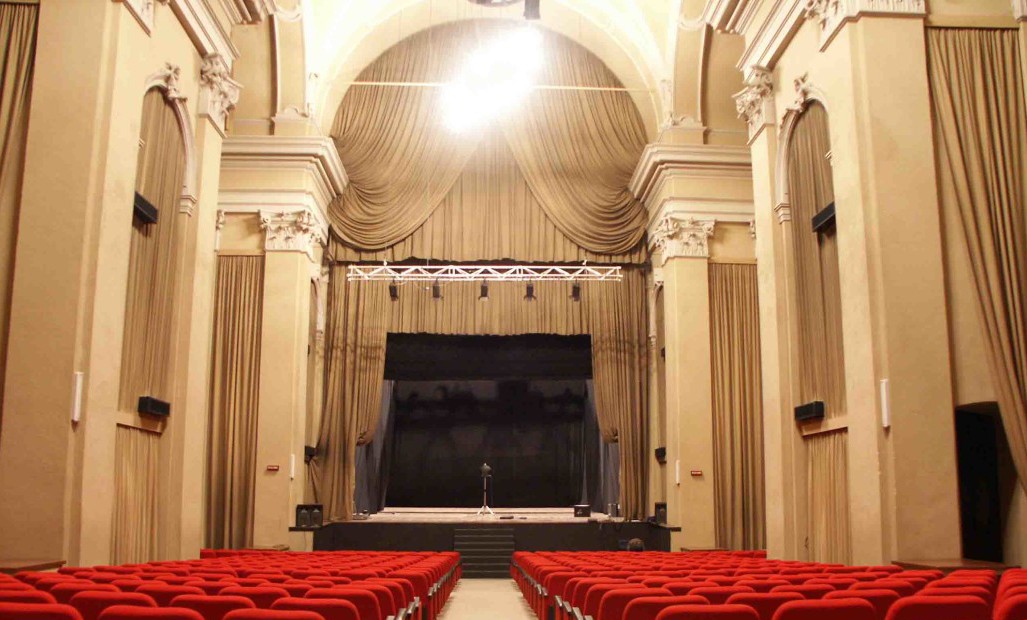
Amici della musica “A. Schmid”, a long story of passion for music in Lodi

By Emilia Campagna - November 18, 2015
It is not the first time for TYBO in Lodi, and it’s not even the first time that we collaborate with “Amici della Musica A. Schmid”, Lodi’s concert society. But this time is very special, because the concert of Theresia on 21st November will open the concert season 2015-2016 of “Amici della Musica”. It’s a […]

It is not the first time for TYBO in Lodi, and it’s not even the first time that we collaborate with “Amici della Musica A. Schmid”, Lodi’s concert society. But this time is very special, because the concert of Theresia on 21st November will open the concert season 2015-2016 of “Amici della Musica”. It’s a big honor, so let us spend some words about the concert society that programs classical music in Lodi and its concert season.

It was 1953 when a group of friends and music lovers decided to start a regular concert season of chamber music in Lodi: World War II had ended since eight years, and sure problems for people were still overwhelming, but they had the purpose of offering citizens opportunities to listen to classical music concerts. In Italy at that time it was neither simple nor obvious to program chamber music concerts: the dominance of opera was still unchallenged. Concert society devoted to chamber and instrumental music were such a few, especially far from major cities. The eleven promoters were then quite daring: beneath them, there was Augusto Schmid, who for years was President of Amici della Musica and, in practice, the Artistic Director too.

The musical activity began on March 6, 1954 with a concert by the young pianist Enrica Cavallo, destined for a brilliant career especially in duo with her husband, the great violinist Franco Gulli. In the following years some of the greatest musicians of that time performed in Lodi: Nikita Magaloff, Alfred Cortot, Alexis Weissemberg, Paul Badura Skoda, Vasa Prihoda, Arthur Grumiaux, Ivry Gitlis, Teresa Berganza, Trieste Trio, La Salle and Amadeus Quartet.

Paolo Marcarini has been Artistic Director since 1972; the 15-16 concert seasons consists of eight concerts, mainly devoted to chamber music and to classic-romantic repertoire. After Theresia concert, the theater will host the italian pianist Maria Perrotta (8th December) who will play music by Mozart, Brahms, Schubert: the concert season will end on 8th May with piano recital of Roberto Plano. In the meantime, Lodi’s music lover may listen to Kiev Radio and Television Orchestra (10th January: conductor Volodymyr Sheiko, soloist the pianist Sabrina Lanzi); in 6th February clarinetist Alessandro Travaglini, violist Bruno Giuranna and pianist Bruno Canino perform trios by Mozart, Reinecke, Kurtag and Schumann. Virtuoso violinist Stephan Milenkovic will give a recital on 13th March, and in April jazz lovers will have their moment, with the concert by Mattia Cigalini and Andrea Pozza (Saxophone and piano).
More than a Symphony, more than a Concerto: J.C. Bach and the “symphonie concertante”

By Emilia Campagna - November 14, 2015
At the heart of our next performance there is the Symphony Concertante C44 by Johann Christian Bach. It was Chiara Banchini herself to choose to perform this piece with Theresia; and it was Chiara Banchini to pick out the soloists (Klaudia Matlak, Agnieszka Papierska, Laura Lovisa and Maria Misiarz) from the orchestra. Let us introduce […]

At the heart of our next performance there is the Symphony Concertante C44 by Johann Christian Bach. It was Chiara Banchini herself to choose to perform this piece with Theresia; and it was Chiara Banchini to pick out the soloists (Klaudia Matlak, Agnieszka Papierska, Laura Lovisa and Maria Misiarz) from the orchestra.

Let us introduce you this special genre: not a Symphony, non just a concert for solo and orchestra, the symphonie concertante is a French form that evolved in Paris around 1750 essentially replacing the then outdated Baroque concerto grosso; composers active in the genre were overwhelmingly French. Usually parsed out in three movements – though Bach sometimes uses two – the Symphonie Concertante is very close to the form of multiple concerto where at least two or more soloists are featured in addition to the orchestra. The symphonie concertante is different from the concerto because the soloists advance melodic material and participate in moving along the development schemes, functioning as in a symphony, rather than performing a single, showy musical part in the manner of a concerto. The symphonie concertante was most popular at a time when public concerts were becoming all the rage and it was advantageous to get as many star soloists out in front of the band as possible. It was all but dead by 1820, killed by the advent of touring virtuosos who always preferred to fly solo, not to mention the rise of the “cult of the individual” arriving in the wake of the Napoleonic Wars.

Bach composed at least 15 symphonie concertante, which places him roughly third in the overall output in the genre after Giuseppe Maria Cambini (82!) and Carl Stamitz (38). They were composed in two batches; one for the Concerts Spirituel in Paris, the home of the symphonie concertante, boasting an orchestra led by the great violinist Chevalier de Saint-Georges, and the other for the Bach/Abel concerts in London, of which Bach himself was co-leader. While the form may be French, Bach’s style is Italo-German, informed by his studies with Padre Martini, his brother Carl Philip Emanuel Bach, and with his father. J.C Bach’s Symphonie Concertante, with their multiples of instruments talking back and forth over short stretches of music, maintain a kind of stylistic universality even as the instrumental timbres are constantly shifting around. The effect is often kaleidoscopic and adds considerable depth and dimension to Bach’s tightly constructed music and its hard-won subtleties.

Enchanting Classicism

By Emilia Campagna - November 13, 2015
Let's deepen the program of the next concerts thanks to the listening guide by Paolo Motta

Enjoy the accurate listening guide that Paolo Motta wrote for Theresia’s concert in Lodi.

Carl Philip Emanuel Bach was the second, and probably the most famous, of Johann Sebastian Bach’s twenty sons. Since 1740 he had been harpsichordist in the music chapel of the Prussian King Frederick the Great: he performed with the king, who was an excellent amateur flutist. In 1768 he succeeded Telemann as musical director and Kantor in Amburg Johanneum. He was a prolific composer and a point of reference for Haydn and Mozart. He was highly appreciated also by Beethoven (mainly for the harpsichordist opus), and then by Mendelssohn, Schumann and Brahms.

During Theresia concert we will listen to the E minor Symphony Wq 178, one of the nine “Berlin Symphonies”: it was originally composed for strings, and later enriched with the addition of flutes, oboes and horns. It was composed in 1756 and it consists of three movements: at first, an Allegro full of tension, as rarely happened at that time; at the end, a second Allegro very rhythmical. In the middle, a delightful Andante, quite contrasting, a fine example of “gallant style”, to which the sound of flutes gives a particular taste.

Johann Christian Bach was the eleventh son of Johann Sebastian and his second wife, Anna Magdalena. After his father died, when JC was fourteen, he moved to Berlin where he stayed with his brother Carl Philip Emanuel and studied Harpsichord and Composition. In 1754 he left Berlin and traveled to Italy: he studied in Bologna with Padre Martini and in Milan with G. B. Sammartini. After he converted to Catholicism, in 1760 he became main organist in the Milan Cathedral. In 1762 he left Milan, for reasons that remained obscure: he moved to London, where he lived till his death and where he had a huge success (also in the field of opera, as a follower of Neapolitan school) becoming chapel Master of Queen Charlotte. Yet, his luck did not last long and he died before time and overwhelmed by debts. His music is far away from his father’s style and from CPE’s style too, due to the more relevant melodic principle. In any case, he is considered one of the most important composers of his time: he wrote principally in the gallant style, even if he is included among the main precursors of the Viennese classicism. He had a huge influence on Mozart.

The “simphonie concertante” is a typical form of the Classical period, and it can be described as a mixture between a symphony and a concert: it’s a concert because it has more than a soloist, and it’s a symphony because soloist are not in particular emphasis, except in few moments. The masterpieces in this genre were written – coincidentally… – by Mozart and Haydn. The Symphonie concertante C44 for flute, two violins, cello and orchestra opens with a lively introduction: then, the two violins and the cello are put in relief, often exchanging solos; in the Andante the flute is the absolute star, exposing sweetly sorrowful melodic lines. The Finale (Allegro Molto) is definitely more symphonic.

“L’isola disabitata” (“The uninhabited island”) is an opera composed by Franz Joseph Haydn in 1779: according to music historians, it represents the composer’s attempt to abandon the Italian “opera seria” style and update his style on the model carried forward by Gluck. The opera wasn’t successful, not at its time, neither in later reprises. Yet the Overture stayed firmly in the orchestral repertoire, due to the dramatic atmosphere and the characteristics that make it like a miniature Symphony, split in four sections with alternate fast and slow movements.

Luigi Boccherini was a great cellist and a prolific composer: he is considered the most representative composer of instrumental music in Latin European countries during the first Classicism. After some experiences in Vienna, Rome and Paris, he moved ultimately to Spain, into the service of Infante Don Luis: when Don Luis died, he establishes a long-distance relationship with Frederick William II, King of Prussia, for whom he composed a lot of music, including – in 1789 – the Symphony in D op. 42. It’s a composition of huge dimensions, with a wind section larger than the usual: it consists in flute, two oboes, two bassoons and two horns. The opening Allegro has a rather dramatic tone and is based substantially on a unique theme that develops through different combinations of instruments in dialogue one with each other. The Andante is particularly interesting, mainly for winds, with flute in evidence, while the strings provide a support made of emphases and brief interludes of dramatic recitative type. The Minuet is rigorous in the structure and in the rhythmical pattern: it’s in the Haydn’s style, with sharp moments for violin and bassoon. The final Presto is a lively, rhythmically engaging, with a clever dialogue of strings and horns.


Pubblicità e mecenatismo: una convivenza (im)possibile?

By Emilia Campagna - November 11, 2015
L'invadenza delle affissioni pubblicitarie sui monumenti in restauro scatena la polemica: pubblicità e mecenatismo sono compatibili?

L’allarme l’ha lanciato Tomaso Montanari pochi giorni fa sulle pagine di Repubblica: cosa ci fa una gigantografia di una modella al posto dell’Obelisco di Portosalvo a Napoli?

La domanda non è dettata da moralismo: se a Napoli c’è una donna seminuda, a Venezia su Palazzo Ducale campeggia una bottiglia di Coca Cola, e il Ponte dei Sospiri è tutto foderato di rosso Scavolini: “Non è un caso isolato: Piazza San Marco a Venezia si sono presentate travestite da Piccadilly Circus o Times Square, con il Palazzo Ducale e il Ponte dei Sospiri letteralmente sommersi da enormi, coloratissimi, cartelloni pubblicitari. Trinità dei Monti a Roma è stata a lungo coperta da una forchettata di spaghetti e mazzancolle, Ponte Vecchio a Firenze è stato oscurato dalle posate offerte da una nota catena di supermercati, la cattedrale di Palermo ormai sembra un tatzebao, e la stessa San Pietro in Vaticano non è stata risparmiata.”

Certo, tutto è fatto a fin di bene, e tutto avviene alla luce del sole: privati finanziano una ristrutturazione e in cambio chiedono visibilità. Invece che comprare pagine su riviste patinate, si comprano mesi di gigantografie sulle facciate più viste al mondo.

La polemica non è nuova, e già nel 2010 il Guardian denunciava l’obbrobrio, rilanciando la lettera con cui i direttori del British Museum e del Museum of Modern Art di New York – e con loro una serie di personalità del mondo internazionale dell’arte e dell’architettura – chiedevano la fine dello scempio. Rispondeva, dalle colonne del Giornale, lo storico e critico d’arte Vittorio Sgarbi: “Le pubblicità sono meglio dei ponteggi, e senza i soldi dei privati questi restauri non sarebbero nemmeno possibili.”

C’è chi pensa che sia solo un fatto estetico: ma in tempi di Art Bonus, e di insistiti riferimenti al mecenatismo privato, la riflessione di Tomaso Montanaro si riveste di ineludibili accezioni etiche e culturali.

Perchè quando vengono rivestiti da capo a piedi da striscioni e immensi manifesti pubblicitari, i monumenti si trasformano “da luoghi di costruzione della cittadinanza a ennesime fabbriche di clienti, da strumenti di liberazione intellettuale a strumenti per la massificazione del consumo.” Fino a perdere la propria identità, come succede negli Stati Uniti, dove la pratica della sponsorizzazione è degenerata in una personalizzazione estrema e dove il “naming”, dentro e fuori il mondo dell’arte ha prodotto piccole e grandi aberrazioni: “Negli Stati Uniti la maggior parte delle squadre di baseball della Major League vende i diritti di denominazione dei propri stadi, così oggi abbiamo il FedEx Field e il Gilette Stadium. Dallo sport, la pratica è passata alle città: si sono cominciati a vendere i diritti di denominazione degli spazi pubblici (stazioni della metropolitana, stazioni ferroviarie, parchi pubblici e sentieri dei parchi nazionali), in quello che si chiama marketing municipale (dal 2003 New York ha un direttore addetto solo a questo). Ma anche le macchine della polizia, le pompe antiincendio, le celle delle prigioni si sono letteralmente coperte di pubblicità.”

Per il filosofo della politica americano Michael Sandel la pubblicità è incompatibile con la cultura, “perché la pubblicità incoraggia le persone a volere cose e a soddisfare i propri desideri, l’istruzione incoraggia le persone a riflettere in modo critico sui propri desideri, per frenarli e per elevarli.” E, una volta (s)venduta l’identità di un monumento, che ne sarà dell’identità (storica, culturale, estetica) dei cittadini?

Eppure, la scelta della sponsorizzazione non è l’unica percorribile: basta guardare alla Francia: “Con cinque successive leggi approvate tra il 2003 e il 2009, lo Stato francese ha, per esempio, regolato e incoraggiato la pratica del (vero) mecenatismo, che grazie alla defiscalizzazione (del 60% del dono per le imprese, del 66% per i cittadini) e ad una sensibilizzazione di massa, oggi riesce ad incanalare 5 miliardi di euro l’anno (3 da persone fisiche, 2 dalle imprese) verso iniziative pubbliche. Il mecenatismo francese è indirizzato verso la cultura per il 26%: con un valore assoluto che eguaglia l’intero bilancio annuale del Ministero per i Beni culturali italiano. Oltre un miliardo di euro contro i 24 milioni che rappresentano ciò che riesce a fare il pur utile Art Bonus strappato con i denti da Dario Franceschini.”

E dunque, pubblicità e mecenatismo non hanno nulla in comune, se non i soldi: ma totalmente diverse, e probabilmente incompatibili, sono le premesse che stanno dietro ad un’azione di sostegno finanziario alla cultura.

Con Chiara Banchini, Theresia “concertante”

By Emilia Campagna - November 10, 2015
Uno sguardo al programma dei prossimi concerti

Si sono appena spenti i riflettori sul set del film Zoroastro e già Theresia è pronta per un nuovo stage e nuovi concerti. L’orchestra sarà a Lodi dal 16 al 21 novembre per lavorare nuovamente con Chiara Banchini dopo l’entusiasmante esperienza della scorsa estate a Dobbiaco e preparerà un nuovo programma che verrà eseguito sabato 21 a Lodi e domenica 22 a Padova.

Per l’occasione, Chiara Banchini ha scelto un programma che prosegue il lavoro fatto nei mesi scorsi, riproponendo l’Ouverture dall'”Isola Disabitata” di Haydn e tornando ad affrontare Boccherini, questa volta con la Sinfonia in re maggiore op. 42: il repertorio di Theresia si arricchisce dunque ulteriormente nell’approfondimento dei lavori del compositore italiano, di cui ha già eseguito in precedenti concerti l’Ouverture in re maggiore op. 43, la Sinfonia in do minore op, 41 e Sinfonia n. 27 in re maggiore G520.

E non manca naturalmente l’attenzione alla famiglia Bach: orchestra votata al classicismo, Theresia da sempre esploira il repertorio dei Bach “figli”, e in questa occasione ha in programma la Sinfonia in mi minore Wq 178 di Carl Philip Emanuel Bach e la Sinfonia concertante in mi maggiore per flauto, due violini, violoncello e orchestra C 44 di Johann Christian. Quest’ultima pagina è stata fortemente voluta da Chiara Banchini per valorizzare la dimensione “concertante” di Theresia: nella migliore tradizione dell’orchestra, le quattro musiciste impegnate nelle parti solistiche sono infatti tutte componenti di Theresia: Laura Lovisa al flauto, Agnieszka Papierska e Klaudia Matlak al violino, Maria Misiarz al violoncello.

Stati Generali della Cultura 2015, protagonista il mecenatismo

By Emilia Campagna - November 3, 2015
Art Bonus e rapporto tra pubblico e privati al centro degli interventi del convegno organizzato dal Sole 24 ore

stati-generali-258-258Si è svolta il 29 ottobre scorso la quarta edizione degli Stati Generali della Cultura, un convegno organizzato annualmente dal Sole 24 ore per discutere del presente e del futuro dei beni artistico-culturali in Italia. Tema caldo di quest’edizione, dal titolo “Investire su una nuova cultura” è stato naturalmente il mecenatismo: numerosi i direttori di musei chiamati a raccontare quali ricadute l’Art Bonus abbia avuto sui loro bilanci.

Alcuni modelli virtuosi di gestione museale sono stati al centro di un confronto, moderato da Stefano Barisoni di Radio24, tra Gabriella Belli, direttrice dei Musei civici di Venezia, James Bradburne, direttore della Pinacoteca di Brera, Flaminia Gennari Santori delle Gallerie nazionali di arte antica di Roma, la presidente del Maxxi Giovanna Melandri e il consigliere dei Musei Vaticani Paolo Nicolini. Ne è emersa la necessità di ottimizzare i livelli di governance dei musei e di incentivare, “nella trasparenza più assoluta e in una ferma ottica della tutela”, il contributo che grandi mecenati e imprenditori possono dare alla salute del patrimonio artistico pubblico.

Accanto alle valutazioni positive dell’iniziativa, che resta peraltro legata al sostegno del patrimonio pubblico ed è spesso destinata a opere di restauro (come l’imponente azione di mecenatismo di Diego Della Valle per il restauro del Colosseo) più che al sostegno di attività culturali nuove, ci sono le forti critiche legate alla permanente difficoltà di rapporti tra pubblico e privato. Numerosi gli interventi, come riportato da Artribune, che rilevano come “un’unione culturale tra pubblico e privato è non solo difficile ma quasi impossibile, data la nostra burocrazia: troppo lenta e alquanto macchinosa per qualsiasi imprenditore che abbia la voglia e la passione di investire in cultura, parola chiave dell’incontro di quest’anno.”

Il Ministro Dario Franceschini al rapporto pubblico privato dice però di crederci, e lancia un appello, invitando tutti i grandi imprenditori italiani ad adottare un museo.

Mecenate, femminile plurale?

By Emilia Campagna - November 2, 2015
Un saggio (in lingua tedesca) analizza le peculiarità d'approccio del mecenatismo al femminile

Che il termine “mecenate” sia maschile è fuori discussione: Mecenate era un patrono delle arti nella Roma di Augusto, e il suo nome è passato alla storia indicando, per antonomasia, chi dedica le proprie risorse al sostegno della cultura. Un sostegno nei migliori dei casi disinteressato, non legato a logiche di promozione di sè o delle proprie imprese, motivato dalla pura passione verso l’arte.

In una società in cui il termine è sempre più di moda, c’è chi si è chiesto se la differenza di genere tra uomo e donna rappresenti anche un differente approccio alle modalità con cui si declinano il ruolo e le azioni di mecenatismo. E’ nato così un saggio di recentissima pubblicazione, a firma di Elisa Bortoluzzi e Hansrudolf Frey, “Mäzeninnen. Denken, Handeln, Bewegen” (“Le mecenati: pensare, agire, cambiare” ndr). Del volume, finora non tradotto in italiano, ha parlato nei giorni scorsi sul Sole 24 ore Pier Luigi Sacco, moderatore durante una presentazione del libro assieme agli autori.

Il libro nasce dalla vasta esperienza di dialogo e supporto con protagonisti del mondo del mecenatismo di Elisa Bortoluzzi, consulente per lo sponsoring e la comunicazione, che si è avvalsa della collaborazione di Hansrudolf Frey. L’analisi di Bortoluzzi e Frey prende le mosse da un vero e proprio boom che ha visto sempre più donne (soprattutto nei paesi di lingua tedesca, ma il libro racconta anche alcuni casi italiani) dedicarsi a progetti di mecenatismo. Numeri “impressionanti”, come scrive Pier Luigi Sacco sul Sole, un dato che “può essere visto come uno dei vari aspetti di un cambiamento sociale profondo che sta portando, in maniera sempre più chiara ed evidente, le donne a occupare spazi sempre più ampi nei nuovi modelli organizzativi della socio-economia della conoscenza.”

Ma è solo questione di numeri? Per gli autori (e per Sacco) no: le numerose interviste riportate dal volume testimoniano che “l’approccio femminile alla filantropia si caratterizza per una prevalenza della razionalità espressiva sul quella strumentale: l’obiettivo primario non è soltanto affrontare e risolvere un problema, ma dedicare cura e tempo, dando così al processo un’importanza paragonabile a quella del risultato finale, così come alla legacy, a ciò che sarà “dopo”, quando non sarà più possibile seguire lo sviluppo del progetto personalmente, ma facendo in modo che esso continui a operare e crescere anche oltre la parabola biografica di chi lo ha fatto nascere. C’è dunque poca attenzione alla costruzione di una “mitologia personale”, di un’immagine sociale spendibile su altri piani, e il risparmio di energie che ne consegue viene in genere riversato in una ancora maggior concentrazione sui progetti, che più che sostenuti vengono appunto “curati”. Il mecenatismo è una progettualità sociale estremamente complessa, che richiede talenti non diversi da quelli imprenditoriali, e forse ancora più variegati. È in fondo, nella sua accezione attuale, una forma molto rappresentativa di attività creativa ad alto contenuto di conoscenza, che fa leva su uno spettro ampio di motivazioni pro-sociali.”

E in un’intervista al Giornale delle Fondazioni Elisa Bortoluzzi spiega di aver scelto come protagoniste del libro donne “portatrici di progetti innovativi. La volontà di spendersi, l’originalità dei progetti e grande disponibilità a raccontare successi e criticità sono stati i criteri di scelta adottati per individuare le nostre interlocutrici. Questo senza riguardo alla loro notorietà. Ci siamo trovati di fronte a donne che hanno deciso di raccontare la propria storia, coscienti che solo comunicando le proprie scelte, raccontando come siano maturate, si può attivare la diffusione del virus della filantropia e motivare altri a donare. Come afferma Mariavittoria Rava “In questa ottica comunicare non è presunzione, è umiltà. Il filantropo non è solo donatore di denaro, ma anche portatore di valori.” La missione della comunicazione è anche essere una fonte di ispirazione per i futuri filantropi e filantrope, una galleria di esempi nei quali ognuno può trovare ragioni per la propria iniziativa che inevitabilmente avrà, ancora una volta, il carattere dell’unicità.”

Bortoluzzi-Frey, Mäzeninnen. Denken-Handeln-Bewegen, Haupt Verlag, Bern, 2014

Art Bonus, sarà permanente

By Emilia Campagna - October 28, 2015
La Legge di Stabilità 2016 rende permanente il credito di imposta del 65% per le donazioni liberali a sostegno di musei e istituzioni culturali

Il Ministro alla Cultura Dario Franceschini l’ha annunciato con entusiasmo: in un anno 34 miliardi donati da privati e aziende nell’ambito dell’Art Bonus, il meccanismo di detrazione fiscale che favorisce le donazioni liberali a favore di musei e istituzioni culturali. In particolare, gli enti che hanno beneficiato dell’Art Bonus sono 134 Comuni, 11 Fondazioni lirico sinfoniche, 16 teatri di tradizione, e 27 enti che afferiscono al Mibact. Sul fronte dei mecenati, si registrano 47 enti, 159 imprese e 567 persone fisiche. Più nel dettaglio, il Mibact ha ‘incassato’ 662.960 euro, i Comuni 10.865.514 euro, le Fondazioni Lirico Sinfoniche 14.959.901, i teatri di tradizione 2.217.477, e altri soggetti 5.051.263.

Per il Ministro, i risultati sono ottimi in quanto raggiunti senza particolare promozione: “Più che positivi sono straordinari, perché in una fase sperimentale, senza una campagna promozionale, ci sono state piccole, medie donazioni a favore dei Comuni, dei musei, delle fondazioni lirico-sinfoniche.” Con qualche distinguo, però: “A eccezione di Unicredit, che ha dato milioni di euro per l’Arena di Verona, non c’è stata questa ressa delle grandi aziende.”

L’istituzione dell’Art Bonus si conferma come primo passo per la costruzione di un abito mentale diffuso, ovvero la normalità del sostegno alla cultura da parte dei privati: “Vorrei che, come in altri Paesi, la valutazione di impatto sociale di una grande impresa italiana – ha aggiunto Franceschini – fosse misurata in base anche a quanto dona per il recupero, la valorizzazione e la tutela del patrimonio del nostro Paese. Patrimonio che, come ci ricorda l’Unesco, è dell’umanità e dunque tutti devono contribuire, a cominciare dalle grandi imprese.”

Proprio per questo motivo, nella Legge di Stabilità 2016 è stata inserita la norma che rende permanente la detrazione del 65% di quanto donato, avvicinando così l’Italia al modello francese. La visione politica che sta dietro all’Art Bonus lascia però totalmente escluso tutto un mondo di mecenati ben più motivati, ovvero tutte quelle azioni non dirette al patrimonio pubblico, iniziative culturali interamente sostenute da privati che la burocrazia ministeriale non sa per ora nemmeno riconoscere.

Olga Pashchenko’s cd reviewed by The Gramophone: “An outstanding rendition”

By Emilia Campagna - October 21, 2015
Olga Pashchenko got a glowing review on The Gramophone for her cd entirely devoted to Beethoven.

Olga Pashchenko got a glowing review on The Gramophone for her cd entirely devoted to Beethoven. The cd program includes: the 32 Variations on an Original Theme, the two Sonatas op. 49, the Variations and a Fugue on an original theme and the G minor Fantasia op. 77.

As Jed Distler writes, “This disc features a Christopher Clarke instrument (modelled on a Fritz piano from Vienna, c1818), whose well-regulated action and varied timbres will likely attract fortepiano mavens. More importantly, Olga Pashchenko has an exceptional way with Beethoven. She imbues both little Op 49 sonatas with a disarming simplicity that can only be borne out of sophistication. You’ll notice, for example, the subtle yet palpable tension and release in the inflections and accents of No 1’s Rondo and the flexible advantages of playing No 2’s Menuetto with the feeling of one beat to the bar.”

Flattering words are used for the interpretation of the 32 Variations: Her outstanding rendition of the 32 Variations in C minor boasts many impressive moments, from the suavely dispatched triplet sequences in Vars 19 21 to the spacious, slightly disembodied sonorities that she conjures up in Vars 28 and 30. Pashchenko has obviously invested a good deal of thought and practice time into the G minor Fantasia, Op 77, yet she pounces on the sudden loud declamations and dives into the wild scales, truly evoking the music’s improvisatory genesis.”

Critic Jed Distler focuses on a comparison between the interpretation of Olga Pashchenko and Brautigam’s one: “In contrast with Ronald Brautigam’s engagingly taut and headlong Eroica Variations, Pashchenko zeroes in her attention on individual variations, revealing her fondness for expressive asides in the form of rubato, tenutos and rounding off phrases at the end of major sections. She especially gilds Var 5’s melodic lilies, while her soft-grained broken octaves in Var 6 arguably downplay the urgency of Beethoven’s unexpected reharmonisation of the theme, which Brautigam brilliantly underlines by slightly accelerating the basic tempo. But Var 8 features alluring pedal effects and a cheeky double-note cadenza right after the final fermata, while the fugue’s playful, almost jazzy lightness contrasts with Brautigam’s surging drive. Thicker passages sometimes lose definition with the ambient resonance, yet otherwise the sound is fine.”

Last summer Olga Pashchenko performed with Theresia Youth Baroque Orchestra as a soloist in the Double Concert by CPE Bach; we are meeting her again soon: Olga will play basso continuo in the concerts scheduled in November in Lodi and Padua.

Galatea Ranzi e l’intreccio delle arti

By Emilia Campagna - October 18, 2015
L'attrice Galatea Ranzi si racconta a Theresia: Casanova, la musica, la recitazione

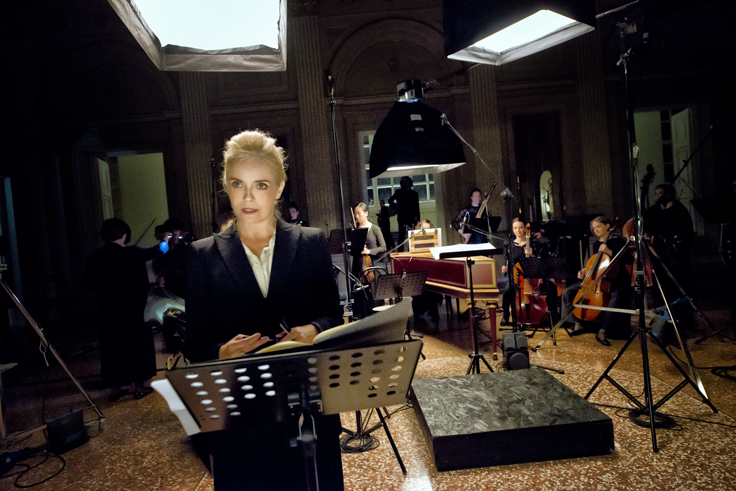
In un progetto complesso come Zoroastro, in cui musica e cinema si fondono negli spazi maestosi del Teatro Galli, la voce attoriale che traccia attraverso le parole i contorni del grande affresco è quella di Galatea Ranzi, figura forte e lieve al contempo, chiamata a interpretare testi di Casanova, tratti dall’autobiografia del letterato veneziano e dalla traduzione che Casanova fece del libretto dell’opera.

Una figura familiare, quella di Casanova, per Galatea Ranzi, che in un incontro con la stampa prima della replica dello spettacolo in Sala Galli spiega: “Casanova lo incontro ogni dieci anni, è un personaggio che mi accompagna. In precedenza ho interpretato ‘Il ritorno di Casanova’ di Arthur Schnitzler e il testo dedicato a Casanova da Marina Tsvetaeva. Forse è più di una coindicenza…”

Per Galatea Ranzi questo Zoroastre è “un affascinante intreccio di arti: c’è la musica, il cinema, il teatro, l’architettura, la danza. In effetti non c’è un termine per definire questo lavoro, io lo chiamo ancora una ‘cosa’. Ricordo quando mi ha contattato inizialmente Alessandro Taverna, sono rimasta affascinata: poi c’è stato un fitto dialogo con il regista Gianni Di Capua, con cui si è costruito tutto.”

E del rapporto con il regista Galatea Ranzi spiega: “Agli inizi della mia carriera un regista disse di me: ‘Galatea non chiede il perchè ma chiede il come.’ Le cose per me sono ancora così: con il regista deve scattare deve scattare un’empatia, io assorbo tutto, sono uno strumento nelle mani del regista.”

Nel podcast l’intervista che Galatea Ranzi ha concesso a Theresia.

[highlighted_text]English translation by Charlotte Michi[/highlighted_text]

Galatea Ranzi in the film-concert Zoroastre gives voice to Casanova reading extracts of his autobiography and of the translations he made of the libretto of the opera.

In this circumstance, which shape has the figure of Casanova for you? How are you interpreting it?

For sure his eclecticism comes out. He is a sophisticated man, prepared, inquiring, very vital, really interested in so many things. I am trying to convey his being passionate about life. [In on of the text I read] Csanova says that at 73, nearly on the verge of death, he is writing his memoires with great fun. I think this is a precious teaching.

Your job as an actress unfolds between cinema, theatre and television. The director of this film-concert, Gianni Di Capua, says that he wanted you to be present in this project also for your versatility. How do you think these three worlds interweave in this moment in this work you are doing on Zoroastre?

I think they interweave and that this will follow-up. I think these forms of expression are still too much separated and the occasions in which they can exalt each other are still few. I think there is still so much to do in this way. This opportunity [of taking part in this project] is quite special and I am happy I can share it.

Of course in this project music is very important. It’s dedicated to an opera and in based on a live music performance. What is you’re relationship with music?

Music is 80% of our lives. We are surrounded by music, unfortunately most of the time terrible music. So, when it occurs, we have to seize on the opportunity to be filled of good quality music. Professionally I have [studied music] since the beginning thanks to the beautiful lessons of Paolo Terni that has been my teacher and trait-d’union between music and theatre, between music and word. This fusion between music and word is also the origin of poetry: the greek tragedy was sung, provencal rymes of the beginning of the Italian literature were all in music, we know very well madrigals. There is a tradition, an archetype we have to recover, develop and analyze.

What effect did the music of Rameau you listened yesterday have on you?

Wonderful, the young musicians of this orchestra are very good, so clean, so transparent. Till now I did not have the occasion [to listen to this music] as there is no recording of this score and I was really inquiring as I would have to interact with this music. It was really magic, the opera talks about magic.

Alessandro Taverna told us that the idea for a such complex project is born from his passion for Fellini; but Fellini remains a bit subtext, he is not appointed, he is not a concrete part of the plot. Do you find a Fellinian spirit in all this operation?

The cinema in the cinema, the theatre in the cinema, this is already an element used by Fellini, think for example at the film 8 and ½. Yes, you can here Fellini is present [in this film-concert] in a strong way.