Our places: Capodistria

By Theresia - May 6, 2022
On the occasion of our residency in Capodistra (Koper), we asked local journalist and musicologist Luisa Antoni to tell us more about this beautiful town and the place where our orchestra is going to perform
‍

di Luisa Antoni

Read the english version

La cittadina di Capodistria (in sloveno Koper) è situata a una ventina di chilometri di distanza da Trieste. E’ il principale porto della Slovenia ed è, assieme a Pirano, Isola e Ancarano, uno dei quattro comuni che compongono la fascia costiera della Slovenia, in cui l’italiano è riconosciuto come lingua ufficiale.

Capodistria nasce da un antico insediamento costruito su un’isola nella parte sud-orientale della baia omonima e all’epoca dell’antica Grecia era conosciuta con il nome di Aegida, mentre successivamente divenne nota con il nome latino di Capris e nel Medioevo Giustinopoli. Dopo i domini bizantino e romano, fu per cinque secoli veneziana, passando poi sotto l’aquila bicipite.

Al periodo veneziano risalgono i più bei palazzi barocchi dell’Istria con una forte concentrazione a Capodistria. Uno dei più caratteristici è il palazzo dei marchesi Gravisi Barbabianca, in cui si svolge il concerto dei Fiati di Theresia il 7 Maggio 2022.

Ultimato nel 1710, si estende su tre piani ed è uno tra i più importanti monumenti architettonici barocchi capodistriani. La facciata è simmetrica con l’asse centrale enfatizzata dal piano supplementare ed il portale d’ ingresso sovrastato da un balcone riccamente decorato con trifora. Al secondo piano si trova parimenti un balcone con trifora però con decorazioni più modeste e l’asse centrale è accentuata ulteriormente con un timpano che finalizza la decorazione.

Il concerto dei Fiati dell’Orchestra Theresia si tiene alla scuola di musica nella sala principale che è stata affrescata nell’ Ottocento.

Il palazzo è oggi la sede della scuola di musica di Capodistria che è oggi composta da tre scuole di musica del litorale sloveno: Isola, Capodistria e Pirano. La scuola capodistriana è stata fondata su iniziativa del pianista, maestro del coro e didatta Srečko Kumar il 21 dicembre 1948 e ha iniziato ad operare a Portorose in sloveno e italiano. Dopo tre anni è stata trasferita a Capodistria. Nel 1952 fondarono una scuola di musica a Isola e tre anni dopo a Pirano. Inizialmente le due scuole operavano come succursali di Capodistria, ma ben presto divennero indipendenti.

Srečko Kumar si ritirò nel 1952 e il compositore e direttore d’orchestra Vladimir Lovec di cui si festeggiano quest’anno i 100 anni dalla nascita) assunse la direzione della scuola. Su sua iniziativa e su iniziativa di Miran Hasl, nel 1967 tutte e tre le scuole di musica furono fuse in un’unica istituzione, il Centro di Educazione Musicale (CGV). Il suo primo direttore, Miran Hasl, ha gestito e sviluppato con successo CGV per 24 anni.

La qualità del lavoro educativo nell’Istria slovena è testimoniata dai dati sui premi vinti in concorsi nazionali, regionali e internazionali, a cui hanno partecipato numerosi solisti, ensemble da camera e orchestre dal 1971. La bontà del lavoro pedagogico è testimoniata anche degli studenti che superano con successo gli esami di ammissione agli studi universitari in patria e all’estero.

Negli ultimi anni la scuola ha collaborato professionalmente con scuole di musica in Croazia, Repubblica Ceca, Ungheria, Austria, Italia, Paesi Bassi, Germania e Polonia.


English version

The town of Koper is located about twenty kilometers away from Trieste. It is the main port of Slovenia, and together with Piran, Isola and Ankaran, it’s one of the four municipalities that make up the coastal strip of Slovenia, where Italian is recognized as an official language.

Koper was born from an ancient settlement built on an island in the south-eastern part of the bay of the same name and in ancient Greece it was known by the name of Aegida, while later it became known with the Latin name of Capris and in the Middle Ages Giustinopoli. After the Byzantine and Roman dominions, it was Venetian for five centuries, then passing under the double-headed eagle.

The most beautiful Baroque palaces in Istria date back to the Venetian period, with a strong concentration in Koper. One of the most characteristic places is the palace of the Gravisi Barbabianca marquises, where the concert of the Winds of the Theresia Orchestra takes place on May 7, 2022.

Completed in 1710, it extends over three floors and is one of the most important Koper Baroque architectural monuments. The façade is symmetrical with the central axis emphasized by the additional floor and the entrance portal surmounted by a richly decorated balcony with a three-light window. On the second floor there is also a balcony with a three-light window but with more modest decorations and the central axis is further accentuated with a tympanum that finalizes the decoration.

The concert of the Winds of the Theresia Orchestra is held at the music school in the main hall which was frescoed in the nineteenth century.

The palace is now the seat of the Koper music school which is made up of three music schools from the Slovenian coast: Izola, Koper and Piran. The Koper School was founded on the initiative of pianist, choir master and teacher Srečko Kumar on 21 December 1948 and began operating in Portorož in Slovenian and Italian. After three years she was transferred to Koper. In 1952 they founded a music school in Isola and three years later in Piran. The two schools initially operated as Koper branches, but soon became independent.

Srečko Kumar retired in 1952 and composer and conductor Vladimir Lovec, whose 100th birthday is celebrated this year) took over the school. On his initiative together with Miran Hasl, in 1967 all three music schools were merged into a single institution, the Music Education Center (CGV). Its first director, Miran Hasl, has successfully managed and developed CGV for 24 years.

The quality of the educational work in Slovenian Istria is testified by the data on the prizes won in national, regional and international competitions, in which numerous soloists, chamber ensembles and orchestras have participated since 1971. The excellence of the pedagogical work is also testified by the students who successfully pass the entrance exams for university studies at home and abroad.

In the recent years the school has collaborated professionally with music schools in Croatia, the Czech Republic, Hungary, Austria, Italy, the Netherlands, Germany and Poland.

Photo credits


Theresia Orchestra’s Symphonies at the Teatro alle Vigne

By Theresia - November 24, 2021
Behind the program of the concert
‍

On Saturday 27 November, Theresia Orchestra will return to play at the Teatro alle Vigne in Lodi at the end of its first residency in the Lombardy city after the pause caused by the Covid-19 pandemic. The programme of the concert, conducted by Alfredo Bernardini, will be based on the core repertoire of the Theresia project, the classical symphonic, and will feature Symphony in G major K444 / P16 by Wolfgang Amadeus Mozart/Michael Haydn, Symphony in D major VB143 by Joseph Martin Kraus, and Symphony No. 91 in E flat major Hob. I/91 by Franz Josef Haydn. 

The two first symphonies are misattributions that we could call musicological fake news. Both Kraus’s Symphony in D and Michael Haydn’s Symphony in G, in fact, have been in the past centuries united by a fate common to many other pieces in the history of music: on several occasions the musicians of the past, taken by the enthusiasm of having to do with a composition of an author more emblazoned than others, were more or less consciously guilty of misattributions. In the case of Kraus, the attribution error was intentional, because printed parts of this Symphony began to circulate in Paris between 1786 and 1787 with attribution to Joseph Haydn. 18th-century music market was in fact extremely lively and competitive, and greedy for compositions by this already well-known composer; Kraus, although an excellent musician, certainly did not have the same commercial appeal. Research carried out in the first half of the 19th century by Fredrik Silverstolpe succeeded in re-establishing the truth and determining the correct attribution, thanks to the analysis of manuscript sources preserved in Stockholm, the city where Kraus worked as Chapel Master at the court of King Gustav III and as director of the Royal Swedish Academy of Music. This research also established 1784 as a possible date of composition of this symphony.

The second piece presented in the programme probably dates from the same year, 1784. Michael Haydn’s Symphony in G Major No. 25 has historically been known as Mozart’s No. 37. This was at least until 1907, when musicologist Lothar Perger, while studying the catalogue of Michael Haydn, was able to establish its true authorship by naming Joseph’s brother as its author. Following this discovery, however, Mozart’s symphonies were not renumbered, leaving a gap in the celebrated composer’s catalogue between Symphony No. 36 and Symphony No. 38. In the case of this symphony, however, the erroneous attribution is partially justified by the fact that the Adagio Maestoso that introduces the first movement (twenty bars in all) was indeed composed by Mozart, as evidenced by a manuscript source of the score: the two composers used to collaborate, and this has led to other musicological misunderstandings (as with Mozart’s duets for violin and viola K423 and 424, published under Haydn’s name). In the Andante sostenuto of the “Mozartian” version of this piece, however, a valuable bassoon solo is missing, which is found in other manuscripts of Haydn’s version: in this concerto the solo is reinstated, in fact creating a synthesis between the two versions of the same symphony.

Joseph Haydn’s Symphony in E-flat Major No. 91 (about which there is no doubt as to its attribution) was composed in 1788 on the commission of Count d’Ogny, together with Symphonies Nos. 90 and 92, to be performed at the Concerts of the Olympic Lodge in Paris. Founded as a Masonic lodge of musicians, this concert society had already commissioned Haydn to write Symphonies 82 to 87, known as the ‘Parisian’ Symphonies. Like most first-rate musicians of the 18th century, Haydn was also affiliated to Freemasonry, which essentially acted as a support network and exchange of information and work assignments throughout Europe. The Olympic Lodge had 364 members, of whom 29 were administrators, 24 ‘associate members’ and a further 65 members who were part of the concert orchestra. The conductor was Joseph Boulogne Chevalier de Saint-George (1745-1799), a French composer and violinist of Senegalese origin. Several thematic elements of Haydn’s Symphony No 91 are related to the cantata Ariadne at Naxos, Hob. XXVIa/2, for piano and voice, composed in the same year, and in particular the chromatic theme that appears at the beginning of the Allegro assai of the first movement.

Simone Laghi,

Artistic Secretary at Theresia Orchestra

Meet Theresia: Pietro Battistoni

By Theresia - September 16, 2020
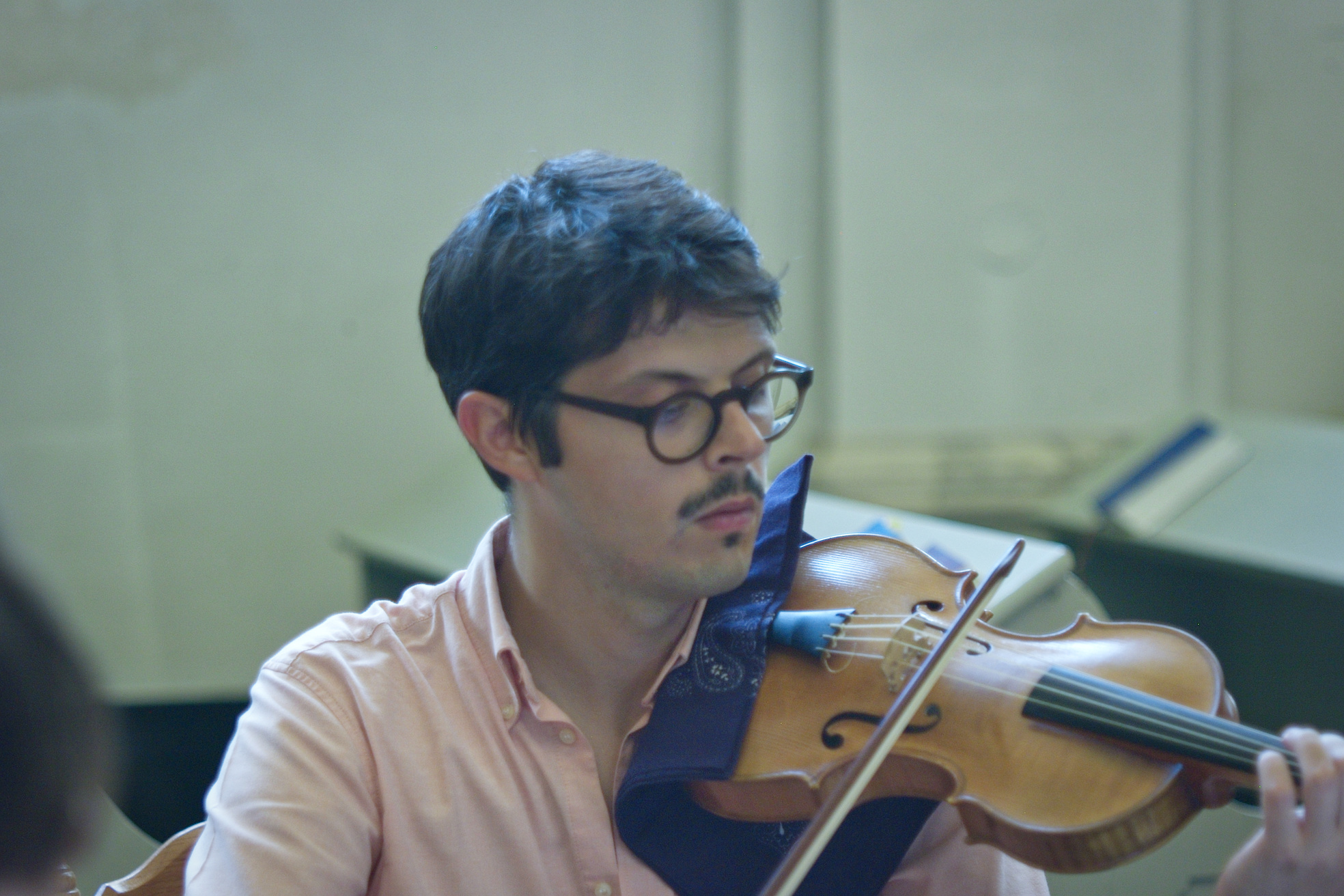
A new member of Theresia Orchestra is going to tell us about him and his experience in the orchestra. Let’s meet Pietro Battistoni, violinist at Theresia Orchestra.
‍

A new member of Theresia Orchestra is going to tell us about him and his experience in the orchestra. Let’s meet Pietro Battistoni, violinist at Theresia Orchestra.

(more…)

Nasce Concerto Theresia, orchestra professionale sbocco di Theresia Orchestra

By Theresia - August 25, 2020
Abbiamo incontrato Mario Martinoli, Fondatore e Direttore Artistico di Theresia, che ci ha raccontato gli sviluppi e le ultime novità del progetto Theresia.
‍

Abbiamo incontrato Mario Martinoli, Fondatore e Direttore Artistico di Theresia, che ci ha raccontato gli sviluppi e le ultime novità del progetto Theresia.

(more…)

Meet Theresia: Samuel Casale

By Theresia - August 3, 2020
Let’s meet a new member of the orchestra: Samuel Casale from Italy.
‍

Let’s meet a new member of the orchestra: Samuel Casale from Italy. (more…)

Meet Theresia: Agata Magdziak

By Theresia - April 22, 2020
Let’s meet a new member of the orchestra: Agata Madziak, violinist at Theresia from Poland.
‍

Let’s meet a new member of the orchestra: Agata Madziak, violinist at Theresia from Poland.

(more…)

Meet Theresia – Giulia Gillio Gianetta

By Theresia - March 16, 2020
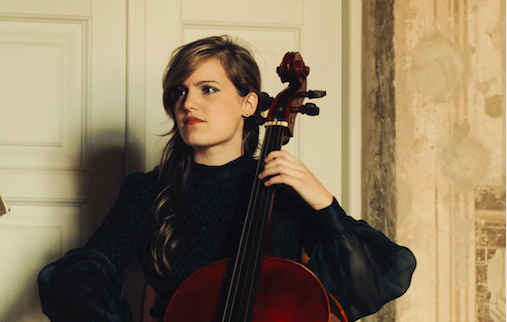
Let’s meet a new member of the orchestra: Giulia Gillio Gianetta, Italian-Spanish cellist at Theresia since 2016.
‍

Let’s meet a new member of the orchestra: Giulia Gillio Gianetta, Italian-Spanish cellist at Theresia since 2016.

(more…)

Composer of the month: Franz Joseph Haydn

By Theresia - March 5, 2020
The 31st of March will be celebrated Haydn’s 288th birthday. Haydn is an Austrian composer of the Classical period loved by Theresia and that has celebrated during the firsts residencies of 2020.
‍

The 31st of March will be celebrated Haydn’s 288th birthday.

Haydn is an Austrian composer of the Classical period loved by Theresia and that has celebrated during the firsts residencies of 2020.

(more…)

Meet Theresia: Ruben Castillo del Pozo

By Theresia - February 27, 2020
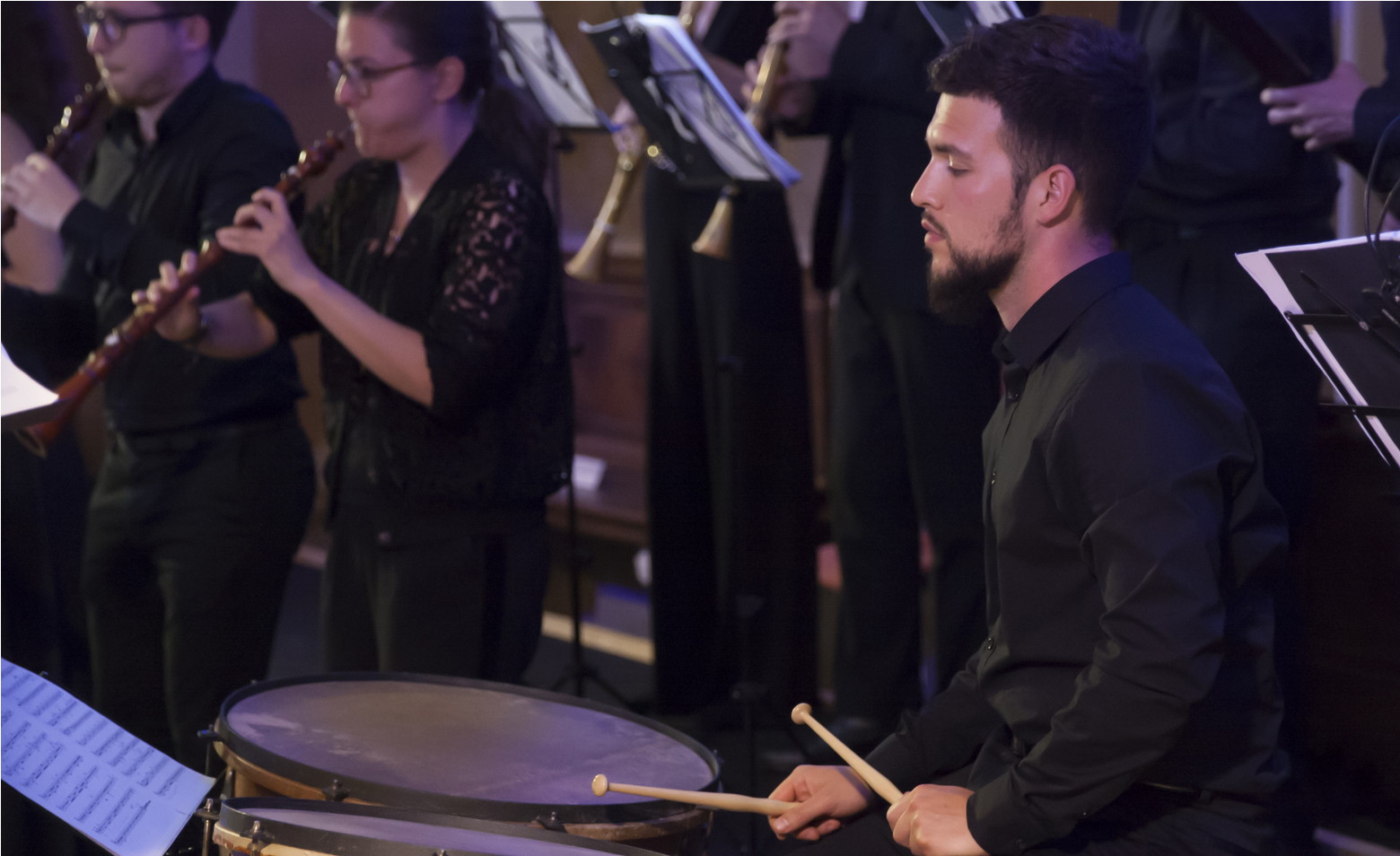
Let’s meet a new member of Theresia: Ruben Castillo del Pozo. Ruben is a timpanist born in 1991. He started playing the violin at age seven. He studied six years at the Conservatory Angel Arias Maceín before changing from violin to percussion. After studying several years percussion he first came to the Netherlands. 
‍

Let’s meet a new member of Theresia: Ruben Castillo del Pozo.

Ruben is a timpanist born in 1991. He started playing the violin at age seven. He studied six years at the Conservatory Angel Arias Maceín before changing from violin to percussion. After studying several years percussion he first came to the Netherlands. 
(more…)

Meet Theresia: Sophia Witmer

By Theresia - February 5, 2020
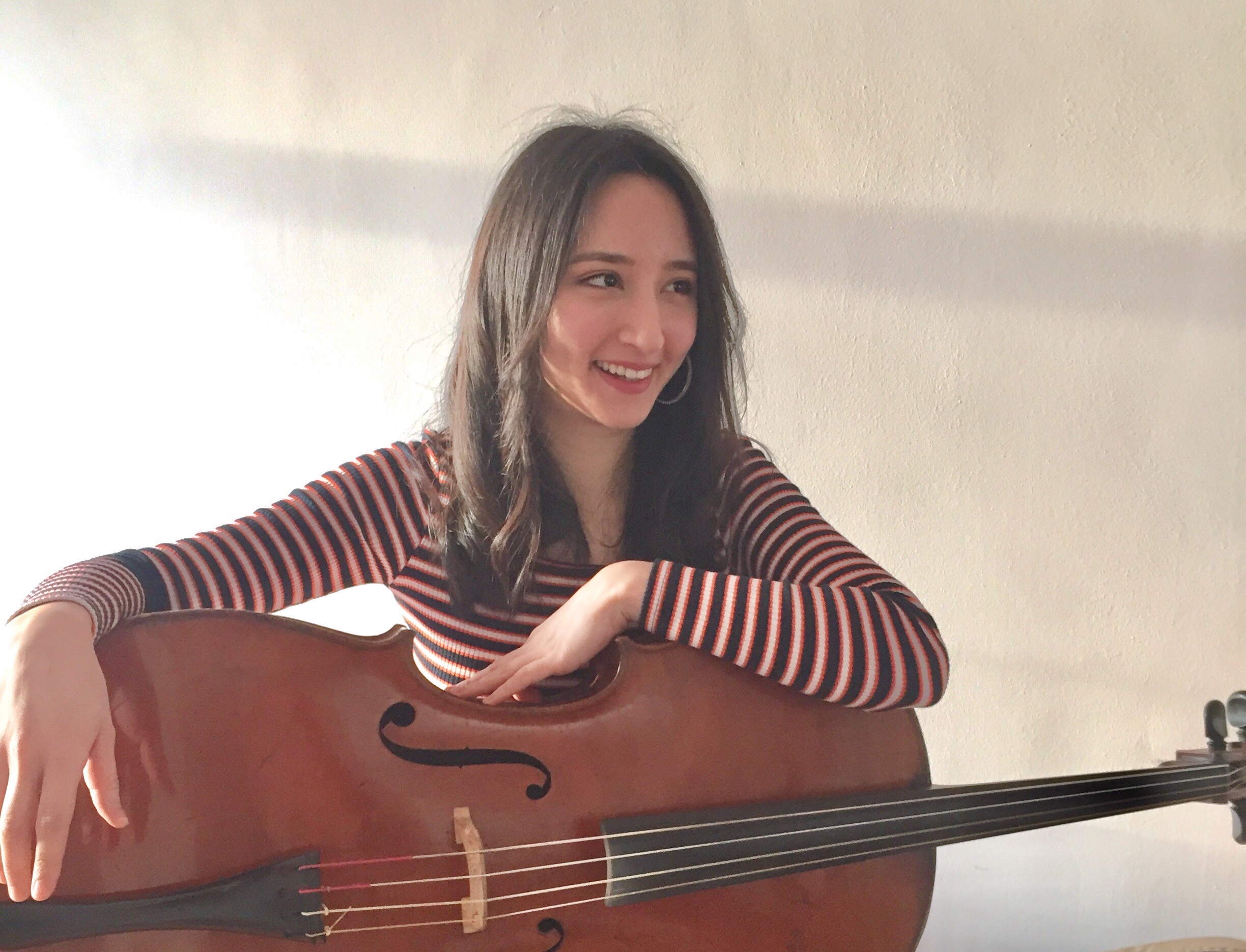
Let’s meet a new member of Theresia: Sophia Witmer. Sophia is 23, comes from Japan and plays cello.
‍

Let’s meet a new member of Theresia: Sophia Witmer.

Sophia is 23, comes from Japan and plays cello.

(more…)