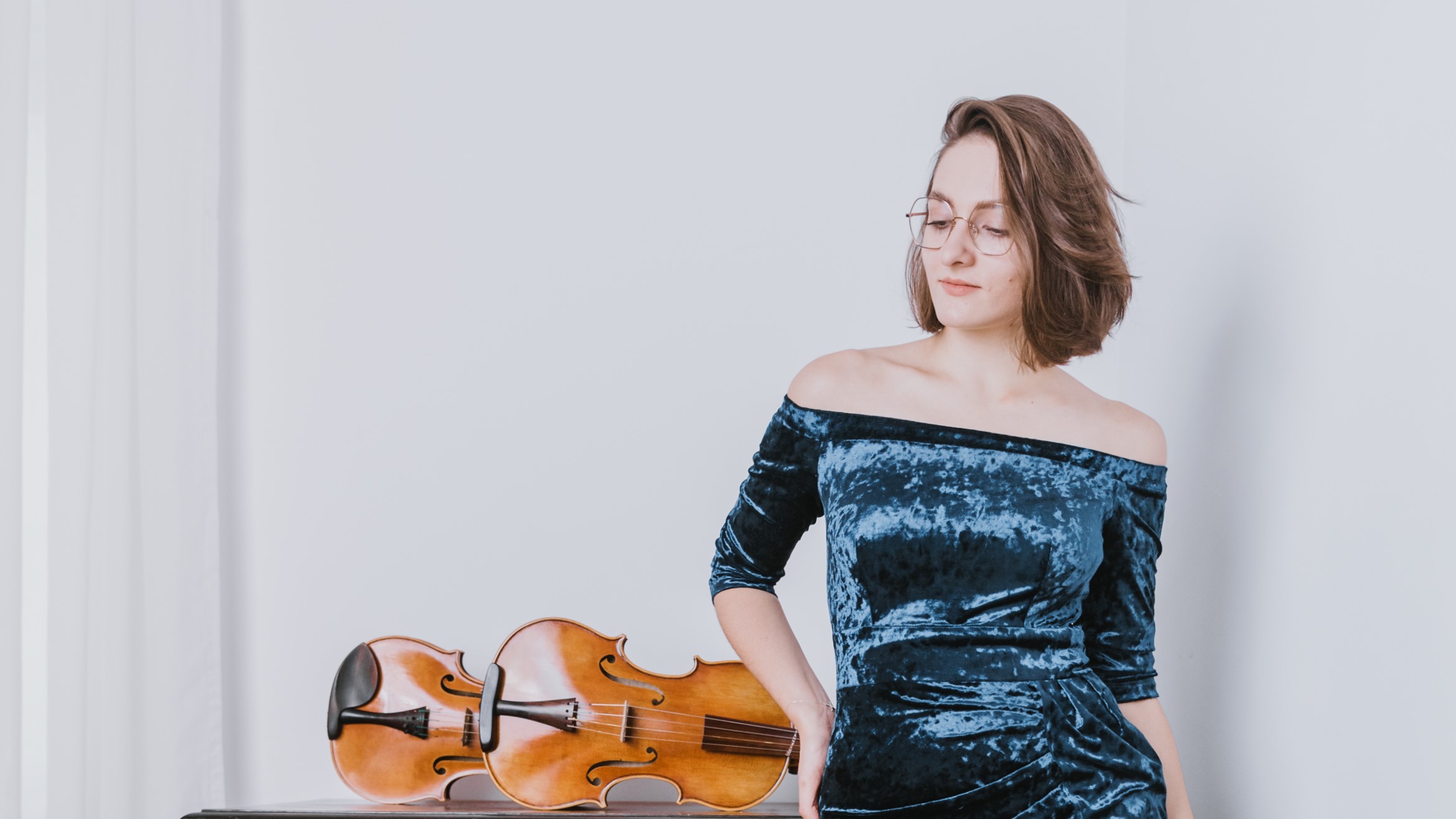
When 3 years ago I thought about playing the baroque viola, I had something like this in mind: “Oh, that would be really cool! I don’t think it’s so difficult, I will take a few lessons, and it’ll be fine.” Now, I do laugh at myself when I recall these words – I could not have been more wrong.
Early music has been a part of me since I remember. And this is for my mentor, my first viola teacher – I was lucky that he was (and still is) highly interested in it. He used to send me some incredible early music recordings performed in historically informed practice – I am deeply grateful for this.
During my studies in Berlin, I was surrounded by early music specialists. I studied the viola with Simone von Rahden (Jandl) who at that time was a violist of the Orchestra of the Age of Enlightenment. I also took a baroque course with Bernhardt Forck – a principal violinist of the Akademi fur Alte Musik Berlin. This all happened 3 years ago.
I bought my baroque bow spontaneously in a very short time! But it was a good choice as I have been using it ever since. Although, I had to wait a while for my baroque viola. The time I had, allowed me to discover the differences between the baroque and the modern viola bows, which lead to a better understanding of the work of the right arm.
There is a huge difference between these bows! The very first important thing is that the baroque bow is much lighter than the modern one. The second one is the fact that the bow balance is different – at the tip, the baroque bow is like a feather. So I had to learn sound production all over again – at that moment I realized that this whole baroque music playing is not as easy as I thought and actually not easy at all. I had a few months to wait for the baroque viola to be built so I focused on the right arm technique – I explored different articulations and experimented with the sound. After a while I found myself comfortable with the baroque bow – I knew how to use it to get the sound I liked, I was able to use different articulations, and I simply made a progress (but still on the modern viola with metal strings). I was mostly happy about finding a way to control the bow in the upper half.
Finally, the moment has come – I could pick up my new baroque viola! When I came back home the only thing I did was playing (obviously) and it was a huge surprise. I had no idea why I could not produce a nice, deep sound – the only sounds I made were squeals and rustles. When I tried to play a long note it somehow broke in the middle and then the short, little notes sounded like pinches. It was another moment when I realized that this whole early music fun is much more difficult than I thought, but this time it was due to gut strings.
To be honest, it was not like nothing came out of the instrument – I could play something, and it sounded more or less ok, but I was not happy with the sound I heard, because I knew how the baroque instrument could have sounded.
My first impression about playing the baroque viola was that the work of the right arm is completely different due to both – the bow and gut strings. The total basics are to play with the slow speed of the bow and get closer to the bridge. I had to learn it all over again as the sound was not so easily achievable compared to playing the modern viola. By the way, it is obviously much easier to play sul tasto than sul ponticello (and here I also mean that it is more difficult to achieve on modern instruments). The next thing that occurred to me was how important each finger on the bow is – each one of them is responsible for something else. While playing with such a light bow, the differences were very well audible.
What about intonation? Another surprise! The first thing I had to do was to get used to the neck of the viola and distances between fingers – it was neither an easy nor a fast process as I studied the modern viola at that time, so the baroque one was my free time pleasure. I noticed that my sound was still a bit mat on the baroque viola even after some time of practicing – I honestly did not like it and still, I had in mind the sound I remembered from some recordings and performances. And then I finally produced a deep, rich and nice sound a couple of times that was full of partial tones, but I felt I made it by accident – I had to find a way to be able to play like this all the time. It took me a while to achieve it, but I finally succeeded. I realized that another important thing was to put the left-hand fingers on the fingerboard softly and without any unnecessary pressure. Combining this with the proper bow movement was a win. When I accidentally or unconsciously tensed my left hand I squeezed the neck and the string (at the same time) too much – the nice sound was gone because I did not allow it to vibrate.
Was it all new to me? Yes and no. NO, because I of course knew about all these things before, and YES, because the skills I had at that time were not good enough to simply take a baroque viola and play. When I understood how the gut strings worked, my modern viola playing improved. When I took an instrument with metal strings and played the way I would play the baroque viola, I achieved a sound that was very rich, strong and soft at the same time – it was something that I had been looking for for a long time. I could not find it as metal strings reacts with every little movement and impulse so it was kind of easy to produce a nice and soft sound. I call the baroque viola “my saver”!
A few weeks ago, I experimented at the school where I teach. I gave each of my students the baroque viola and let them play. They were really shocked by the sound they produced. The experiment was about that they played the same musical phrases on the modern and baroque instruments, trying not to change the way of playing (so that they played with the same techniques on both violas). Their faces were priceless when they noticed the differences. I helped them to achieve a nice sound on gut strings, and they succeeded, more or less. I saw smiles on their faces when it happened. After this experiment, they have become more interested in sound production, and now I see that each one of them has made bigger or smaller progress, which makes me very happy!
Maybe all string players should play the baroque instrument, even for a year? I do think it would be very useful and productive.
Jak zaprzyjaźniłam się z altówką barokową

Kiedy trzy lata temu po raz pierwszy przeszła mi przez głowę myśl, by spróbować gry na altówce barokowej, brzmiała ona mniej więcej tak: „Ale byłoby super grać na takim instrumencie! To pewnie nie jest takie trudne, pójdę do kogoś na kilka lekcji i będzie super!”. Teraz jak sobie o tym przypominam, to w środku się śmieję – nic bardziej mylnego!
Muzyka dawna od zawsze była częścią mnie. Miałam szczęście, że mój mentor, mój pierwszy nauczyciel altówki był (i nadal jest) jej miłośnikiem. To właśnie on wysyłał i pokazywał mi najwyższej klasy nagrania zgodne z HIP – jestem mu za to ogromnie wdzięczna!
Będąc na studiach w Berlinie, zostałam otoczona specjalistami w zakresie wykonawstwa historycznego. Studiowałam u Simone von Rahden (Jandl), która wtedy była członkiem Orkiestry Wieku Oświecenia, a kurs barokowy odbyłam u Berharda Forcka – pierwszego skrzypka Akademie fur Alte Musik Berlin. To było właśnie trzy lata temu.
Smyczek barokowy kupiłam bardzo spontanicznie bez większego przemyślenia (używam go do dziś, więc zdaje egzamin), natomiast na altówkę musiałam poczekać kilka miesięcy. Ten czas dał mi możliwość, by lepiej zauważyć różnice między smyczkiem barokowym i współczesnym, a w efekcie, by lepiej zrozumieć pracę prawej ręki.
Różnica między tymi smyczkami jest ogromna! Po pierwsze, smyczek barokowy jest znacznie lżejszy, a po drugie jest on zupełnie inaczej wyważony. Musiałam od nowa nauczyć się produkcji dźwięku – dotarło do mnie wtedy, że będzie to znacznie dłuższa nauka niż myślałam! W oczekiwaniu na altówkę barokową próbowałam i poszukiwałam różnych sposobów gry – w efekcie miałam poczucie, że opanowałam ten smyczek na tyle, by móc wykonywać nim artykulacje różnego rodzaju i przede wszystkim panować nad dźwiękiem w górnej połowie smyczka, a to sprawiało mi największe trudności na początku.
W końcu nadszedł długo wyczekiwany moment – pojechałam odebrać swoją altówkę barokową. Po przyjeździe z nią do domu od razu zaczęłam grać – wtedy zaczęły się prawdziwe schody. Nie miałam pojęcia dlaczego nie potrafię wydobyć ładnego dźwięku, w większości były to piski i szelesty. Trzymając długą nutę, dźwięk w pewnym momencie przerywał się, natomiast drobne wartości brzmiały jak uszczypnięcia. Wtedy dotarło do mnie, że opanowanie strun jelitowych to dopiero będzie wyzwanie.
Oczywiście, to nie było tak, że nic nie brzmiało – brzmiało, ale sama czułam, że nie potrafię wydobyć pięknego dźwięku z tego instrumentu, a ten, który wydobywałam wtedy po prostu mi się nie podobał.
Pierwsze moje odkrycie było takie, że instrumenty ze strunami jelitowymi wymagają zupełnie innej pracy prawej ręki. Wolne pociągnięcie smyczka i gra bliżej podstawka to naprawdę podstawy. Musiałam się tego oczywiście nauczyć, ponieważ gra przy podstawku jest znacznie trudniejsza niż ta bliżej gryfu (mam także na myśli, że jest to znacznie trudniejsze od tych samych technik wykonywanych na instrumentach ze strunami metalowymi). Następnie zrozumiałam jak ważne są poszczególne palce na smyczku – każdy odpowiada za coś innego. Trzymając tak lekki smyczek różnice w brzmieniu były bardzo dobrze słyszalne.
A co z intonacją? No właśnie – tutaj kolejne zdziwienie. Oczywiście, musiałam się najpierw nauczyć nowej menzury – nie był to proces ani szybki, ani łatwy, ponieważ studiowałam altówkę współczesną, więc na barokowej grałam tylko w wolnych chwilach. Zauważyłam jednak, że mój dźwięk był dość matowy, nie podobał mi się, a wiedziałam jak pięknie może brzmieć instrument barokowy. Kilkakrotnie zdarzyło mi się wydobyć bardzo klarowny dźwięk pełen alikwotów. Początkowo nie potrafiłam znaleźć drogi do tego, by każdy dźwięk był tak piękny, jednak po czasie udało mi się. Zrozumiałam, że ogromne znaczenie ma to w jaki sposób położę palec lewej ręki na strunie. Tylko bardzo swobodne i luźne oparcie ręki na gryfie w połączeniu z dobrze poprowadzonym smyczkiem dawało zadowalający rezultat. W momencie, gdy choćby delikatnie moja lewa ręka się spięła, zaczynała ona zaciskać gryf, a jednocześnie strunę – to nie pozwalało strunie swobodnie drgać.
Czy to wszystko było dla mnie nowe? I tak, i nie. NIE w takim kontekście, że o tych wszystkich rzeczach niby wcześniej wiedziałam, a TAK, ponieważ umiejętności, które miałam do tamtej pory nie wystarczyły mi, by zacząć grać na instrumencie barokowym od razu. Gdy zrozumiałam jak działają struny jelitowe, poczułam, że moja gra na altówce współczesnej bardzo się polepszyła. Biorąc instrument ze strunami metalowymi i grając w sposób, którego nauczyłam się przy altówce barokowej uzyskałam niesamowicie bogate brzmienie – takie, którego szukałam od dłuższego czasu. Wcześniej nie potrafiłam go znaleźć, ponieważ struny metalowe reagują na najmniejszy bodziec, więc było to dość łatwe, by uzyskać zadowalający, miękki dźwięk. W żartach nazywam altówkę barokową “moim wybawcą”!
Jakiś czas temu zrobiłam mały eksperyment na swoich uczniach. Przyniosłam na zajęcia altówkę barokową i dałam każdemu z nich, by spróbowali coś zagrać. Byli bardzo zdziwieni tym, co usłyszeli. Eksperyment polegał na tym, że zmieniali instrumenty, starając się wydobyć dźwięk w jak najbardziej zbliżony sposób, ale na innych altówkach. Widziałam ich zaskoczenie, gdy słyszeli jak ogromna jest różnica w brzmieniu. Pokierowałam nimi trochę, by znaleźli piękny dźwięk na strunach jelitowych, a gdy im się to choć raz udało, widziałam uśmiech na ich twarzach. Dzięki temu doświadczeniu widzę, że jakość wydobywanego przez nich dźwięku ogromnie się polepszyła. Może każdy muzyk, grający na instrumencie współczesnym powinien przez pewien czas grać na instrumencie ze strunami jelitowymi? Myślę, że przyniosłoby to tylko pozytywne rezultaty.